

From June 20th (Thursday) to 23rd (Sunday), I visited Rishiri Island and Rebun Island at the northernmost point of Hokkaido. Nearly 40 years ago, I made a day trip to Rebun Island when visiting my uncle’s home in Wakkanai. However, my memories of it are faint, making this visit feel like the first.
June 20th (Thurs)
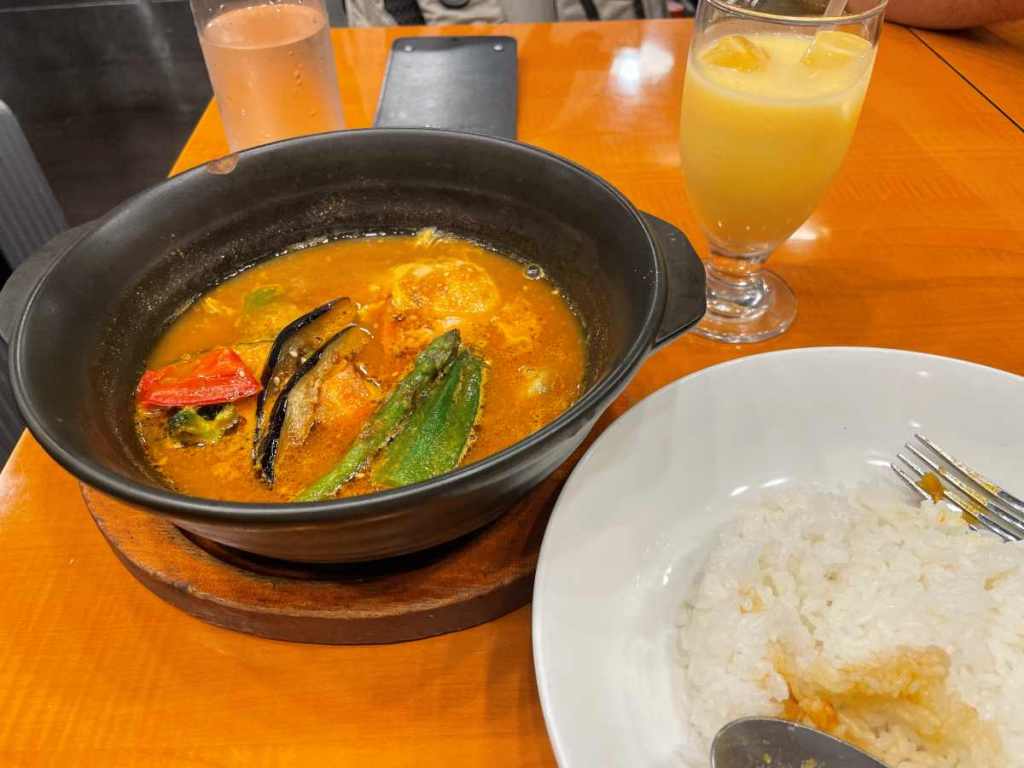
I departed on JAL505 from Haneda Airport at 08:15 and landed at Sapporo New Chitose Airport at 09:50.Then, shortly after 11:00, I boarded the Rapid Airport Express bound for Sapporo Station. With some time to spare, I enjoyed a lunch of chicken on the bone and a hearty vegetable soup curry at Tenma Curry, located on the 6th floor of Stellar Place, adjacent to Sapporo Station. The combination of spicy fragrance and pungent taste was delightful.
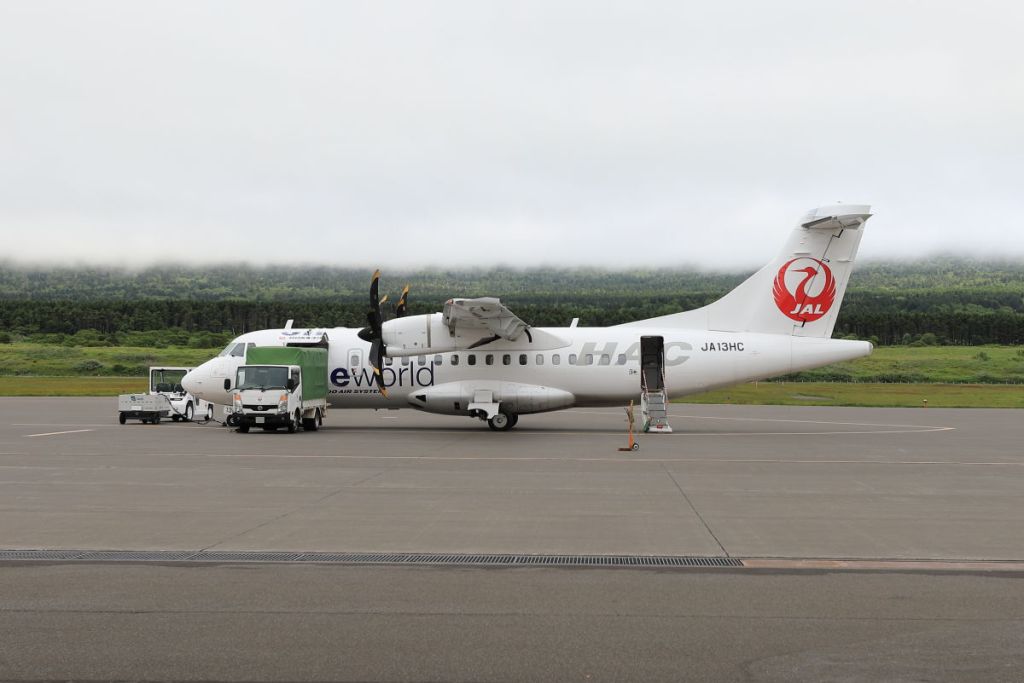
After dining, I browsed the shops at the commercial center in Sapporo Station before hailing a taxi to Sapporo Okadama Airport. This airport is serviced by JAL, offering flights within Hokkaido and to adjacent regions. Sapporo and Rishiri are connected by two daily flights. On this occasion, I boarded the latter, JAL flight 2885, which left Okadama Airport at 15:00 for Rishiri Airport. It had been some time since my last flight on a propeller-driven aircraft, the charming ATR42-600 with its 48 seats.
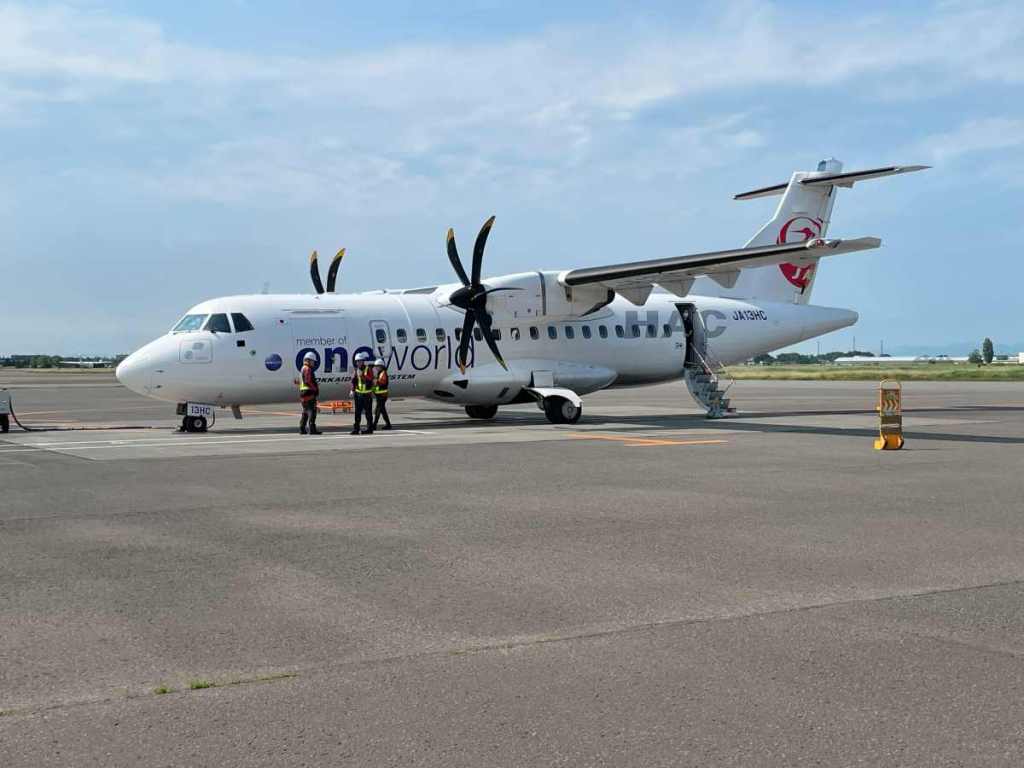
Upon departure, the inclement weather raised concerns about the possibility of returning, creating uncertainty about our landing. Despite the plane being buffeted by strong winds, we managed to land safely at Rishiri Airport at 15:50. Aware of the airport’s small size and potential transportation issues, I had arranged for a hotel transfer in advance, ensuring a seamless arrival. My accommodation for the evening was Hotel Rishiri, conveniently located near Kutsukake Port.
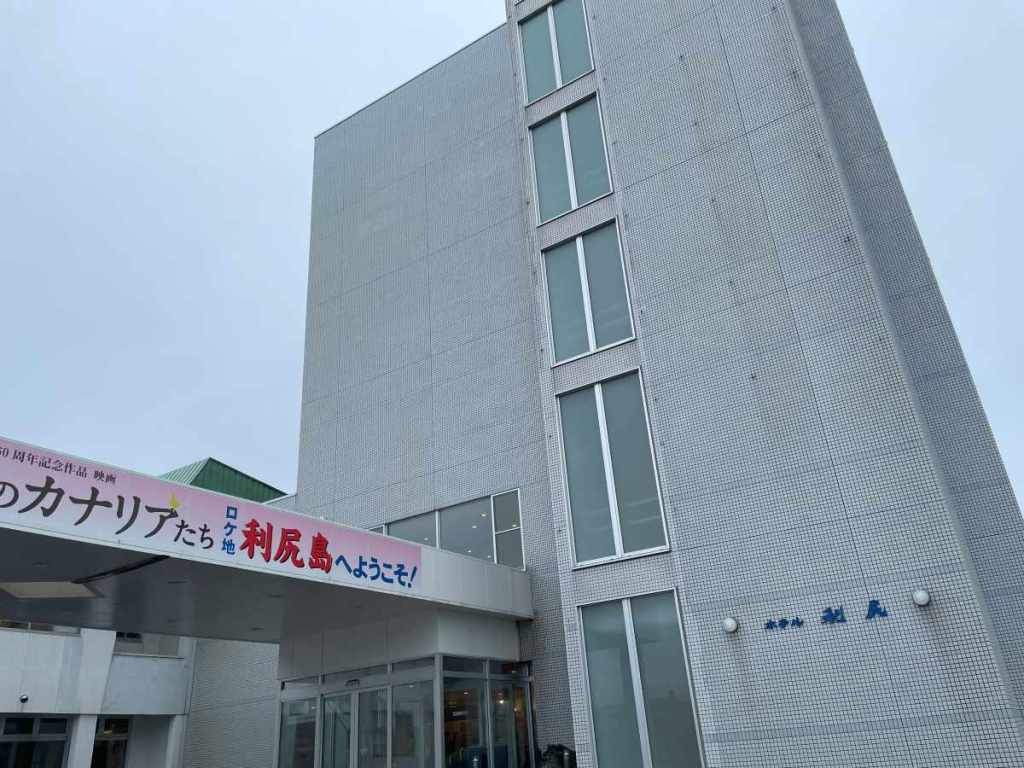
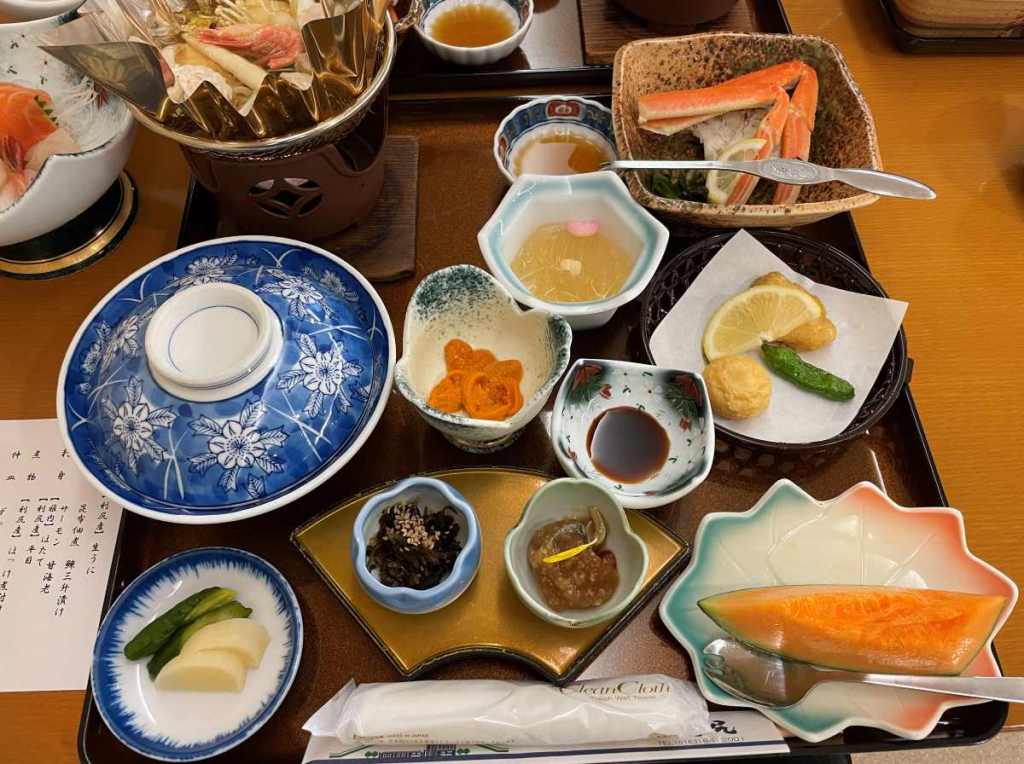
The hotel boasts a hot spring sourced directly from its origin, which I indulged in after a brief rest in my room. The spring’s water is rich in hydrogen carbonate, ranking among the highest in Japan, and contains significant levels of chlorine, sodium, magnesium, calcium, and iron. This composition of iron turns the water brown upon exposure to air. Although the flowing water bath maintains a low temperature of 33 degrees Celsius, prolonged immersion warms the body, likely due to the hydrogen carbonate’s high concentration. For dinner, I savored local seafood, highlighted by the seasonally available Ezo Bafun Uni, a sea urchin with a delightful color, sweet taste, and exquisite flavor.
June 21st(Fri)
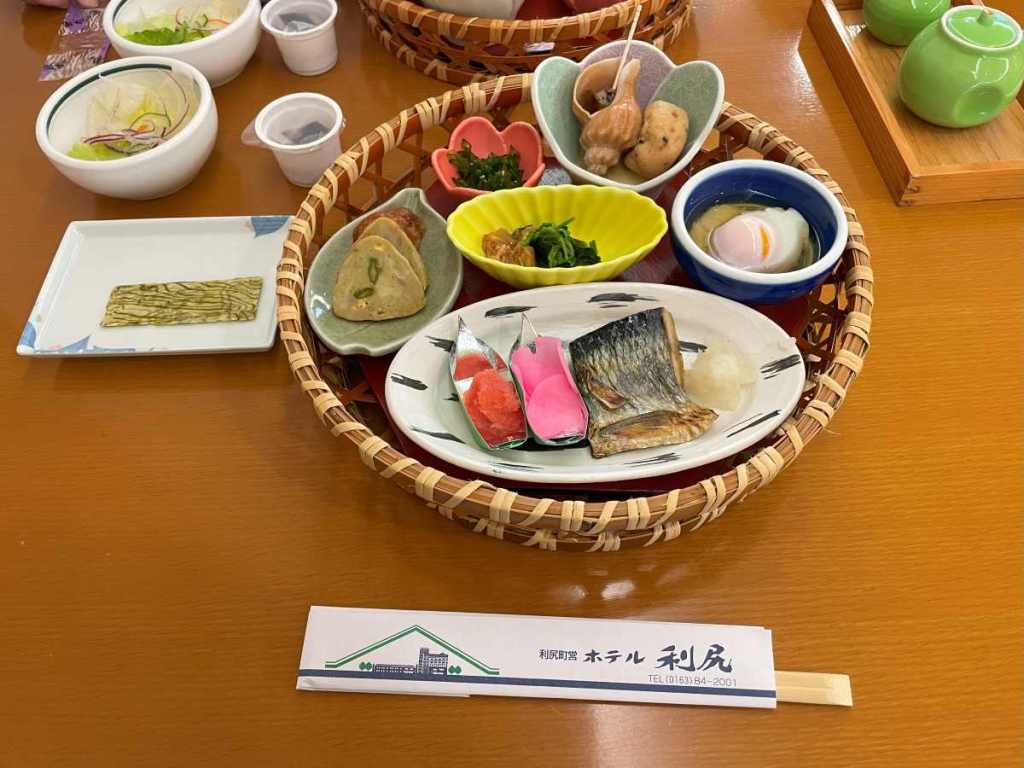
Upon waking, I enjoyed a morning bath followed by breakfast. Rather than nori seaweed, it was served with thinly shaved kelp resembling nori. I was unaware it could be substituted in this manner.
This morning, I booked a spot on the Rishiri Island Regular Tourist Bus for the ‘A Tour of the Beautiful Rishiri Fuji.’ I headed to the Soya Bus Kutsugata Office close to where I was staying and left at 08:20. The tour’s first destination was the picturesque man-made lake, Himenuma. After crossing the bridge from the parking area and walking through the lush greenery of the Erman’s birch forest, I reached Himenuma.

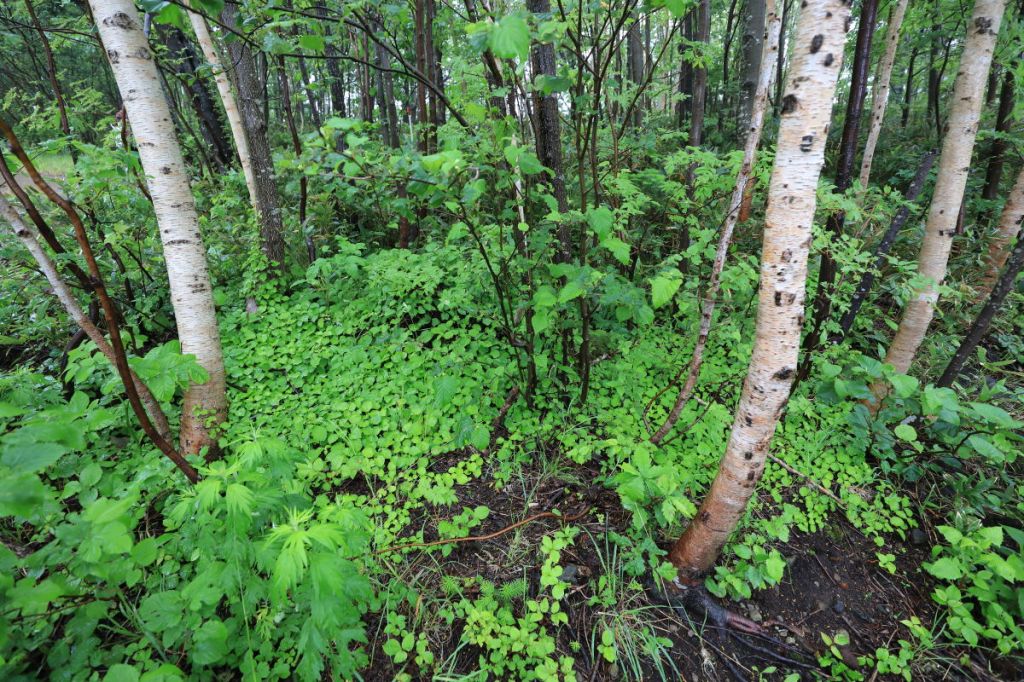
Rishiri Fuji is not visible due to the fog and light rain.
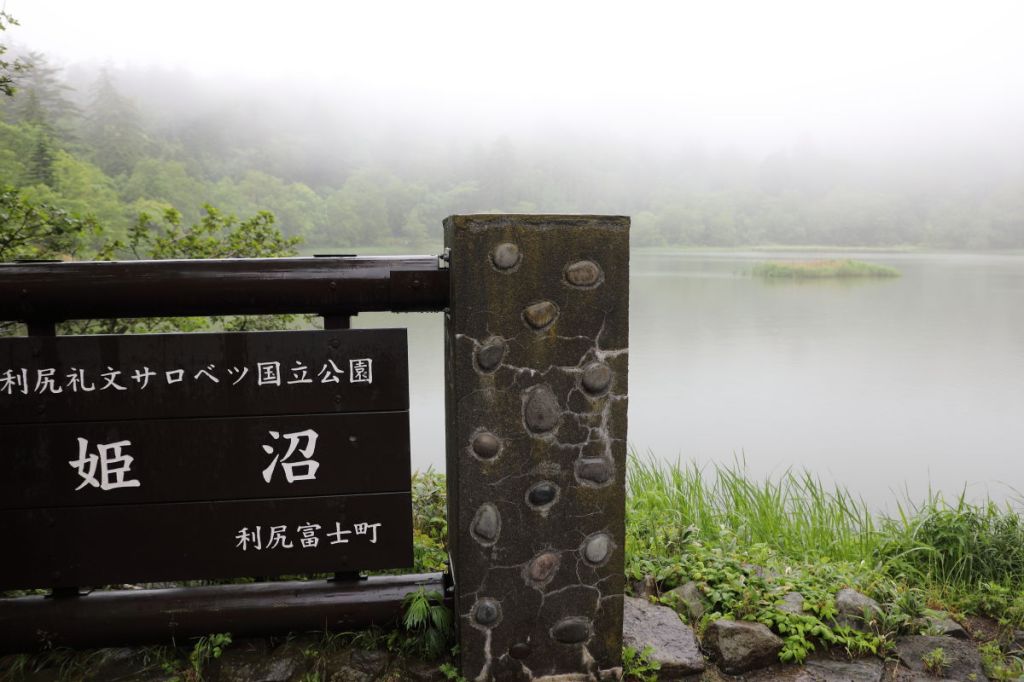
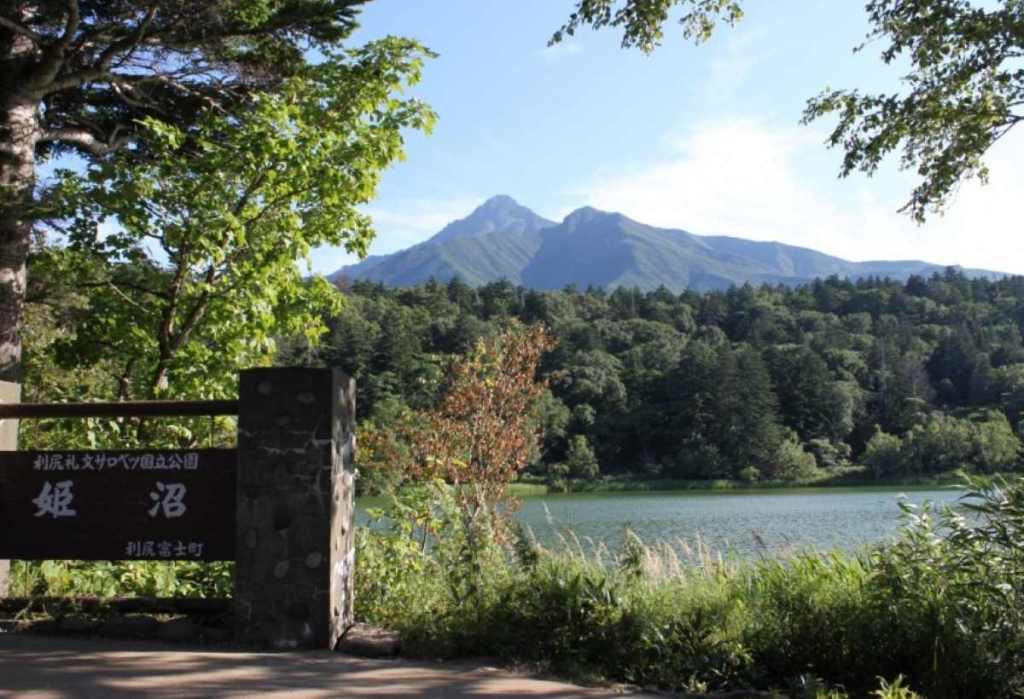
According to a tourism website, Hokkaido offers spectacular views when the weather is favorable, as depicted in the photo below. While it is commonly believed that Hokkaido lacks a rainy season, the Soya region experiences the Ezo rainy season in June. This period is characterized by frequent fog and minimal rainfall, resulting in many days of less-than-ideal weather conditions.
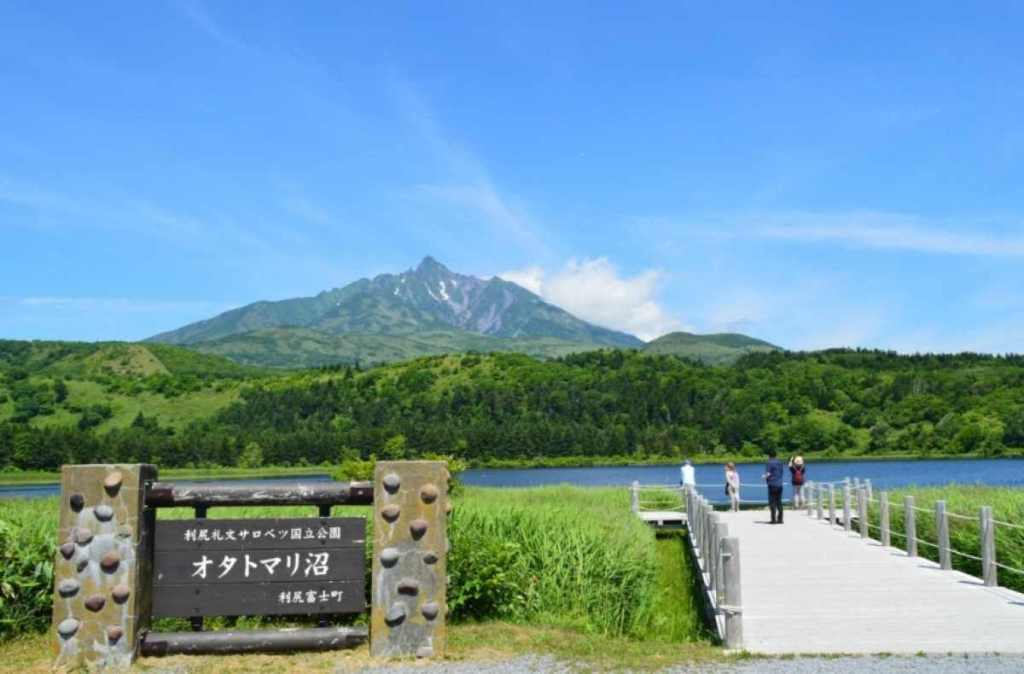
Next, we explored Otatomari Swamp. Unfortunately, Rishiri Fuji remained hidden from view. Thankfully, the vibrant orange blossoms of the Ezo Day Lilies welcomed us.

According to a Hokkaido tourism website, visitors should be able to see a view similar to the one depicted in the photo below. A well-known souvenir from Hokkaido is the confectionery “Shiroi Koibito,” which features the image of Rishiri Fuji on its packaging, as viewed from this location.
We then visited Senboshi Misaki Park, a natural park located at the southernmost point of Rishiri Island. Here, one can observe unusual rock formations resulting from the lava of Mount Rishiri entering the sea. Close to the parking area, there are shops offering kelp products from Rishiri Island. I bought natural Rishiri kelp for soup stock from a store operated by the local fishing port. It’s worth noting that ‘Rishiri kelp’ refers to kelp collected in Rishiri, Rebun, and Wakkanai, and this location offered the lowest prices, even compared to Rebun Island.

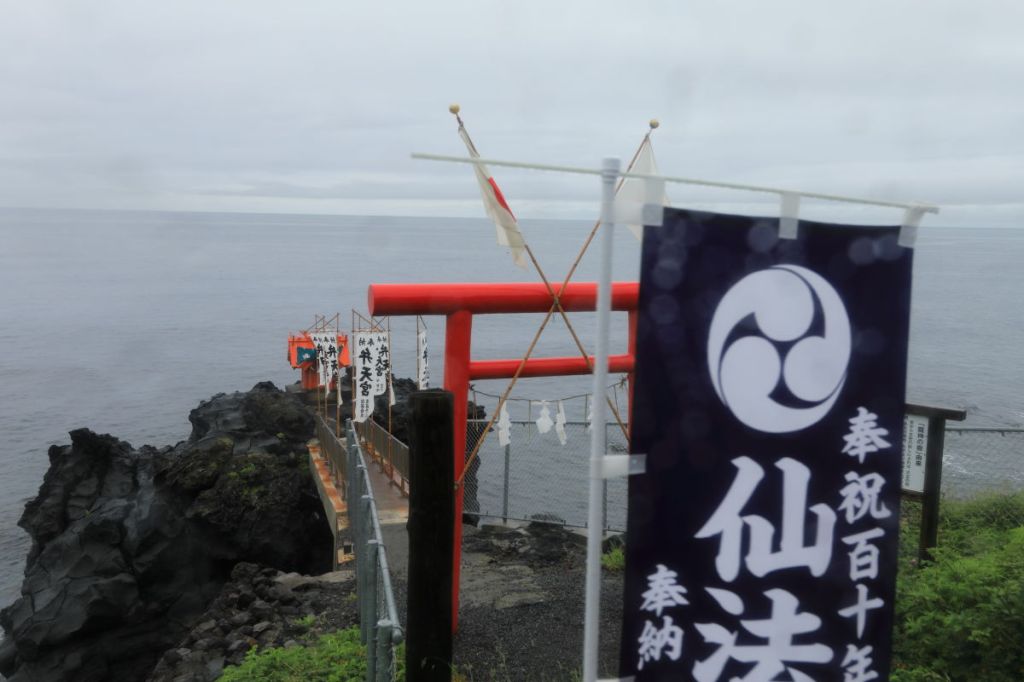
Gazing out of the car window en route to Oshidomari Port, we beheld the Benten Shrine, festively adorned and perched upon the Dragon God’s Rock.
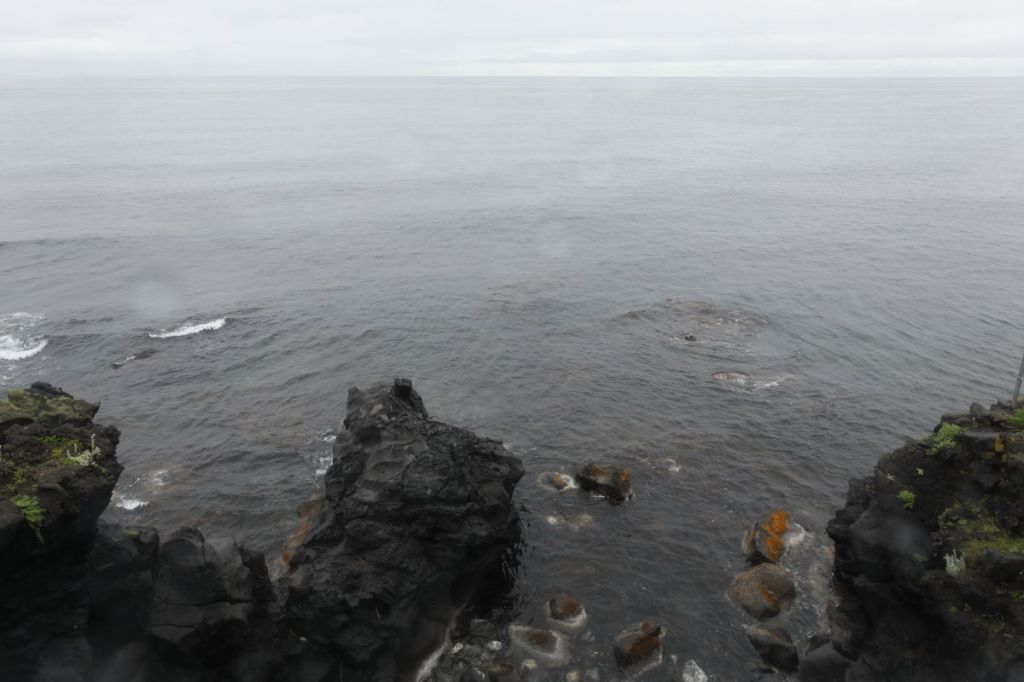
Next, we see the Sleeping Bear Rock, which resembles a bear sleeping face down.
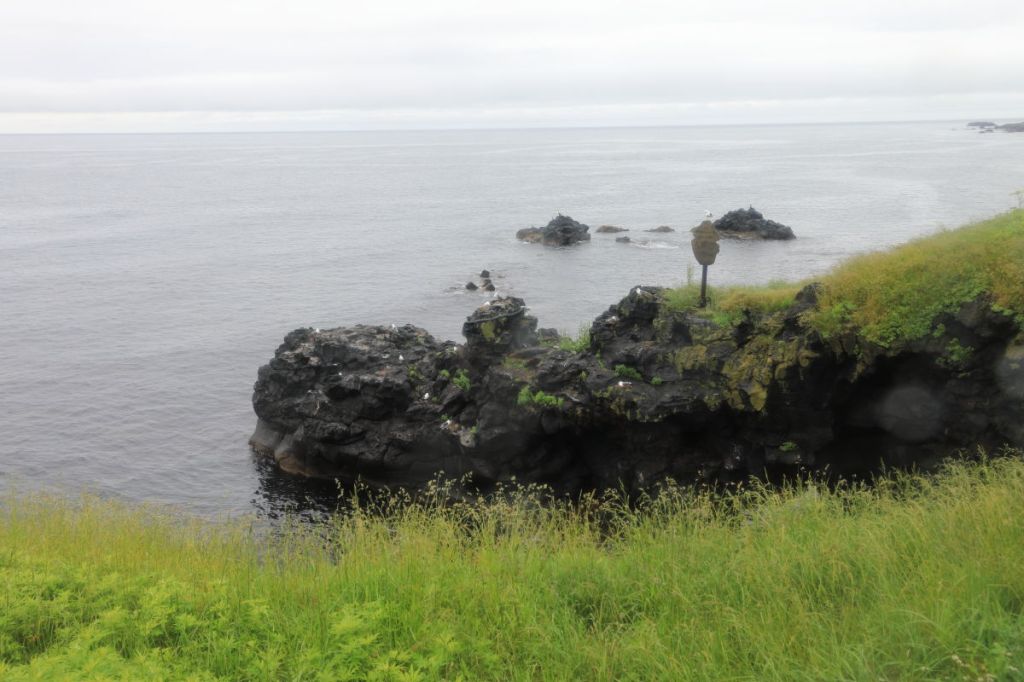
There is a rock with a human face and a white headband on top. Could it be a profile?
We reached our final stop, Oshidomari Port, at 12:15. With some time to spare before the ferry’s 13:15 departure to Rebun, I enjoyed lunch at Iso Yaki-tei, located just opposite the ferry terminal.
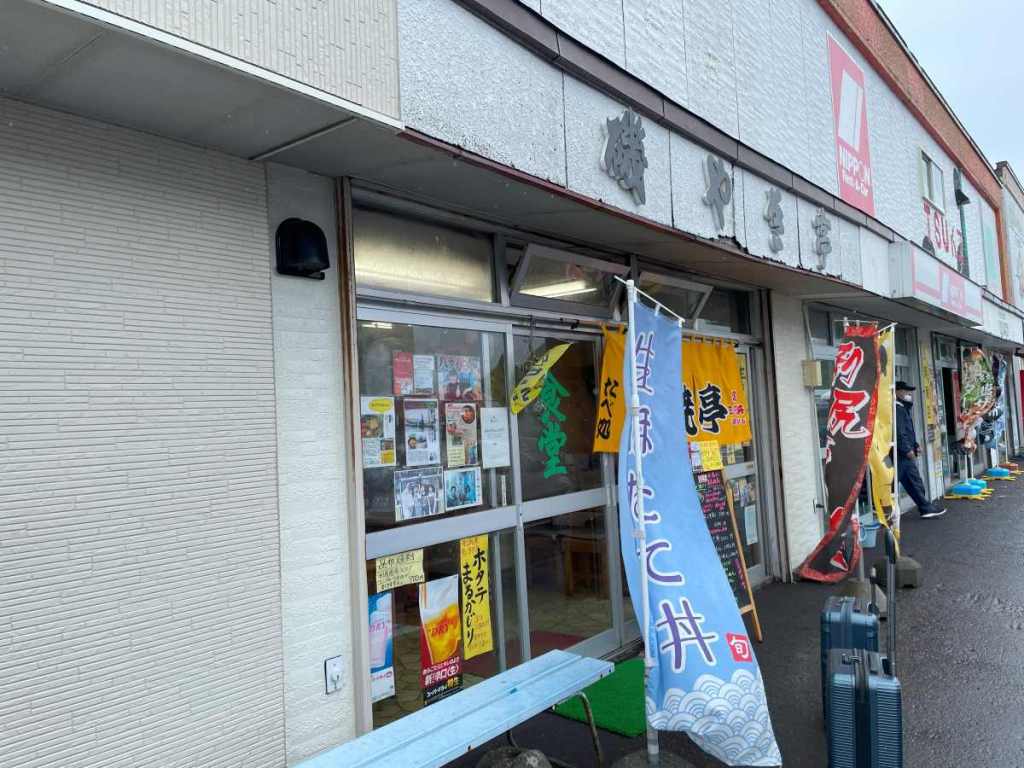
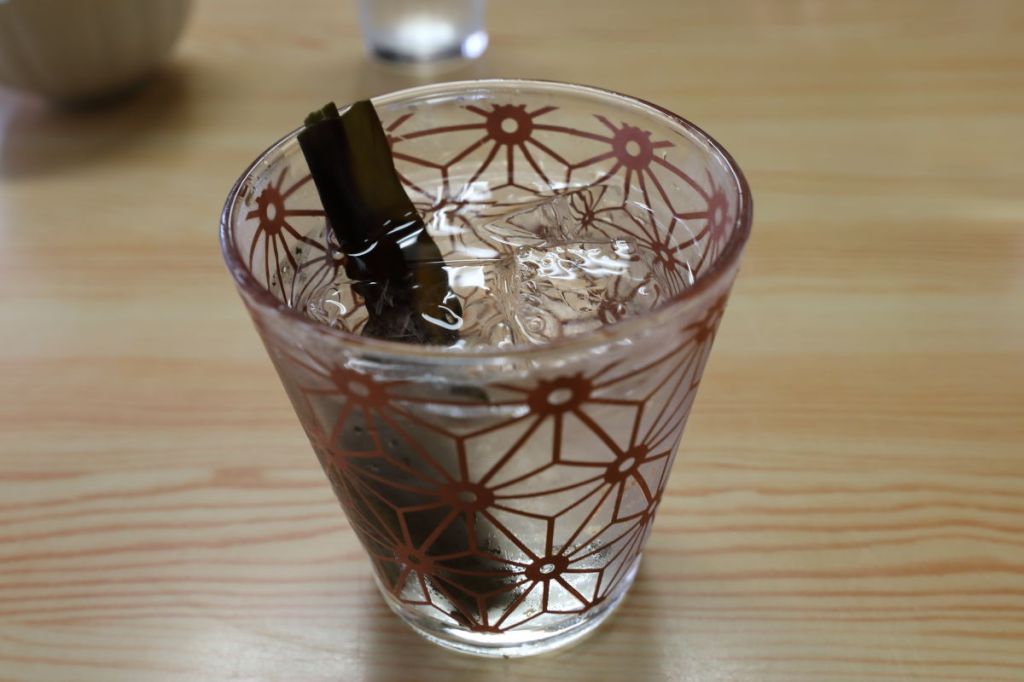
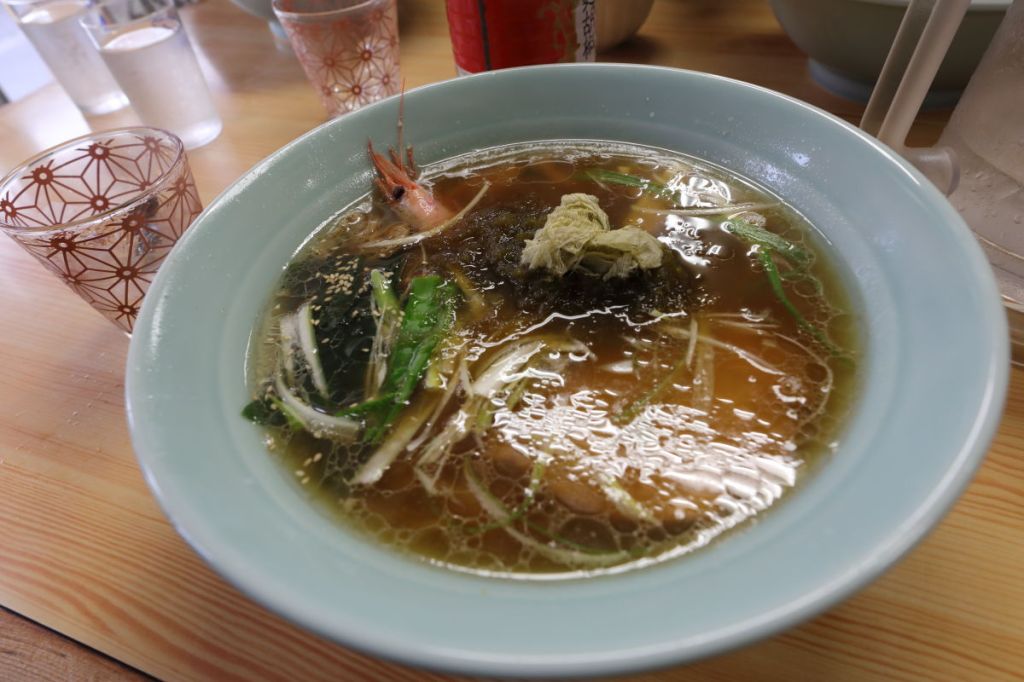
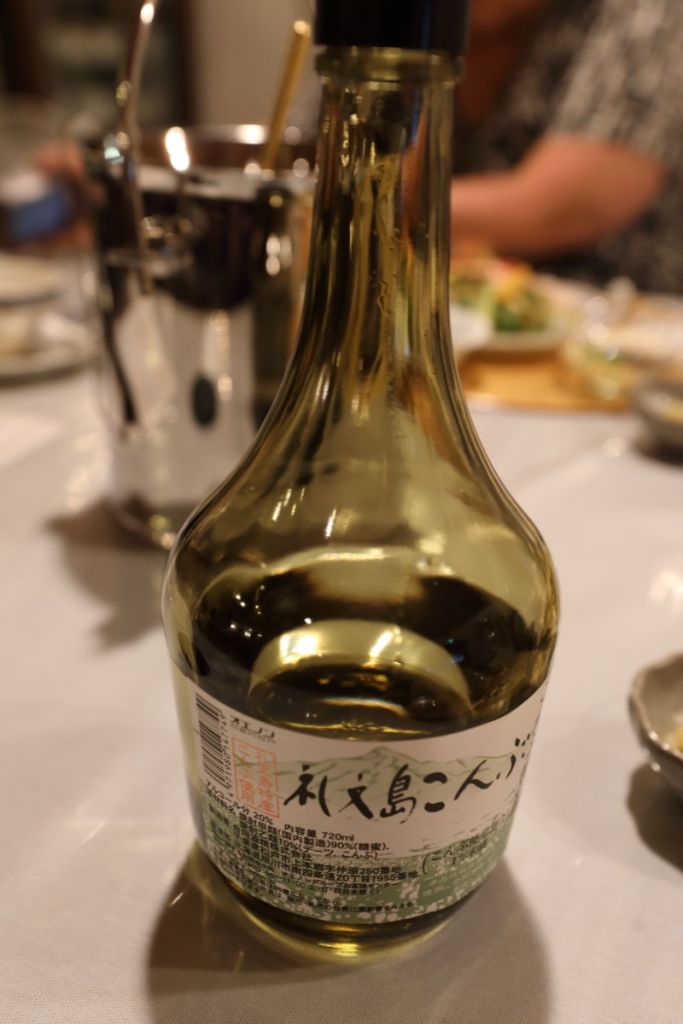
I initially intended to enjoy a sea urchin rice bowl, but due to the poor quality and high cost of the small urchins this year, I opted for Rishiri ramen instead, brimming with shrimp, scallops, and a variety of seafood, complemented by kelp shochu.
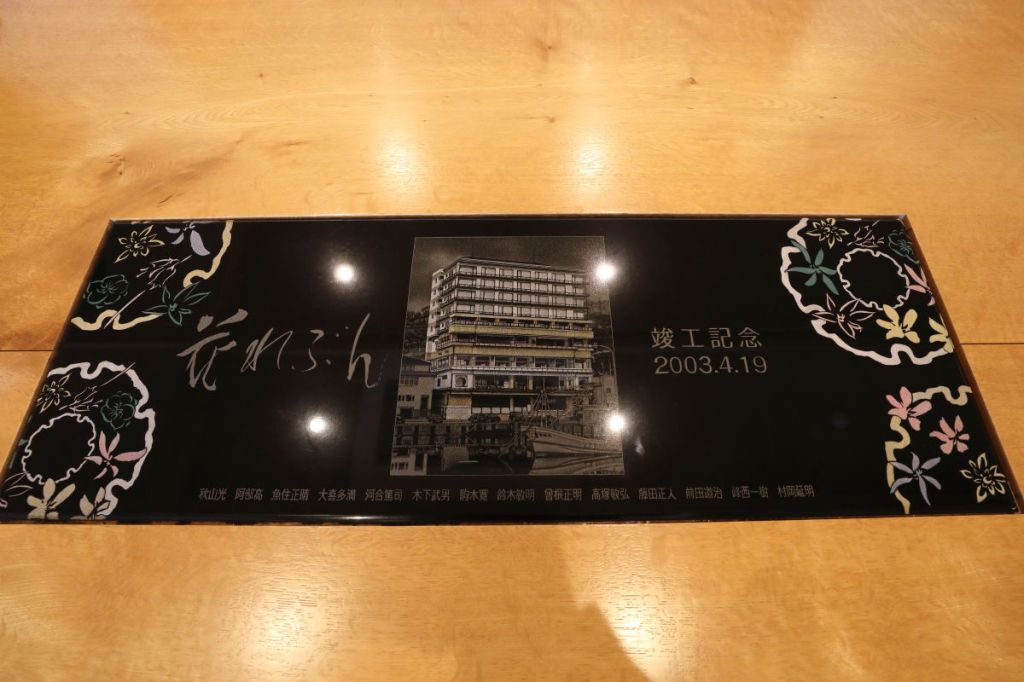
We reached Kafuka Port at 14:00 on the ferry that left Oshidomari Port at 13:15, bound for Rebun. I then proceeded to my overnight accommodation, Hana Rebun, conveniently situated near the port. Hana Rebun appears to offer the finest amenities and cuisine in the Rishiri-Rebun region.
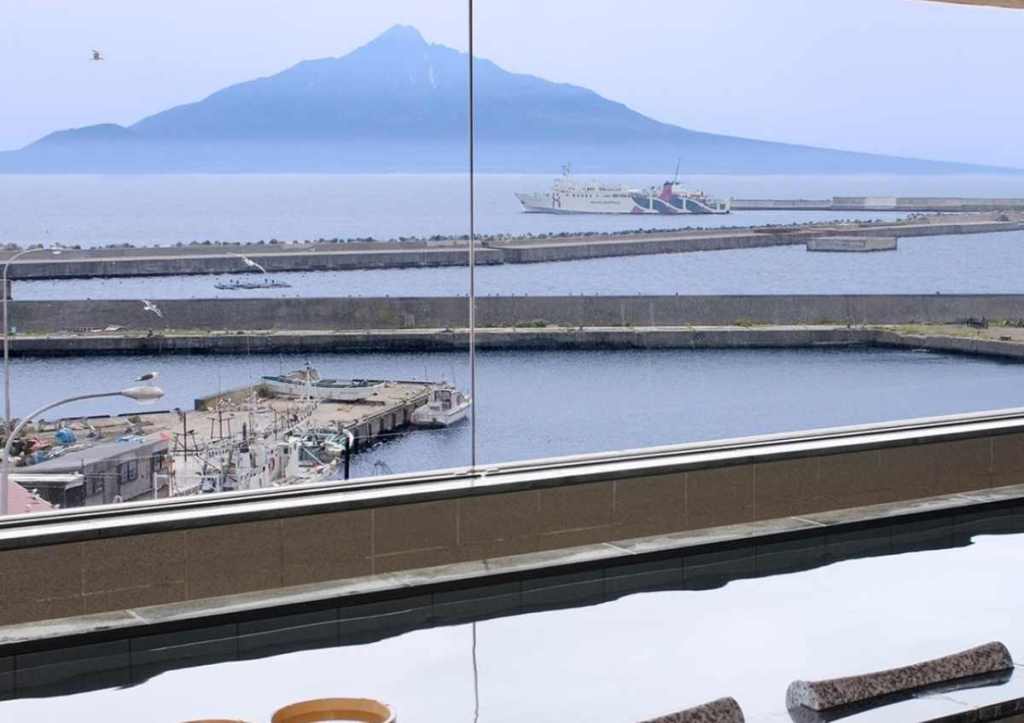
After taking a break, I headed to the hot spring. The water is a mix of sulfate and sodium chloride springs. The hotel’s website showcased photos with a breathtaking view of Rishiri Fuji visible from this location.
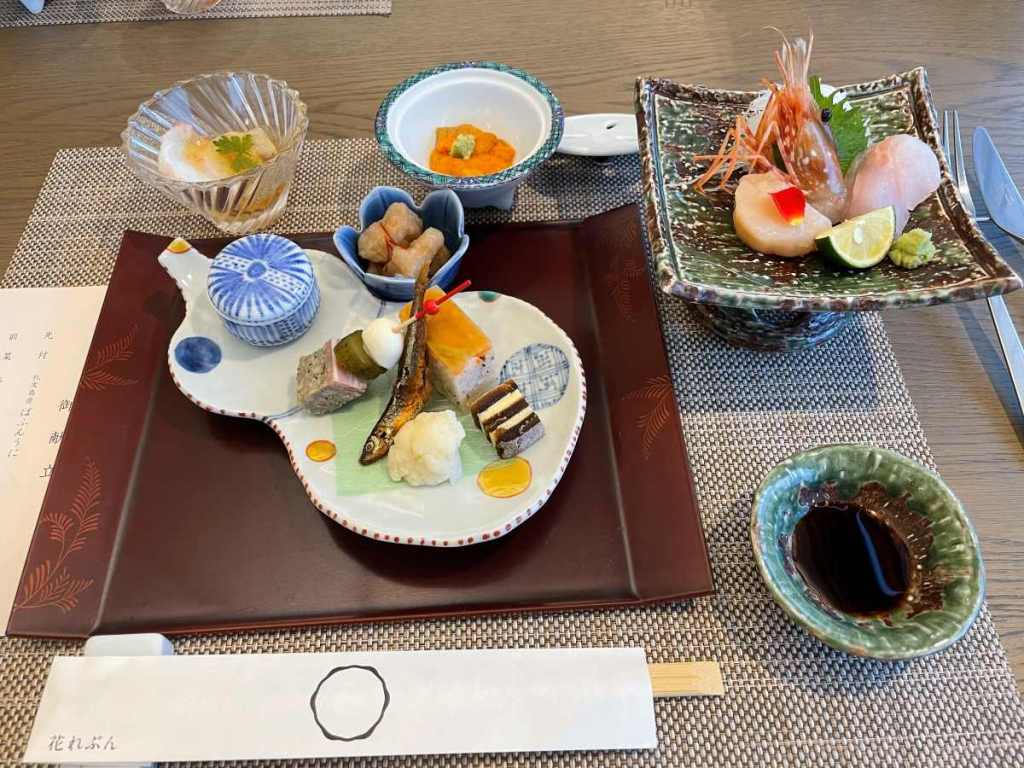
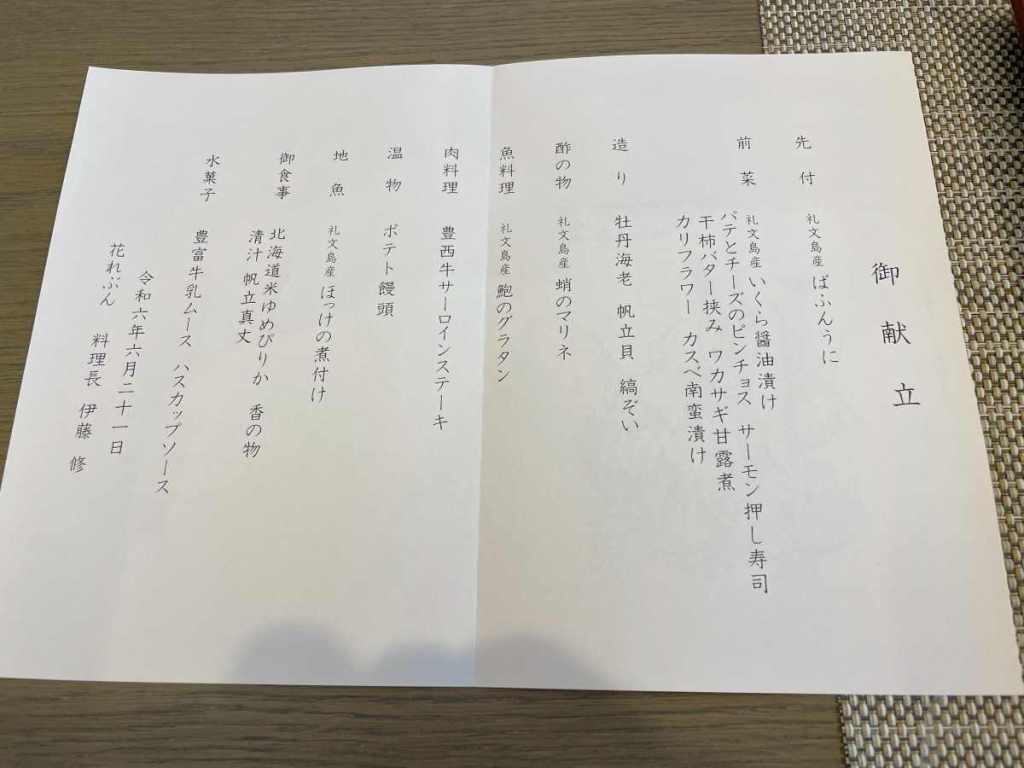
Dinner featured a multi-course seafood feast, including the standard dish of sea urchin (Ezo Bafun Uni). Given that the inn is operated by a seafood processing company, the seafood was outstanding in both quality and quantity.
Jun 22th (Sat)
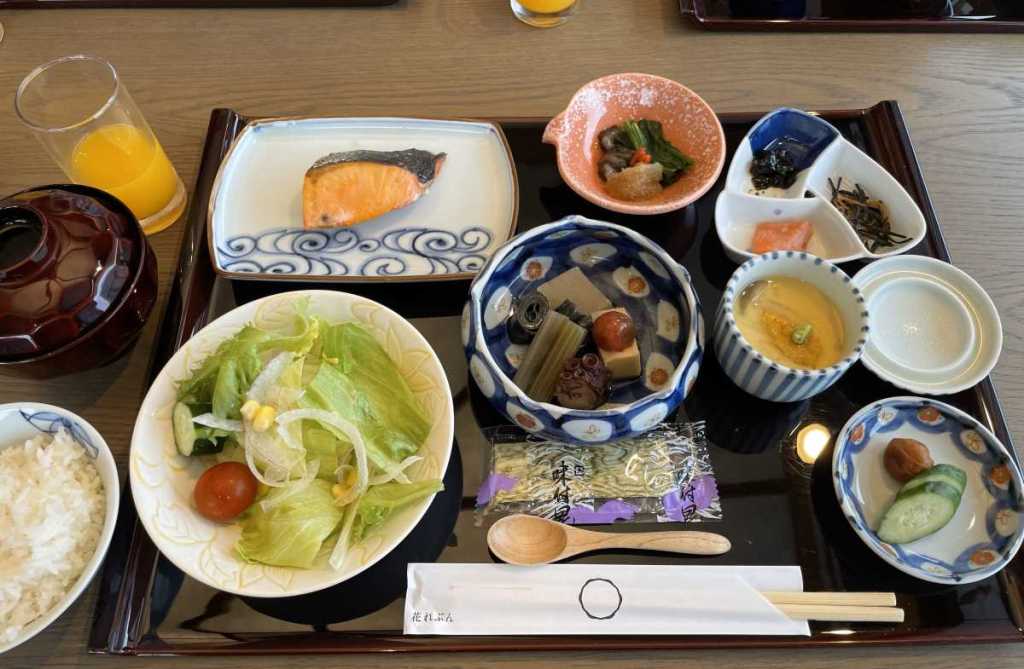
Following my morning bath, I enjoyed breakfast in the dining area. The chawanmushi, a steamed egg custard, was topped with a slice of sea urchin, and the thick, grilled salmon was rich and flavorful, providing me with energy for the day ahead.
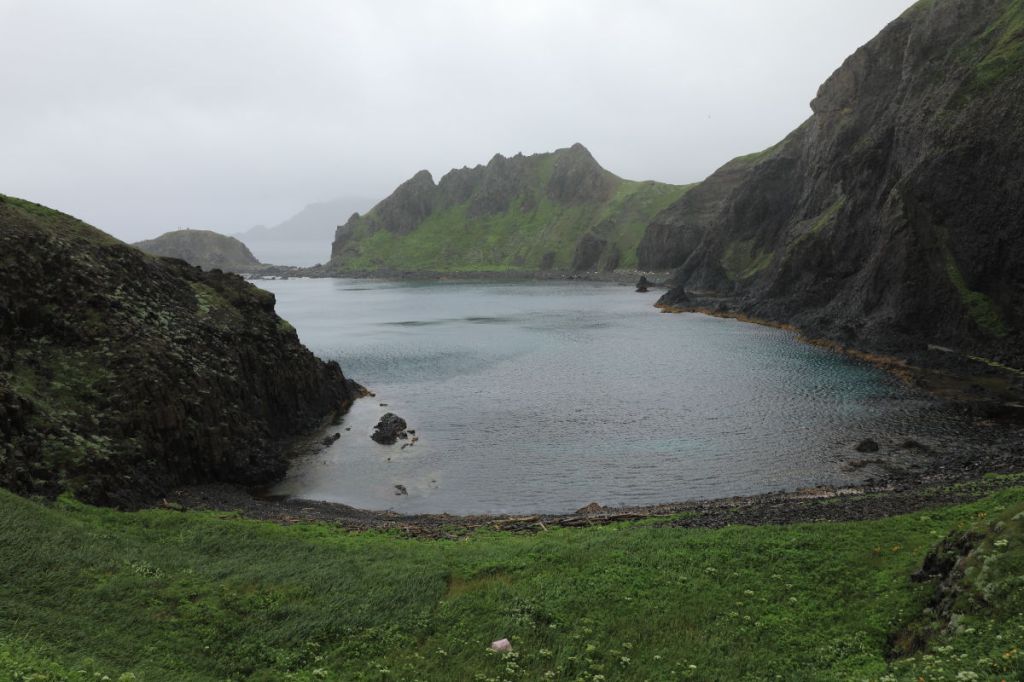
This morning, I embarked on a tour of the island aboard the ‘A Dream Floating Island Rebun’ sightseeing bus, which left Kafuka Port Ferry Terminal at 08:40. The first destination was Sukai Cape, also known as Clear Water Cape. True to its name, this cove is distinguished by its crystal-clear waters, reputed to be the most transparent on Rebun Island. Despite the serene appearance in the photograph, a robust wind was sweeping through, apt for Rebun’s reputation as a breezy isle.

Flower of the giant ash
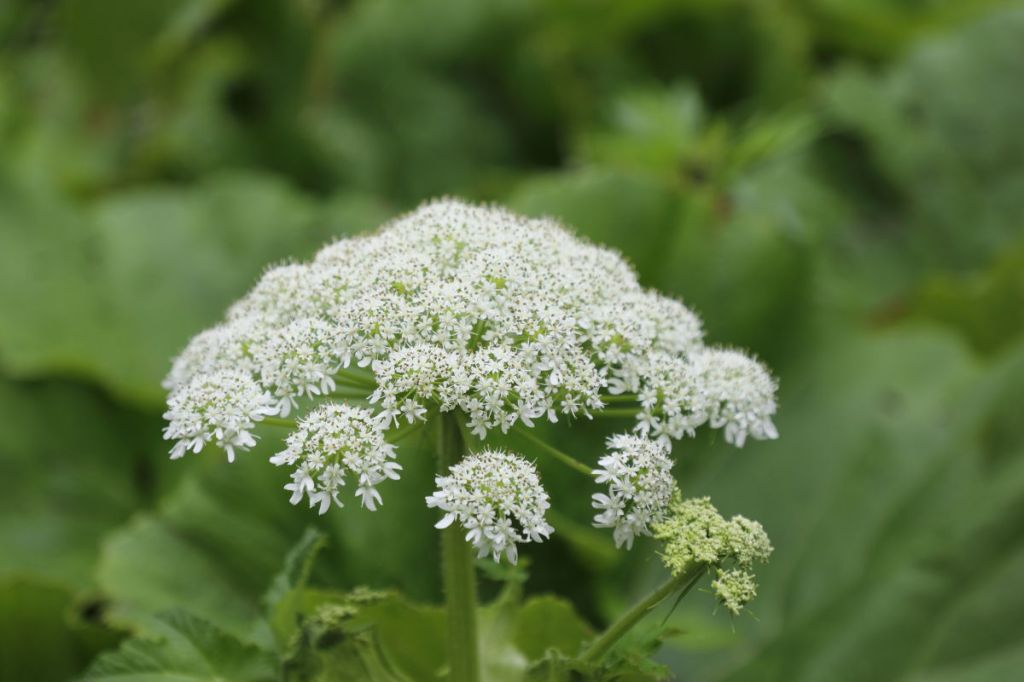
Giant ash and daylilies

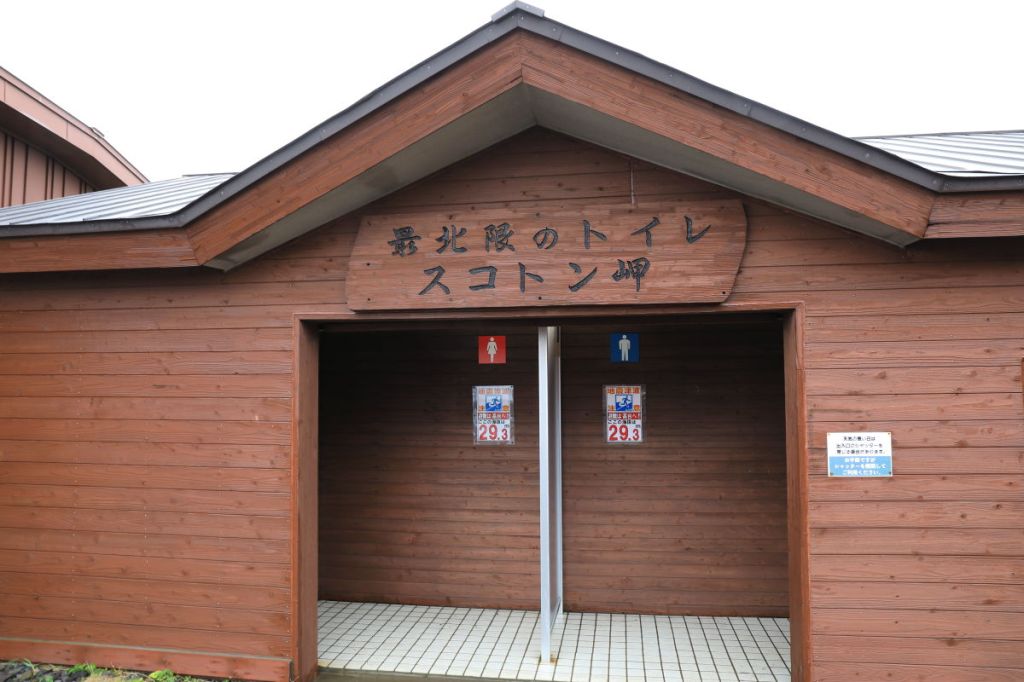
Our subsequent stop was Cape Sukoton. In the distance lies the deserted Todo Island, also known as Sea Lion Island. True to its name, it is a haven for sea lions, and it is also a site for sea lion fishing.
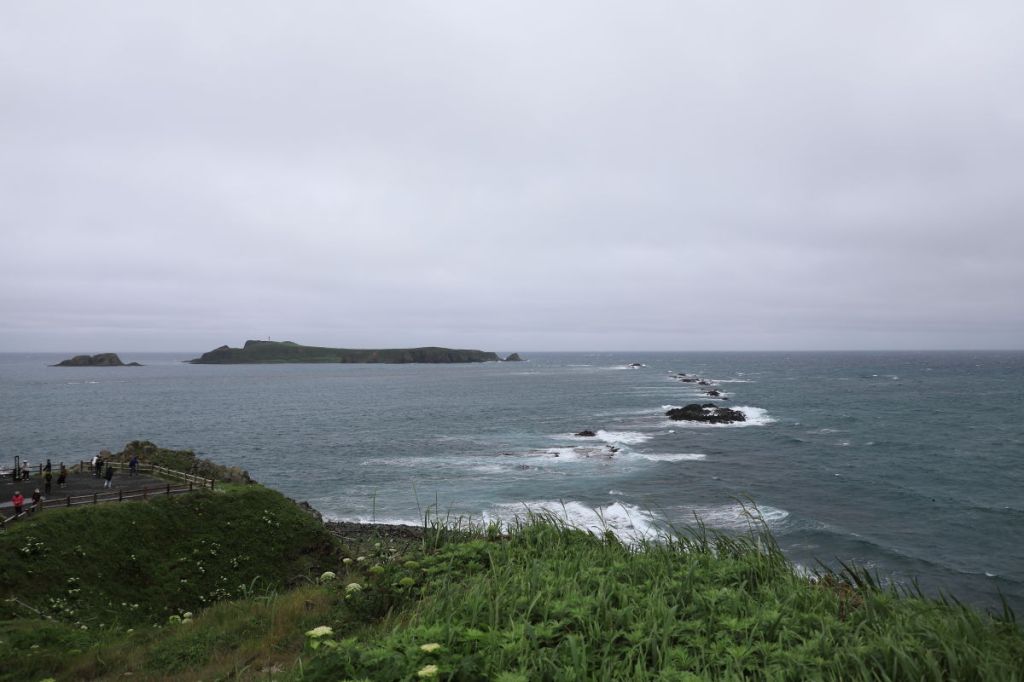
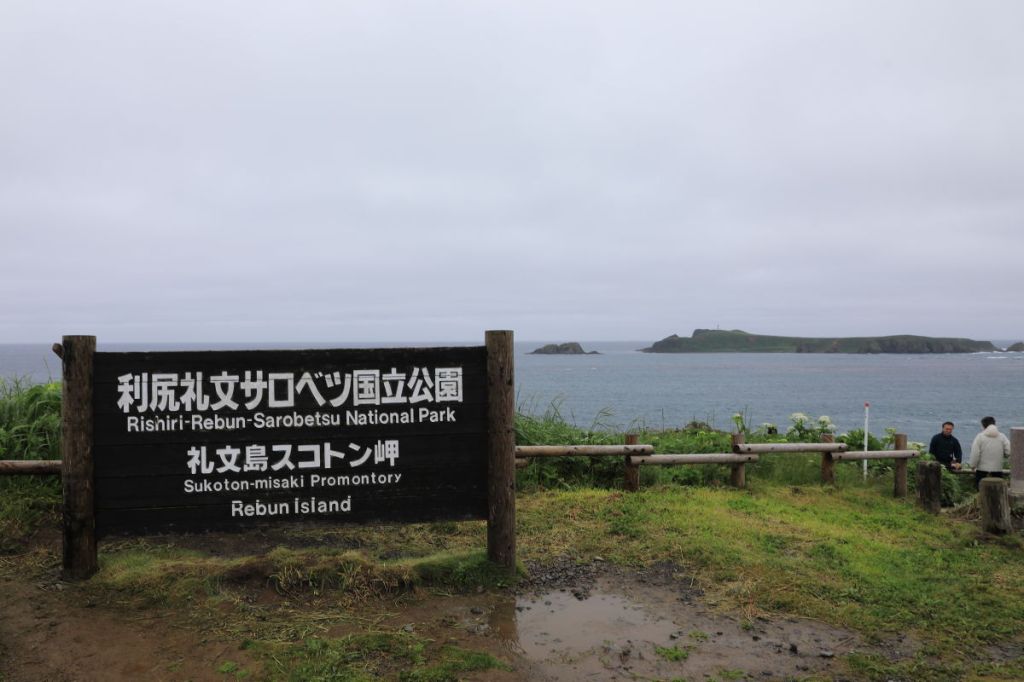
It’s very clean for a toilet at the end of the line.
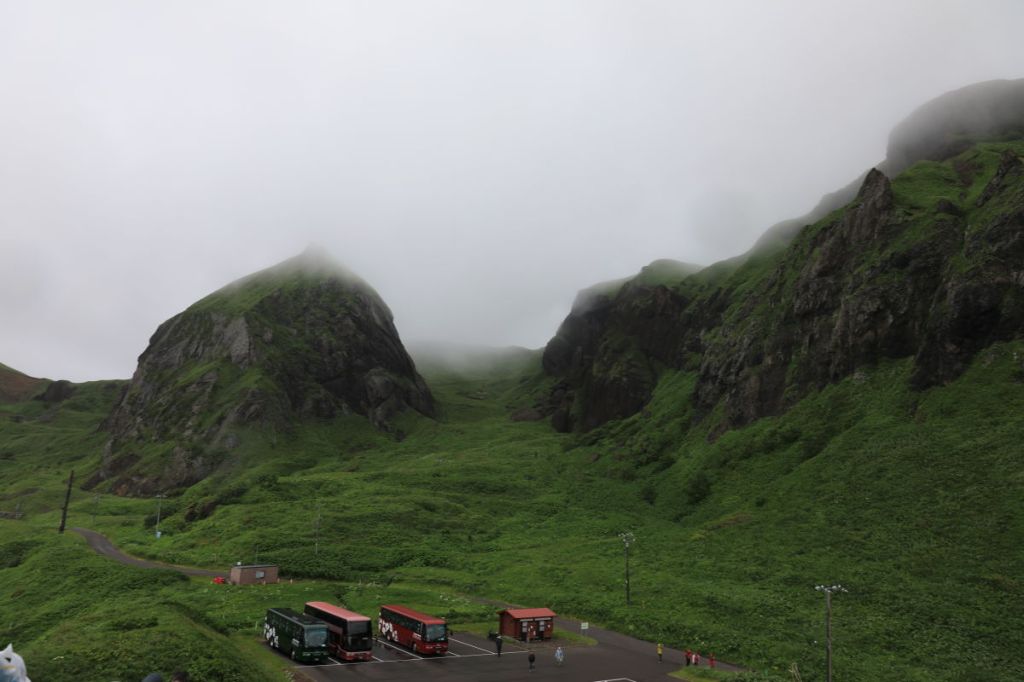
I purchased canned sea lions as souvenirs from the local shop, retraced my steps, and then proceeded to the Momodai Nekodai Observatory located on the west side. The rock known as Momodai (Peach Rock) is positioned to the center-left in the photograph.
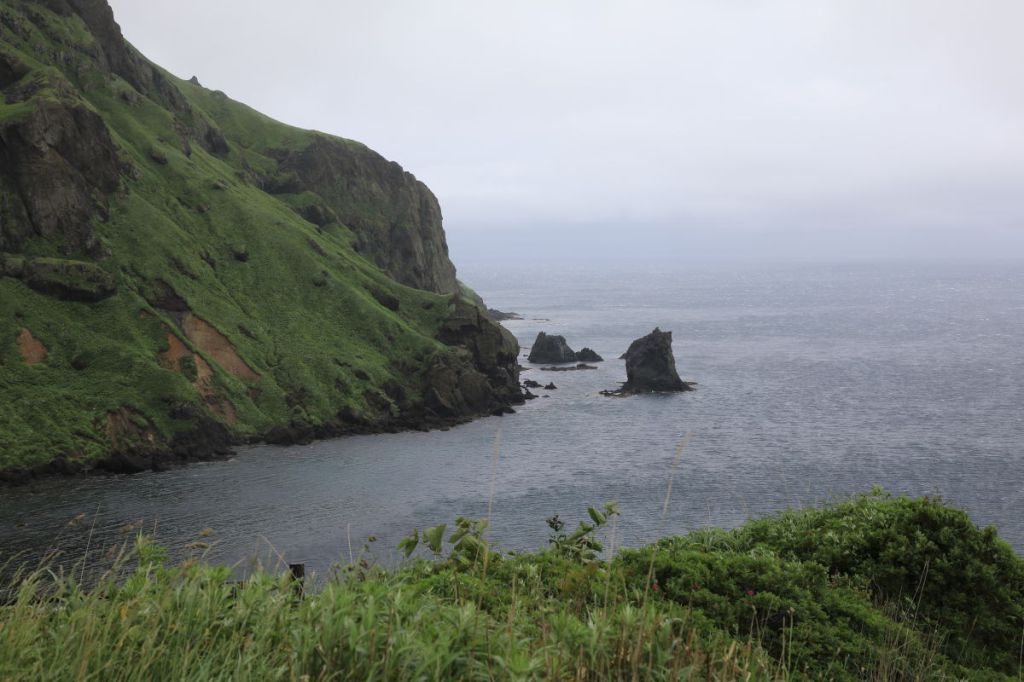
The rock formation that extends into the sea is known as Nekodai, or Cat Rock.
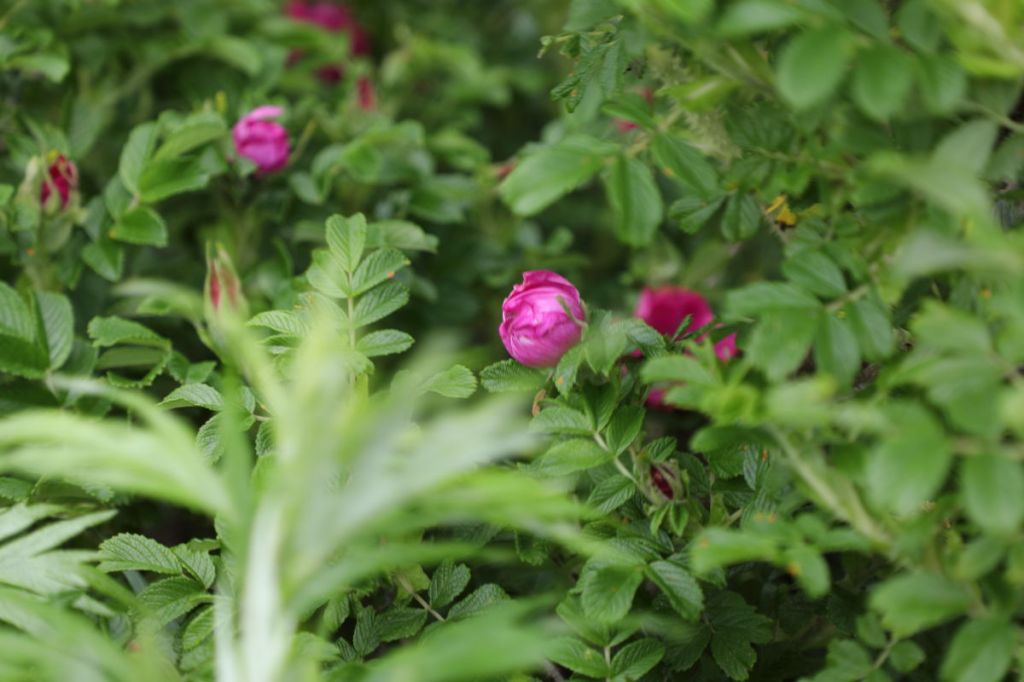
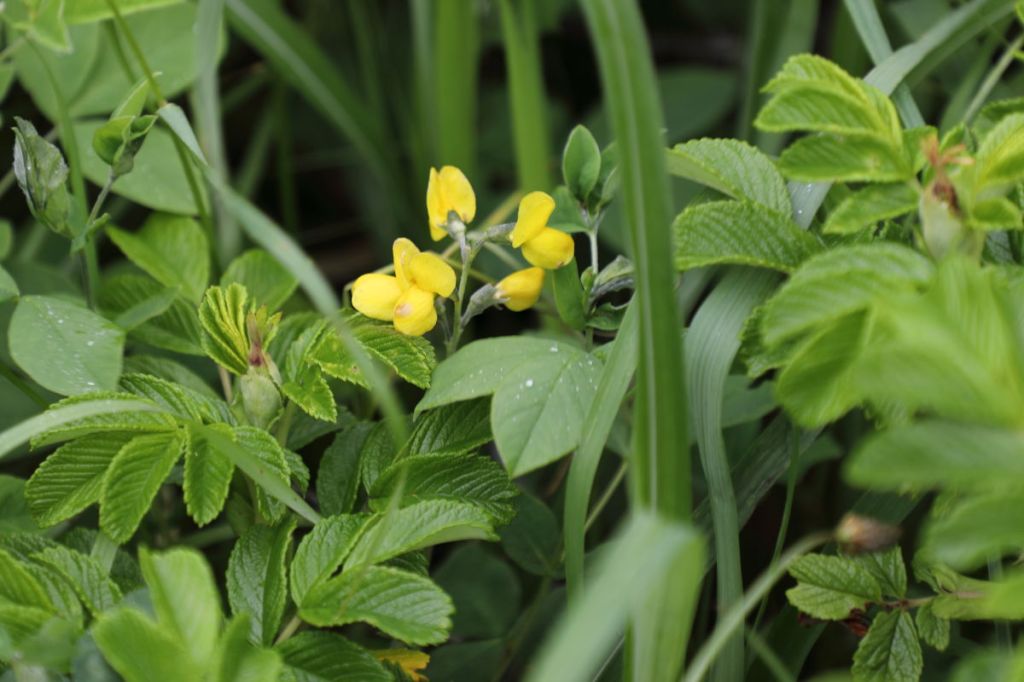
Rugosa rose buds
Japanese bush clover flower (Sendaihagi)
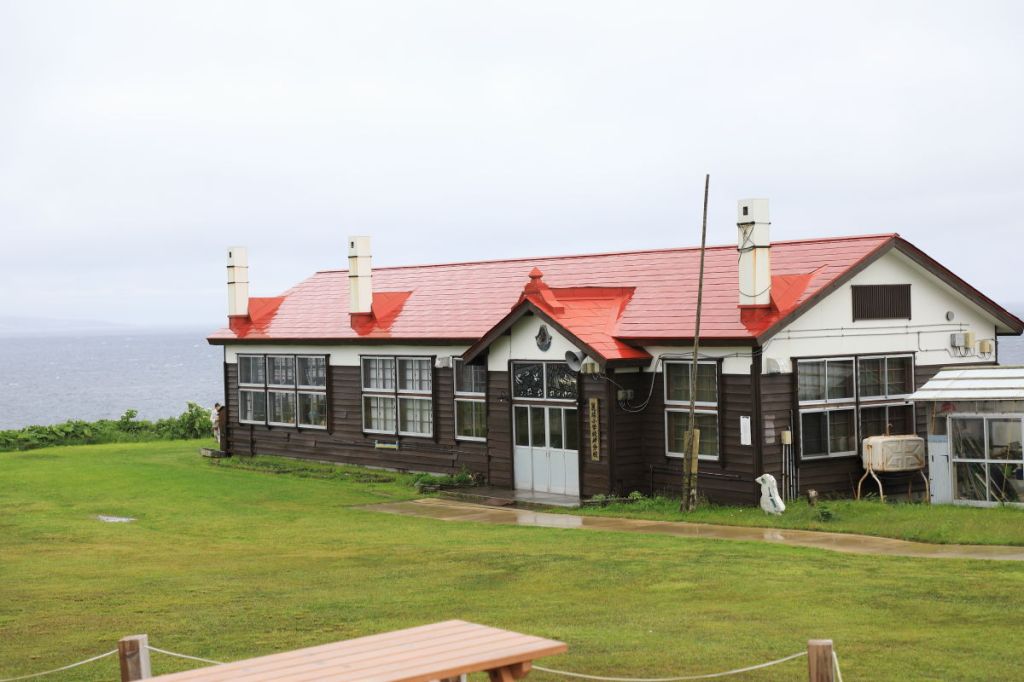
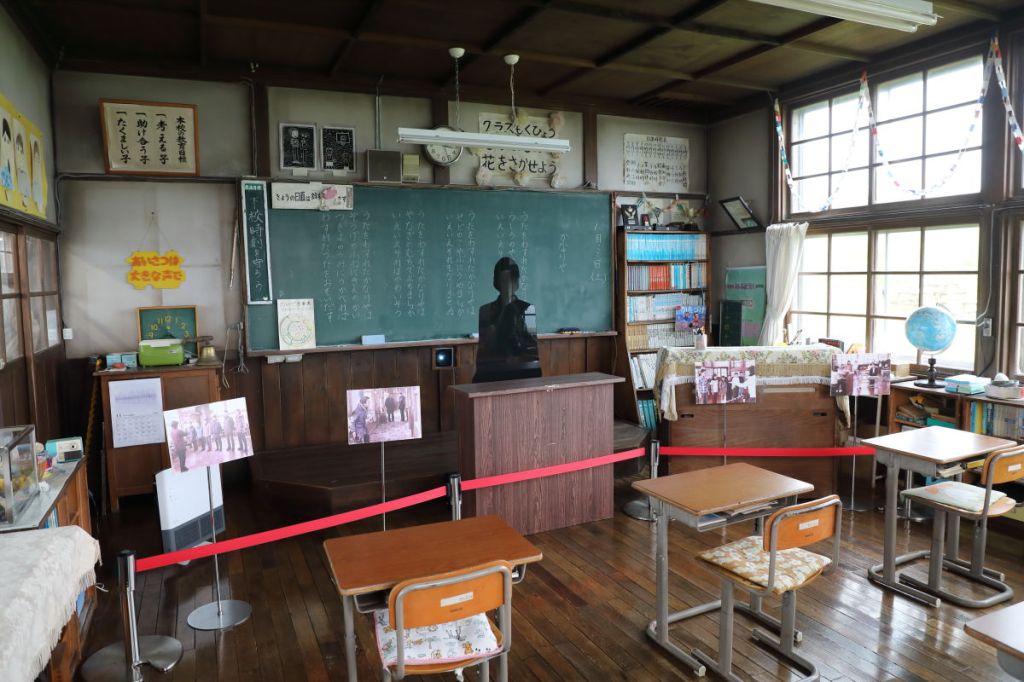
The final destination we explored was Kita no Kanaria Park, which conserves the set from the movie “Kita no Kanaria-tachi.” Since an appropriate wooden school building for the film’s vision was unavailable, a set was constructed. The inscription on the stone of the information board in the photograph was penned by the renowned Japanese actress Yoshinaga Sayuri. While Rishiri Island is not as visible as indicated on the sign, a small portion of the mountain’s base is discernible.

We made our way to the Kafuka Port Ferry Terminal and subsequently caught a hotel shuttle to the island’s northern side. The accommodation for my stay was the Petit Hotel Corinthian. It was quite remarkable to find such an establishment in such a remote northern setting.

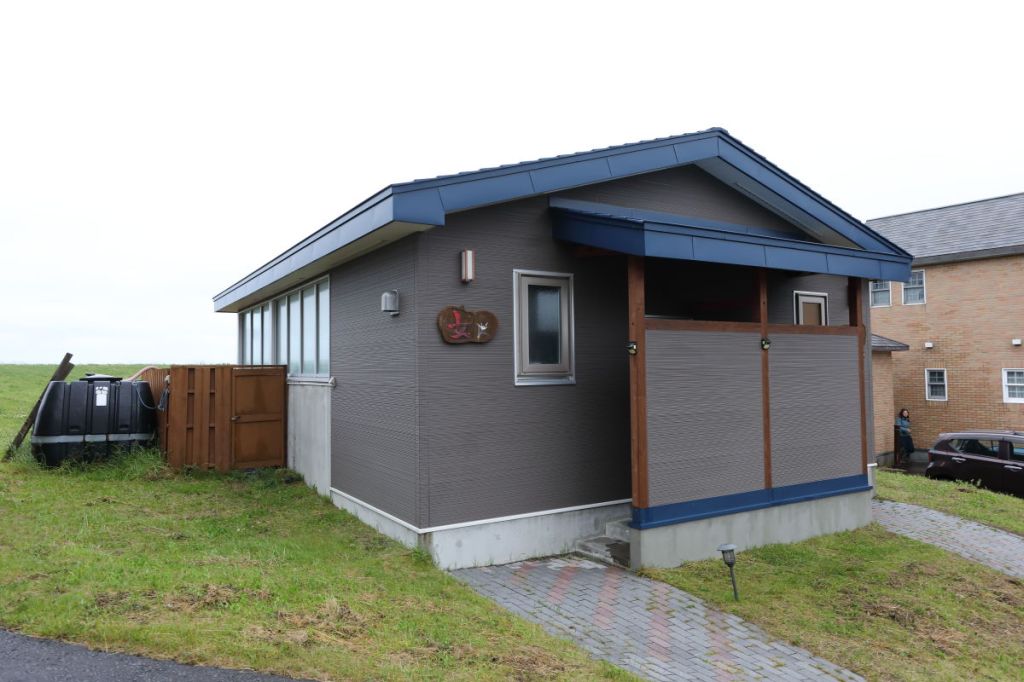
I stayed in the gallery in the annex.

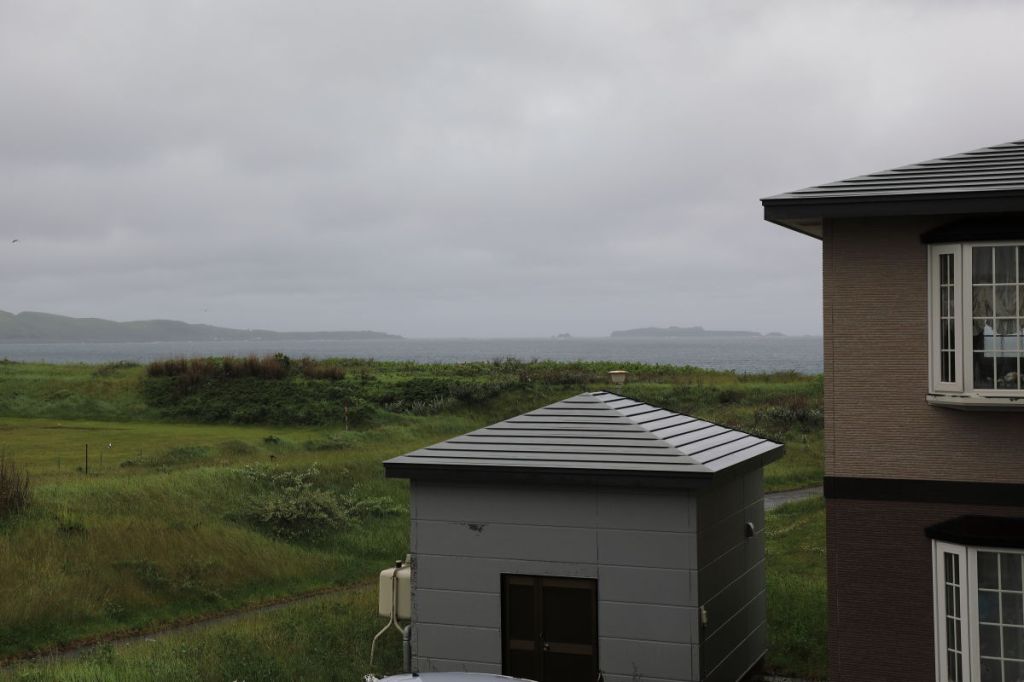
From the window of my room, I can see Cape Sukoton and Todo Island, which I visited today.
Opposite the building where I stayed, there is a separate hot spring facility, offering the same quality of spring water as Hana Rebun did yesterday. The hot spring cascades down like a waterfall from the rocks on the wall. Additionally, the main building is equipped with an indoor bath.
I was expecting a Western-style meal, but it was actually a Japanese-style feast featuring Ezo Bafun Uni (sea urchin), herring, and Atka mackerel sashimi. The herring and Atka mackerel sashimi were notably crisp and fresh.

Yesterday at lunch, I enjoyed some kelp shochu, and the bottle resembled the one shown in the picture above.
The hotel boasts 15 rooms, which appeared to be fully booked given the bustling crowd of guests in the dining room.
June 23rd(Sun)
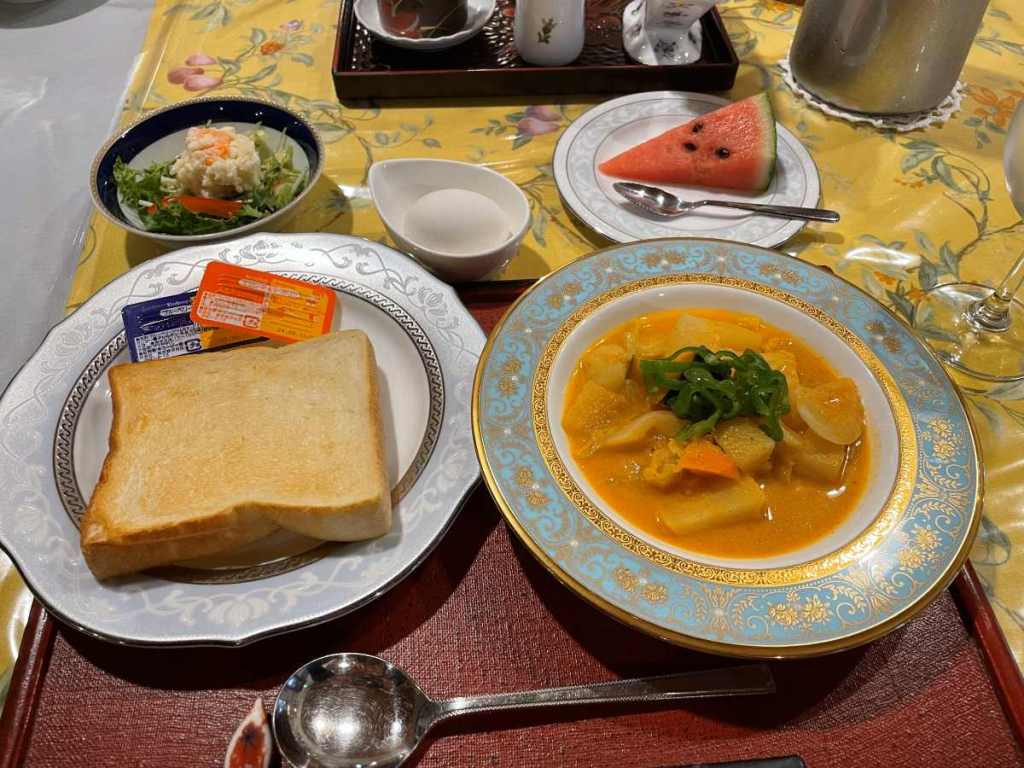
The breakfast consisted of a Western-style selection, featuring pot-au-feu, toast, potato salad, and boiled eggs, as anticipated.
Constrained by time, I couldn’t catch the shuttle bus to Kafuka Port Ferry Terminal and opted for a taxi instead. With some time on my hands, I visited the Rebun Town Local History Museum close to the port.
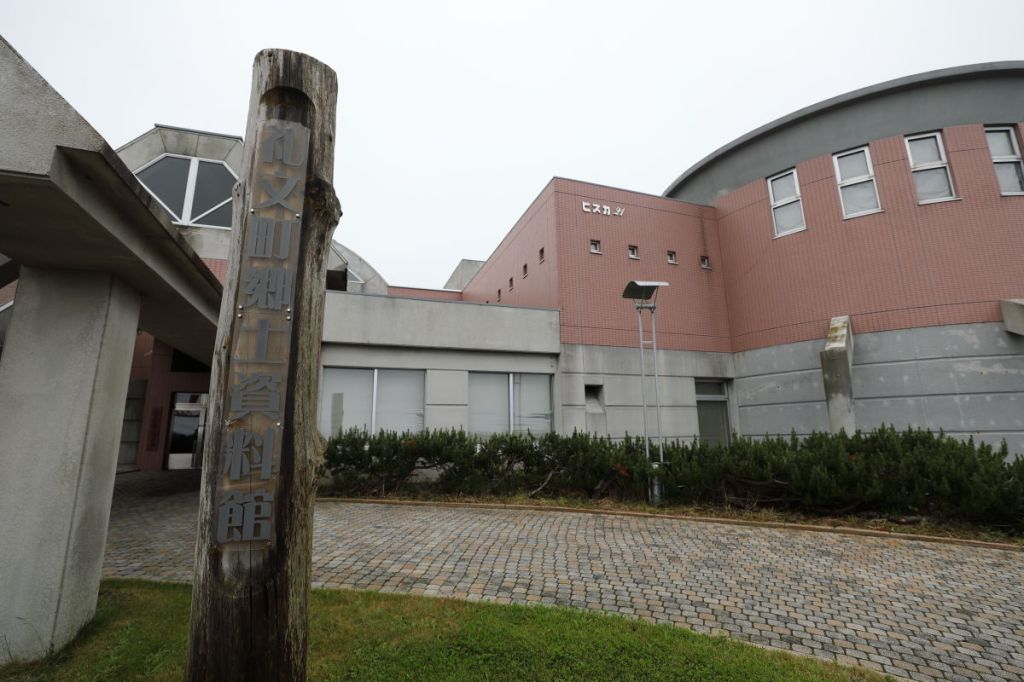
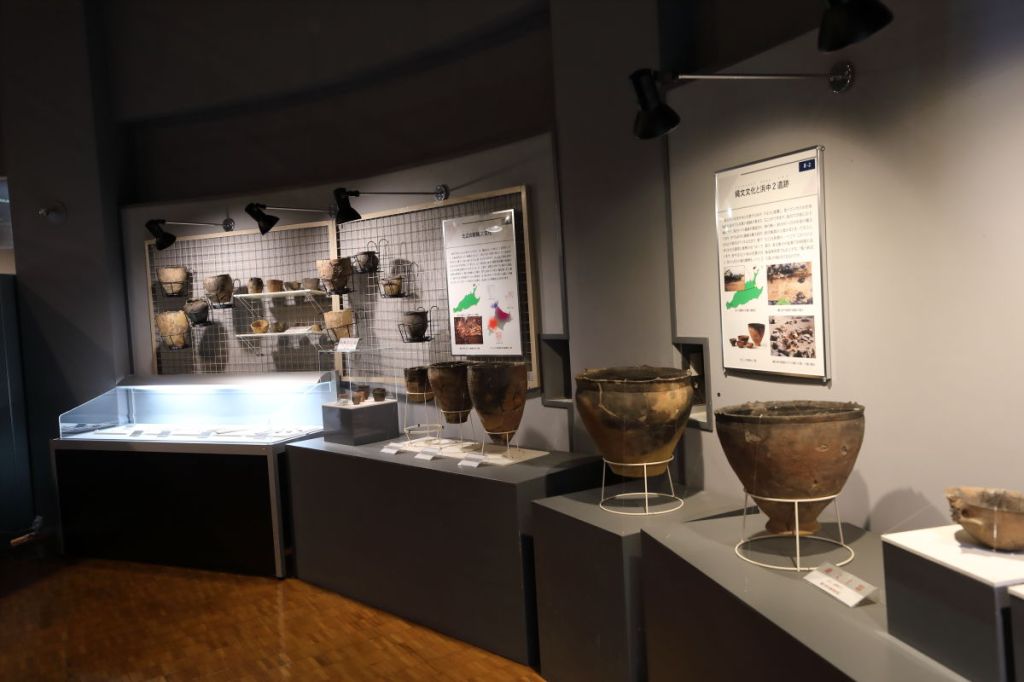
The museum houses an exhibition of Jomon period pottery unearthed on Rebun Island. It’s fascinating to discover that people have inhabited this remote northern island since ancient times.

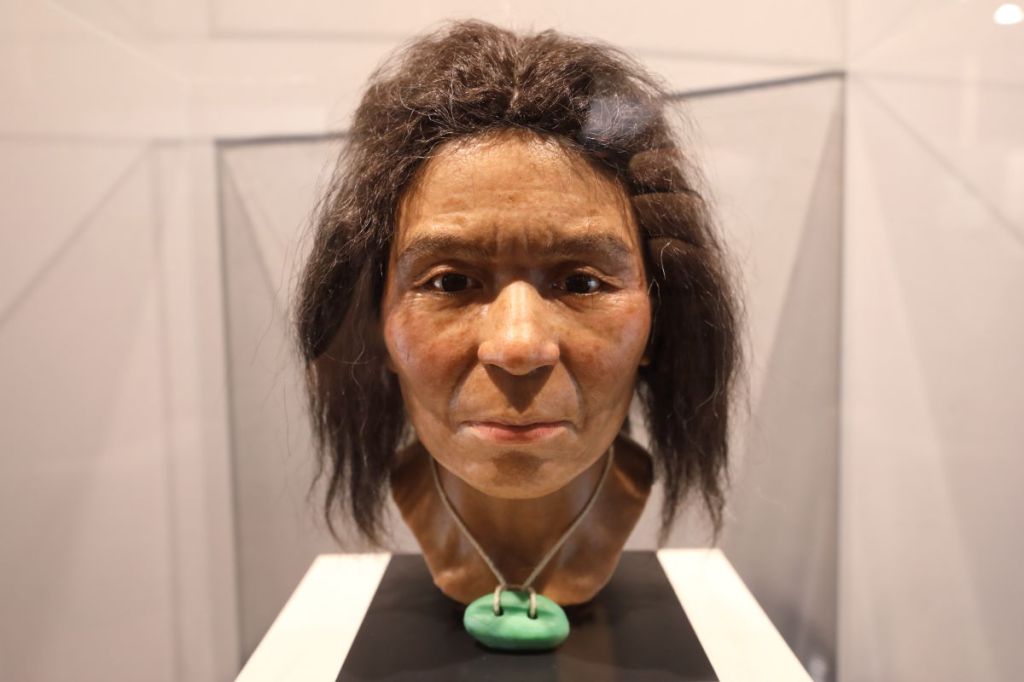
This reconstruction of a Jomon woman, based on a skull unearthed from a cemetery, shows facial features that could seamlessly blend into the modern era.
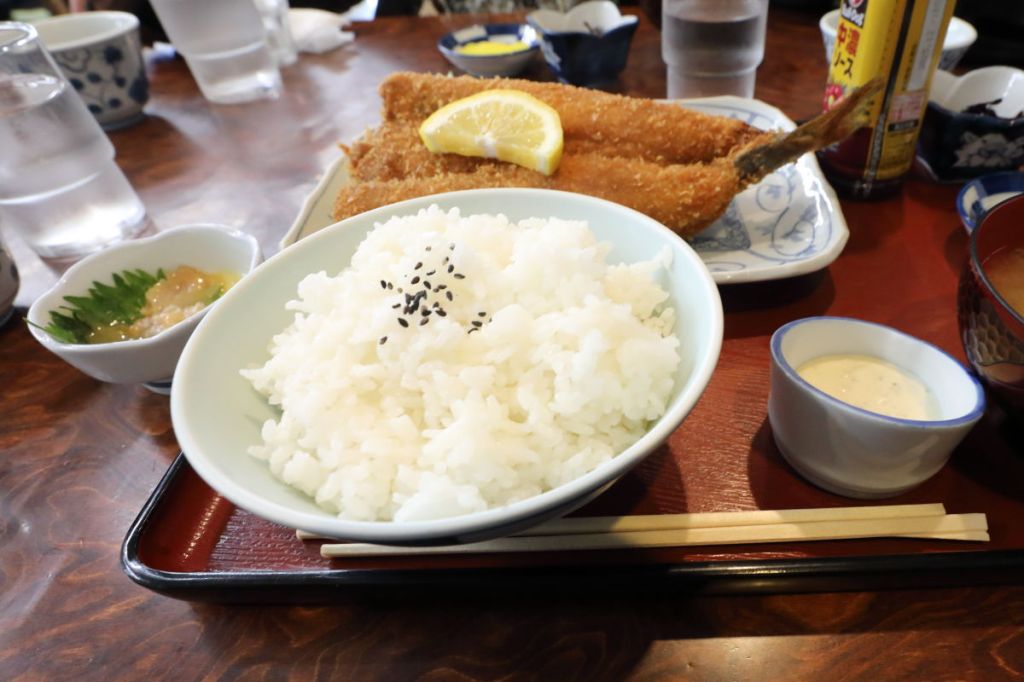
For lunch, I enjoyed a fried Atka mackerel set meal at Takechan Sushi, located on the second floor of the ferry terminal. The small dish to the left featured Steller sea lion fins in vinegared miso, an ideal accompaniment to drinks. Fried Atka mackerel, a regional specialty, is likely the finest fried fish you’ll ever taste.
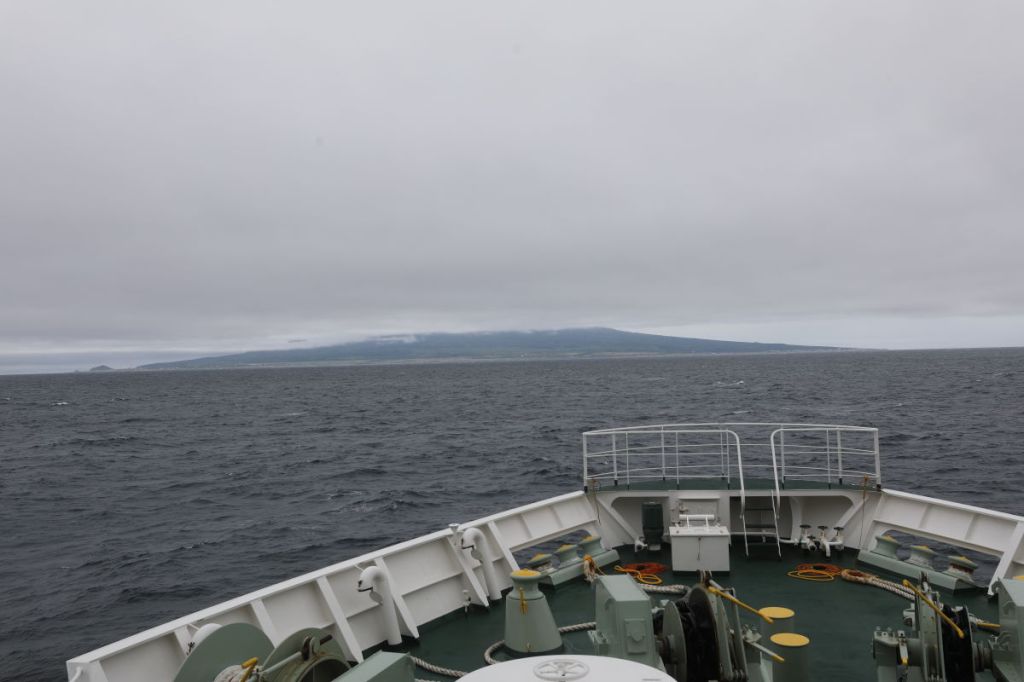
Returning, I boarded the ferry to Rishiri Kutsugata Port, which left Kafuka Port at 12:50. My journey took me from Rishiri Airport to Haneda Airport via Sapporo Okadama and Sapporo Chitose Airports. From the ferry’s bow, the base of Mt. Rishiri Fuji was visible.
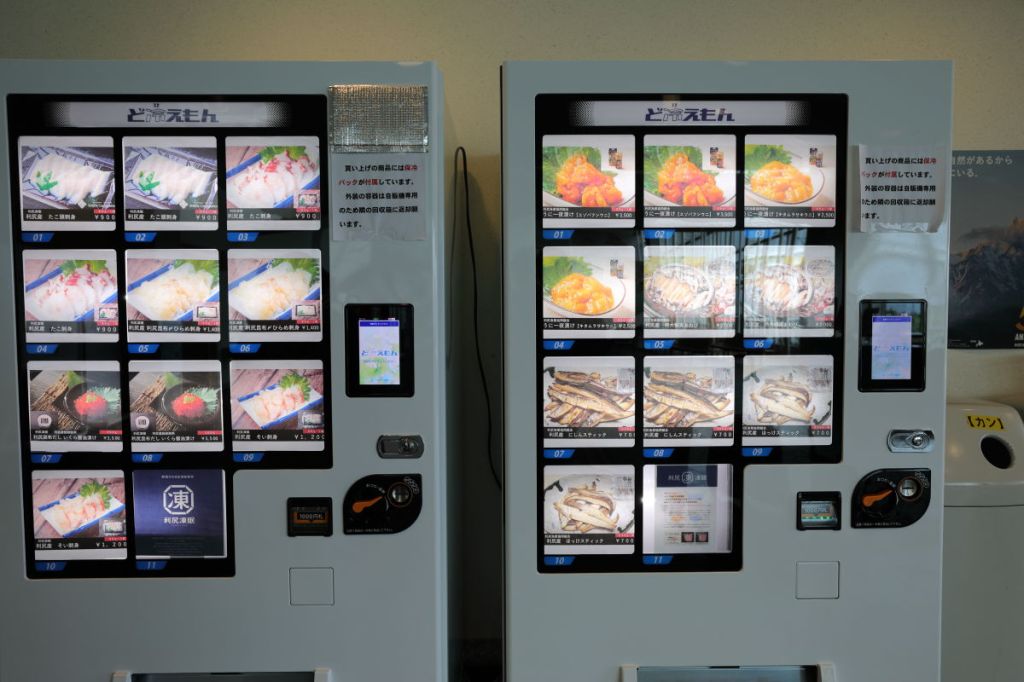
Upon disembarking at Kutsugatake Port, I was greeted by a local bus, which I boarded for Rishiri Airport. With nearly two hours before my flight, I purchased a beverage from the second-floor shop. To my surprise, adjacent to it was a vending machine offering seafood, complete with frozen bags.
The return flight was also an ATR42-600 propeller plane. While on the bus to the airport, the clouds thinned and the snowy valleys on the summit of Rishiri Fuji became visible, but by the time we departed, they had disappeared again.
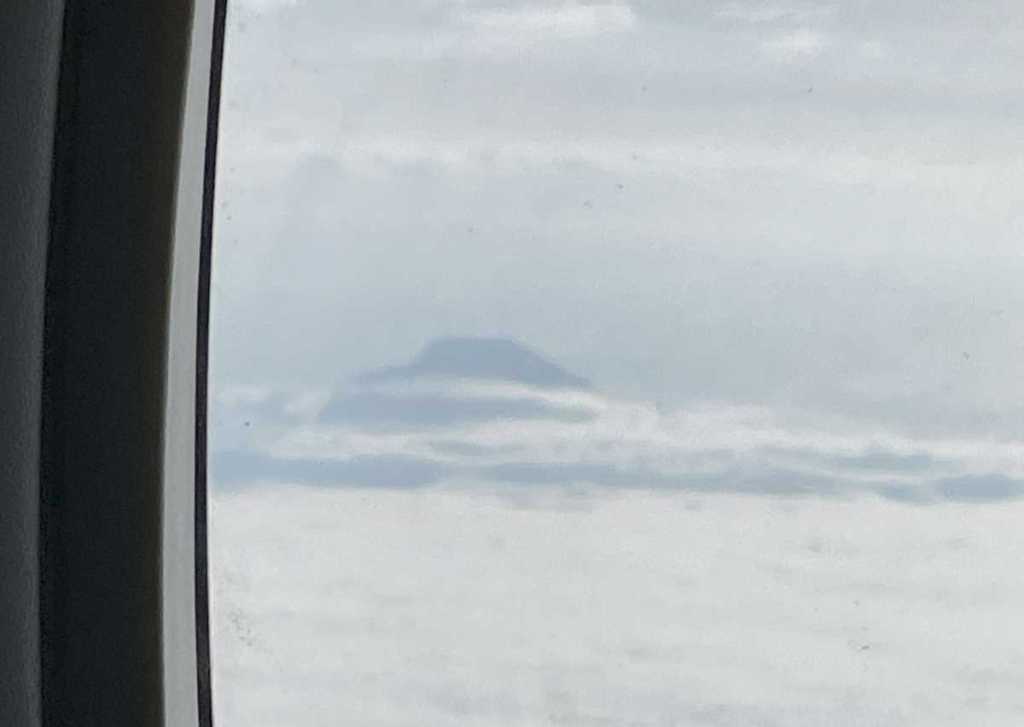
The sole comfort was that once we ascended above the clouds in the propeller plane, the mountain peaks emerged into sight. Regrettably, the photographs were blurry as they were taken through the window using my smartphone.
Despite the absence of significant problems like flight cancellations, the poor weather obstructed the full view of Rishiri Fuji, preventing me from seeing the splendid scenery. Nevertheless, the opportunity to relish the island’s hot springs and the exquisite seafood of Rishiri and Rebun made the trip worthwhile.
 旅好き爺の旅行記
コメントを残す