

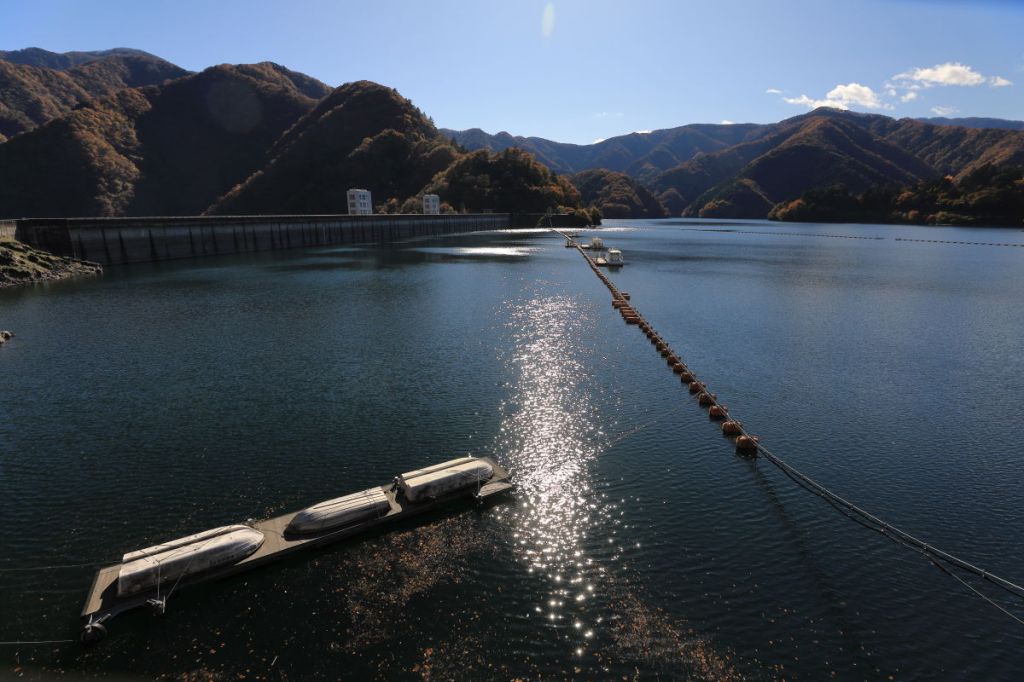
From November 19th to 20th, I embarked on a journey to Okutama, a place where the autumn season is in full swing. I traveled via the Chuo Expressway from Hachioji JC, transitioned to the Ken-O Expressway, and took the Hinode IC exit towards Lake Okutama using the local roads. The trip to Lake Okutama, a man-made lake formed by the Ogouchi Dam blocking the Tama River, took just under two hours. Known officially as Ogouchi Reservoir, it is overseen by the Tokyo Metropolitan Government Bureau of Waterworks and serves as one of Tokyo’s water sources.
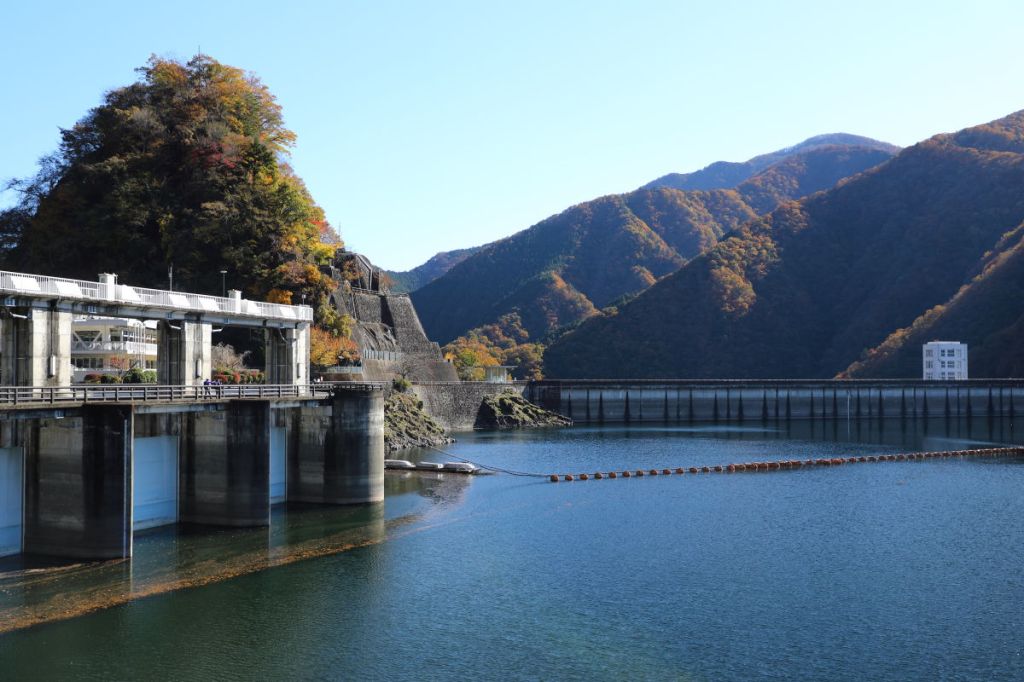
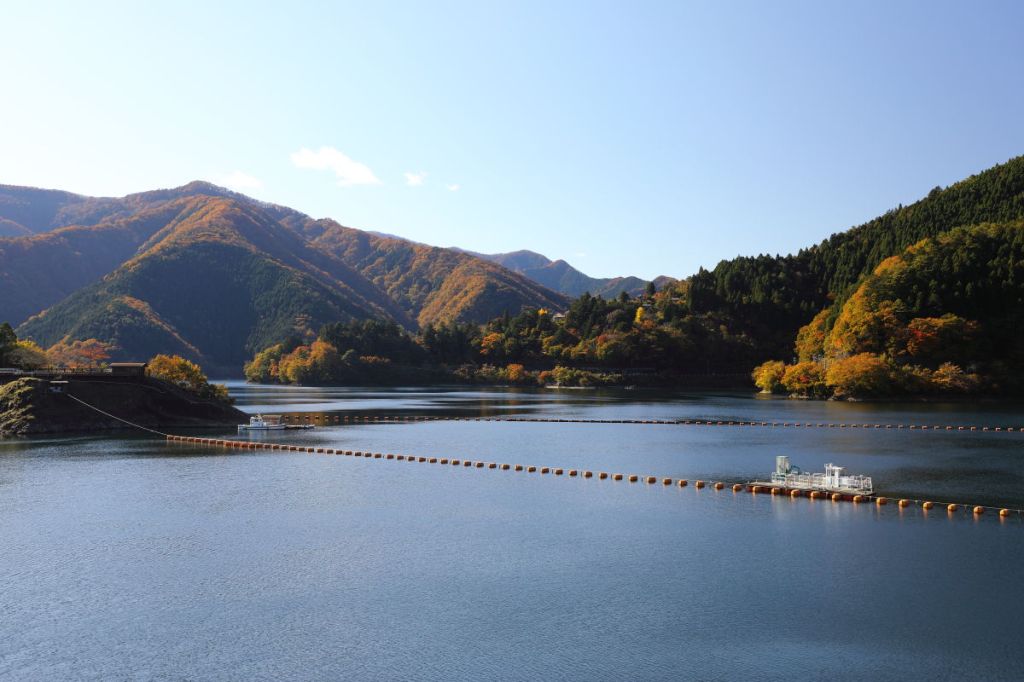
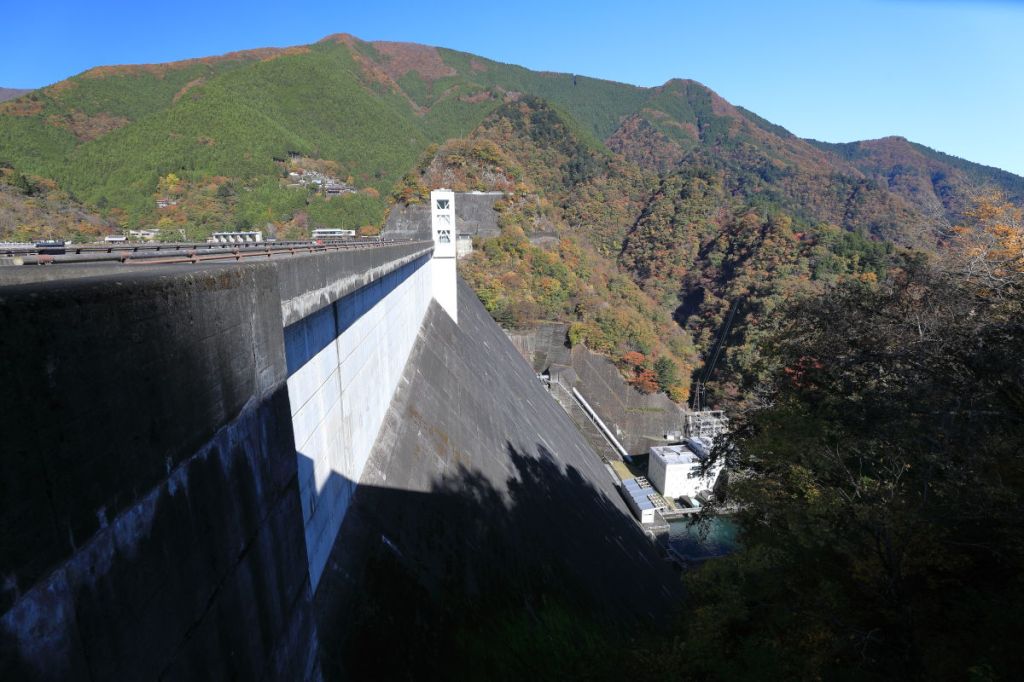
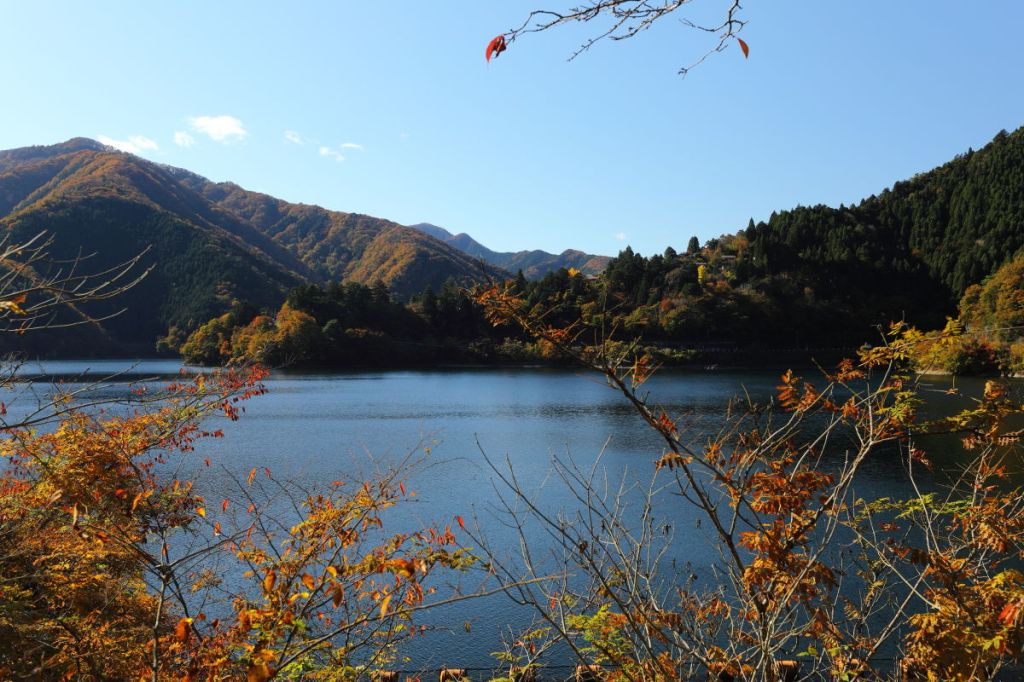
The autumn sunlight reflects off the lake water, creating a sparkling, beautiful sight.
Strolling around the lake, I realized it was lunchtime, so I made my way to Yama no Furusato Mura via the Okutama Loop Road. Approaching a restaurant named Yamasemi, I was welcomed by the breathtaking autumn foliage.


Upon approaching the shop’s door, I noticed a sign indicating it was closed for the day. Consequently, I decided to retreat and enjoy lunch at ‘Jinya’, a soba restaurant located at the foot of Miyama Bridge.
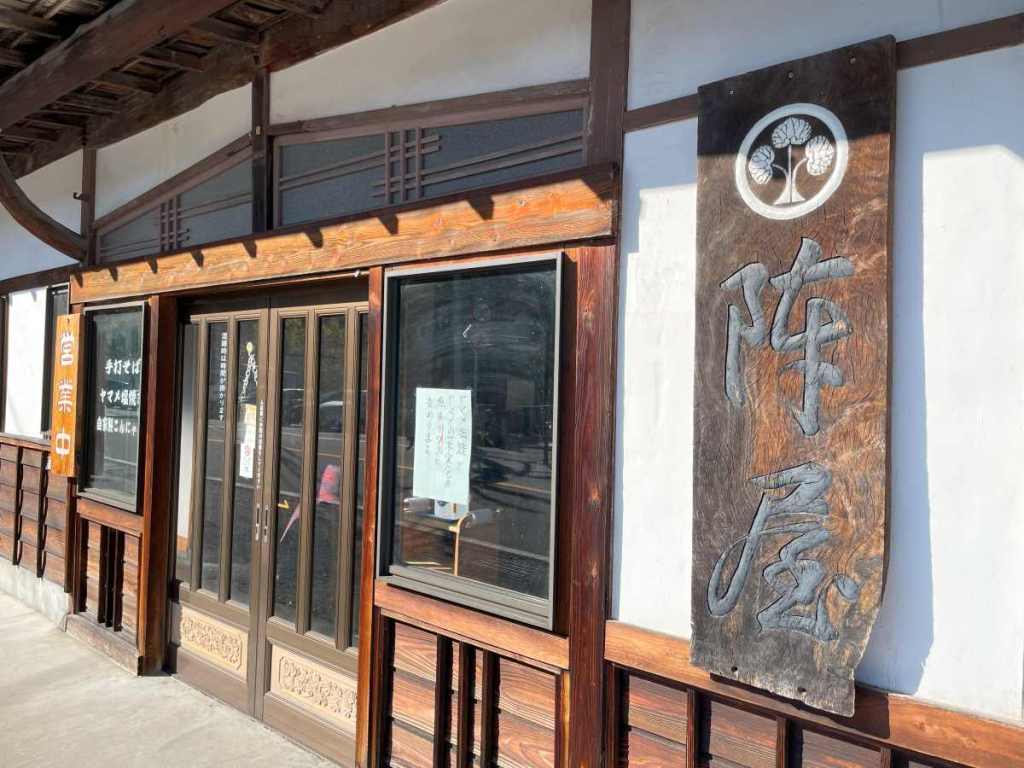
After enjoying a soba set meal (mori soba, konnyaku sashimi, and assorted wild vegetables), we made our way to Hatonosu Valley. Regrettably, the autumn foliage was only beginning to show its colors.
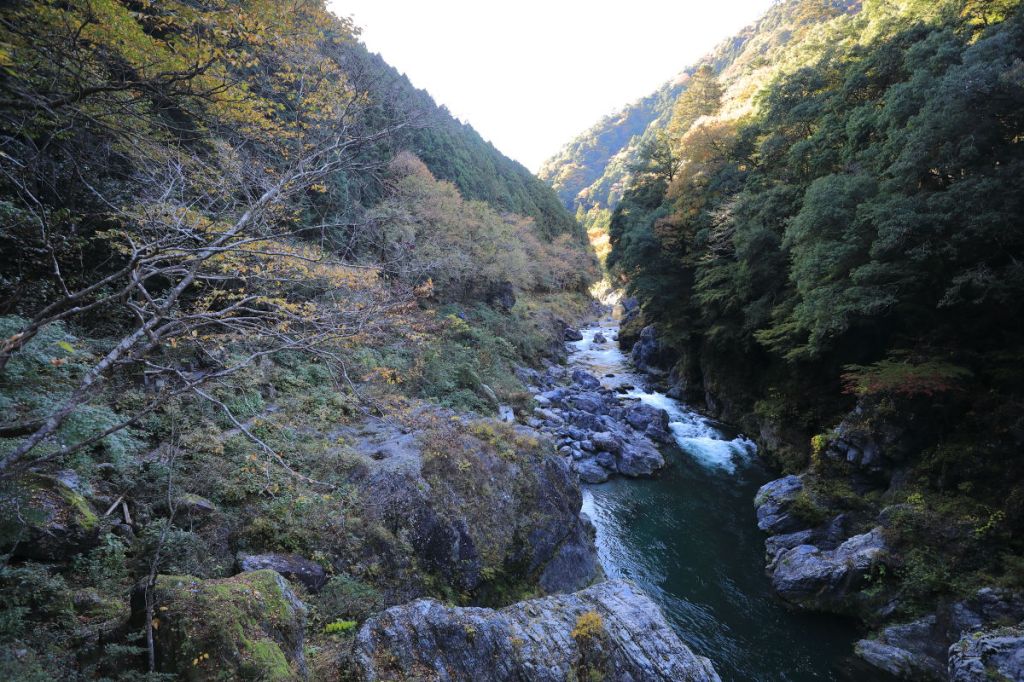
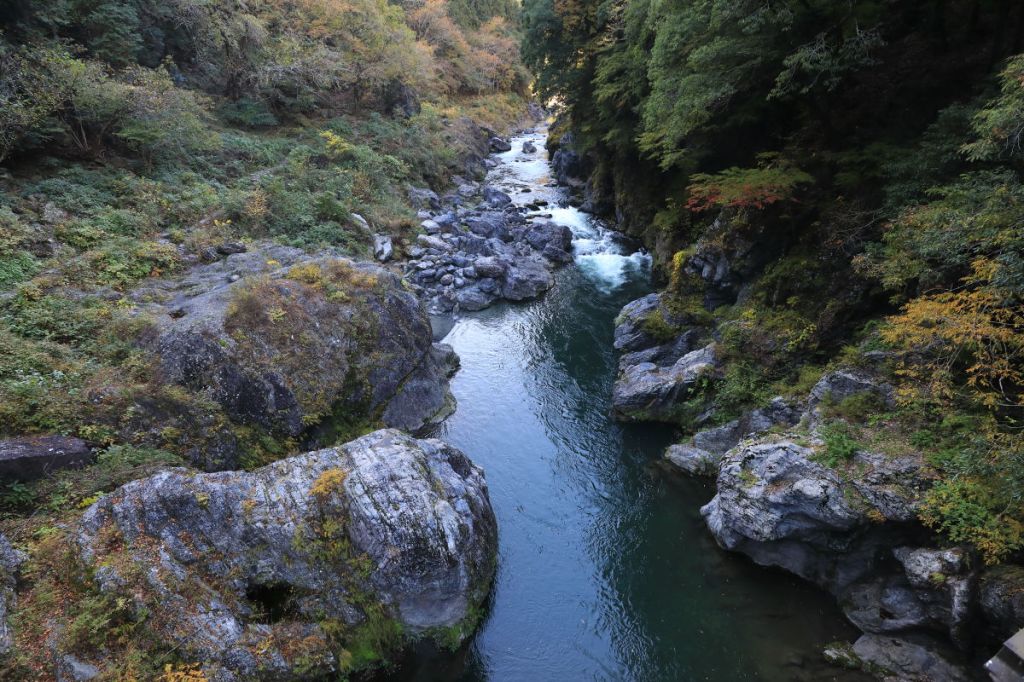
After a while of walking, I took a break and had a coffee at Cafe Poppo near Hatonosu Bridge. From there, I walked up the hill to my lodging for the night, Hatonosu-so. I had been interested in this lodging for several years. It is a hot spring inn in Tokyo that serves a full-course Italian dinner, and has received top customer reviews from JTB.
After taking a short rest in the room, I went straight to the large hot spring bath on the first floor. The photo is a screenshot from the inn’s website. The indoor bath is drawn from a hot spring source that gushed out near the inn in 2017, and is a weakly alkaline hot spring with a high metaboric acid content.

There is an open-air bath beyond the door on the right. The water is brought from the nearby Tsuru-no-Yu bath and is an alkaline simple sulfur spring.

Both the indoor and outdoor baths contain ingredients that are said to be good for your beauty, but they are not very slippery or moist, and are not particularly distinctive.。
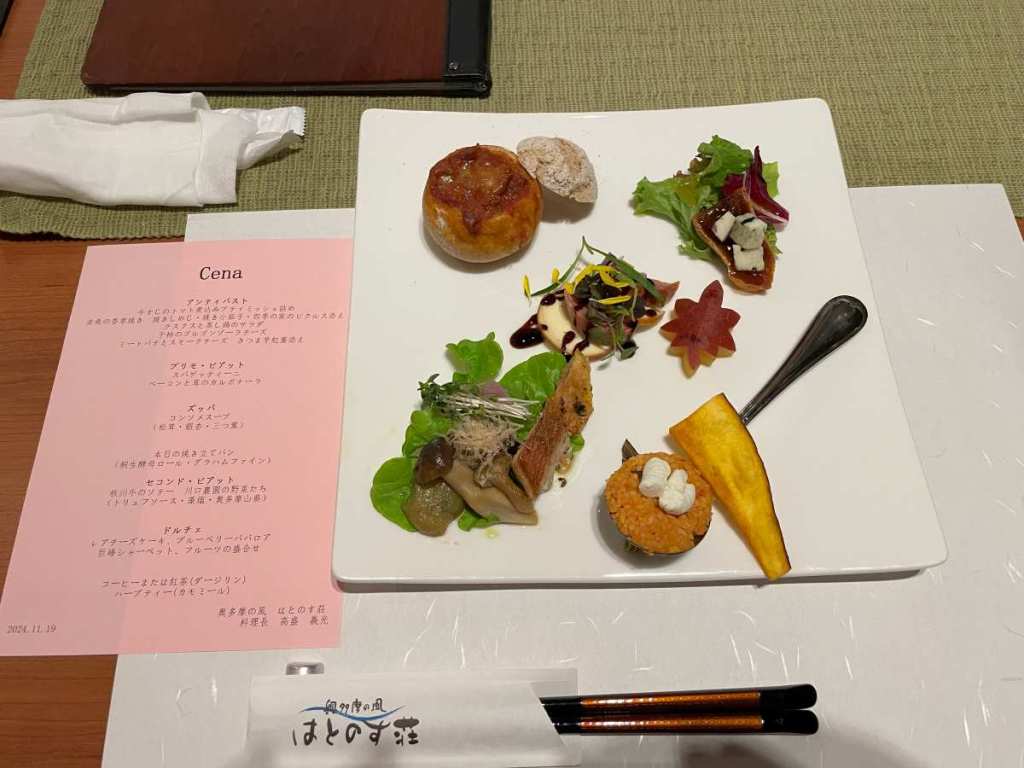
At last, dinner time had arrived, which I had eagerly anticipated. The meal commenced with an antipasto. In total, there were five dishes, featuring beef tendon simmered in tomato sauce and served in petite round breads, a couscous and steamed chicken salad, alongside dried persimmon paired with gorgonzola cheese.
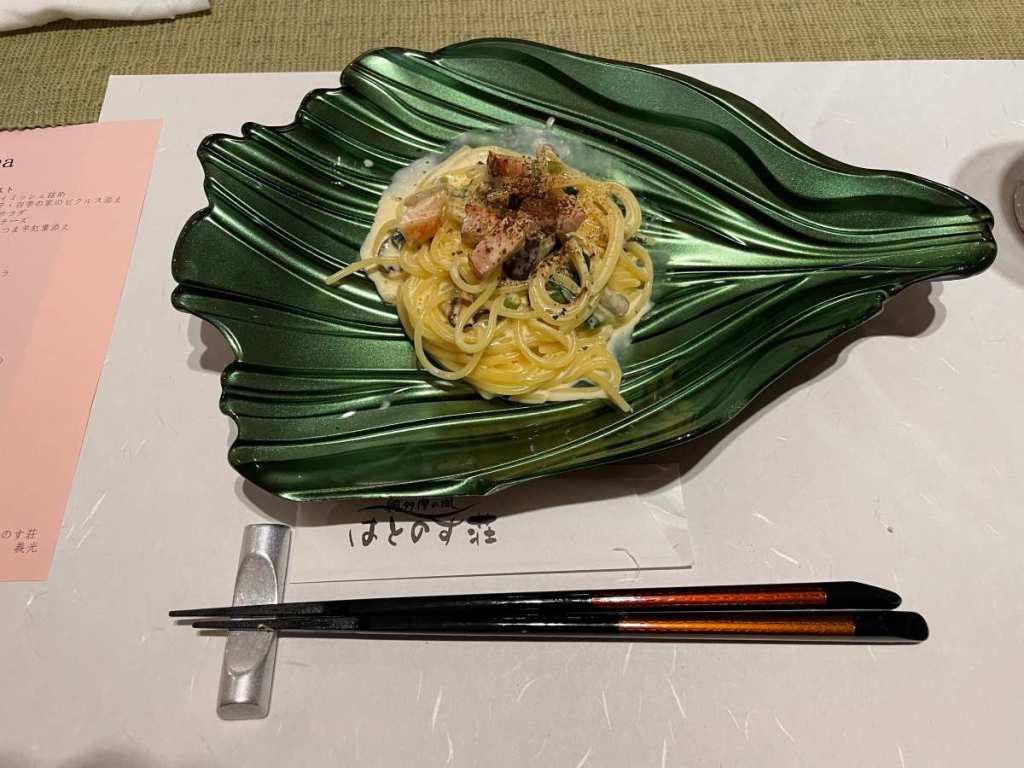
The second dish was spaghetti carbonara with bacon and mushrooms as a primo biato.
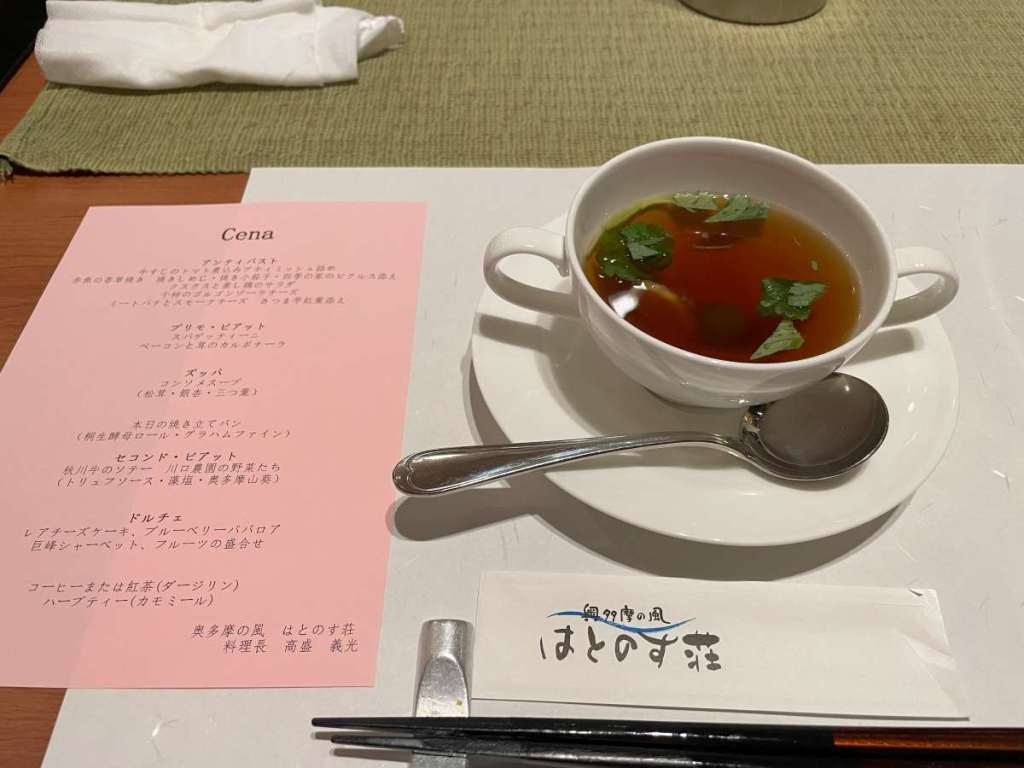
The third course is a consommé featuring matsutake mushrooms, ginkgo nuts, and mitsuba, offering a delightful blend of Japanese-inspired flavors. The subtle scent of matsutake mushrooms adds to the soup’s deliciousness.
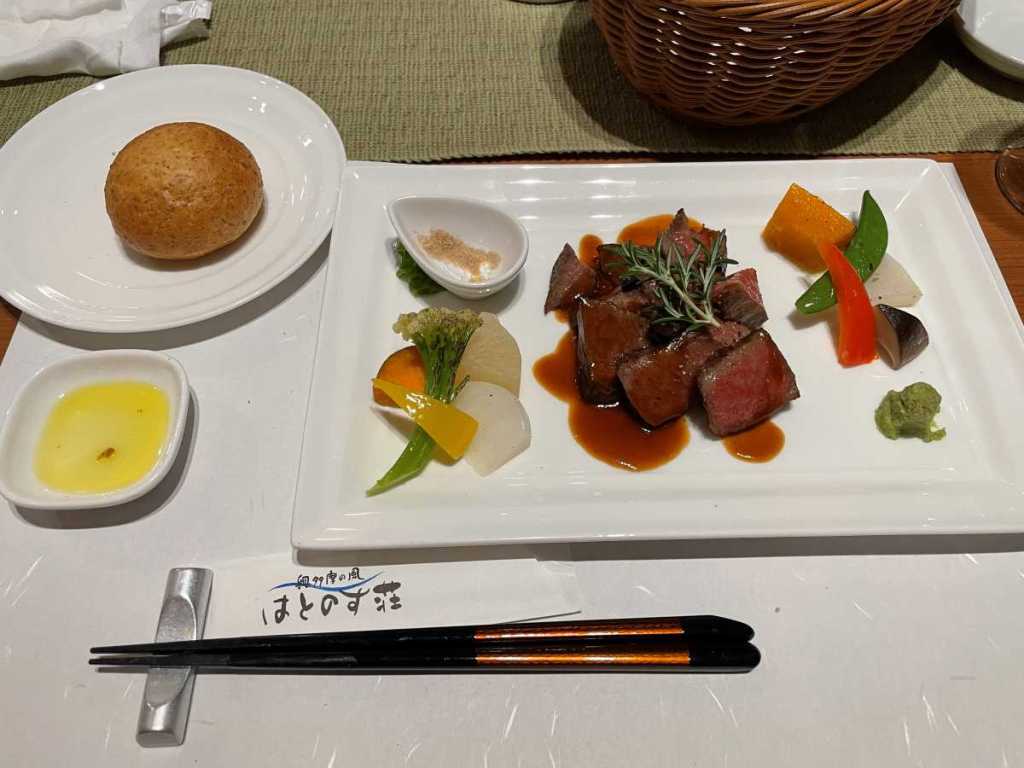
The fourth course, also known as the second biato, features sautéed Akigawa beef, the sole brand of black wagyu beef raised in Tokyo. This exquisite dish, characterized by its delicate fat, is tender and well-prepared, enhanced with a truffle sauce. It pairs impeccably with Okutama wasabi.
Finally, I have dessert and coffee.
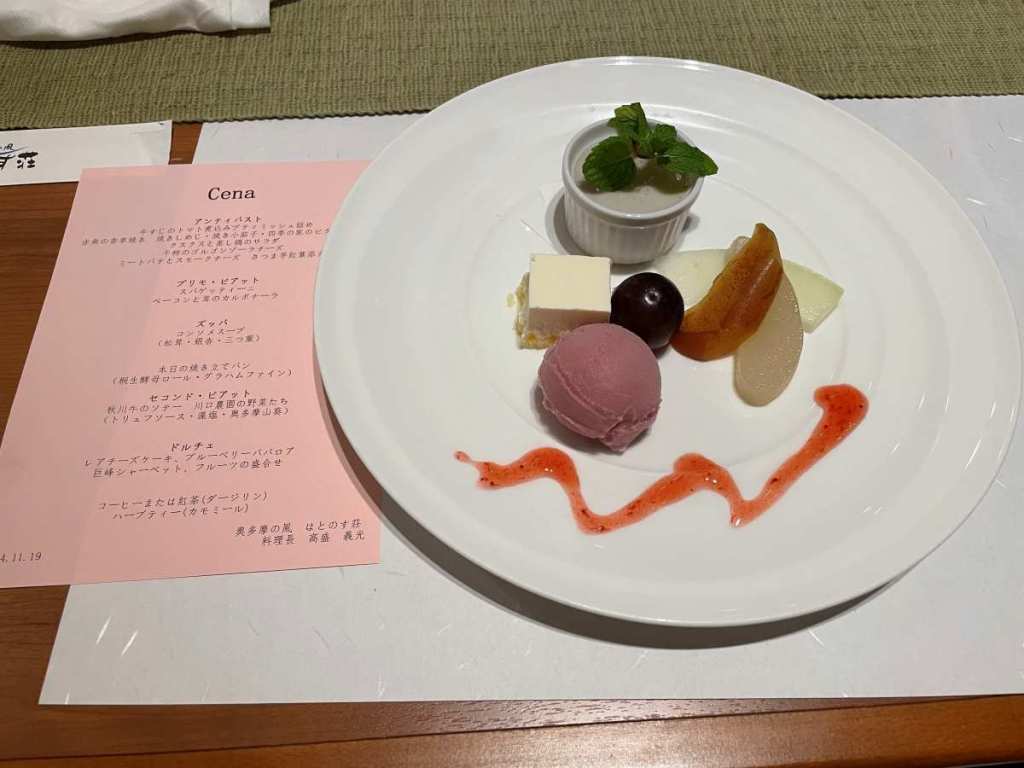
I was extremely pleased with the food, which was flawless in terms of its content.
The following morning brought a stark change in weather from the clear skies of the previous day, with rain setting in. Post-breakfast, I opted to unwind at the inn until it was time to check out. The morning meal wasn’t served buffet-style but as a standard set plate of breakfast items.
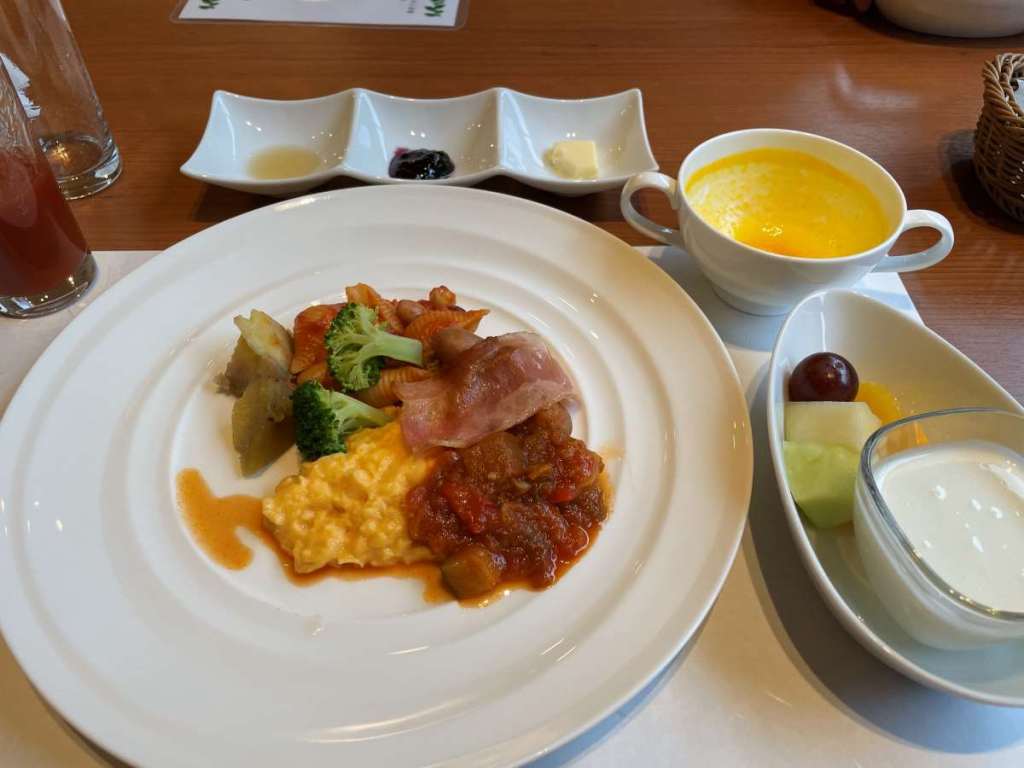
After dinner, I indulged in a relaxing soak in the hot spring before checking out and returning home. Had the weather been more favorable, I would have taken in the stunning vistas of the nearby valleys. However, with rain and temperatures dipping below 10 degrees—the lowest in 40 years in this season—staying indoors was likely the wisest choice.
Blending hot springs with Italian cuisine, this inn is an ideal retreat for those seeking a break from traditional Japanese kaiseki meals. Its popularity often leads to early full bookings, especially on weekends, making reservations challenging. Even on a weekday, availability was nearly exhausted. The lodging fees are affordable, offering great value for money. Should the chance arise, a return visit would be delightful.
 旅好き爺の旅行記
コメントを残す