

This year, I have primarily traveled by plane; however, on this occasion, I chose to drive to Sado Island in Niigata, a I had not previously visited. On my return journey, I decided to stop Togura Kamiyamada Onsen in Nagano before heading back home.
May 6th (Tue)
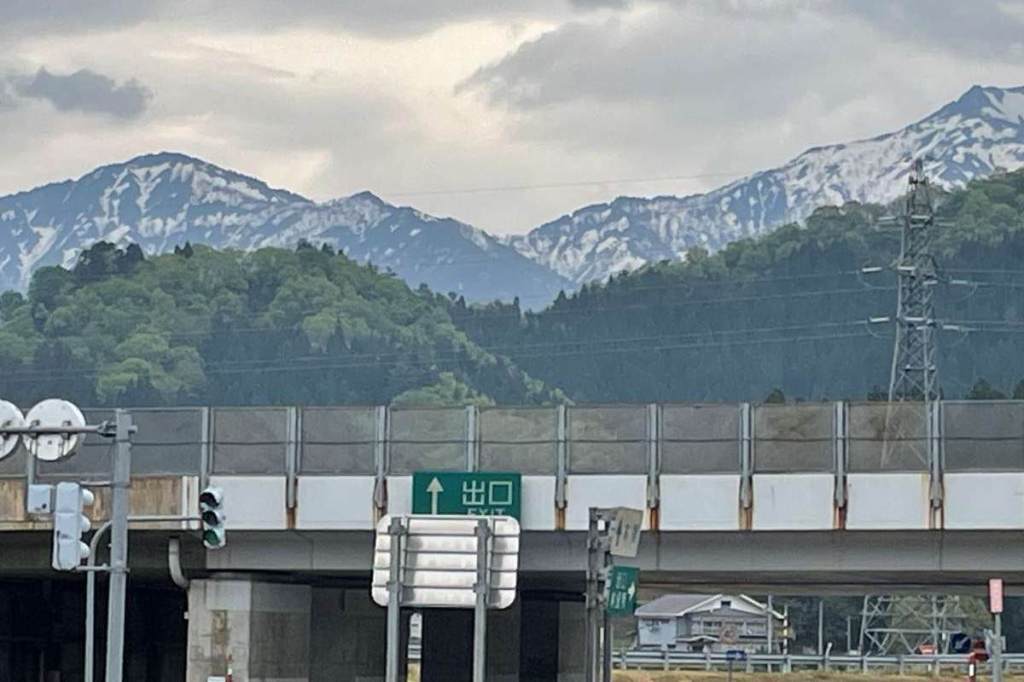
Early in the morning, I departed from home and my way to the ferry terminal at Niigata, pausing for breakfast taking a at a rest area along Upon reaching Nigata and resting at Echigo Kawaguchi SA, I admired the lingering snow the mountains and, from the observation deck, enjoyed a magnificent view of the Shinano River.

I arrived at the Niigata Port Sado Kisen Ferry Terminal shortly after11:00. After completing the boarding procedures I found with some extra time decided to have an early lunch the terminal building, enjoying kitsune soba noodles accompanied by Tochio fried tofu.

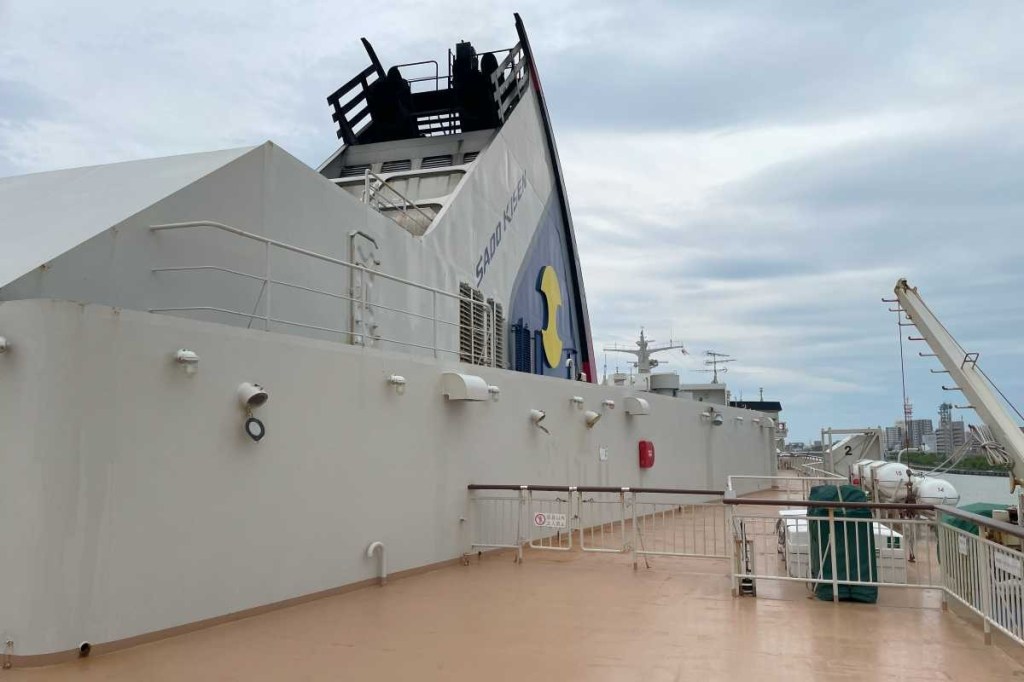
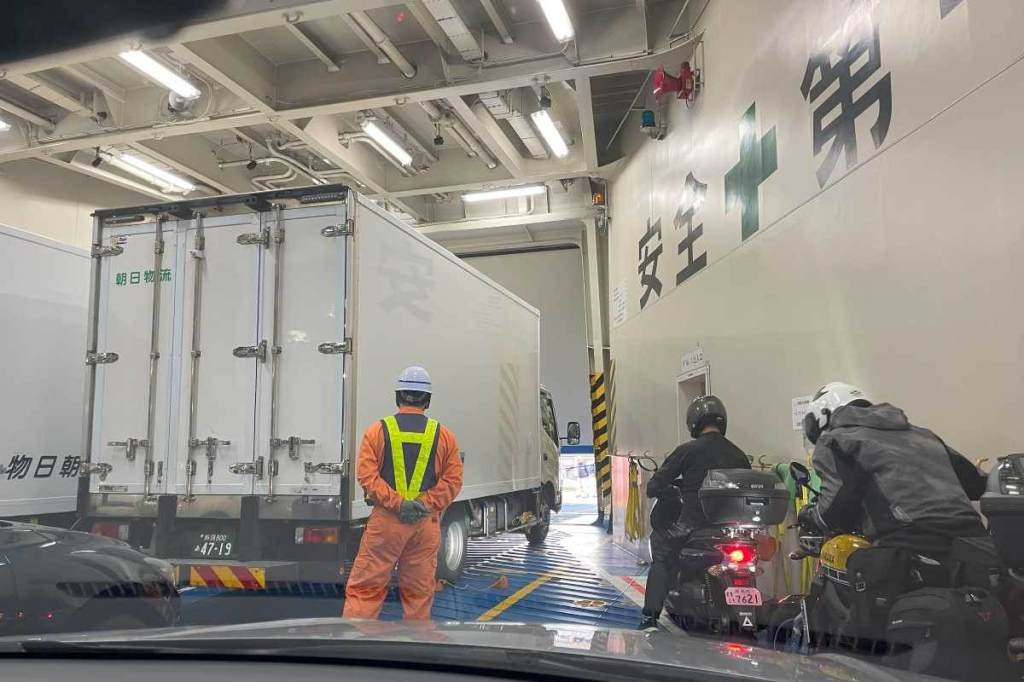
I boarded the ferry to Ryotsu Port, which departed at 12:35, and arrived at the port at 15:05 as scheduled.
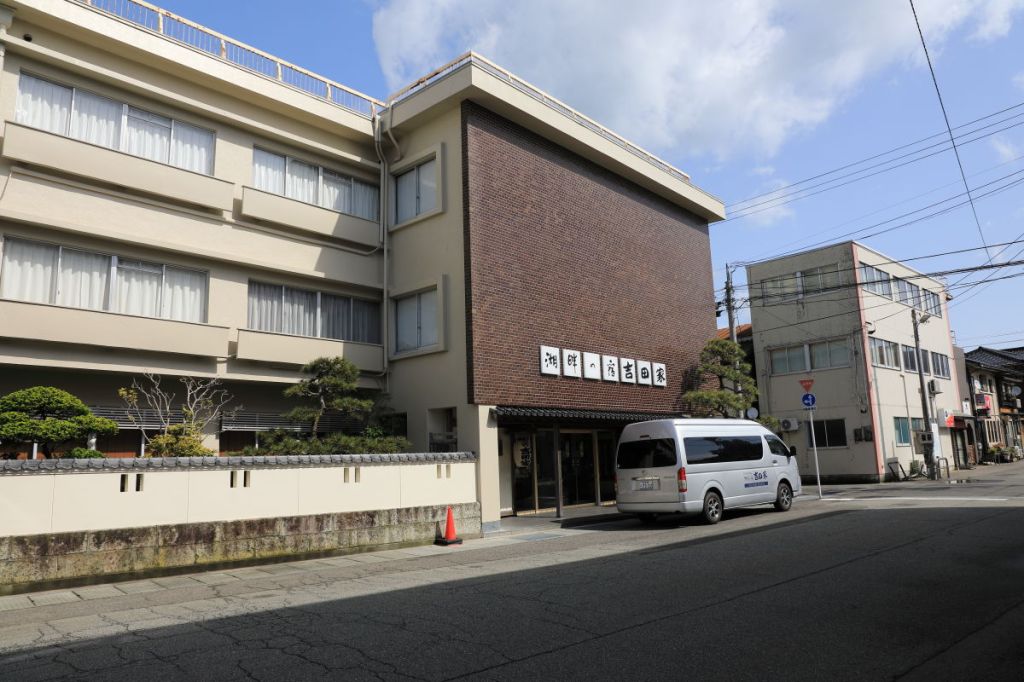
Tonight, I am staying at Yoshidaya, an inn situated on the shores of Lake Kamo, near Ryotsu Port.
After resting I proceeded directly the hot spring. The photo is screenshot from the inn’s website showcasing the open-air bath. spring features a weak alkaline sodium bicarbonate composition, renowned a beauty bath. The water is brown and viscous, offering a uniquely smooth and pleasant texture. The open-air bath is a natural hot spring, and the view, as depicted in the photo, was truly breathtaking.

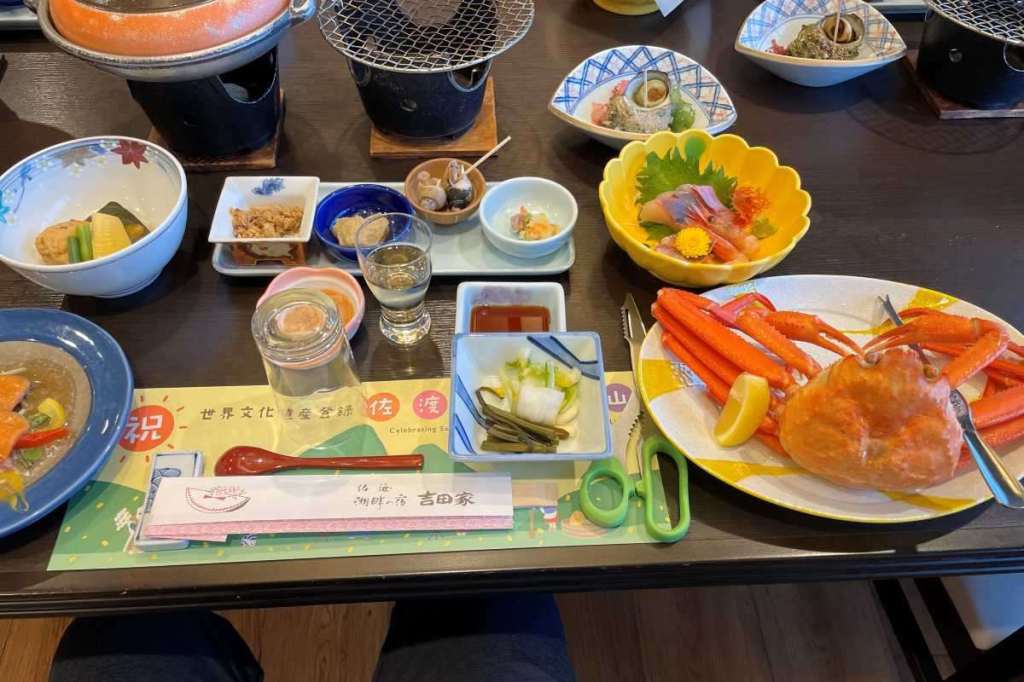
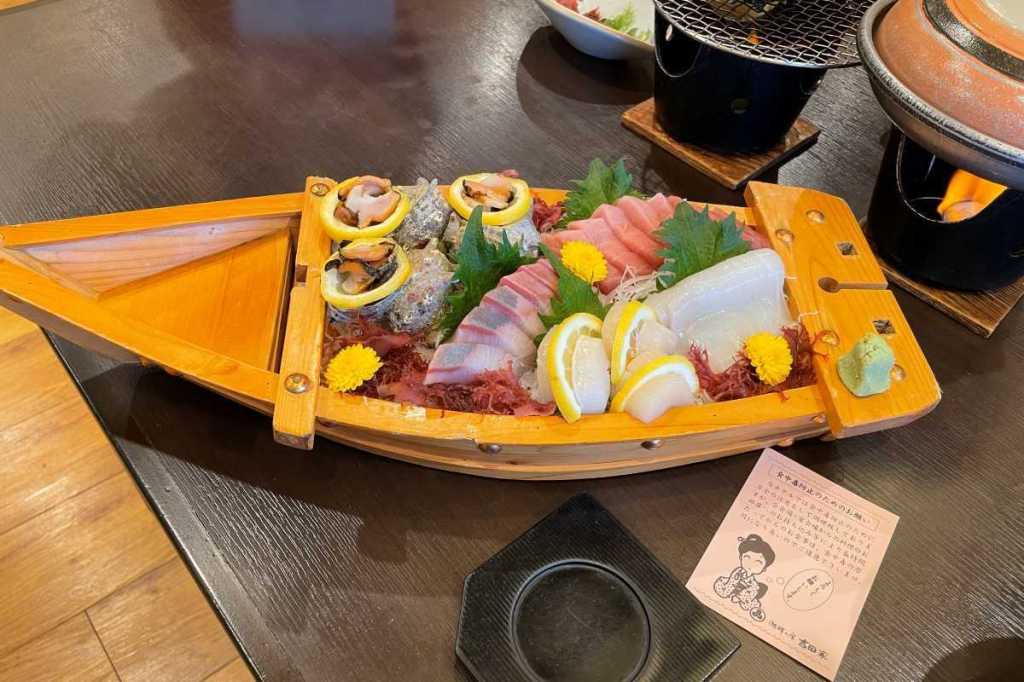
Dinner consists of a kaiseki meal featuring a whole red snow crab and a sashimi platter making quite. However, the drawback lies in the need to to extract the crab meat, which can be somewhat inconvenient.
May 10th (Wed)
Today, I will visit the tourist spots of Sado Island all day. Sado Island was connected to Honshu, but around 16 million years ago, crustal movement and volcanic activity caused it to separate from Honshu and take on its current shape. It is the second largest island after Okinawa Island, excluding Honshu, Hokkaido, Shikoku, and Kyushu. The first destination is Toki(Crested ibis) Forest Park, located near the inn.
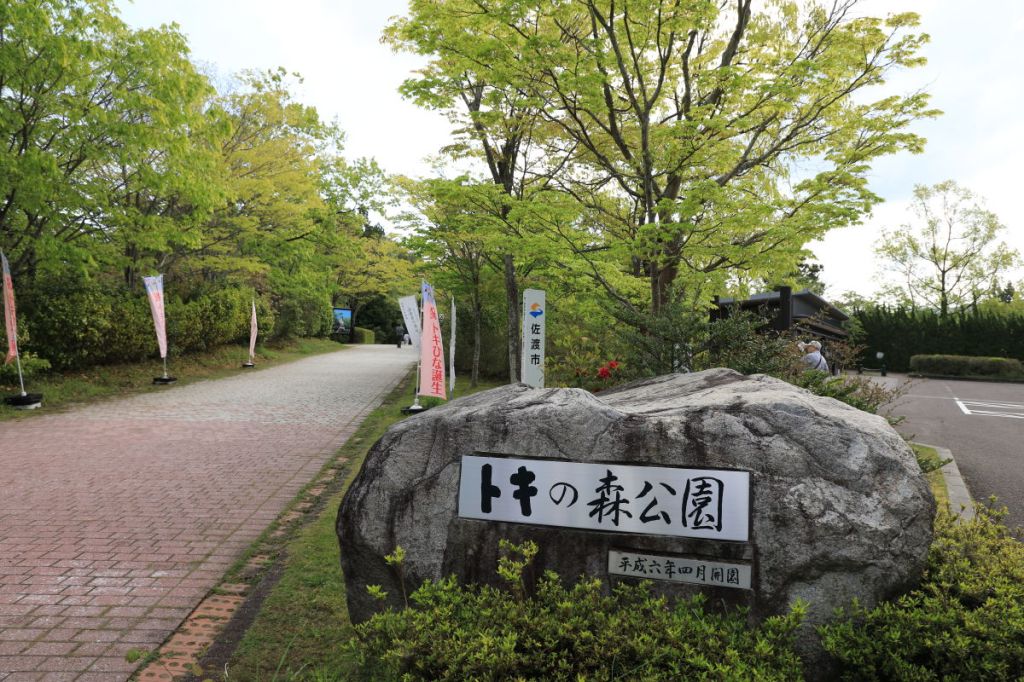
The Crested Ibis exhibition room includes a taxidermy specimen of Kin, last wild Crested Ibis in Japan, which died in 2003. Today, it becomes sometimes to observe Crestedises in the wild due to the increase of captive-bred individuals. However, sightings rare,coring the importance of facilities like this

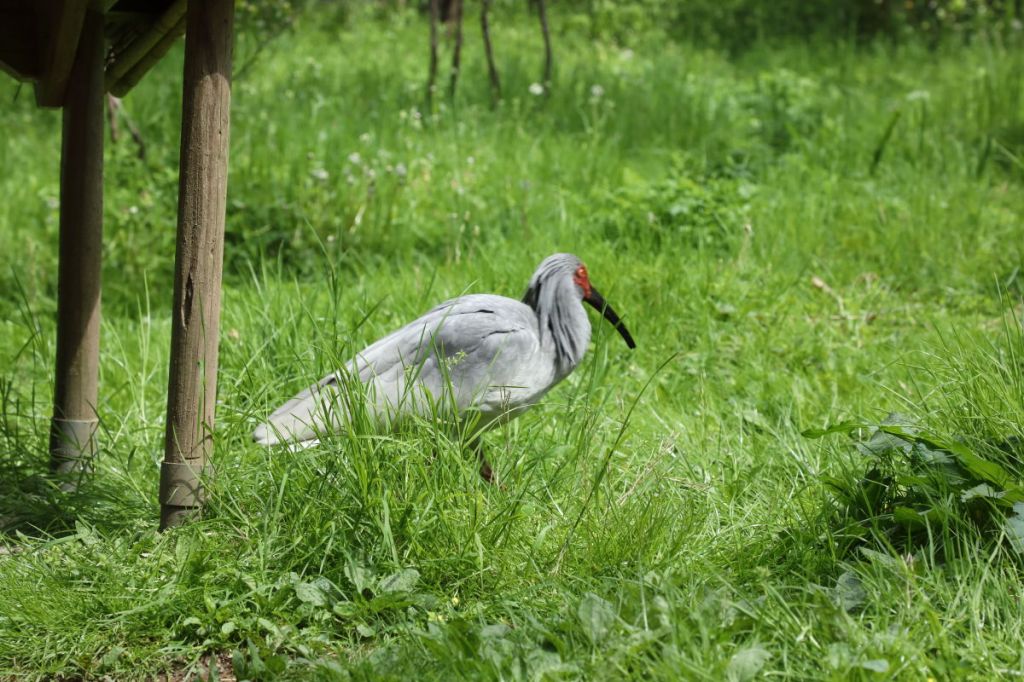
After leaving here, I looked at the Japanese crested ibises in their cages and then headed to the Japanese Crested Ibis Interaction Plaza, I saw something that looked like a Japanese crested ibis on the way, but it turned out to be a model of one.
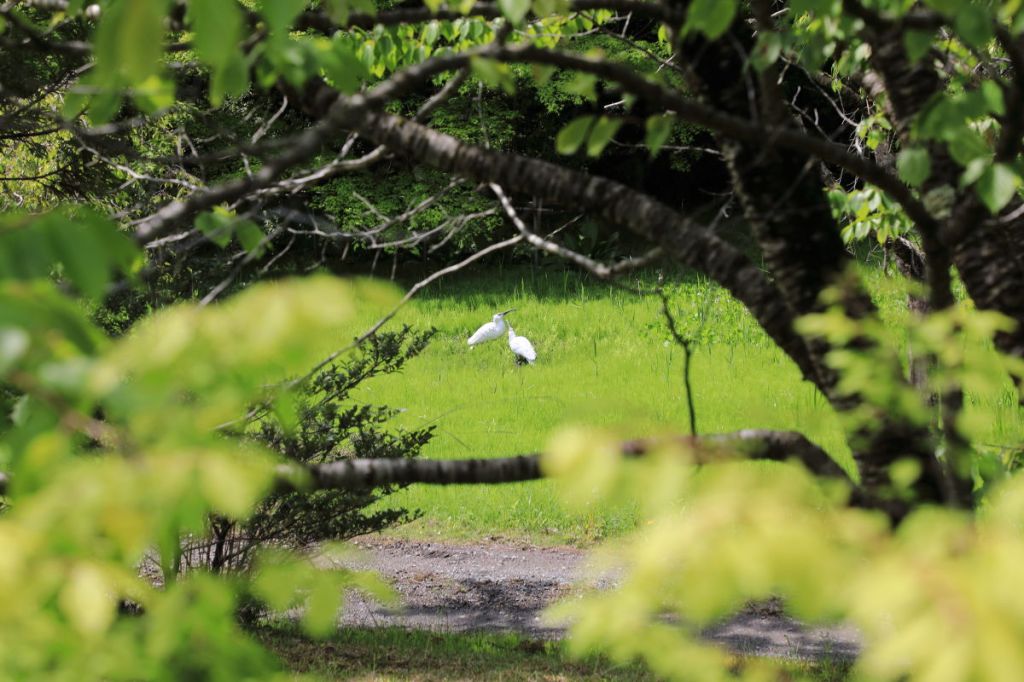
In the petting plaza, there was a large cage where I observed the chicks’ faces in their as they were being raised, though I regrettably did not have the opportunity to a photograph. However, I managed to capture an image of the parent bird at the feeding area through a one-way mirror. It appears that the color of their feathers dark during the breeding season.
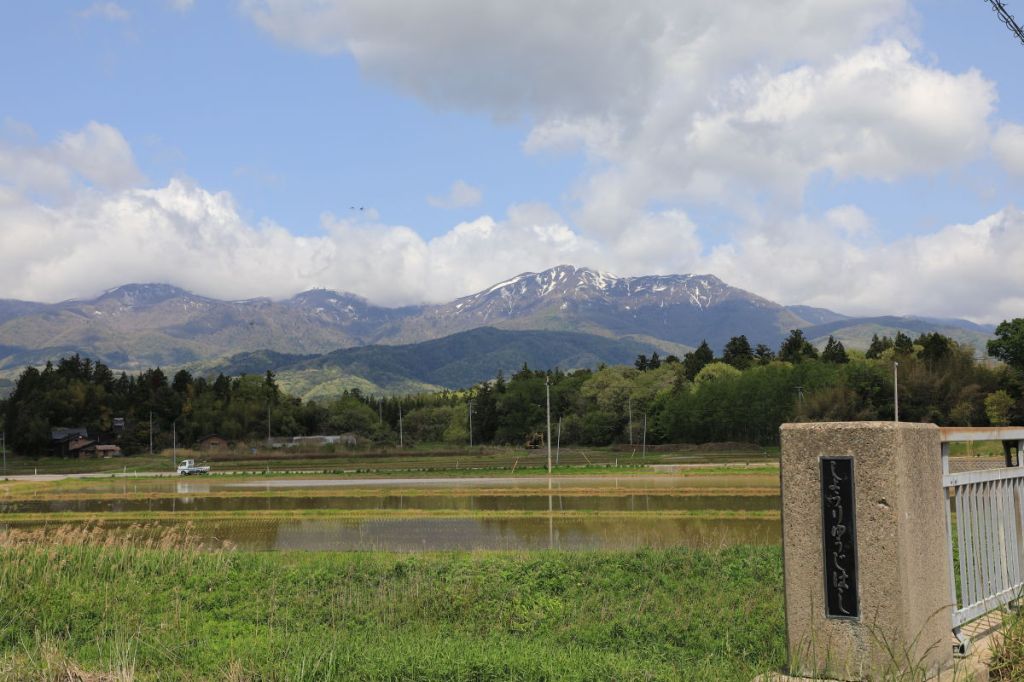
After leaving Toki Forest Park and driving a little further, I found some remaining snow on the mountainside.
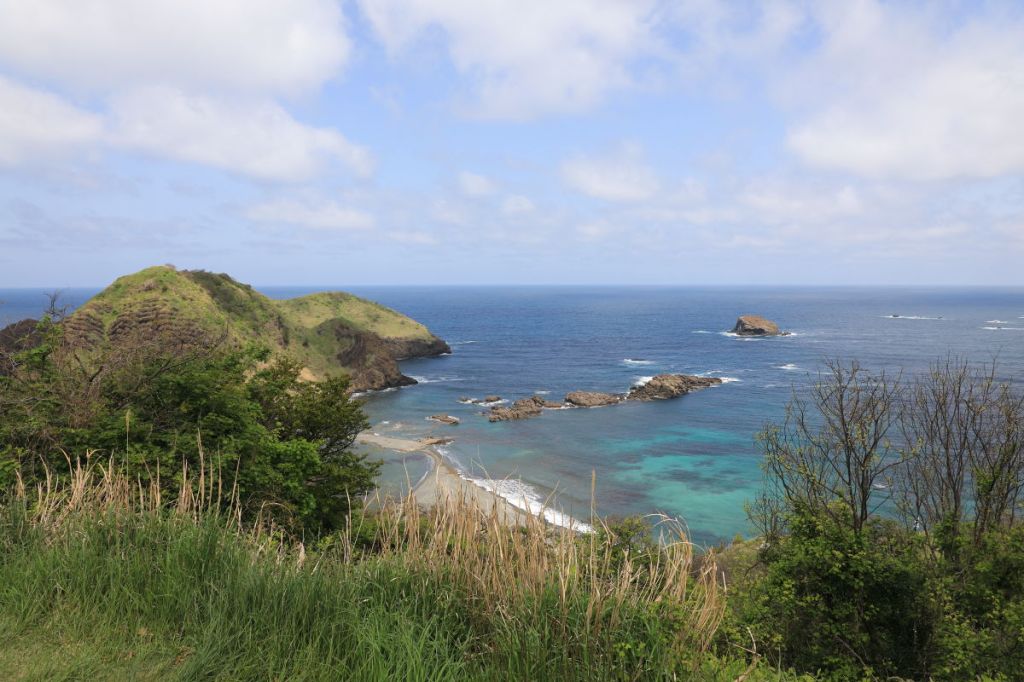
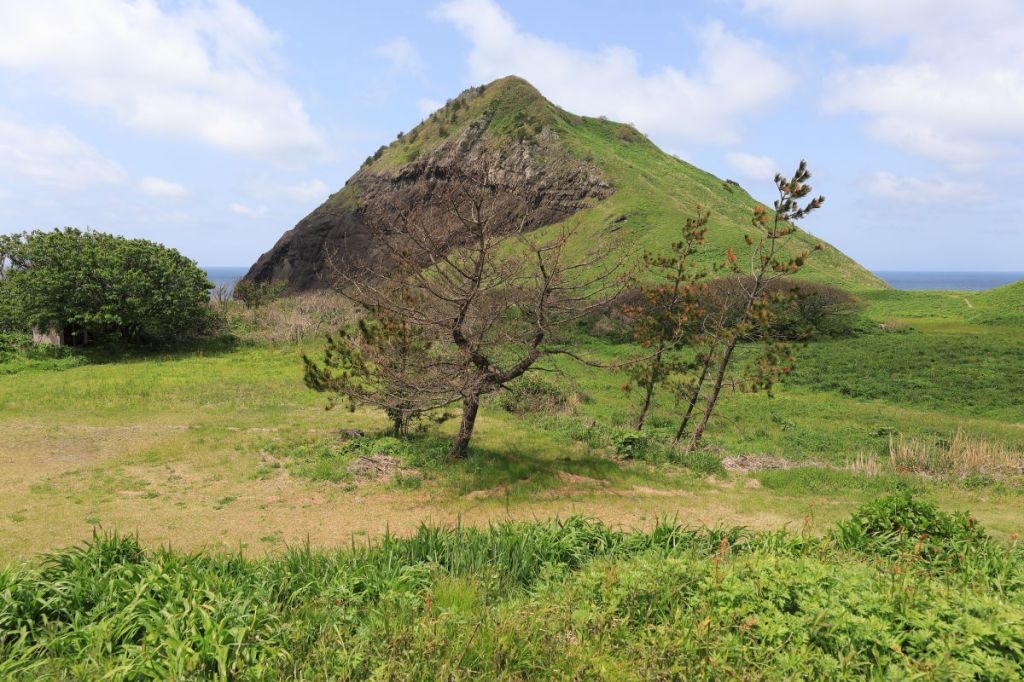
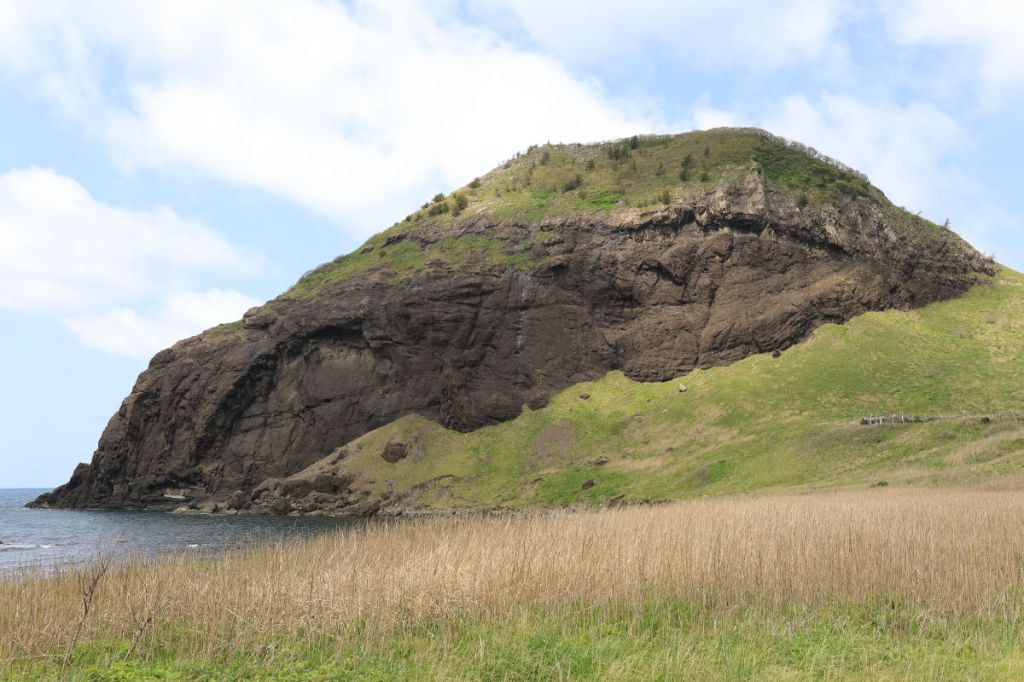
I drove along the coastline and went to Futatsugame, a scenic spot in the north. It is a swimming beach, but there are 350 steps to get there, so I decided to just enjoy the view from the top. The water is incredibly clear and it has been selected as one of the 100 best swimming beaches in Japan.
You can also see the nearby Onogame from here.
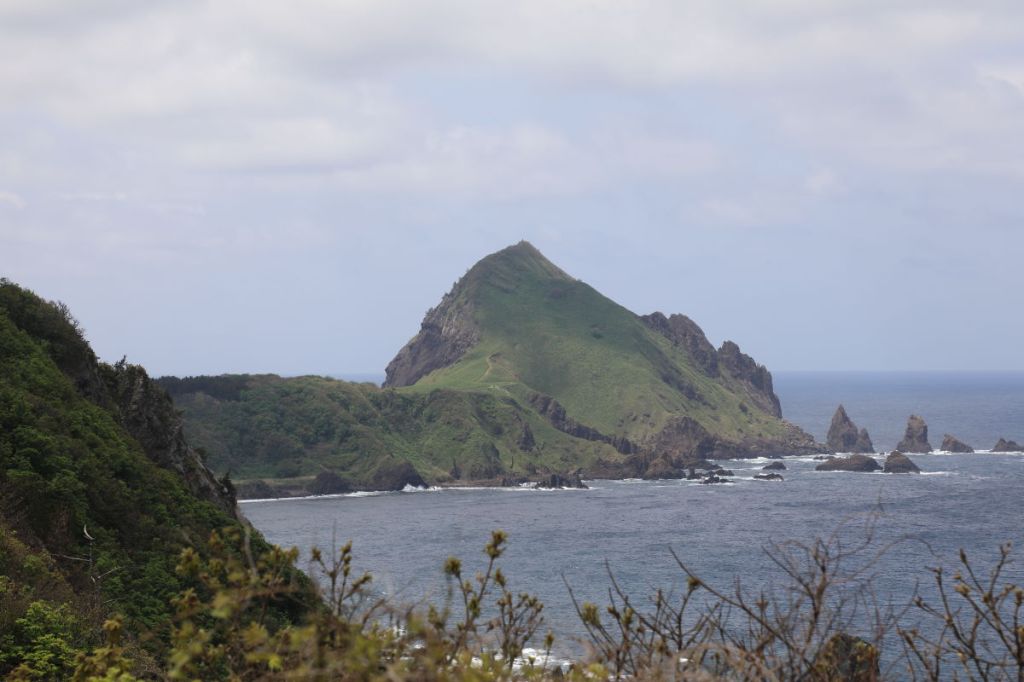
If you enter the parking lot of Onogame, you can see it up close. The yellow flowers of the Tobishima Daylily bloom in late May, but unfortunately it was too early.
I continued to move west along the coast of the island and went to Senkaku Bay Ageshima Amusement Park. Senkaku Bay is a small bay that stretches for about 3 km, but it is a scenic spot with many oddly shaped rocks. I purchased an admission ticket with a boarding pass and boarded the underwater observation boat.
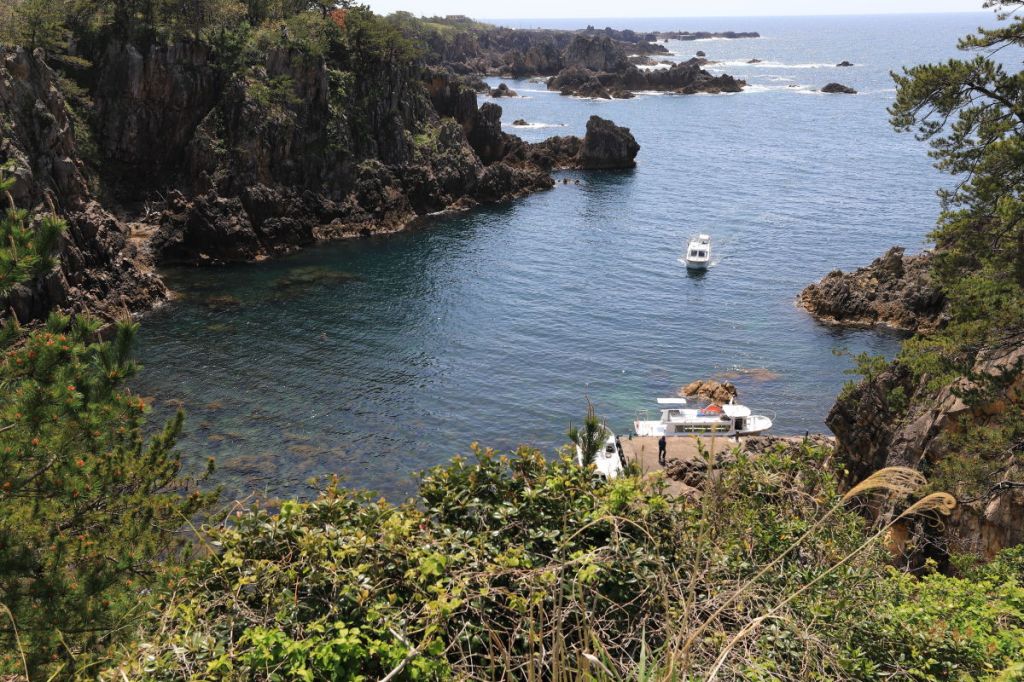
I set sail on this small boat, and the boat rocked quite a bit as I left the cove.
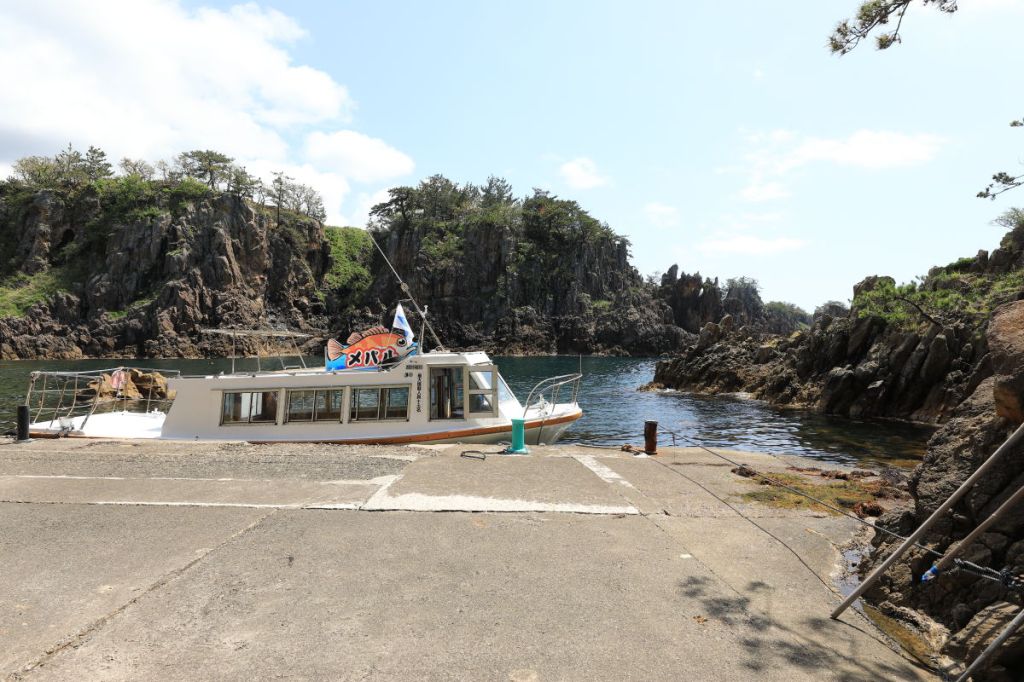
Along the way, I was able to see some red sea bream and black porgy.

The view from the boat is also spectacular.
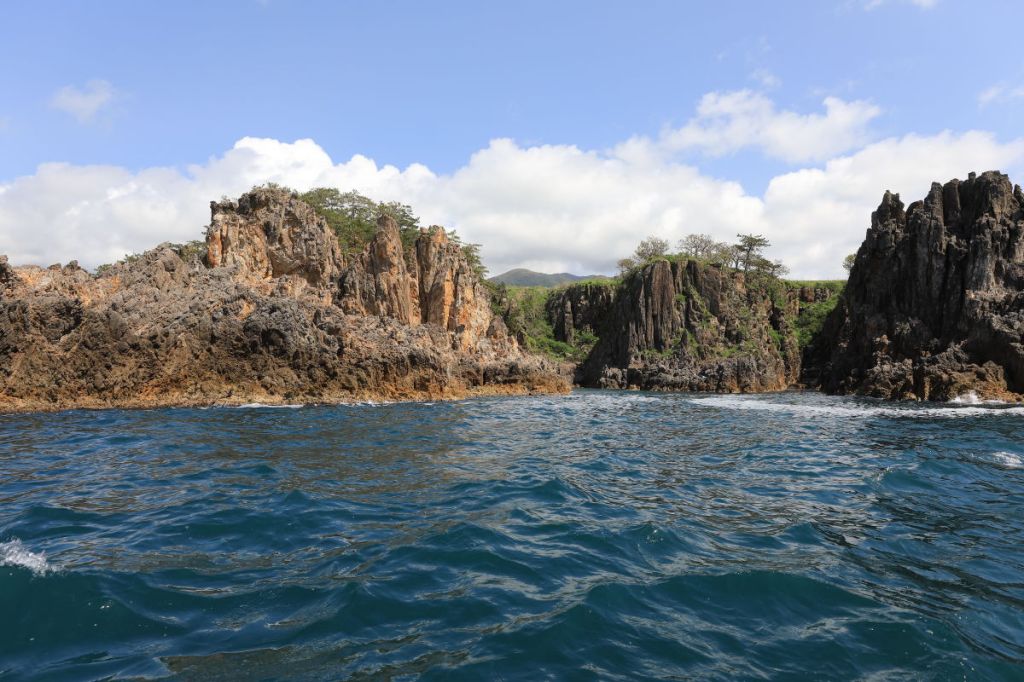
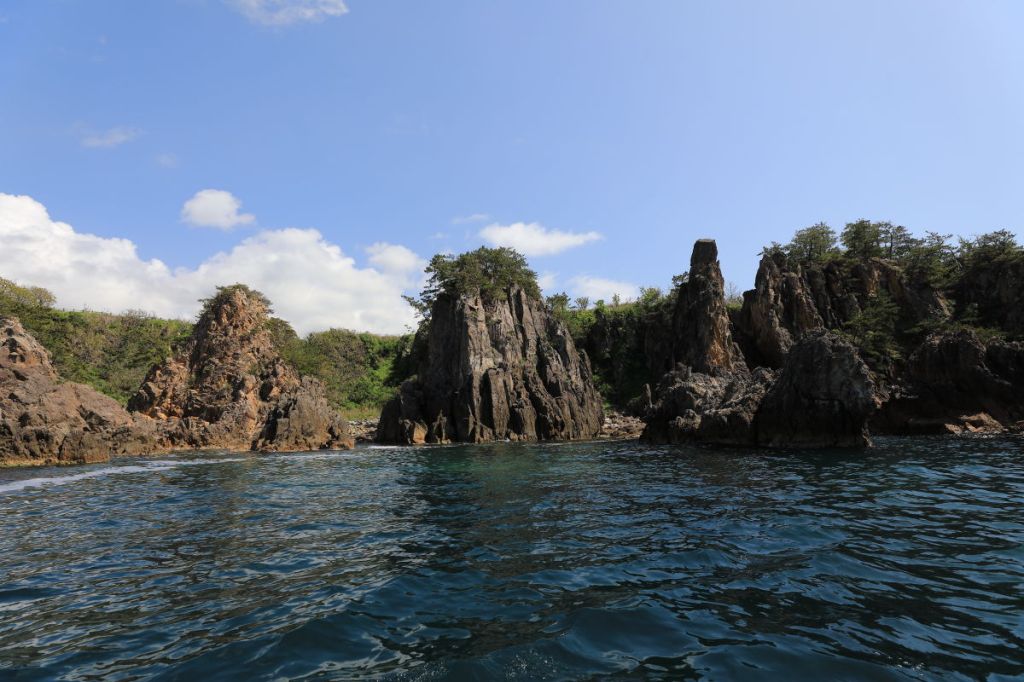
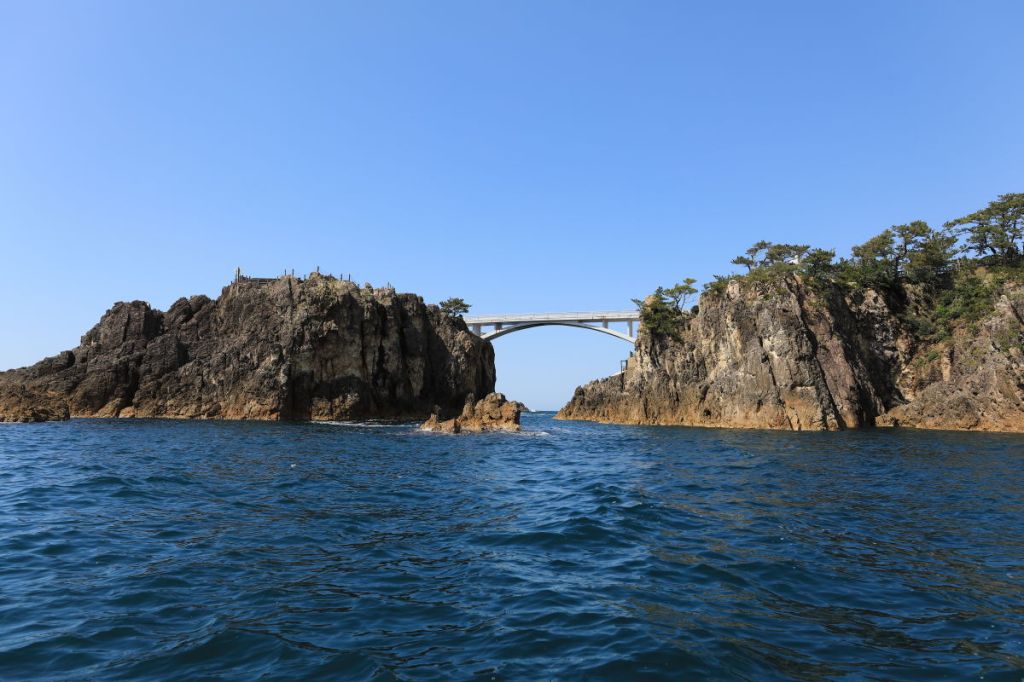
The film “Your Name” was shot here in 1953, and the bridge you see in front of you is called “Machiko Bridge.” The original bridge was replaced with the current one due to deterioration.
Next, I went to Sado Gold Mine, which will be designated as a World Heritage Site in 2024. Gold and silver have been mined at Sado Gold Mine under the management of the Tokugawa Shogunate, and it is said that 78 tons of gold and 2,330 tons of silver have been produced in the 388 years since the Edo period. There are two routes: “Soudayu Mine”, a mining tunnel from the Edo period, and “Doyuko”, a mechanically dug tunnel from the Meiji period onwards. I chose “Doyuko”, which has no ups and downs.
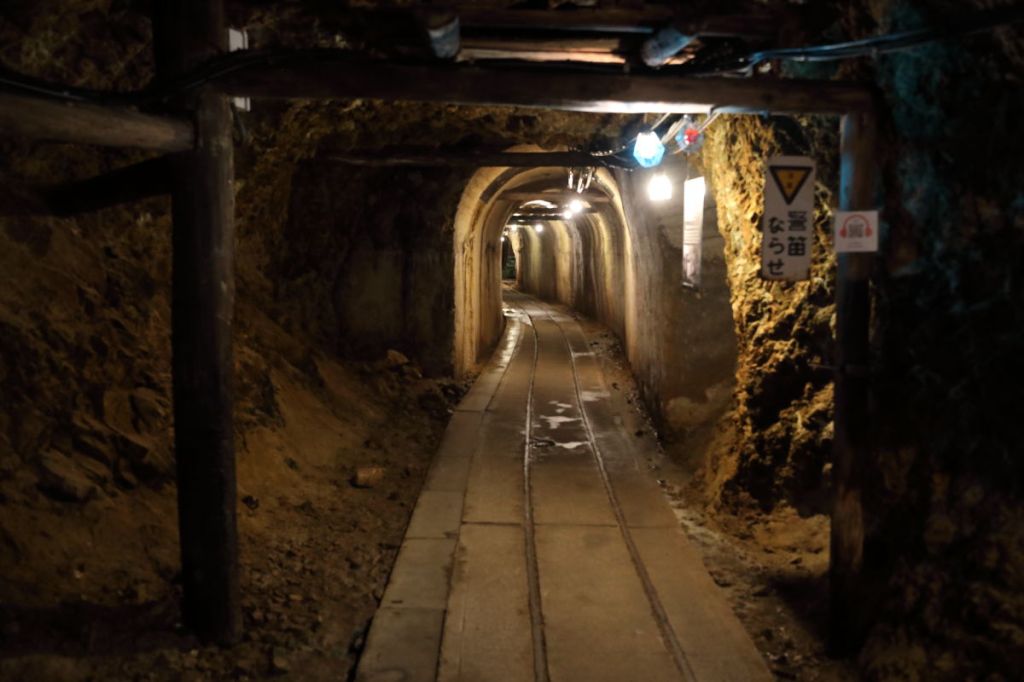

Doyu-no-Warito, the symbol of Sado Gold Mine, is a V-shaped mining site dug from the surface along the Doyu Vein.
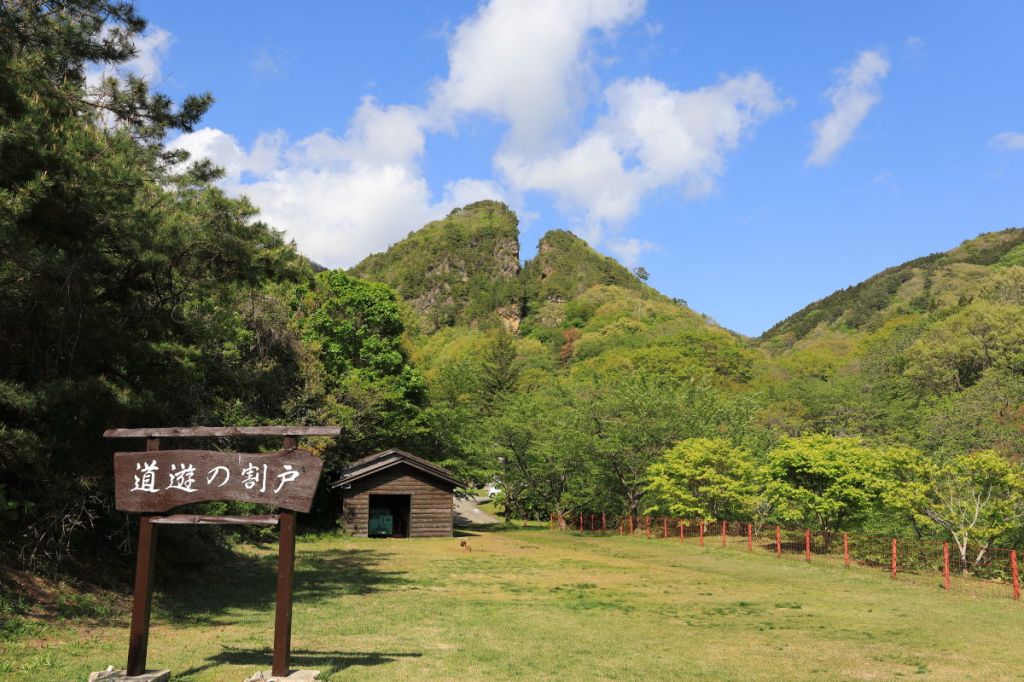
You will pass the souvenir shops and arrive at the exit. The journey takes about 40 minutes.
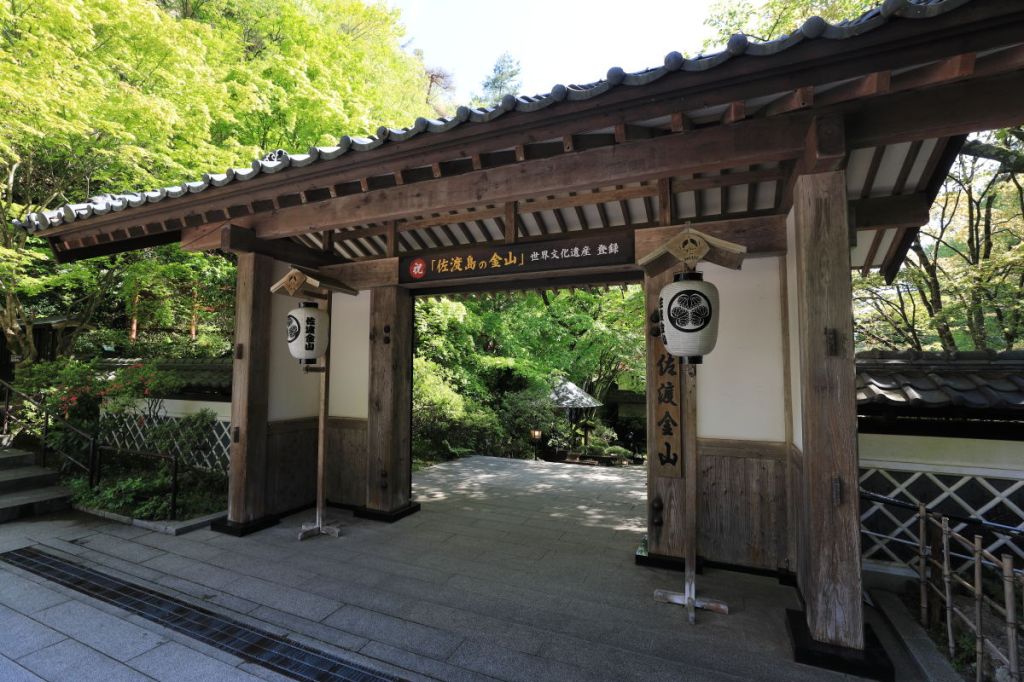
On the way to the hotel, I stopped off at the remains of the Kitazawa Flotation Plant, an ore-dressing plant for the Sado Gold Mine. The scenery there reminded me of Hayao Miyazaki’s Laputa: Castle in the Sky.

Today’s accommodation is SADO RESORT HOTEL AZUMA.
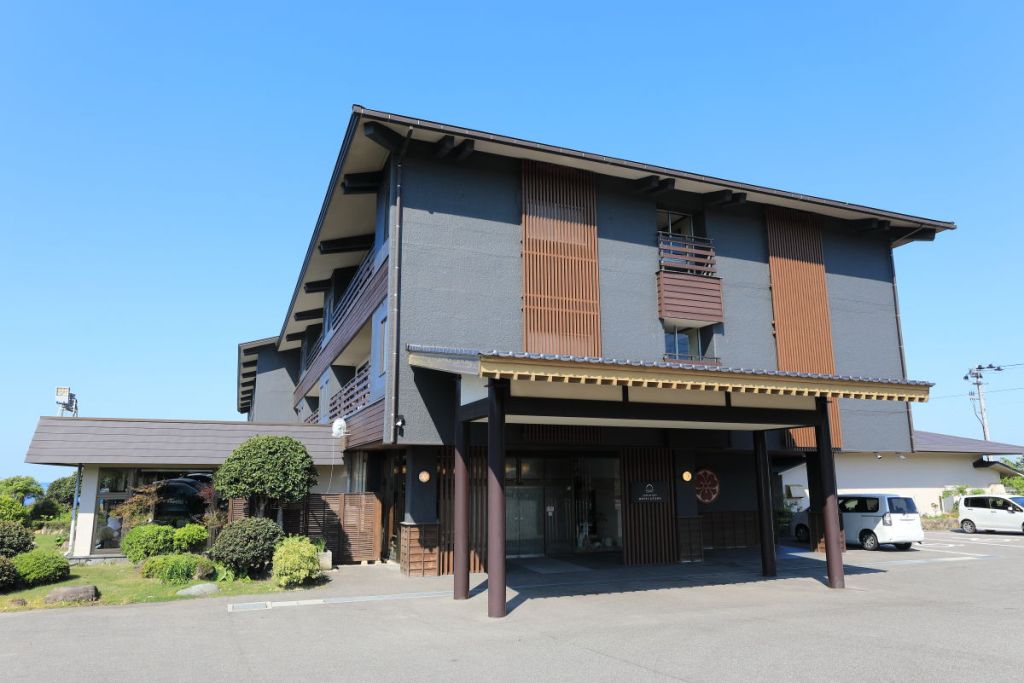
The view from the room is outstanding.

After taking a break, I first went to the hot spring. The spring quality is sodium monosulfate chloride spring, hypotonic, weakly alkaline. The photo is a screenshot from the hotel’s website. The view from the open-air bath is also nice.

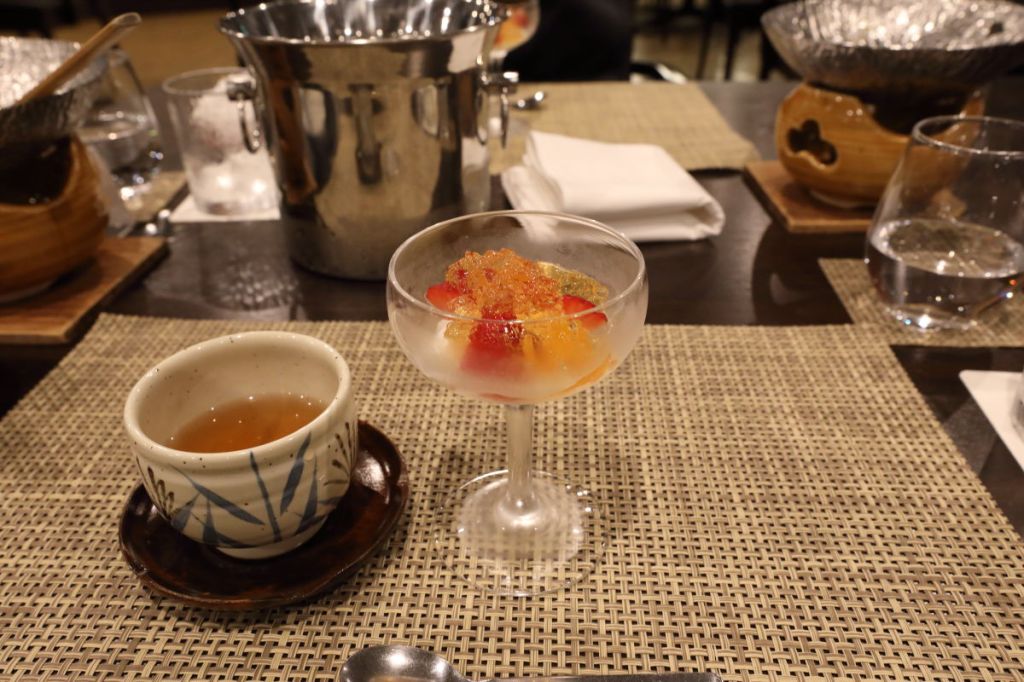
The meal was a Japanese banquet with eight dishes. The photo shows some of them. I enjoyed them with some potato shochu from Sado.

The sashimi consisted of skipjack tuna, Spanish mackerel, red sea bream, flounder, and yellowtail amberjack.
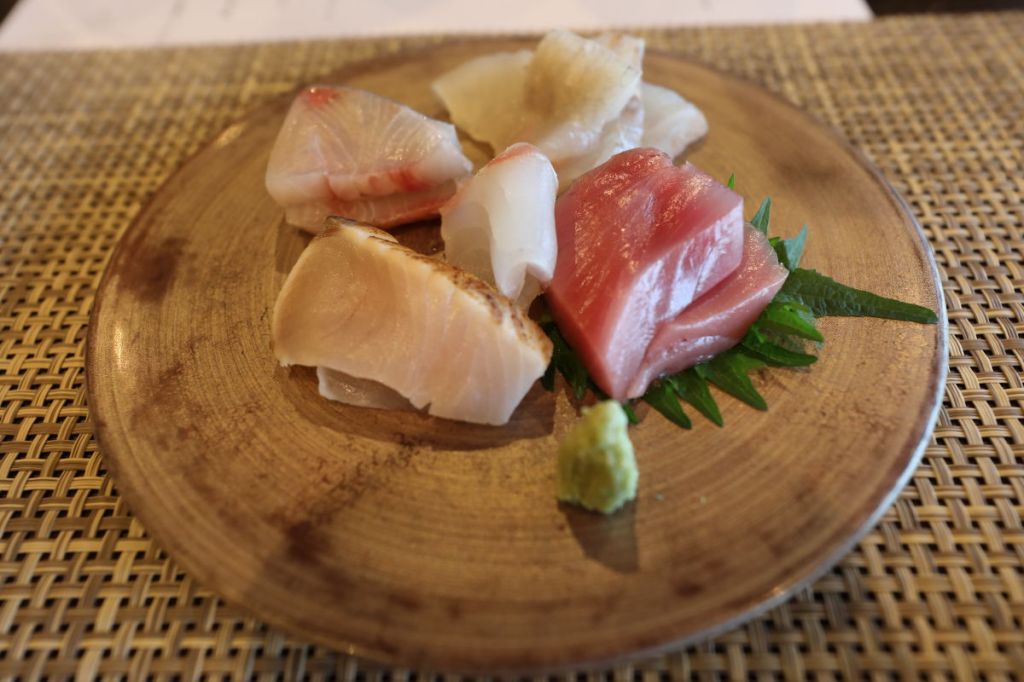
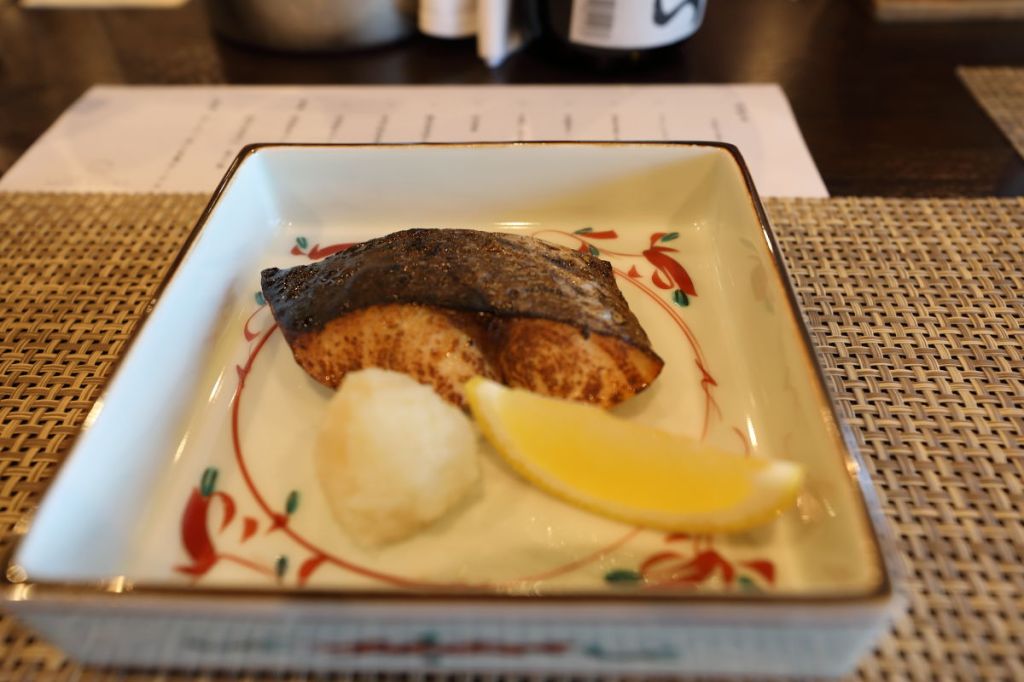
Baked savory-flavored Spanish mackerel
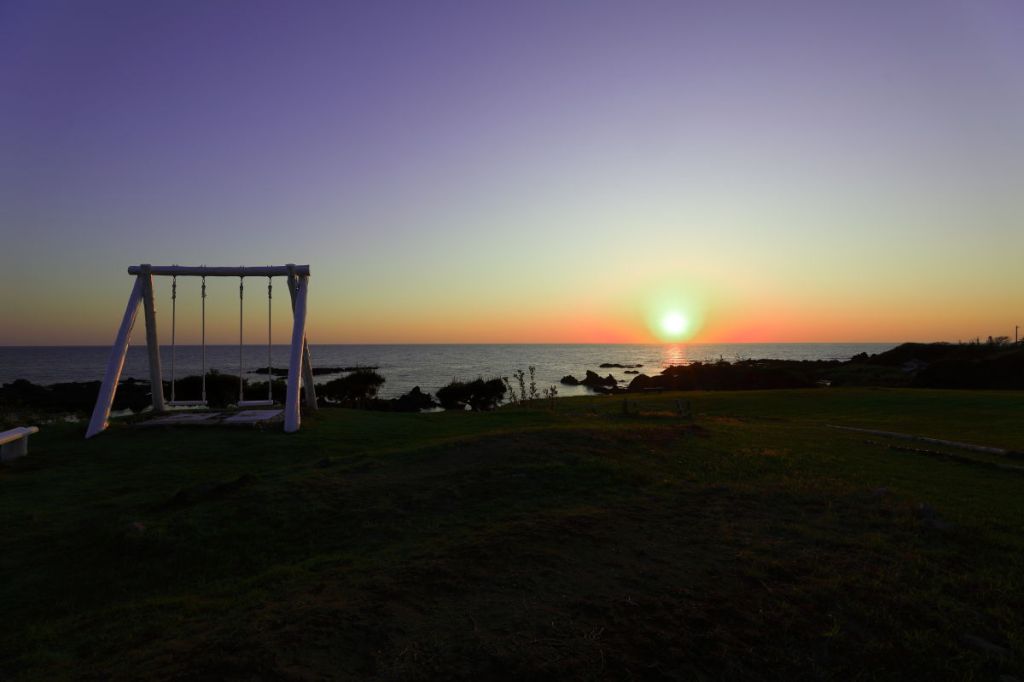
I stopped eating here at sunset and was able to go outside and enjoy the beautiful sunset.
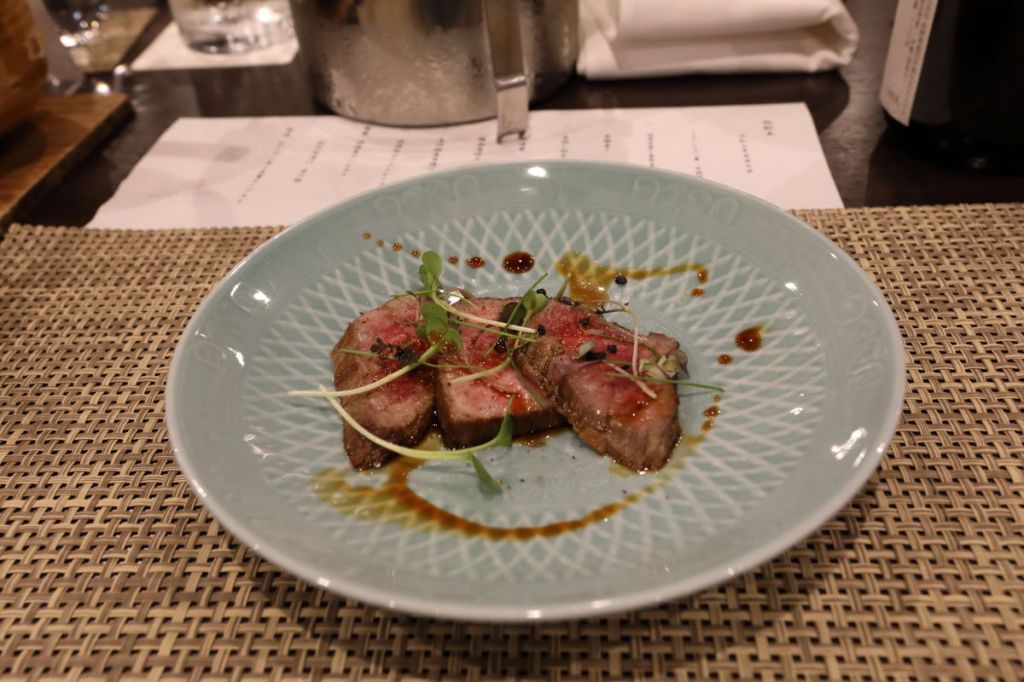
Roast beef made from Sado beef, a rare local beef that was born and raised in Sado
May 8th (Thr)
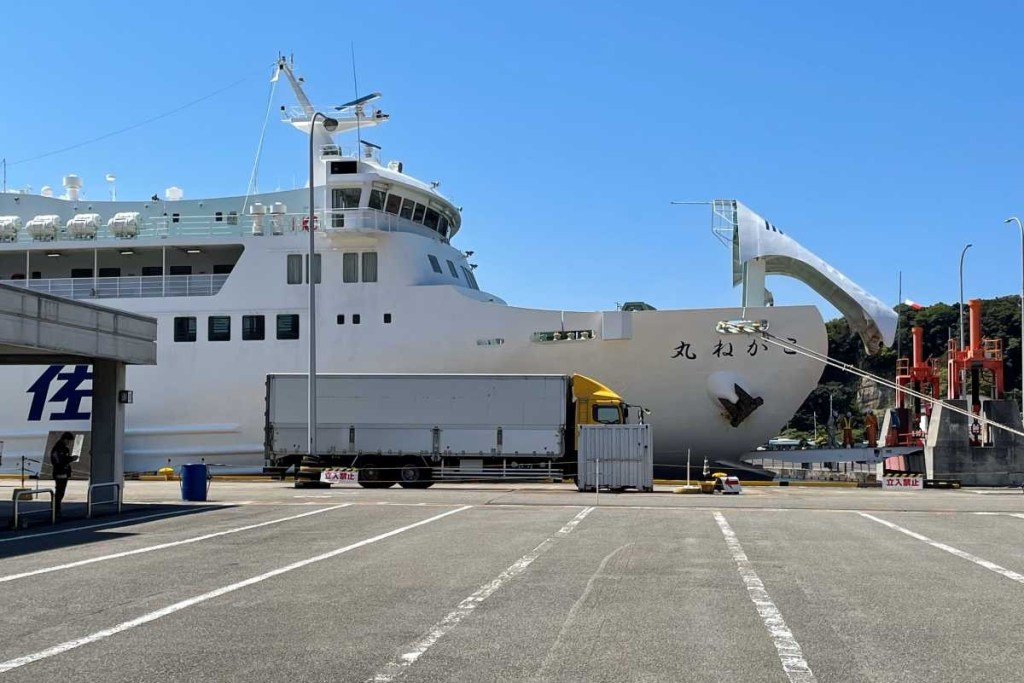
This morning, after having breakfast, I moved to Togura Kamiyamada Onsen in Chikuma City, Nagano Prefecture. On my return journey, I boarded a ferry Ogi Port to Naou Port. ferry was slightly smaller than the one operating Niigata Port and Ryotsu Port.
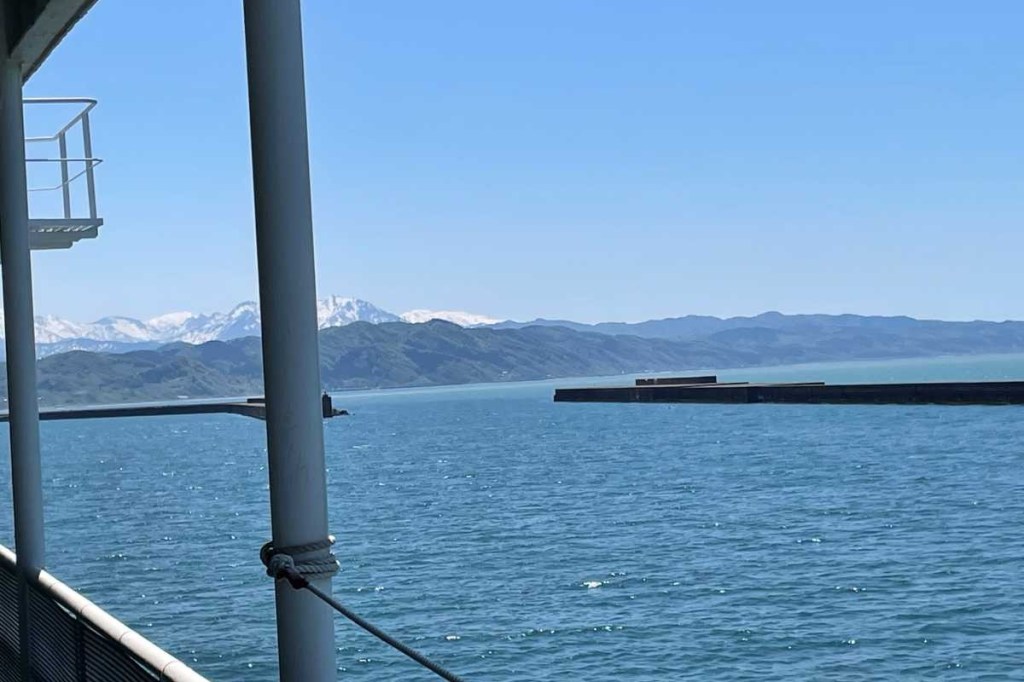
As the ship approached Naoetsu Port, I could see the Northern Alps mountains with still some snow remaining.
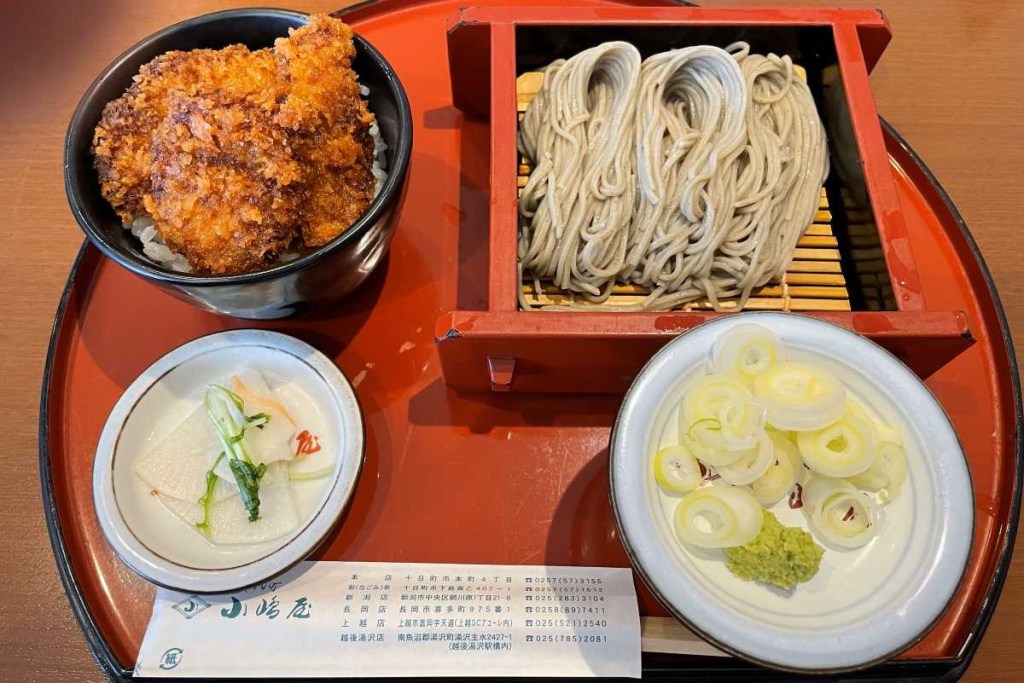
I arrived at Naoetsu Port at 13:15, so after disembarking I went to Kojimaya, a restaurant famous for its hegi soba noodles, located in a shopping mall near the port and ate a set of hegi soba noodles and sauce katsudon.
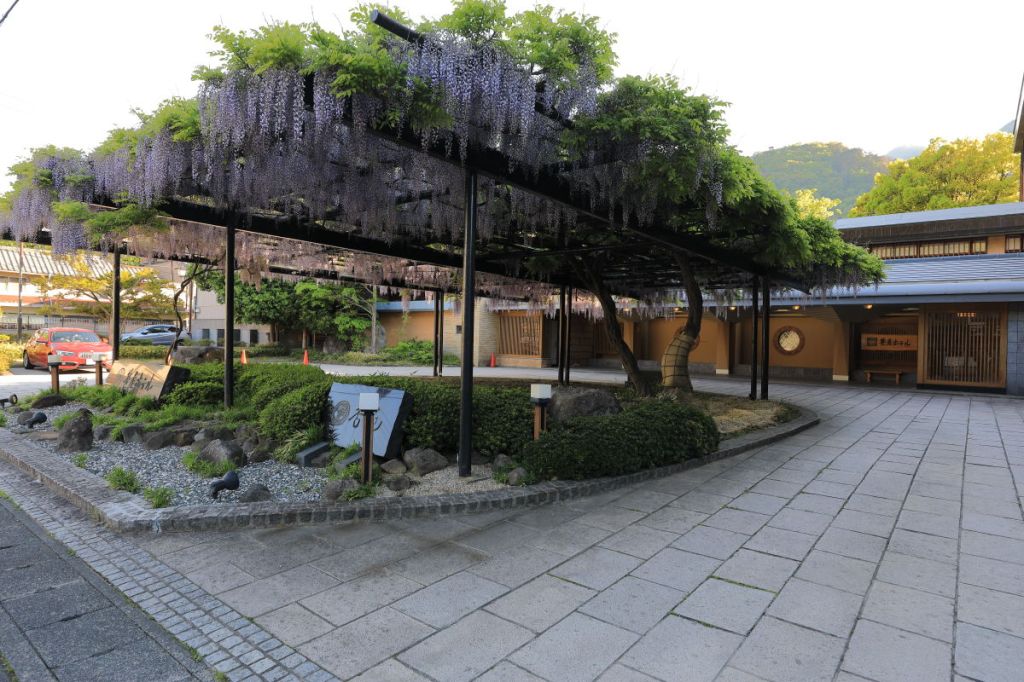
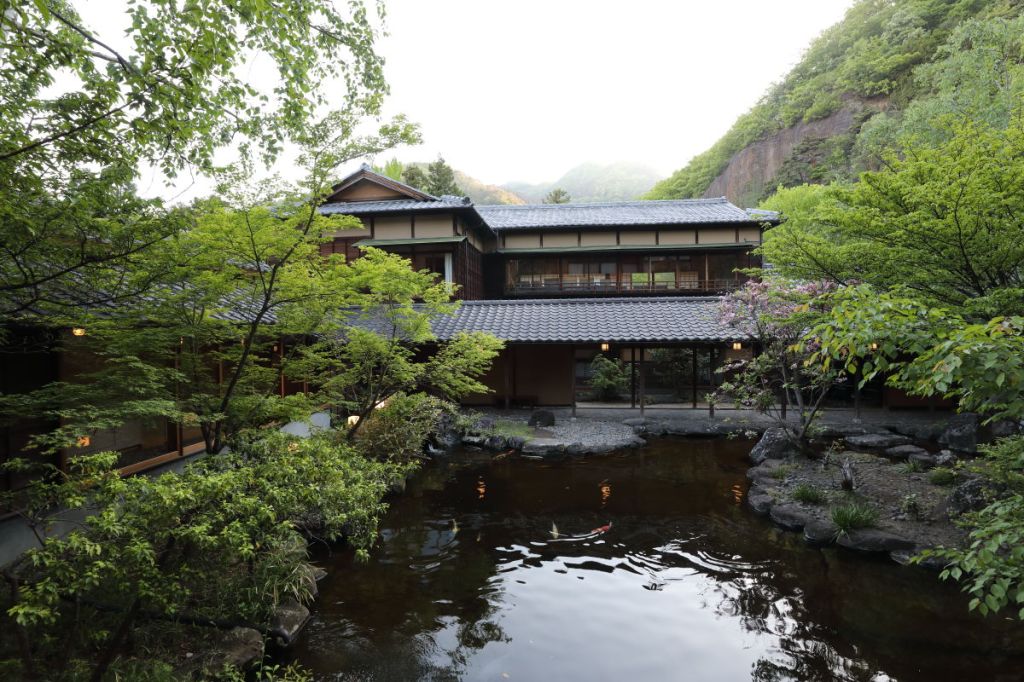
Today’s accommodation is the Sasaya Hotel. In front of the entrance is a large 300-year-old wisteria tree that was bestowed by the Sanada clan, the feudal lord of this area, and it was in full bloom.
Togura Kamiyamada Onsen has a history of over 100 years, having been opened by the founder of Sasaya Hotel, who discovered a hot spring gushing out from the Chikuma Riverbed around 1870. In one corner of the hotel, there is a sukiya-style building called “Honenmushi”, which was designed as a villa in 1932 and is designated as a national registered tangible cultural property. There was a guided tour, so I joined it. There are currently eight rooms, which are preserved while being used, so the room that was not in use that day was introduced.
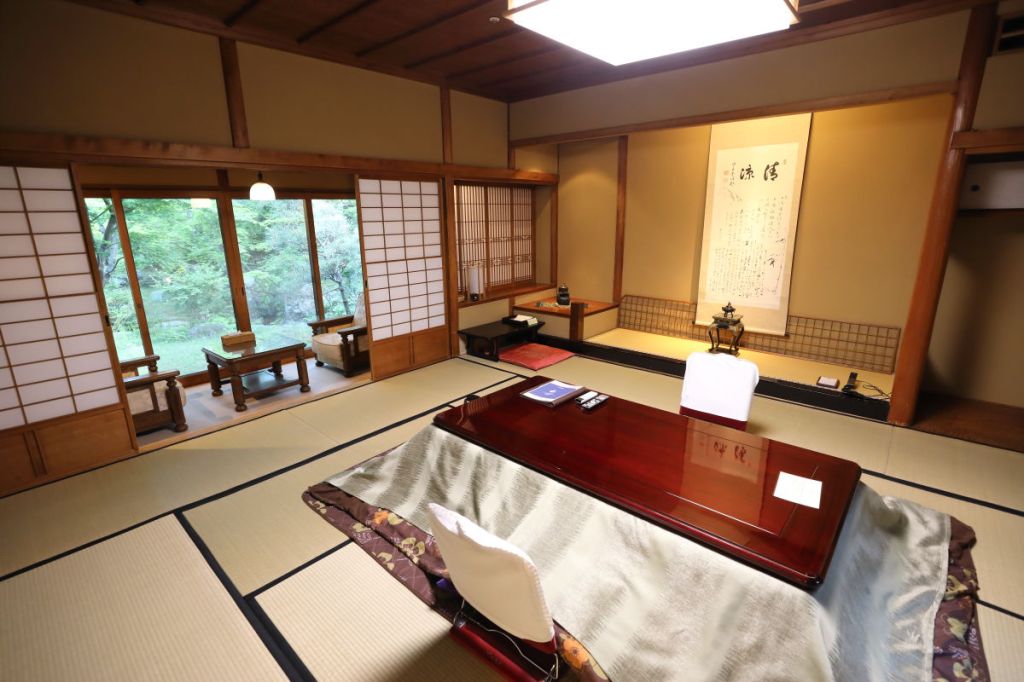
The baths in the rooms also have natural hot spring water.
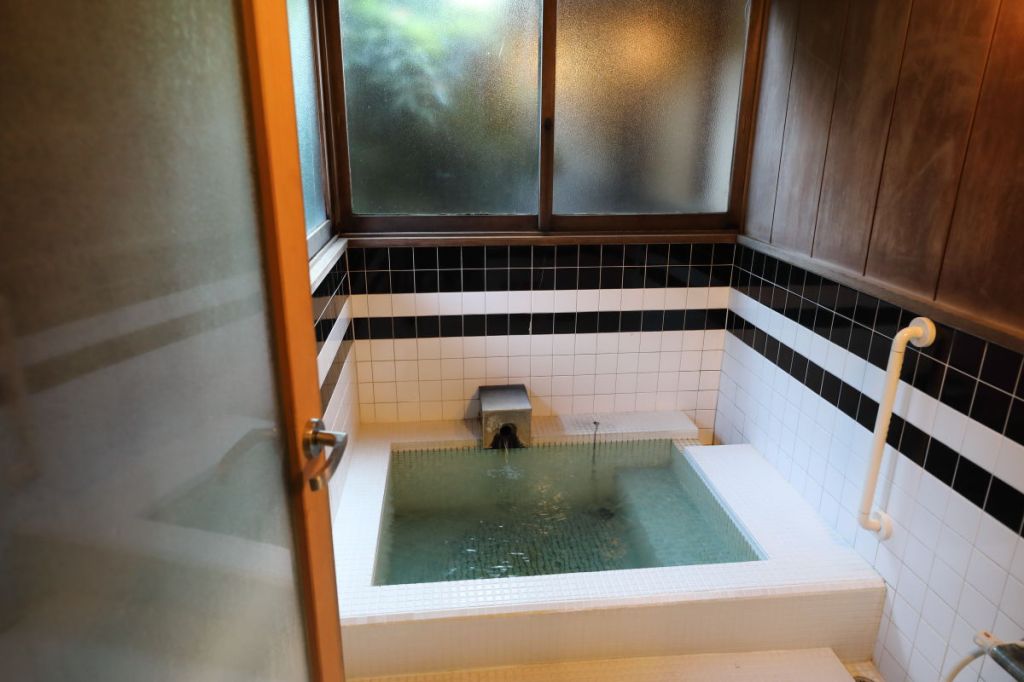
After the tour, I went straight to the hot spring bath. The photo is a screenshot of Ishi no Yu from the hotel’s website. The spring quality is alkaline simple sulfur spring, which is refreshing for the skin. There is also a large bath called Ki no Yu, which is alternated between men and women.

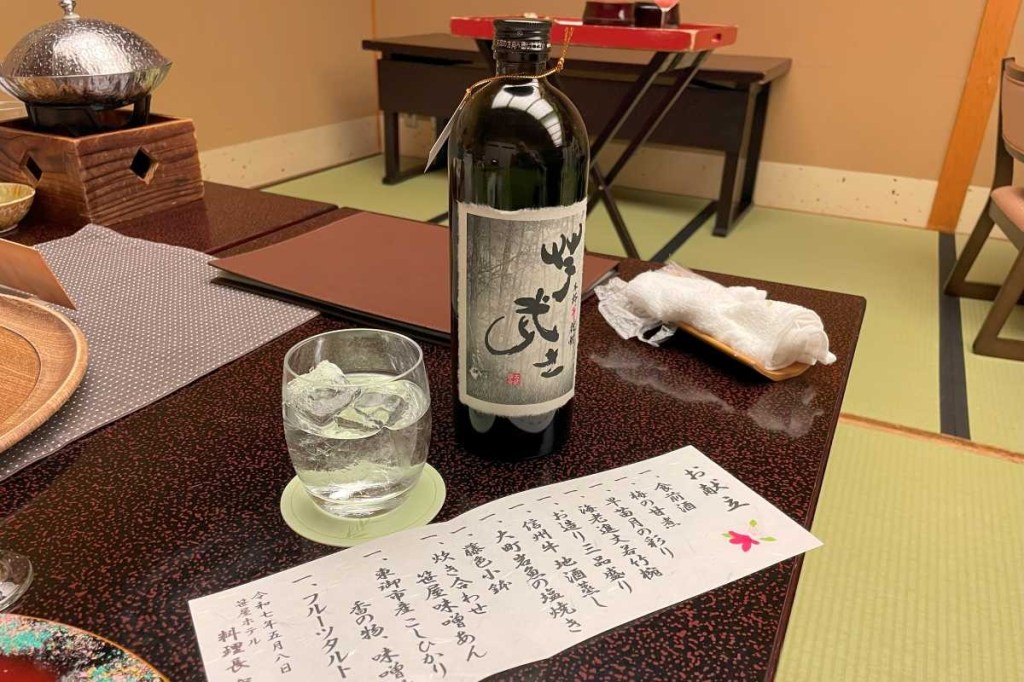
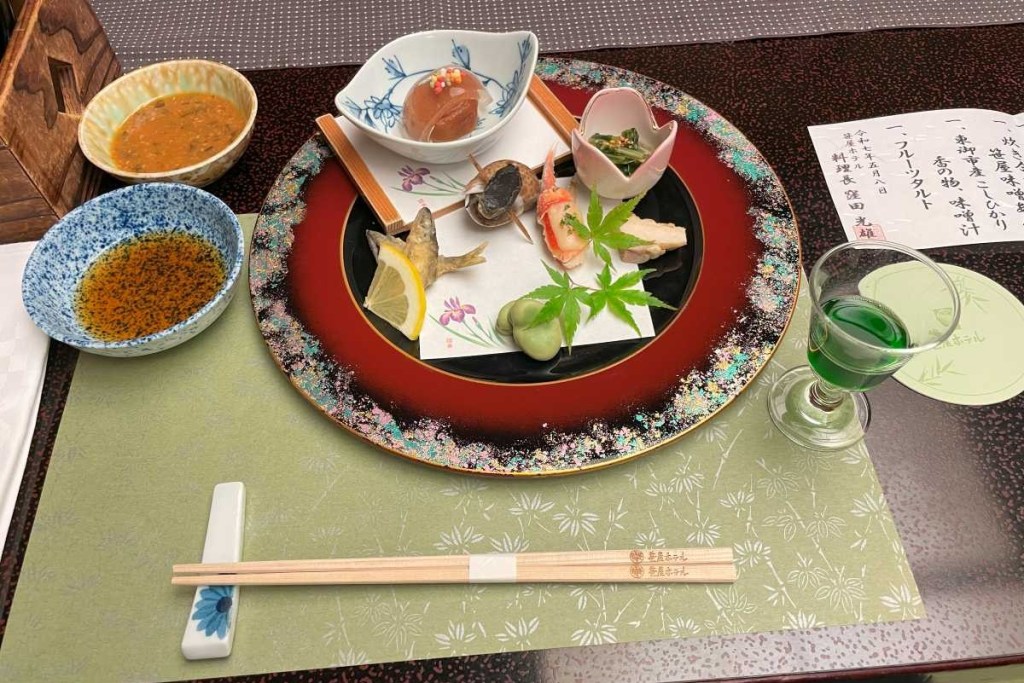
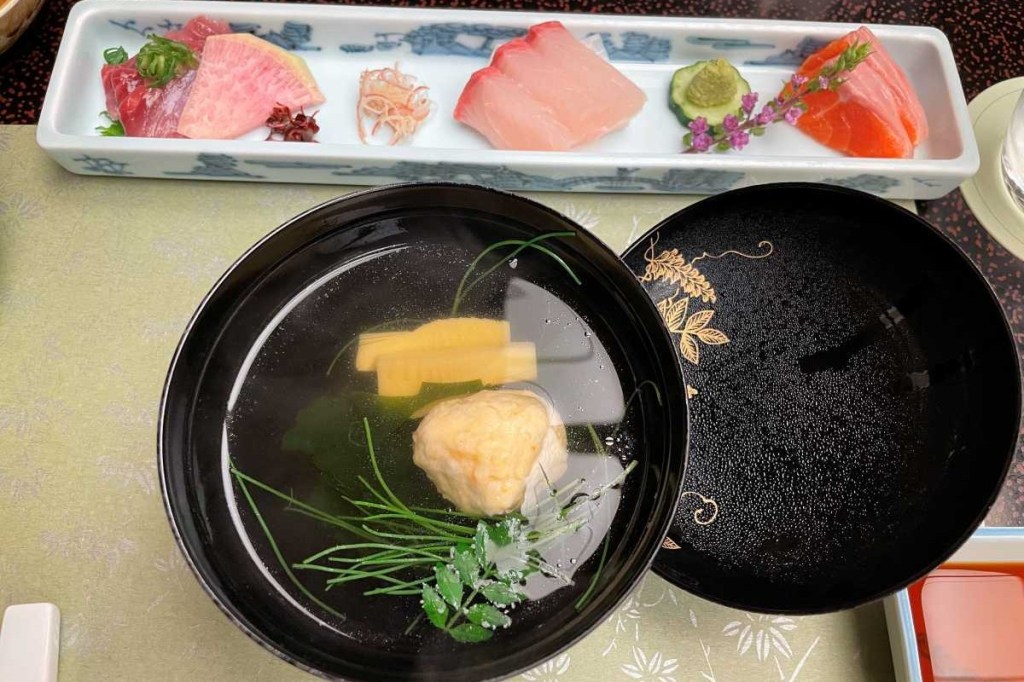
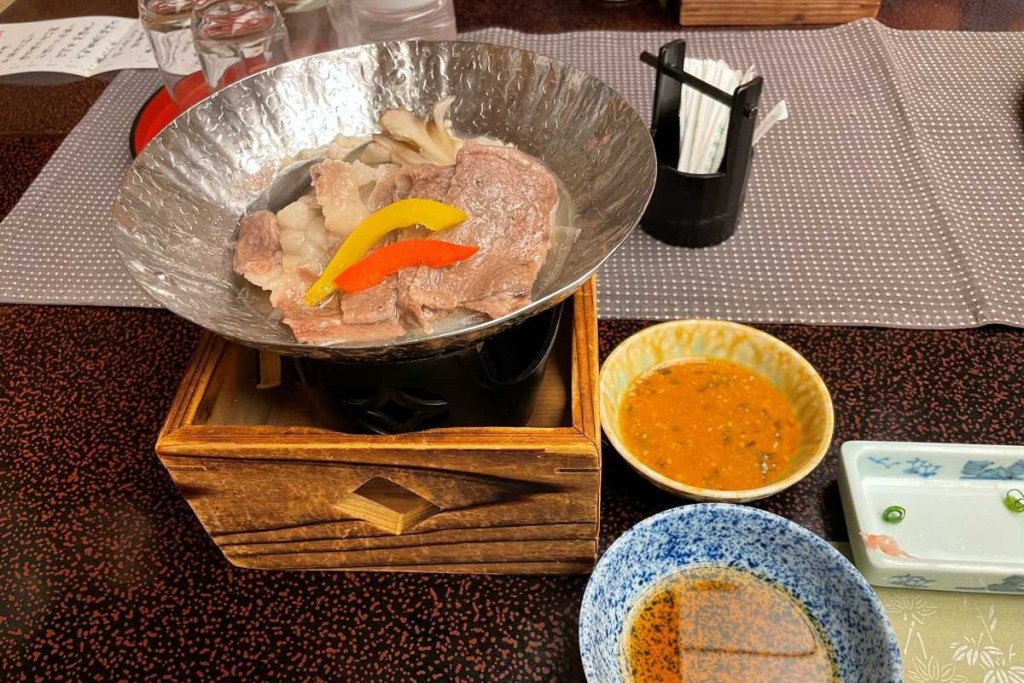
The meal was a Japanese kaiseki dinner, accompanied by sweet potato shochu from Nagano Prefecture.
May 9th (Fri)
Today I’m going to visit some tourist spots near my accommodation before heading home. First, I went to Sarashina Shrine, which is close to my accommodation. The original date of construction is unknown because the ancient documents were burned when the main hall was destroyed, but the shrine was moved to its current location after the site collapsed in an earthquake in 887, suggesting that it must have been built quite a long time ago.

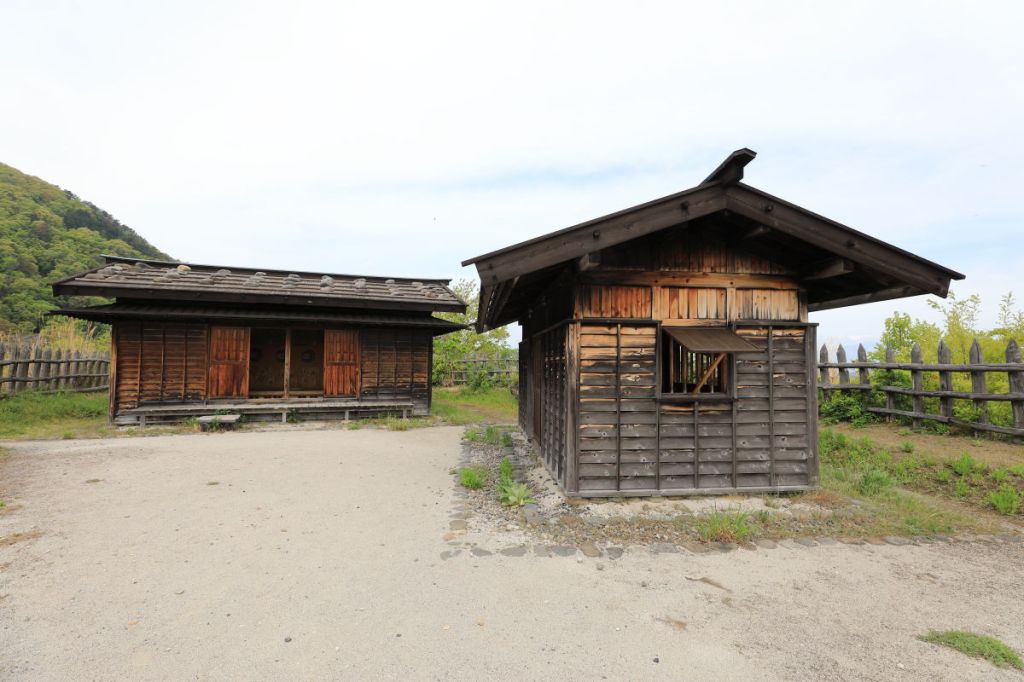
Next, I visited the ruins of Arato Castle. This castle was built in 1524 by the Yamada clan, a branch of the Murakami clan that ruled this area, and was reconstructed in 1995 and opened as Joyama Historical Park. It was apparently used as a filming location for NHK’s historical dramas Furin Kazan and Go: Princesses of the Warring States. It must have been difficult for the film crew to transport their equipment, as they had to climb a long hill from the parking lot.
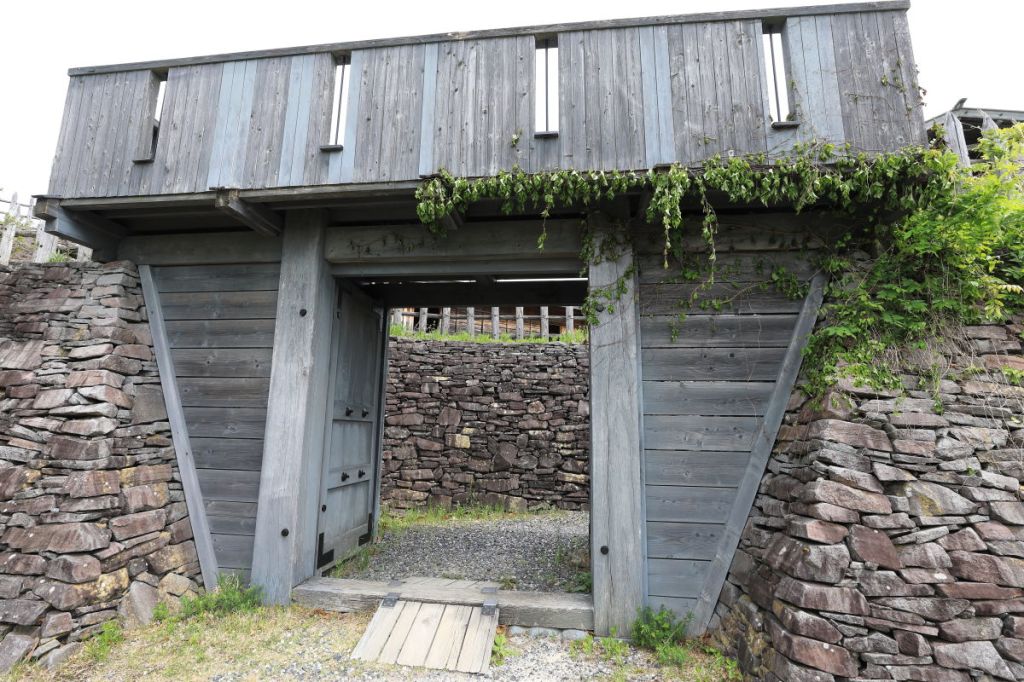
The castle is a type of mountain castle made up of multiple enclosures, which was a common style at the time, but it was a very simple structure. Beyond the turret, you can see the city of Ueda.
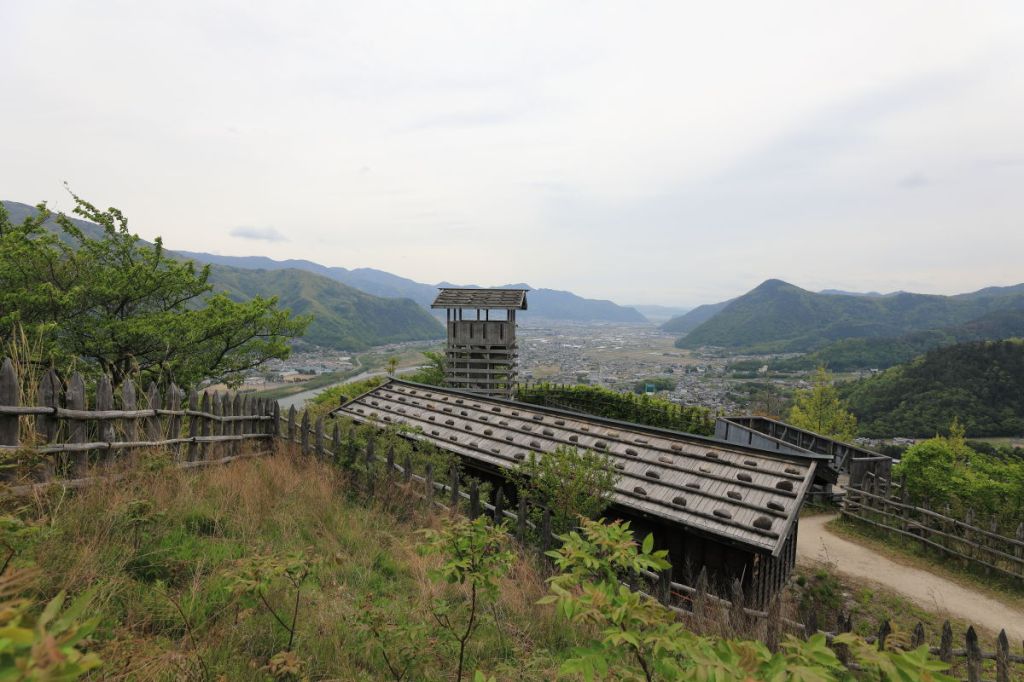
The main castle grounds, containing the barracks and the lord’s residence
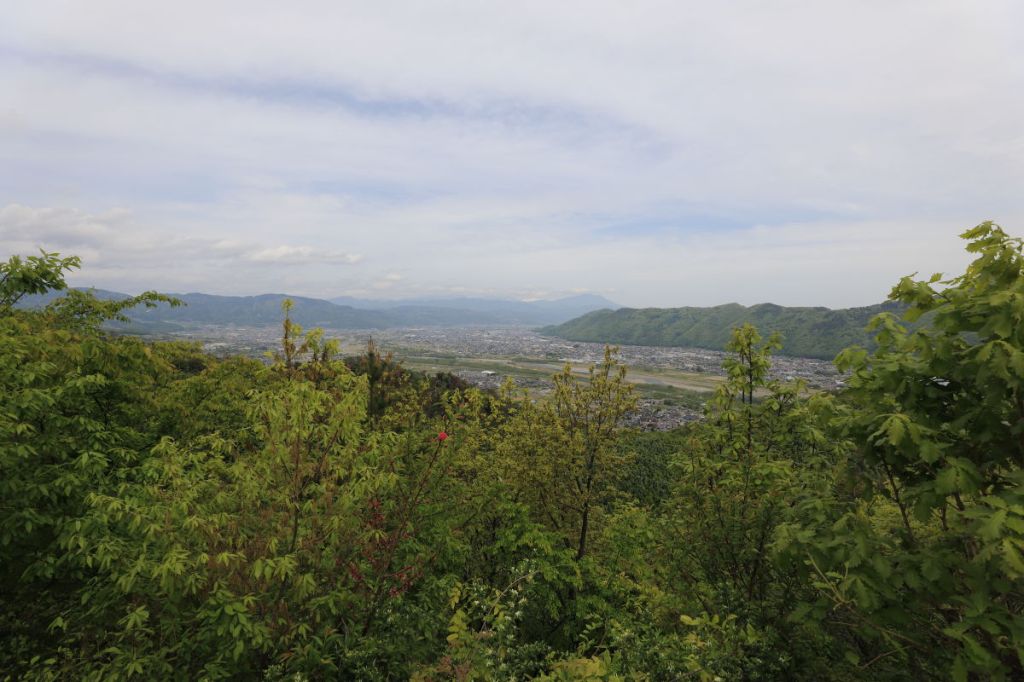
From here you can see the city of Chikuma and beyond that Mt. Togakushi and Mt. Iizuna. According to the information desk staff, if the weather is good you can also see the Northern Alps.
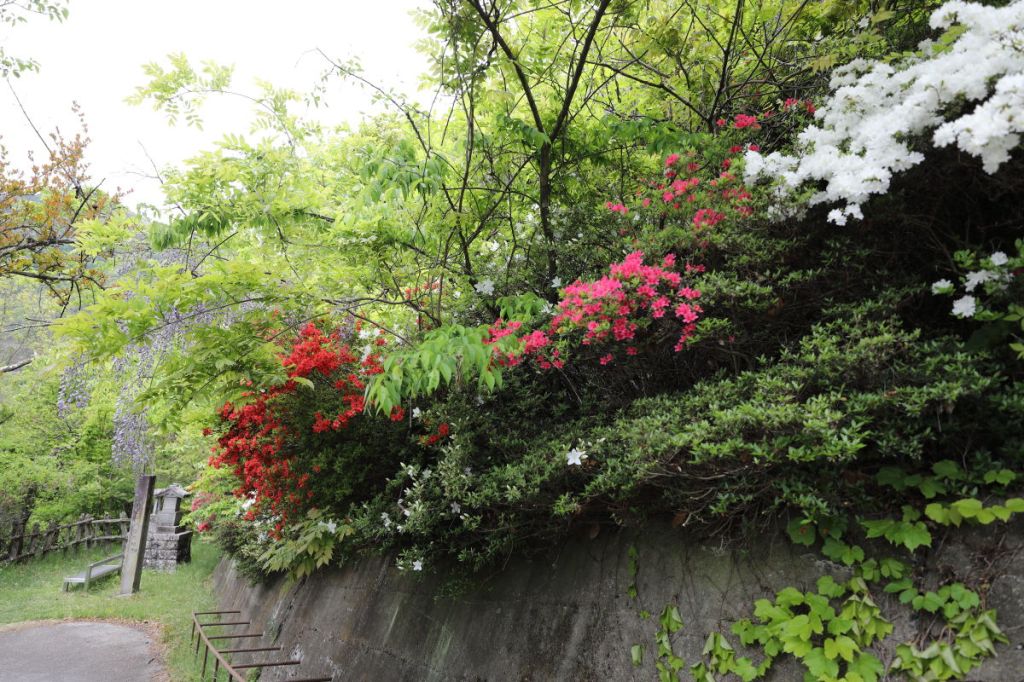
On the way back it was downhill so I had plenty of time to enjoy the vibrant colours of the azalea and wisteria flowers.
Next, I went to Seigenzan Chishikiji Temple, a temple of the Shingon sect of Buddhism. The Daimido Hall was built in 740 as a place of imperial prayer for Emperor Shomu. The Niomon Gate was donated by Minamoto no Yoritomo in 1197 and still stands today.
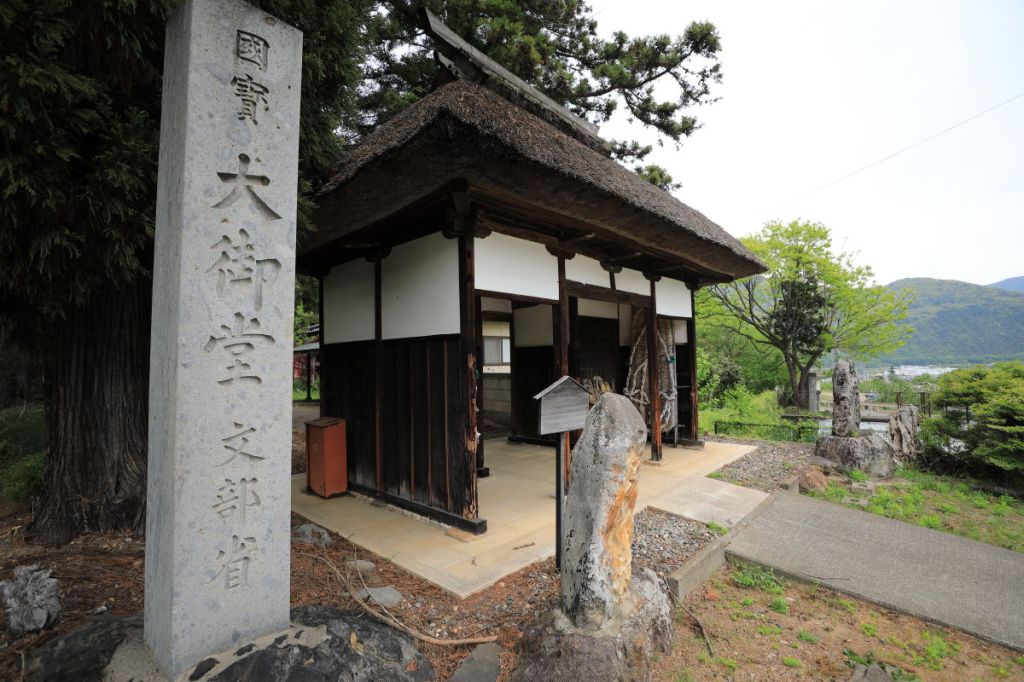
Although parts of the Daimido Hall’s building are from the Kamakura period, most of it retains features from the Muromachi period (from 1334 onwards), so it is said to have been rebuilt during that period.
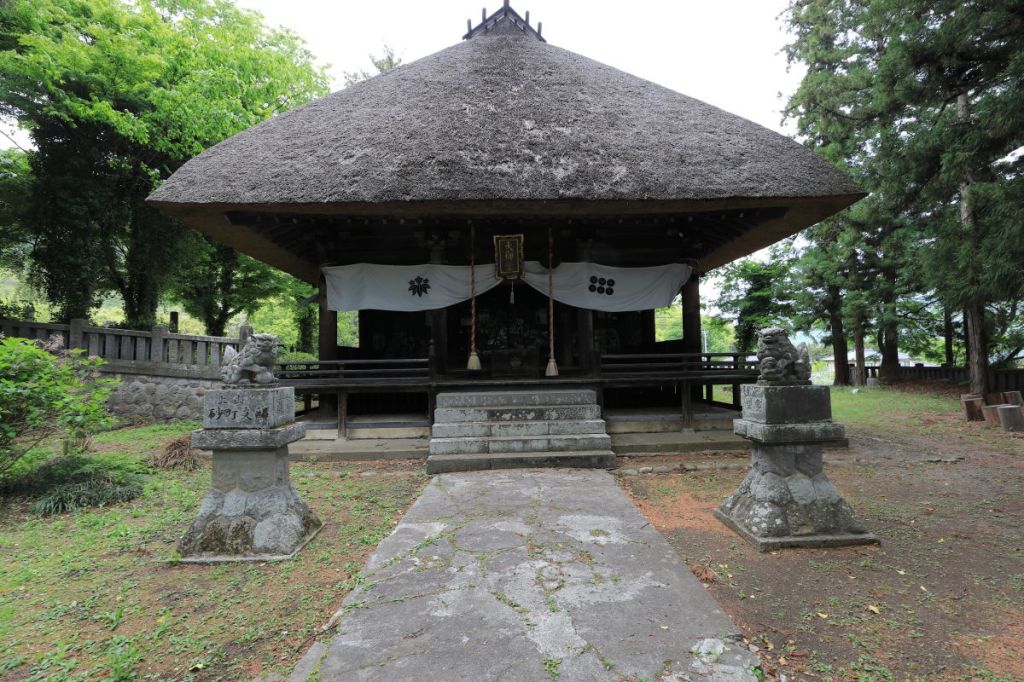
A woman at the temple office unlocked the door to the main hall for me, so I was able to see the principal image inside.
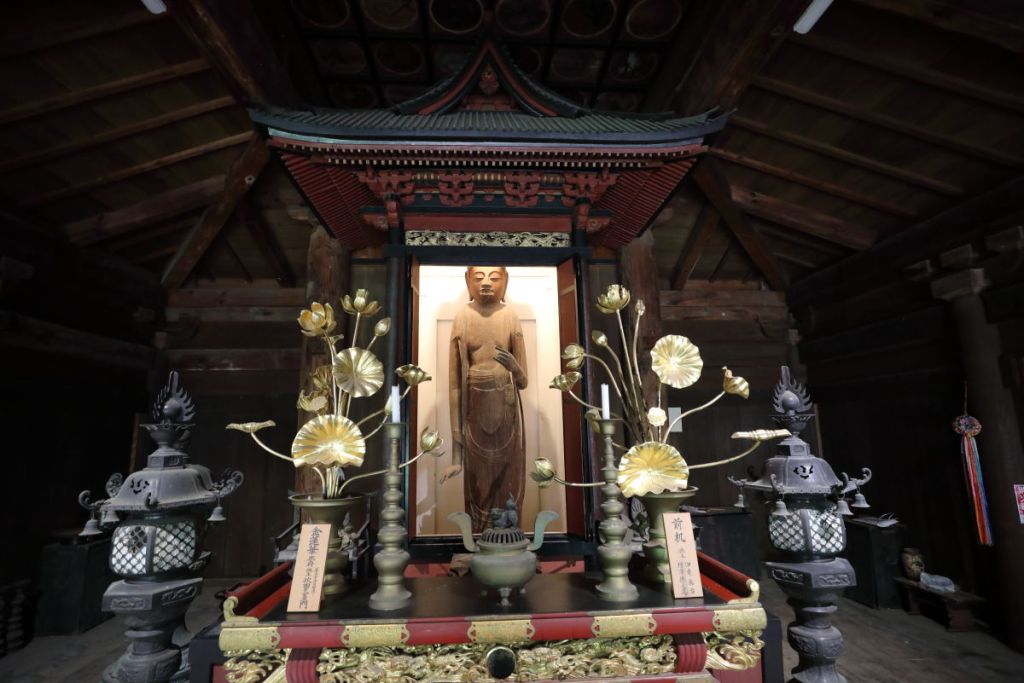
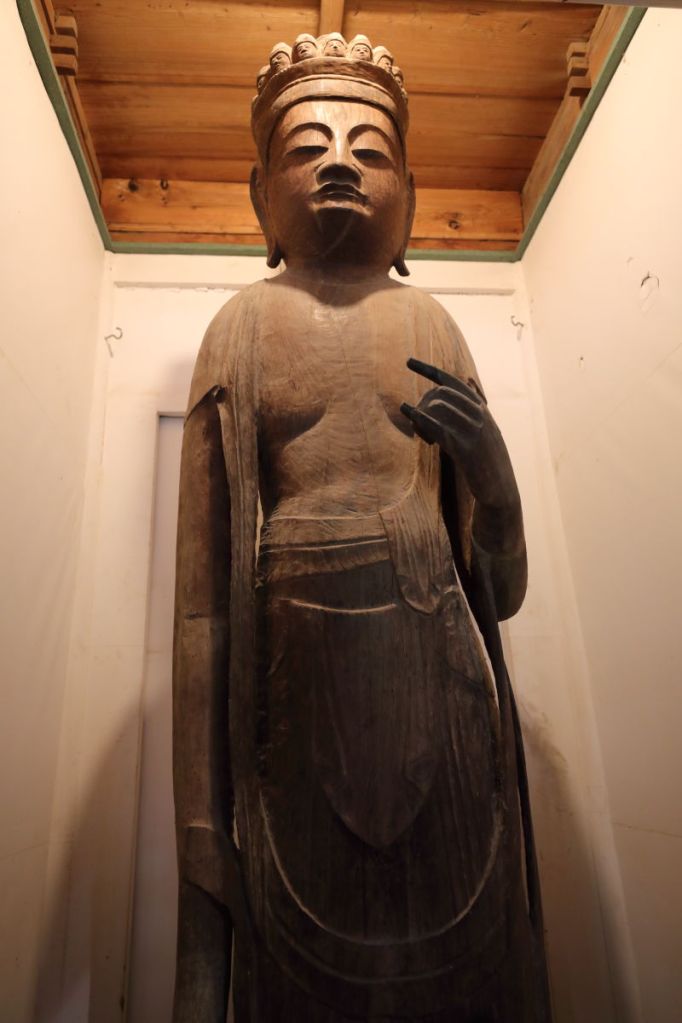
The principal image is an impressive Eleven-Headed Kannon, a national important cultural property that is said to have been created by the monk Gyoki Bodhisattva (668-749), carved as a single standing statue out of zelkova.
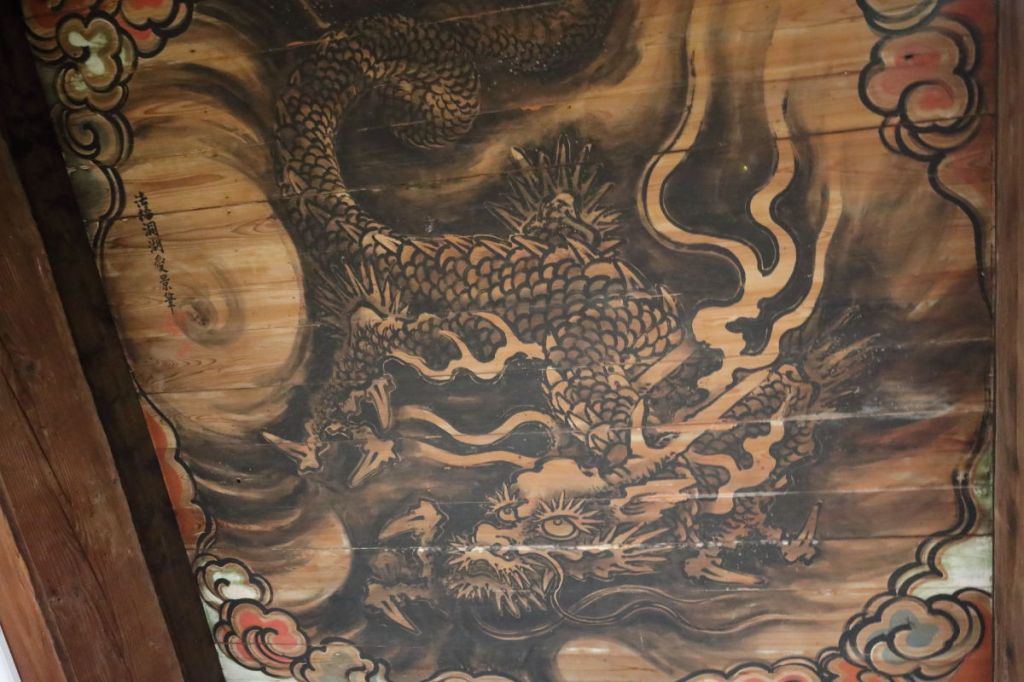
There used to be a painting of a roaring dragon above the main hall, but now the floor has been replaced with tatami mats, so it no longer echoes when you clap your hands.
With that, I finished sightseeing in Chikuma City, had lunch at a local Western restaurant, and then took the Joshinetsu Expressway and the Kanetsu Expressway to return home safely. I drove quite a long distance there and back, but the drive was smooth without any traffic jams or problems.
I enjoyed the beautiful sea and scenery of Sado Island, saw the Sado Gold Mine, a designated World Heritage Site, and the old shrines and temples of Chikuma City, and enjoyed the hot springs. It was a very satisfying trip. I plan to go on a hot spring tour again next month using my car.
 旅好き爺の旅行記
コメントを残す