

From Sunday, October 19th to Wednesday, October 22nd, I traveled to Tomonoura, Hiroshima City, and Dogo Onsen. The purpose of this trip was to visit Tomonoura, a port town with an old townscape that I had always wanted to visit, and the Dogo Onsen Main Building, where preservation and repair work will be completed in December 2024. I was also looking forward to enjoying the rich seafood of the Seto Inland Sea.
October 19th (Sun)
I boarded JAL flight 257 departing from Haneda Airport at 09:55 and arrived at Hiroshima Airport at 11:20. After having a light lunch at the airport, I took the limousine bus bound for Fukuyama Station at 12:25, arriving at Fukuyama Station at 13:30. I had booked the inn’s free shuttle bus departing at 14:45, so I strolled around the station until then. I was surprised to see so many young people dressed in cosplay around the station; it seemed that an anime-themed event was being held by Fukuyama Anime that day.
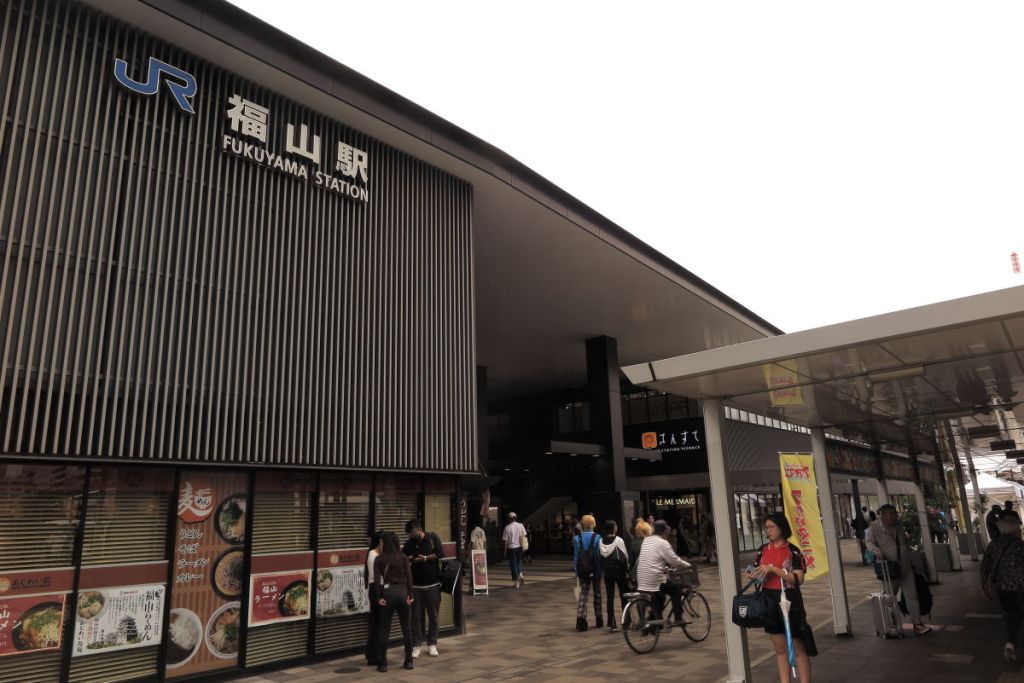
In front of the station is the Izura Fisherman Statue, which was erected to commemorate the opening of the Sanyo Shinkansen. It is said to be the work of the famous sculptor Hirakushi Denchu. Across the tracks is Fukuyama Castle, designated as one of Japan’s 100 most famous castles, but due to time constraints I decided to pass it up this time.

Today’s accommodation is Keishokan Sazanamitei, which is conveniently located for sightseeing in Tomonoura.
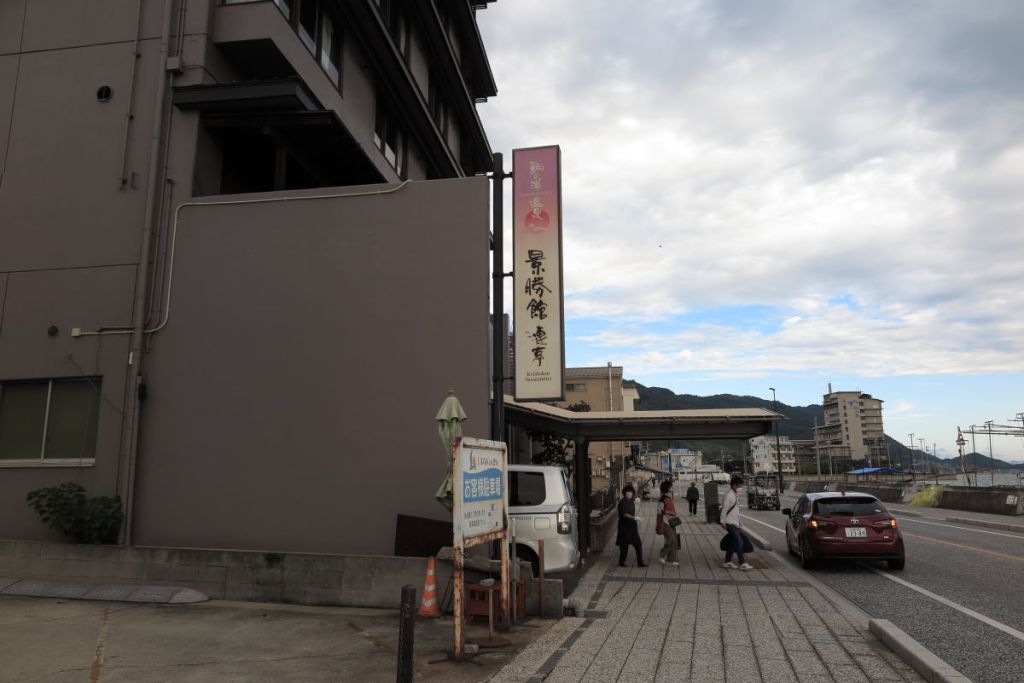
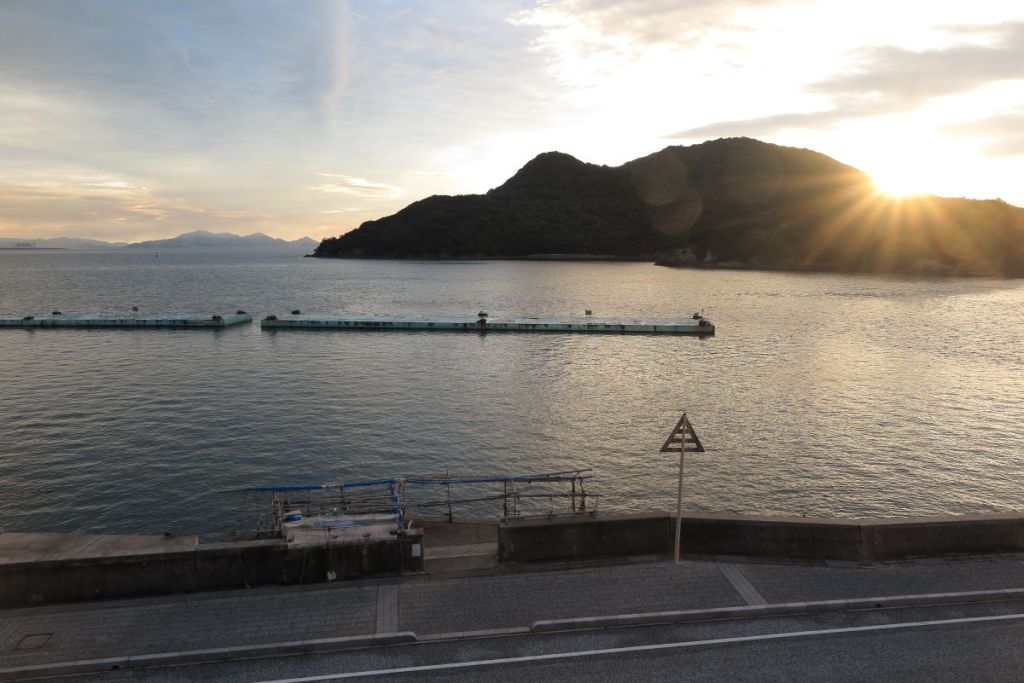
All rooms have an ocean view, offering a panoramic view of the Seto Inland Sea.
After taking a rest in the room, I went to the hot spring on the top floor. The view from the bathroom was amazing. The water is a cold mineral spring containing radium, and although it is tasteless and odorless, it warms the body. The photo is a screenshot from the inn’s website.

Dinner is a kaiseki course meal using seasonal ingredients from the Setouchi region. Appetizers include saury rolls, sea bream jelly, and sesame tofu.
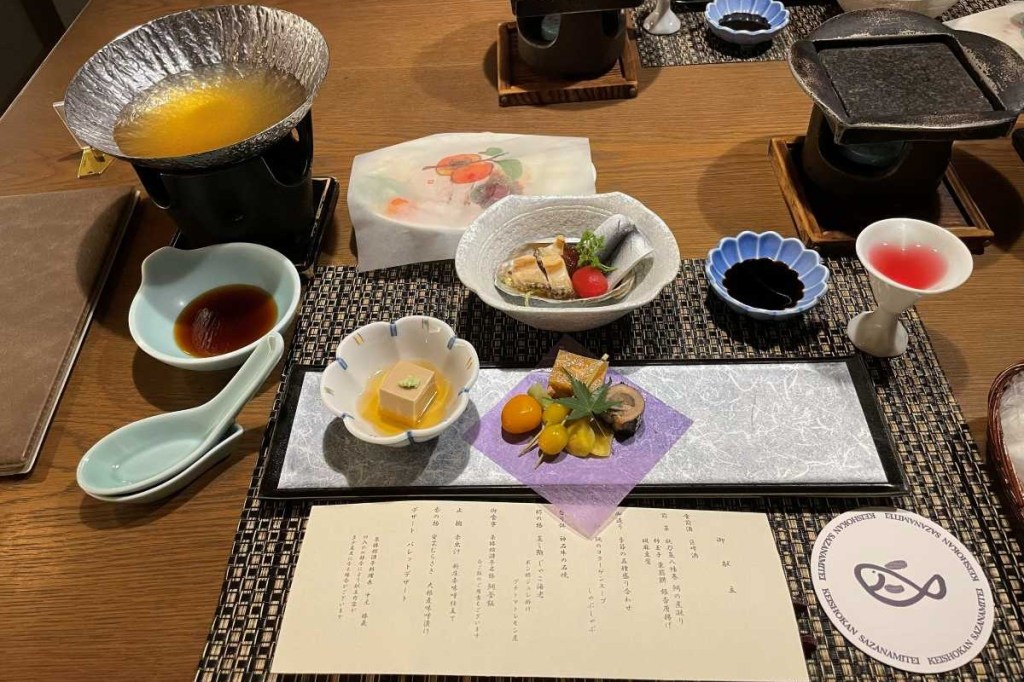
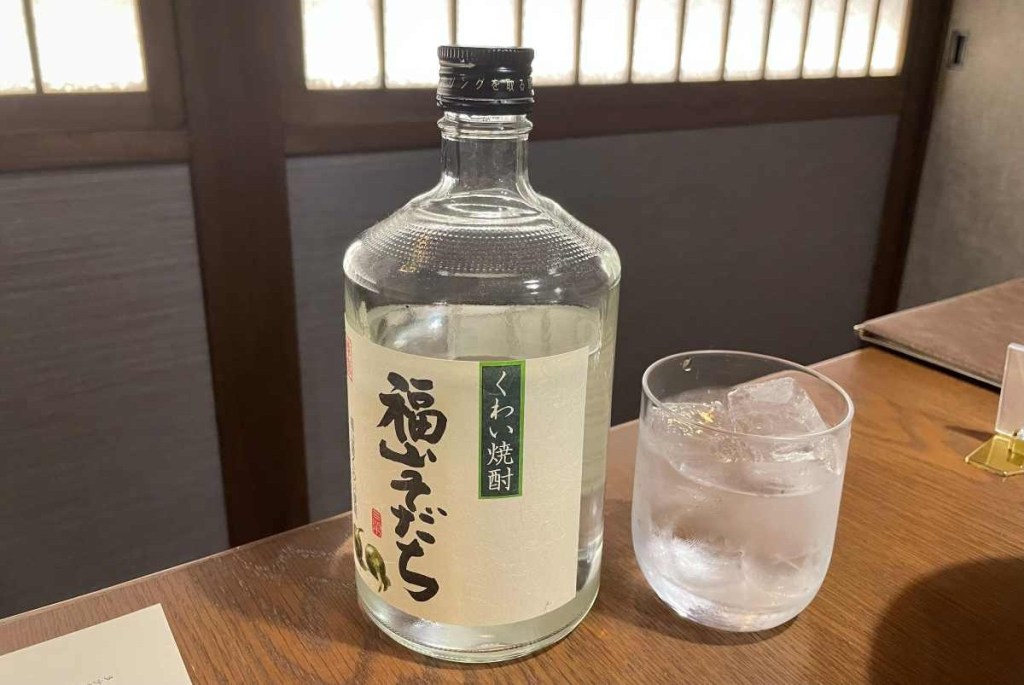
They had a shochu made with local arrowheads, so I ordered Fukuyama Sodachi. It’s a blend of rice shochu and arrowheads, and has a refreshing taste with the aroma and flavor of arrowheads.
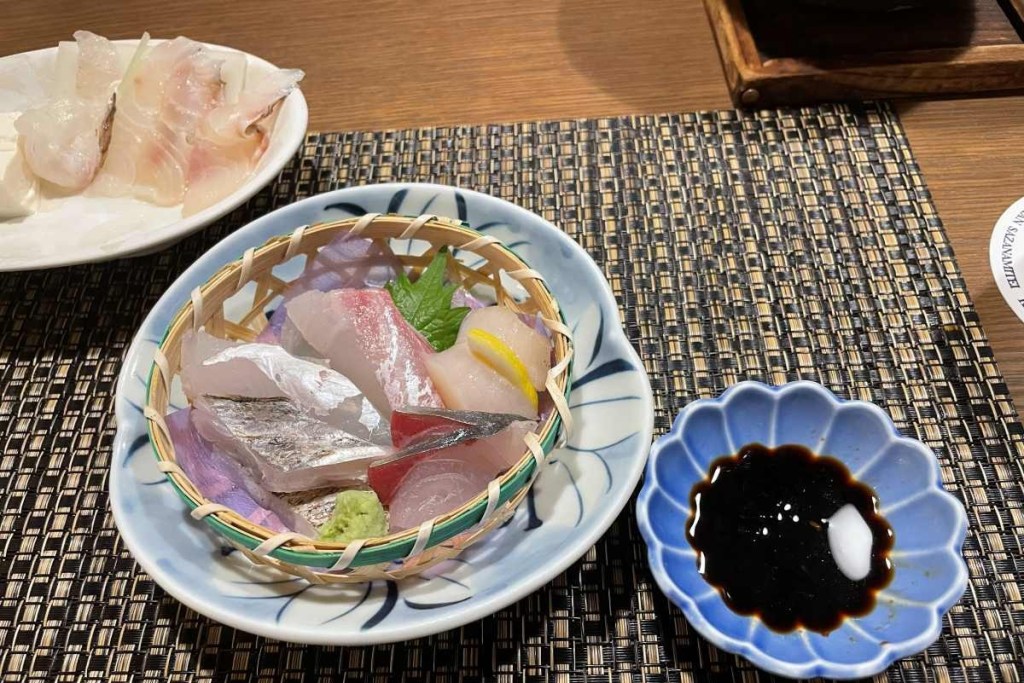
The sashimi consisted of five types, starting from the front left and going clockwise: swordfish, flathead, red sea bream, scallop, and striped jack.
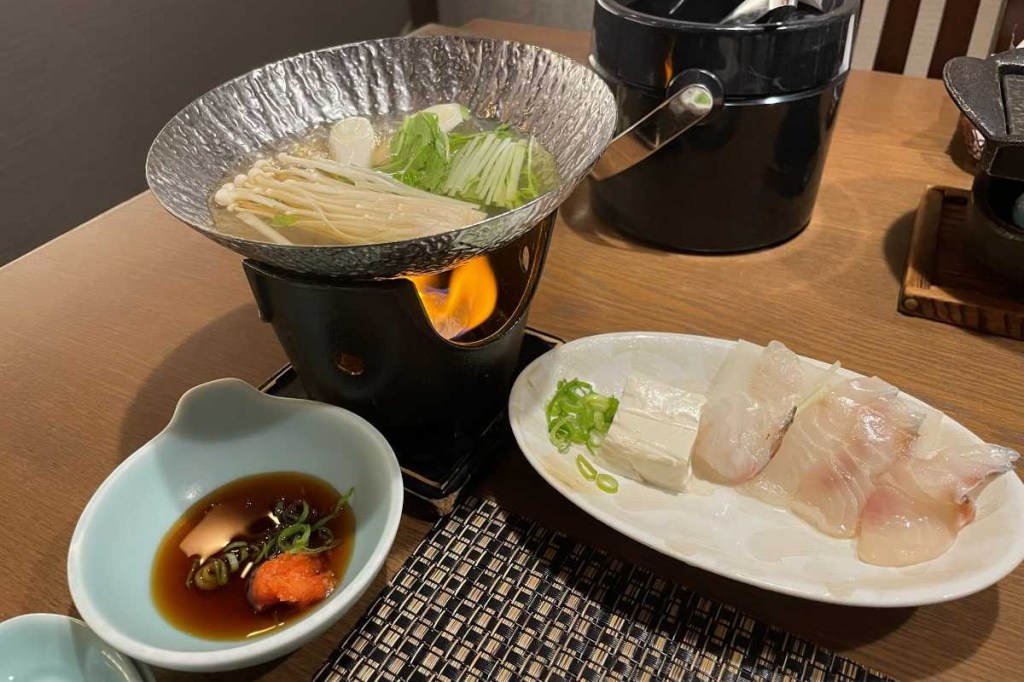
The sea bream collagen soup shabu-shabu was delicious when eaten with fillets of sea bream dipped in ponzu sauce.
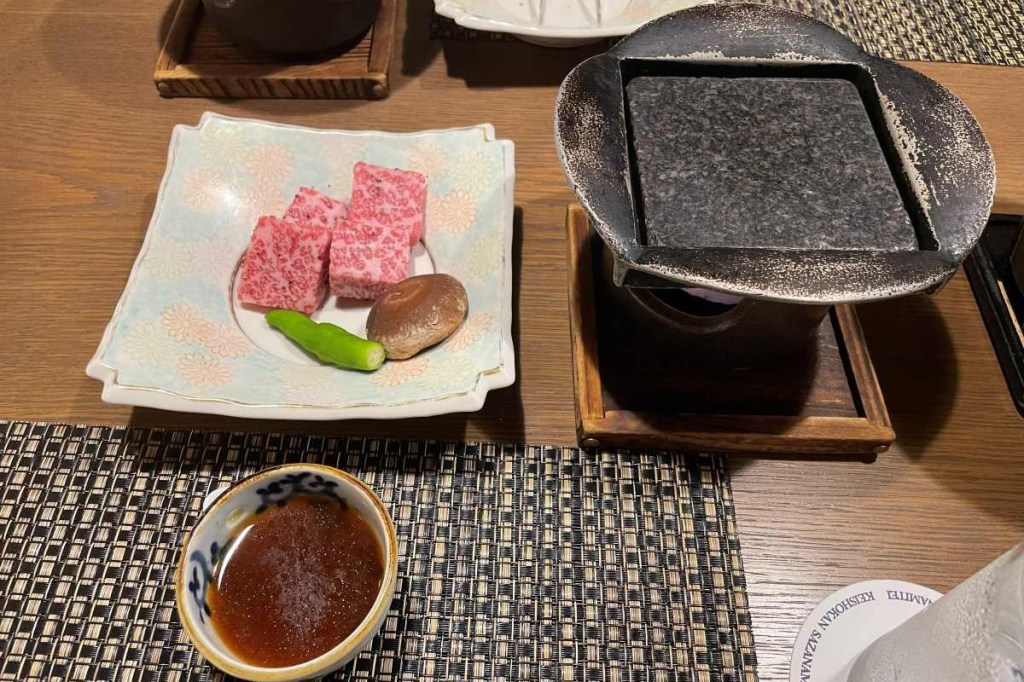
The stone-grilled Jinseki beef, a rare Wagyu beef raised on the Jinseki Plateau in Hiroshima, with only 400 head shipped annually, was exquisite.
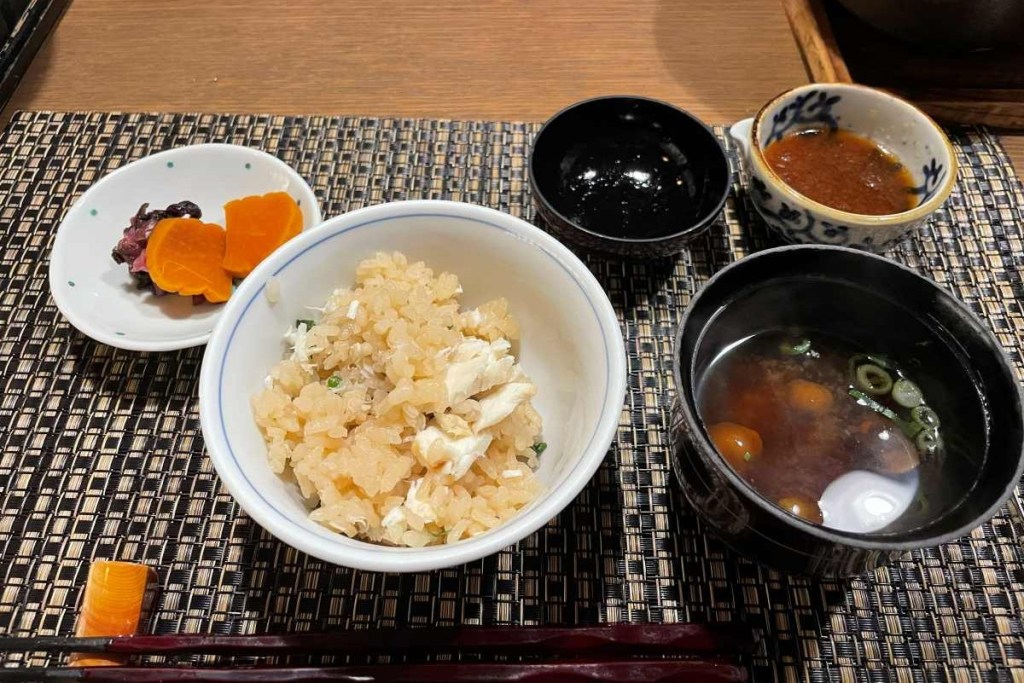
Sea bream rice pot and red miso soup are also local dishes.
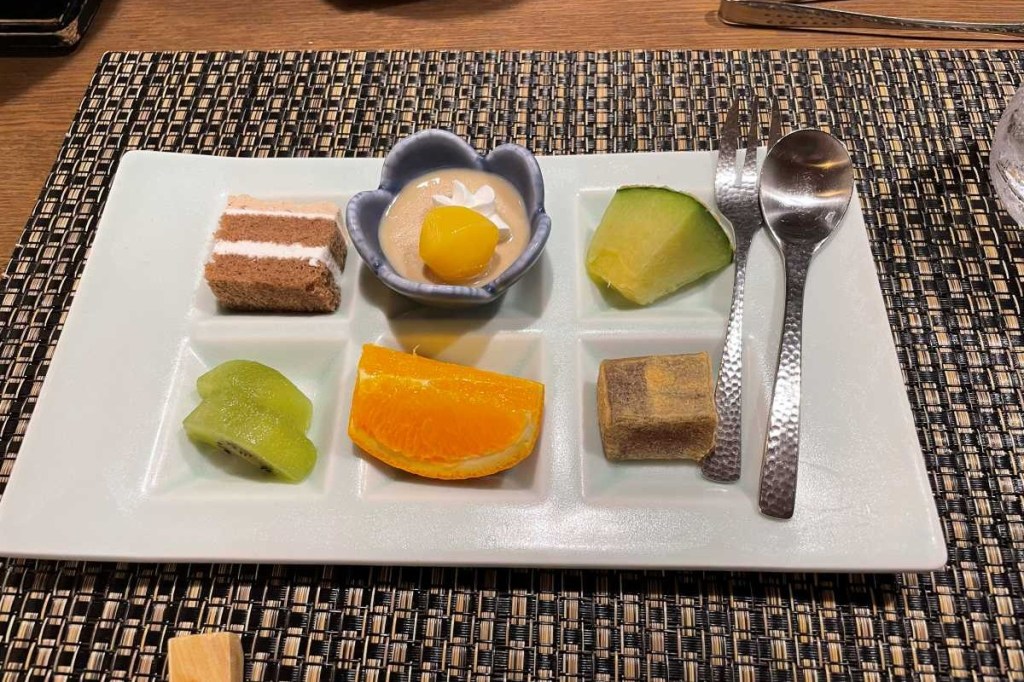
Six kinds of desserts were also served. This time, the course was a small gourmet meal, but it was still very filling.
October 20th (Mon)
After breakfast, I checked out and went sightseeing in Tomonoura until the shuttle bus departed at 2:00 PM. The first place I visited was Fukuzenji Temple’s Taichoro. Taichoro, adjacent to the main hall here, is a palace built in 1690 and designated as a national historic site. It was also used as a guest house for Korean envoys.
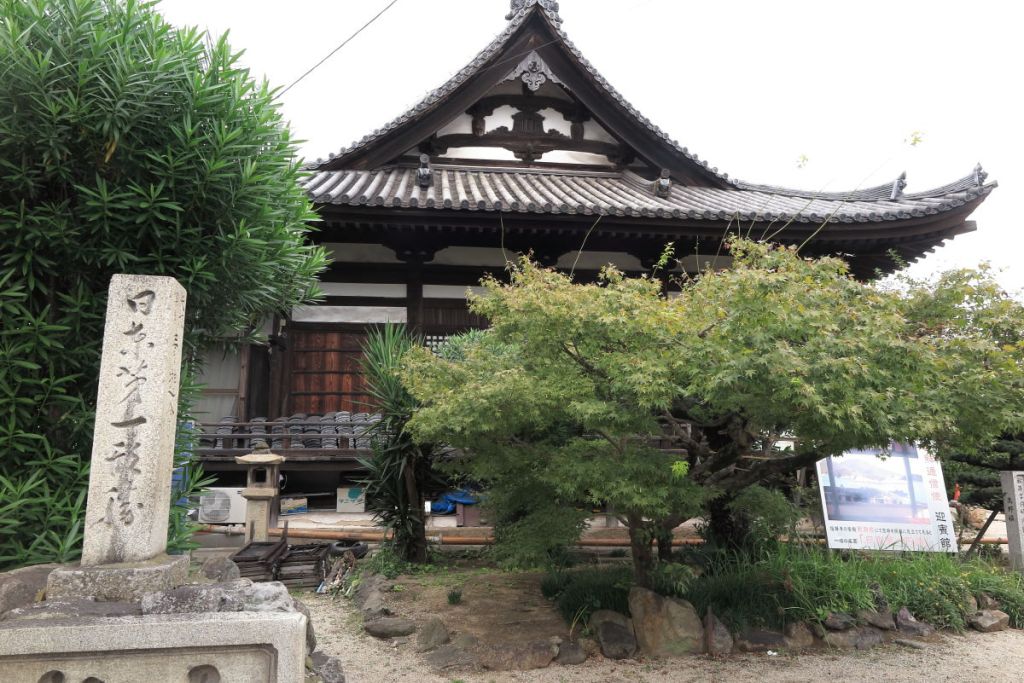
If you go up the stairs and turn right, you will find Taichoro.

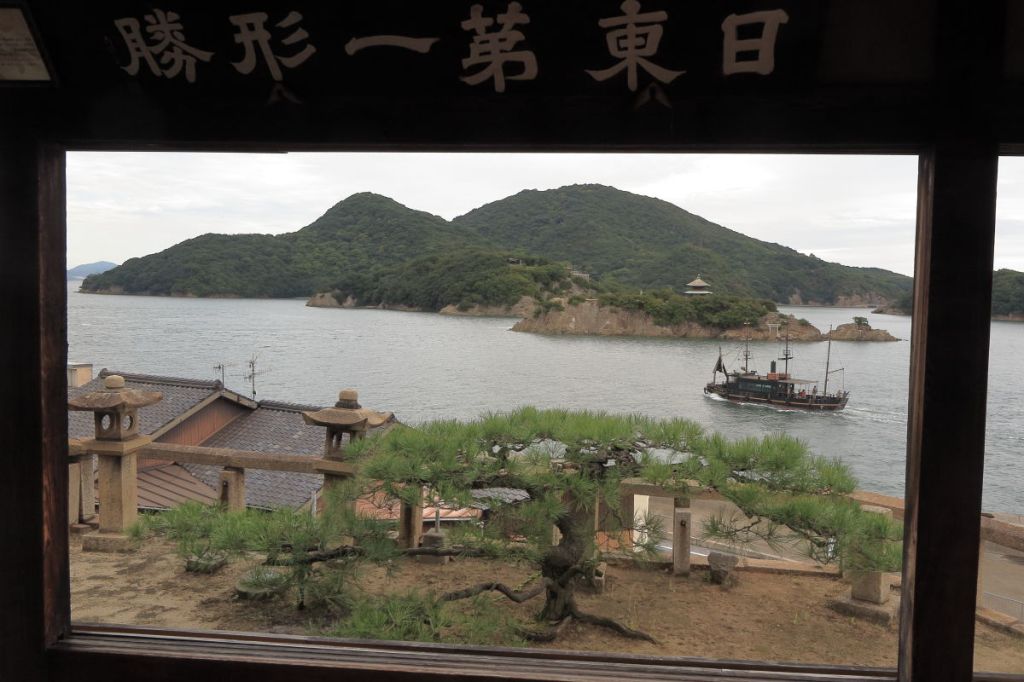
In 1711, the Korean envoy, Yi Bang-Hyeon, praised it as “the most beautiful sight in the East of Japan.” It certainly is a magnificent view, like a framed painting. The island in the foreground is Bentenjima, and behind it is Sensuijima.
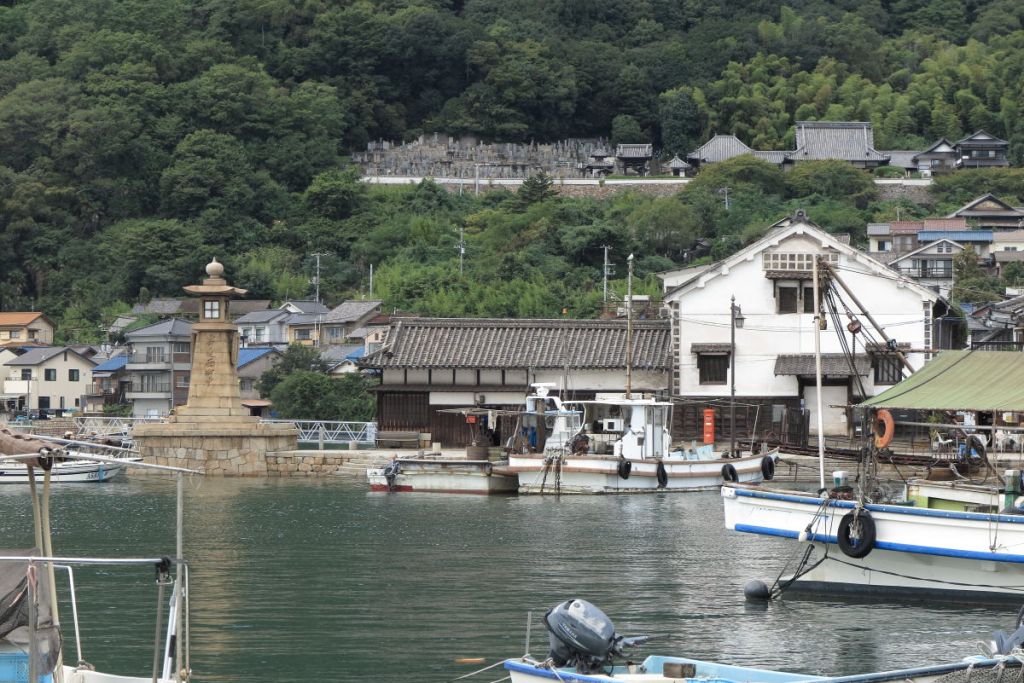
When I headed out to the harbor from here, I could see the iconic Joyato light.
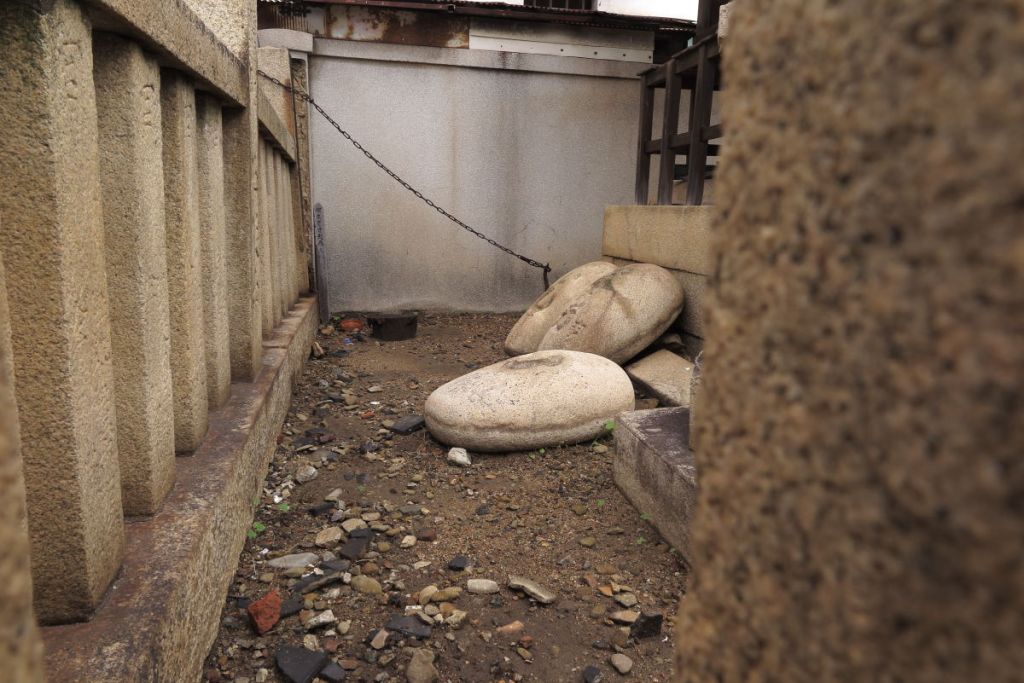
A short walk later, at the back of the Sumiyoshi Shrine, I came across three Tomonotsu chikaraishi (power stones). They are oval granite stones, weighing between 230kg and 118kg, and are engraved with the name of the donor and their weight.
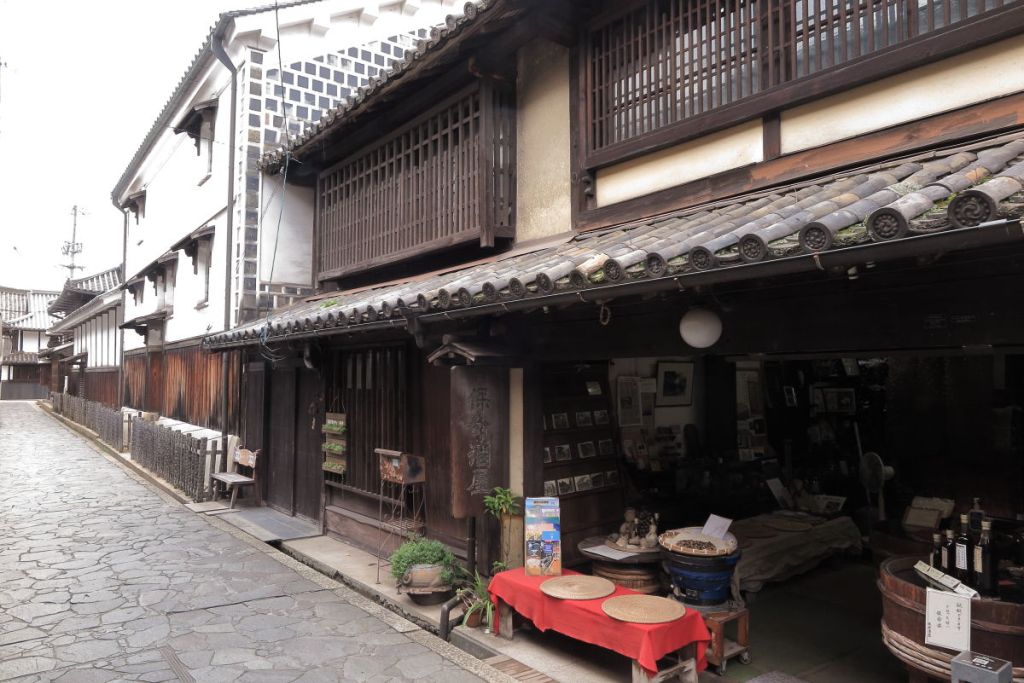
The road to the Joyato light is lined with old townscapes.
To the right of the Joyato is the Iroha Maru Exhibition Hall, which displays items salvaged from the Iroha Maru, the ship of Ryoma and the Kaientai that sank in 1867, but it was closed on the day we visited and we were unable to enter.
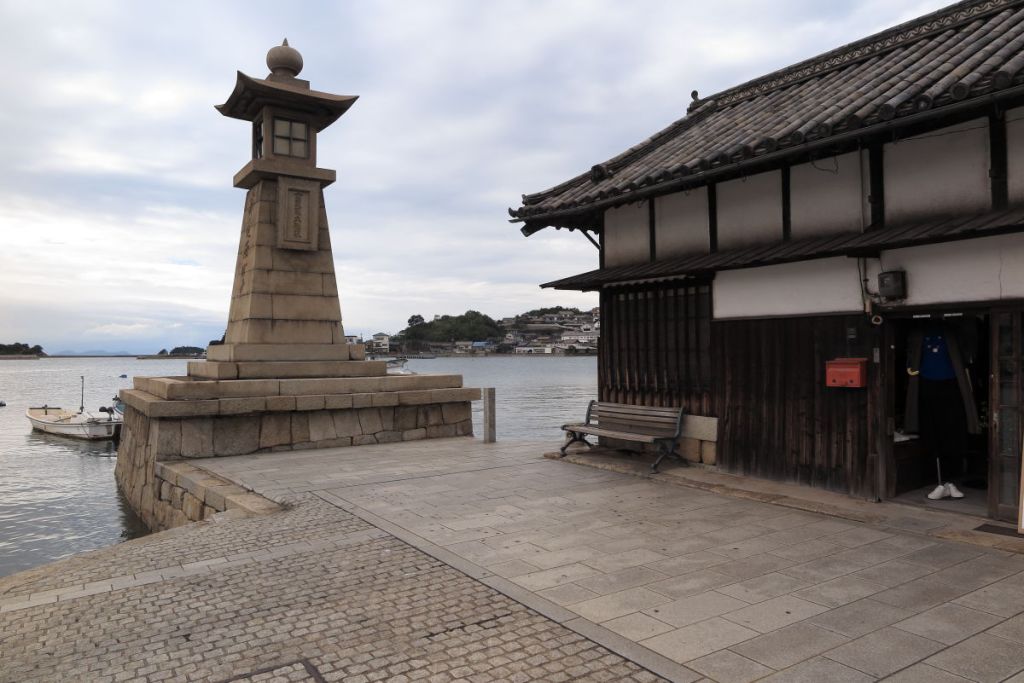
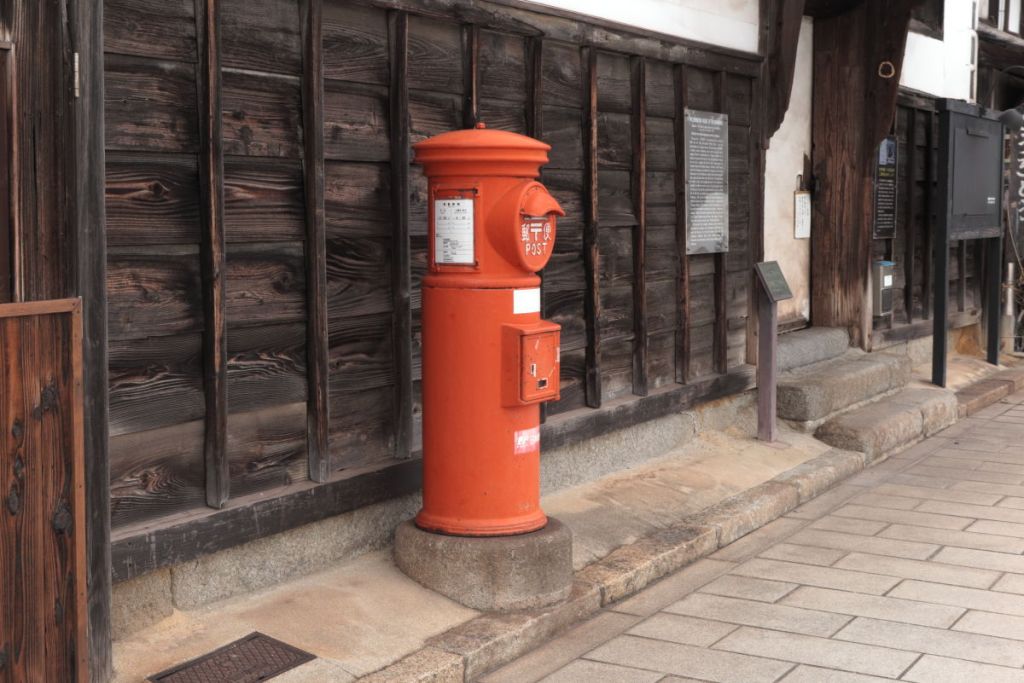
There was a classic post box next to the Irohamaru Exhibition Hall.
I stopped by the Ota family residence, which is designated as an Important Cultural Property of Japan, nearby.
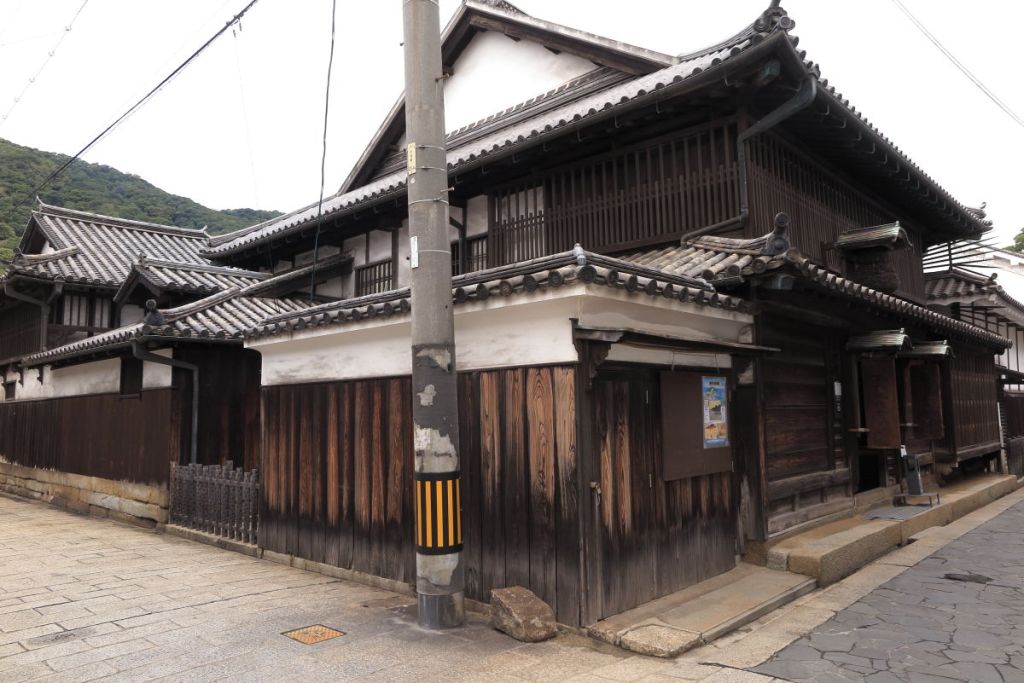
This two-story hip-and-gable building was built by the Nakamura family of Homeishu sake from the mid-18th century onwards, and prospered from the mid-Edo period to the early Meiji period by producing and selling sake such as Homeishu, a famous Tomo specialty. In the Meiji period, the Ota family took over and it continues to operate to this day.
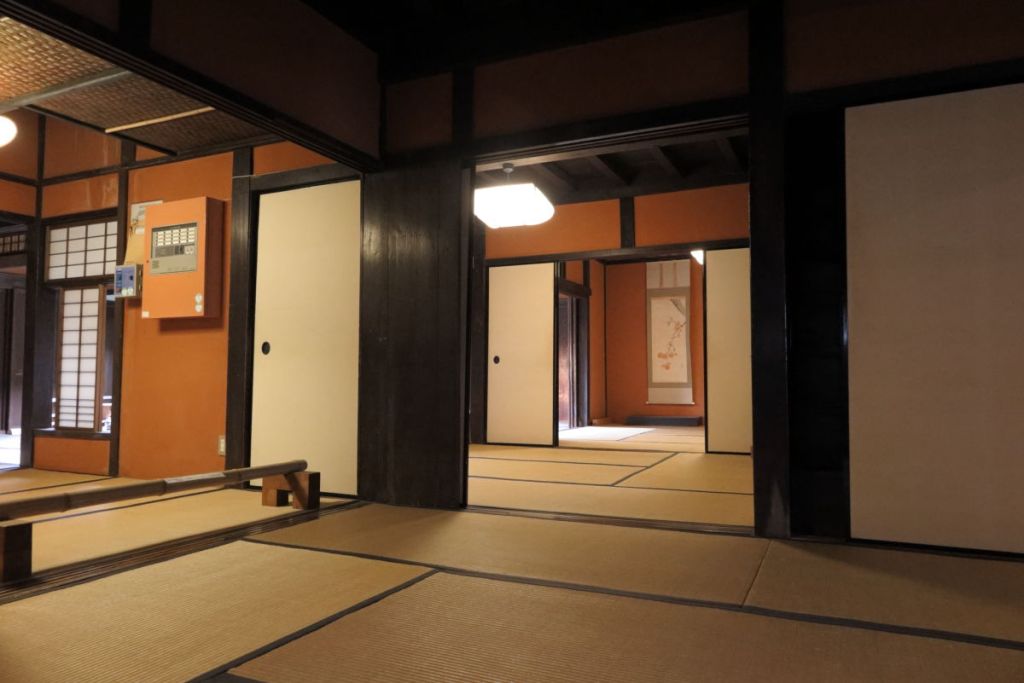
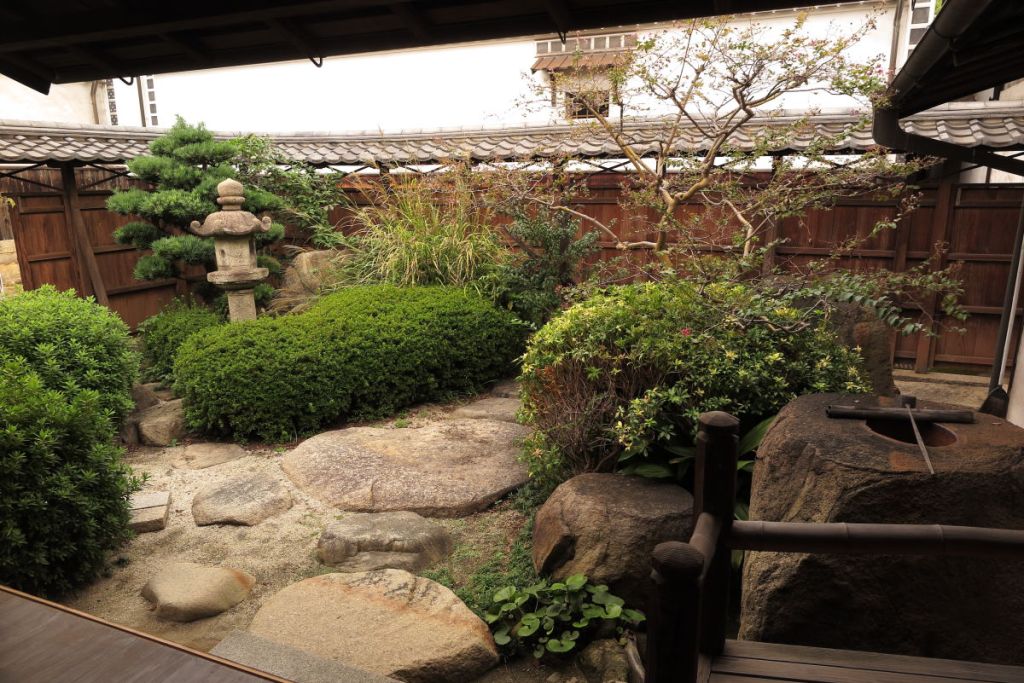
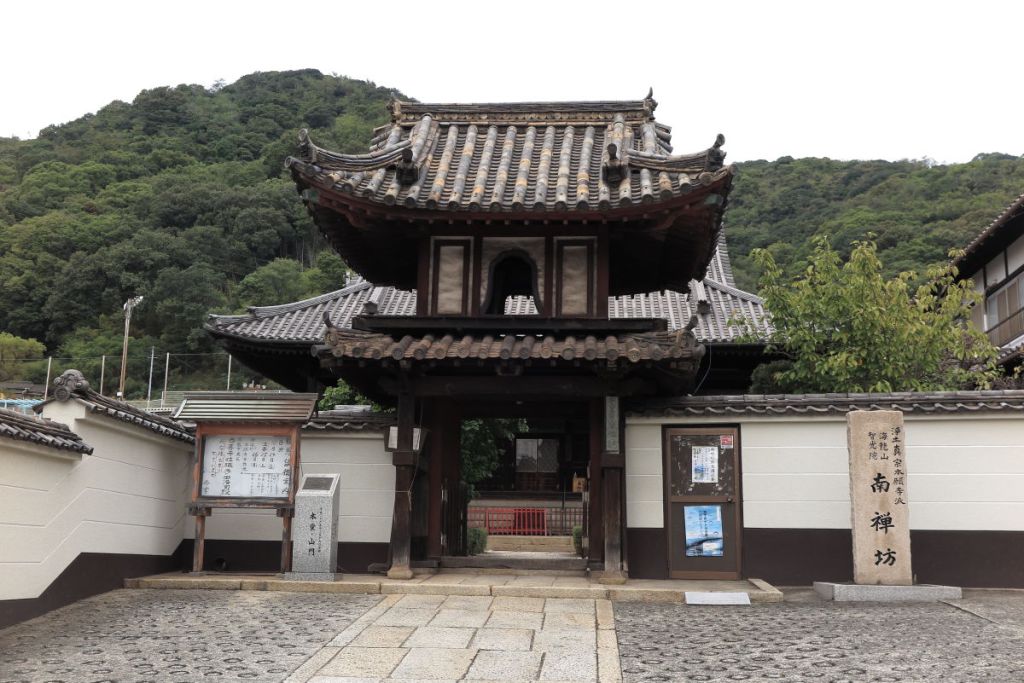
Many old temples remain in Tomonoura, and the photo shows one of them, Nanzenbo.
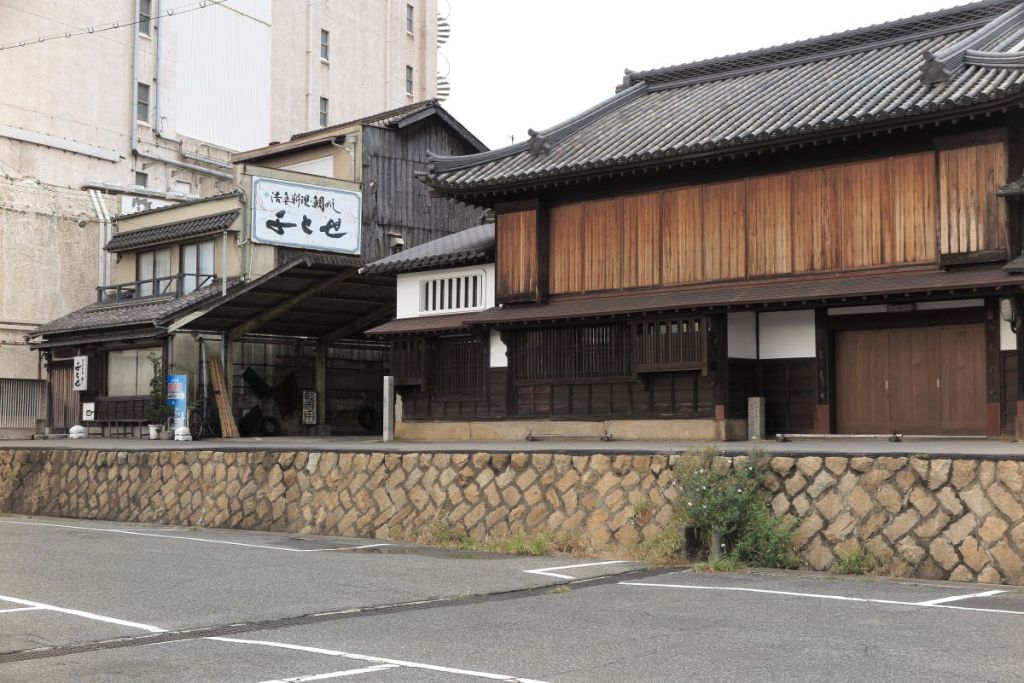
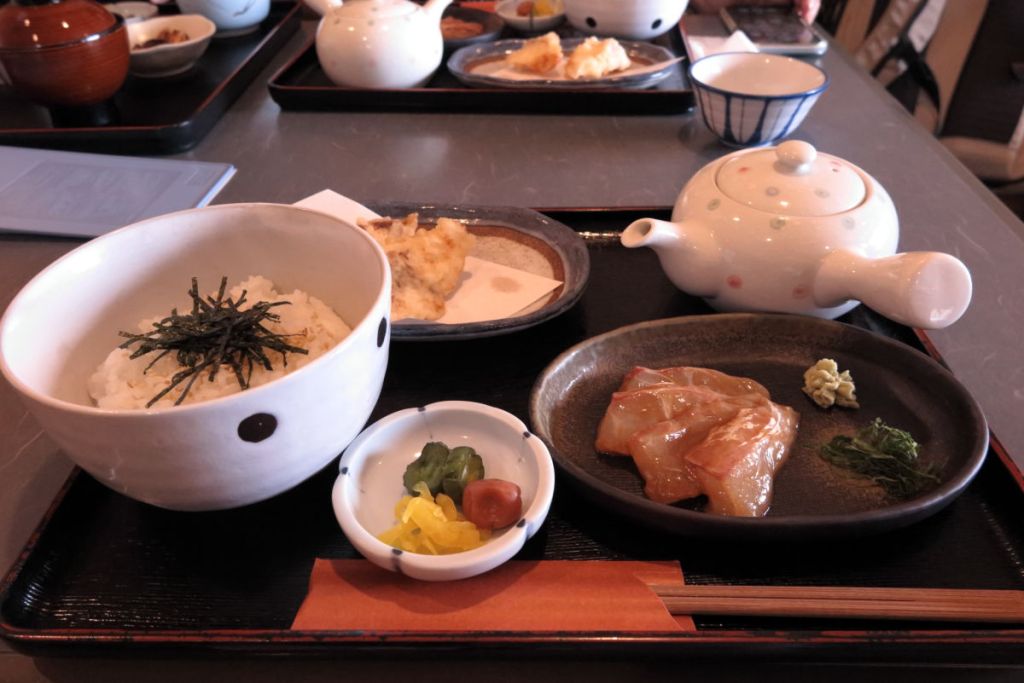
It was lunchtime, so I went to a nearby seafood restaurant called “Chitose” and had a meal of sea bream chazuke gozen. The photo was taken before the restaurant opened, and there were many tourists waiting at lunchtime.
As expected, sea bream in the Seto Inland Sea is delicious no matter how you cook it.
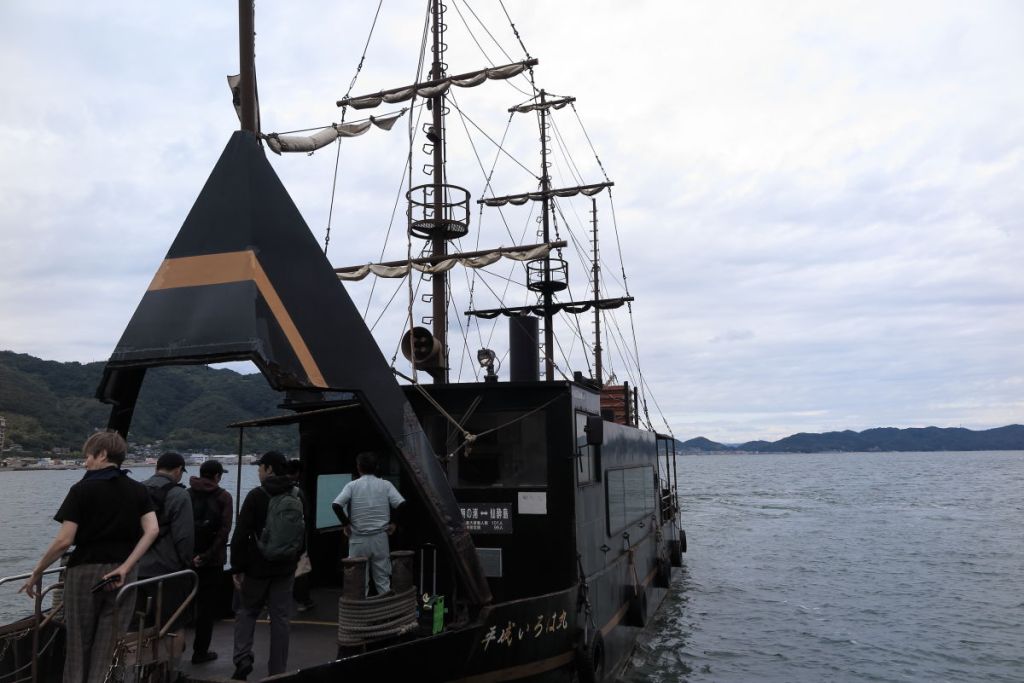
Since I still had time, I took a round trip to Sensuijima on a boat called Heisei Iroha Maru. Even though it was a short boat trip, the round trip fare of 240 yen was surprisingly cheap.
I returned to Fukuyama Station on the inn’s shuttle bus and headed to Hiroshima Station on the Sanyo Shinkansen. Unfortunately, due to a train inspection at a nearby station, my arrival was delayed by 30 minutes. I then changed to a streetcar and checked into my accommodation for the night, Hotel Mystay Hiroshima. The front desk was crowded with many Western tourists.
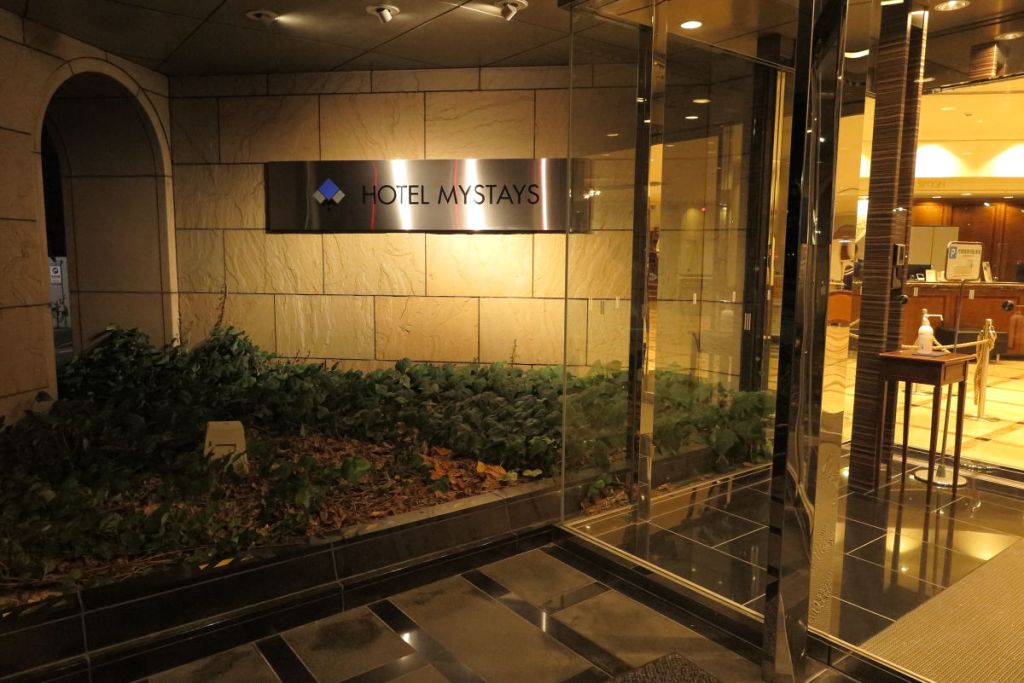
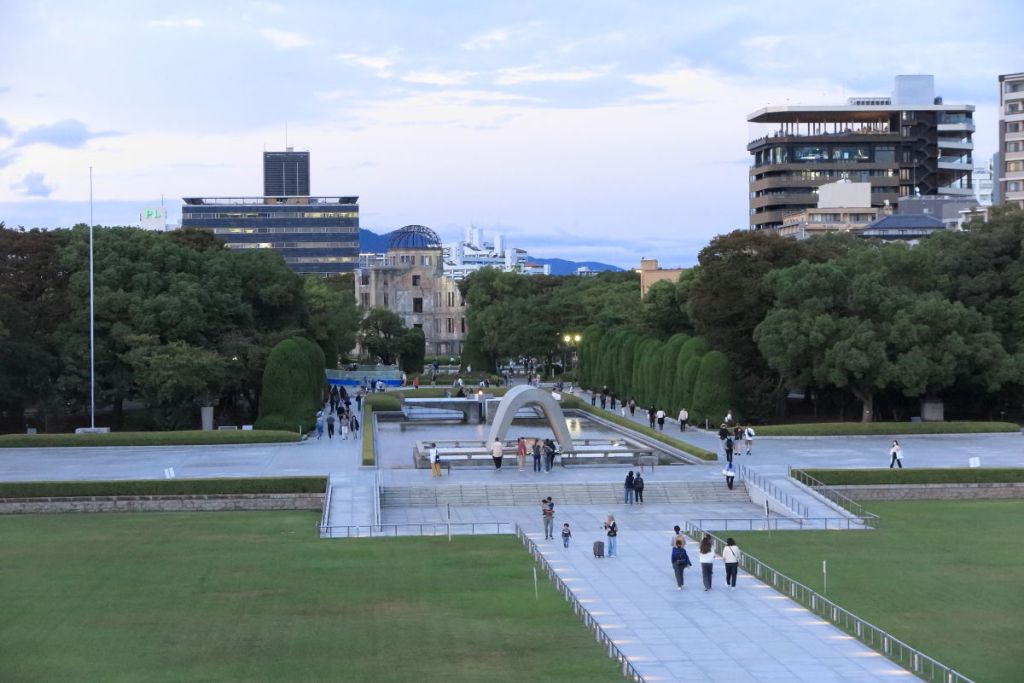
After leaving my luggage in the room, I went to the Peace Memorial Museum near the hotel. I could see the Atomic Bomb Dome as I crossed the bridge.
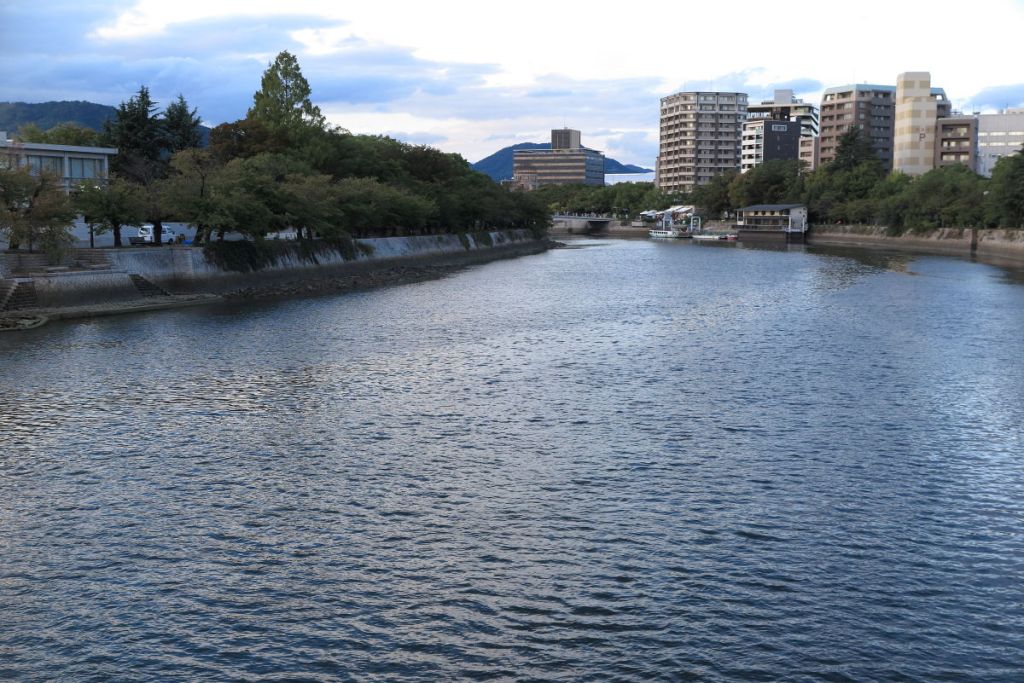
I have been to Hiroshima several times, but to my shame, this was my first time visiting the Hiroshima Peace Memorial Museum, so I made it one of my destinations this time.

When I went inside, I was surprised to see so many tourists from Europe and Americas. It seemed that about 60% were foreign tourists, 30% were students, and the rest were domestic tourists.
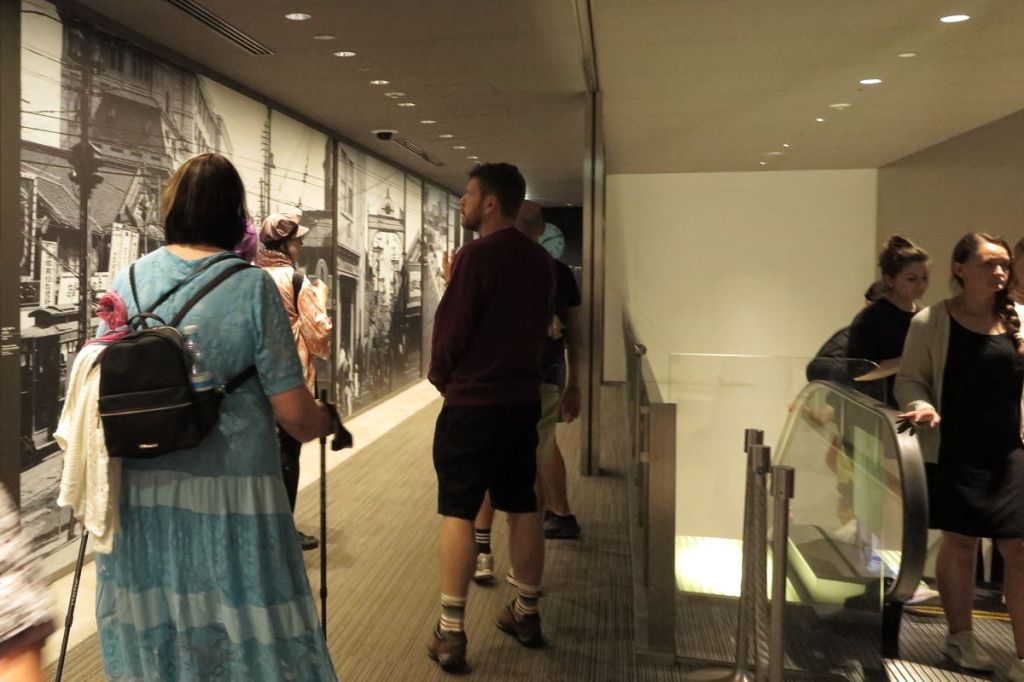
We are extremely grateful that tourists from overseas have visited this memorial, which conveys the horrors of nuclear weapons, and we hope that the use of nuclear weapons will never occur again.
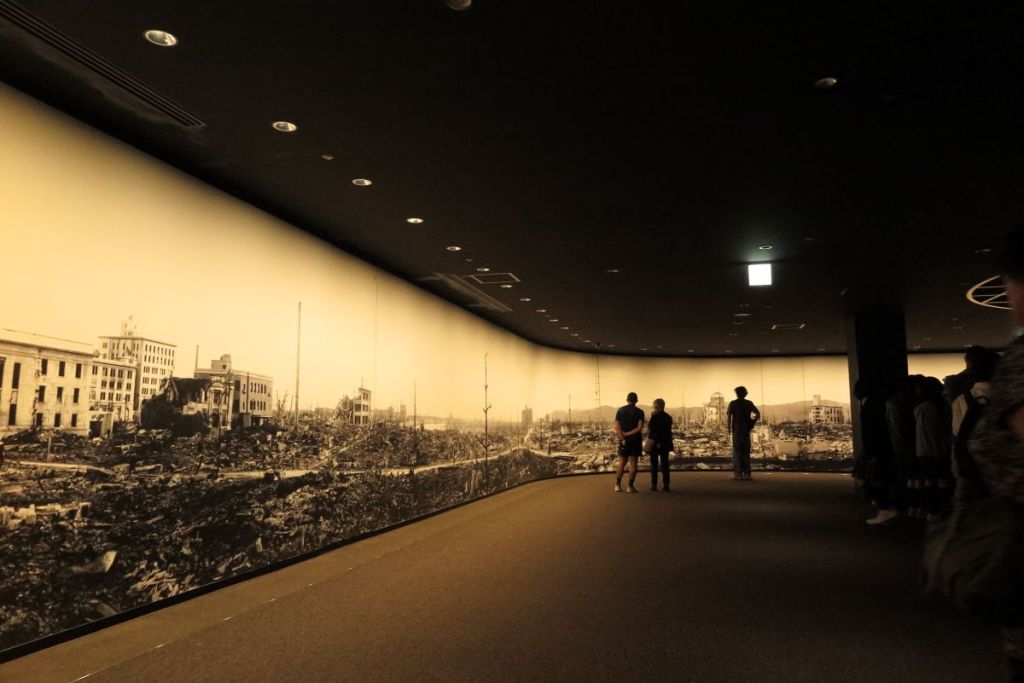
At the back of Peace Memorial Park, you can see the Atomic Bomb Dome, the site of the hypocenter.
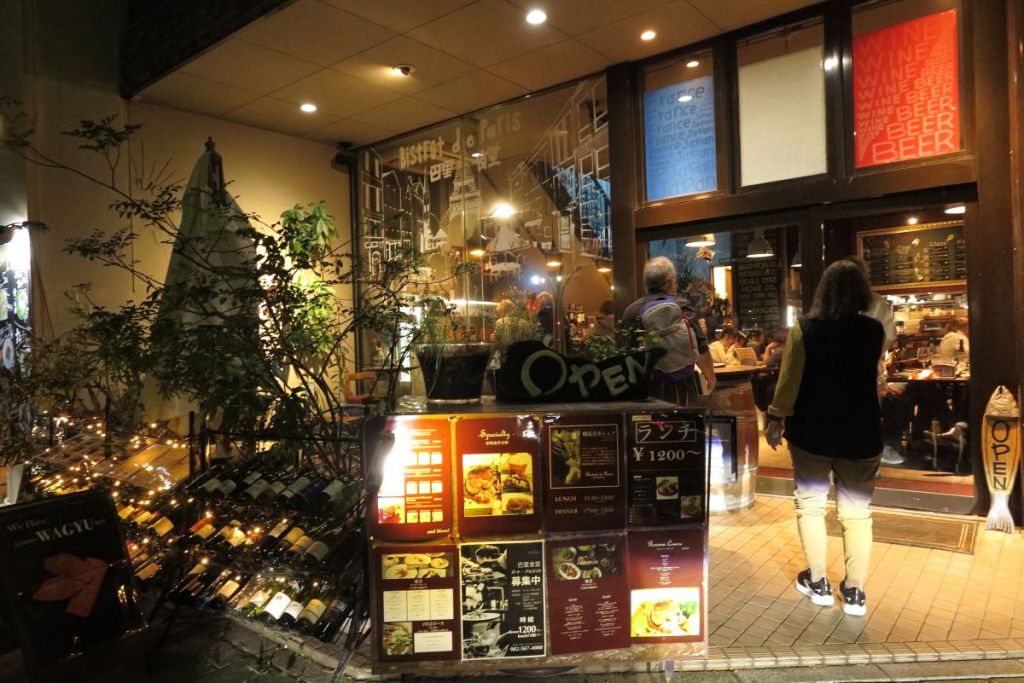
I had dinner at Bistro Paris Shokudo, which is close to the hotel. It was the perfect place to take a break as tomorrow I’ll be having kaiseki cuisine at the inn.
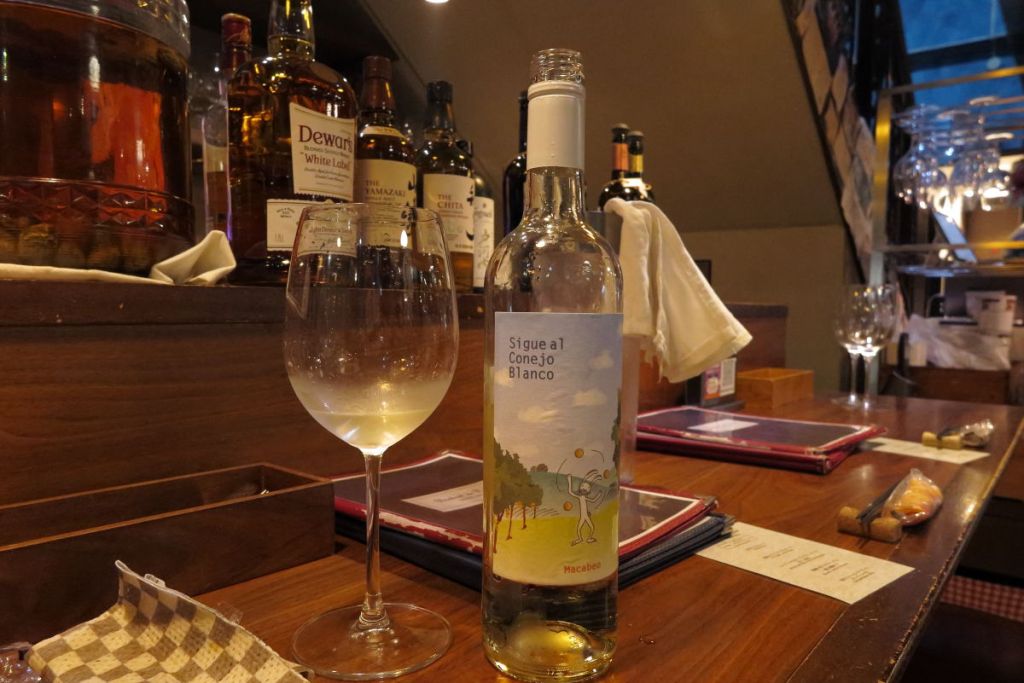
I decided to order an organic Spanish white wine made from Macabeo grapes, a variety I’d never tried before. It was fruity, fresh, and easy to drink.
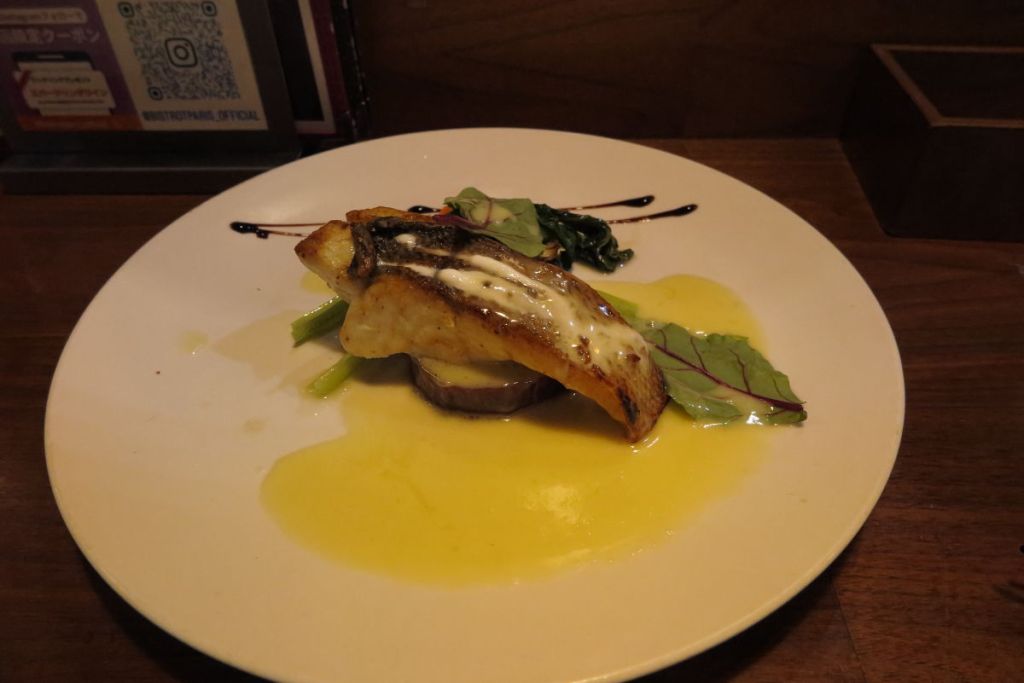
Poached sea bass
Garlic sauteed chicken thighs
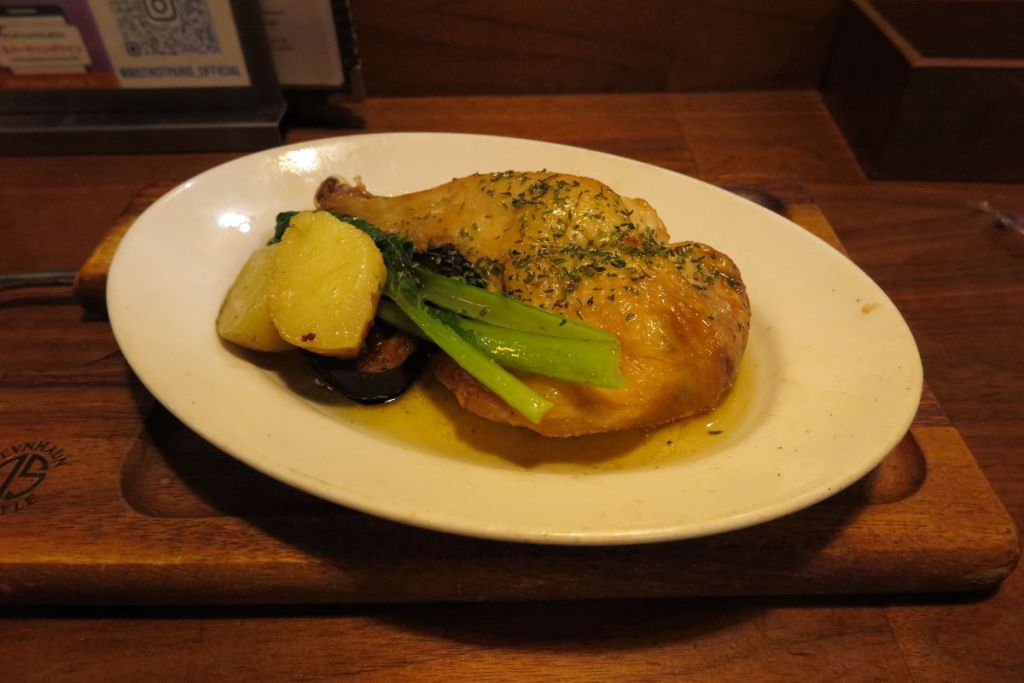
After enjoying a delicious French dinner, I returned to the hotel.
October 21st (Tue)
Breakfast was buffet style in the restaurant on the top floor of the hotel, but most of the guests were from Europe and Americas, so it felt like I was having breakfast in a hotel overseas.
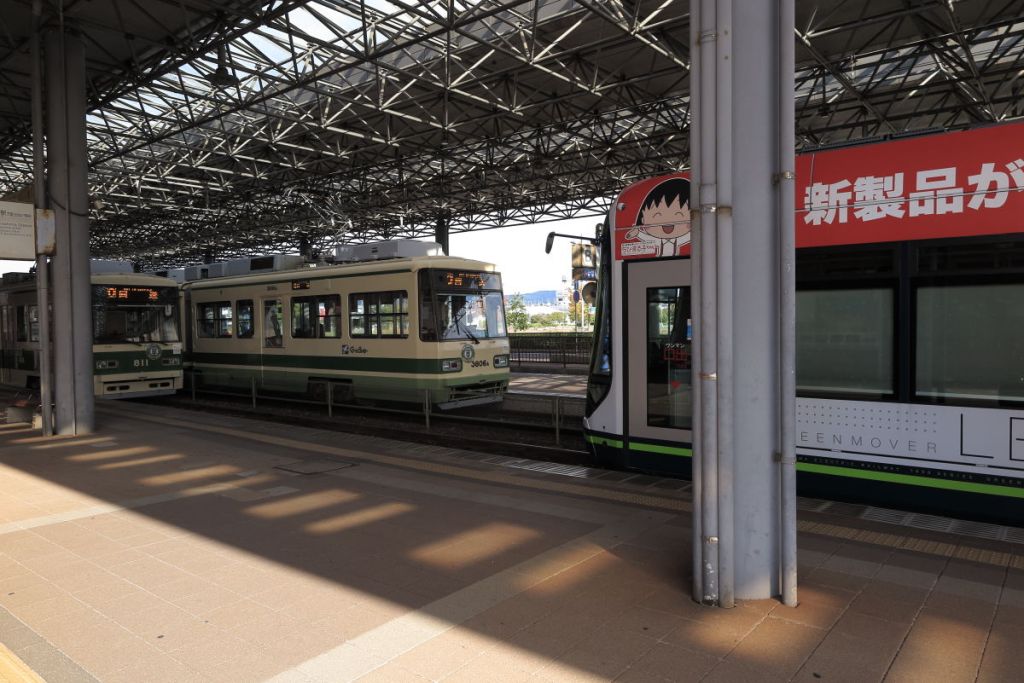
Today I’m heading to Dogo Onsen. I took the tram from Chuden-mae, near the hotel, to Hiroshima Port. Both old and new trams were parked at the terminus, Hiroshima Port.
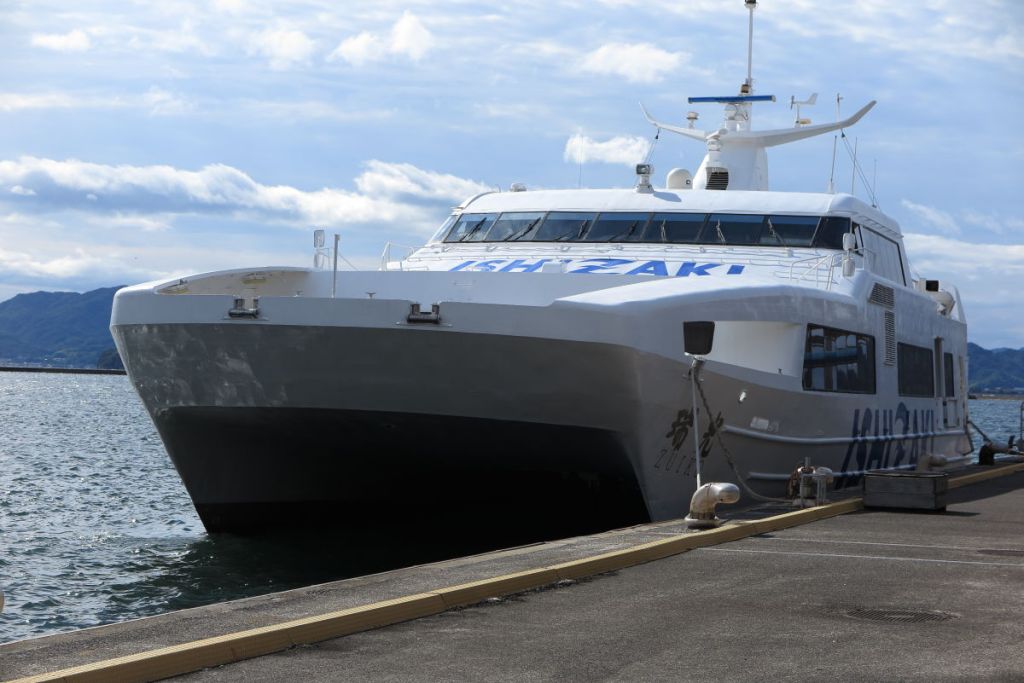
From Hiroshima Port, I take the high-speed boat called Super Jet to Matsuyama Kanko Port for a 1 hour and 10 minute boat ride while enjoying the view of the Seto Inland Sea.
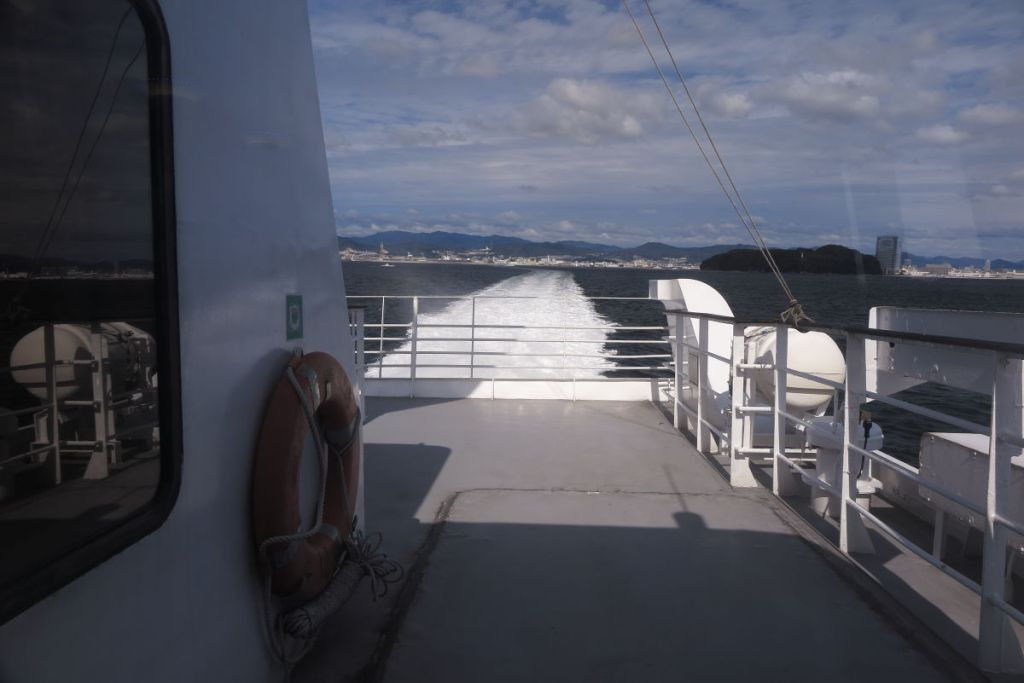
A Self-Defense Force ship was anchored at Kure Port along the way.
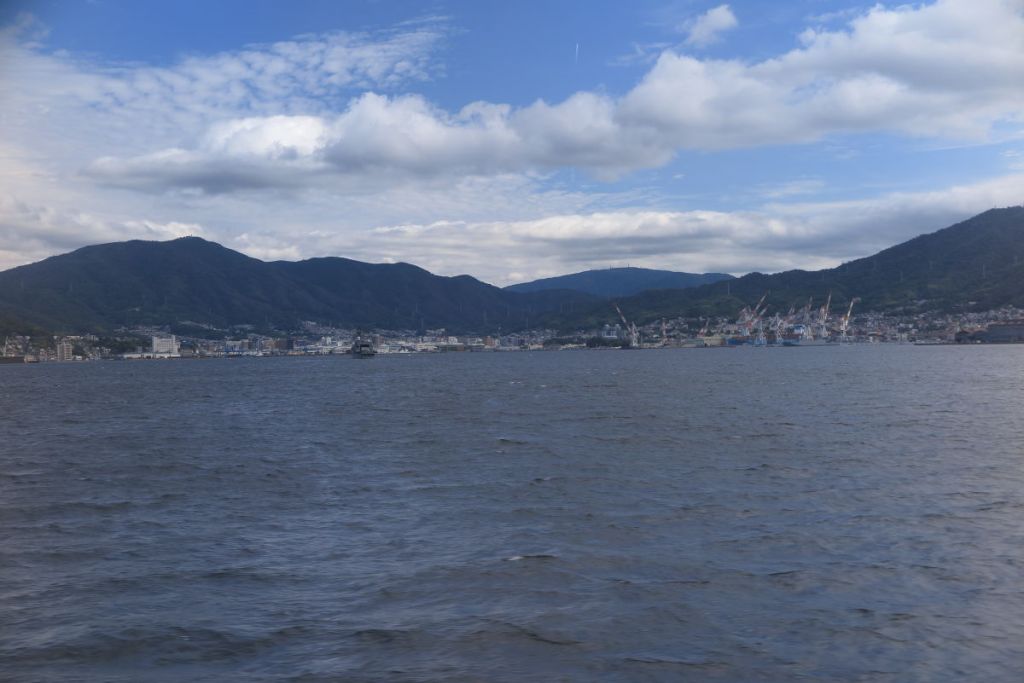
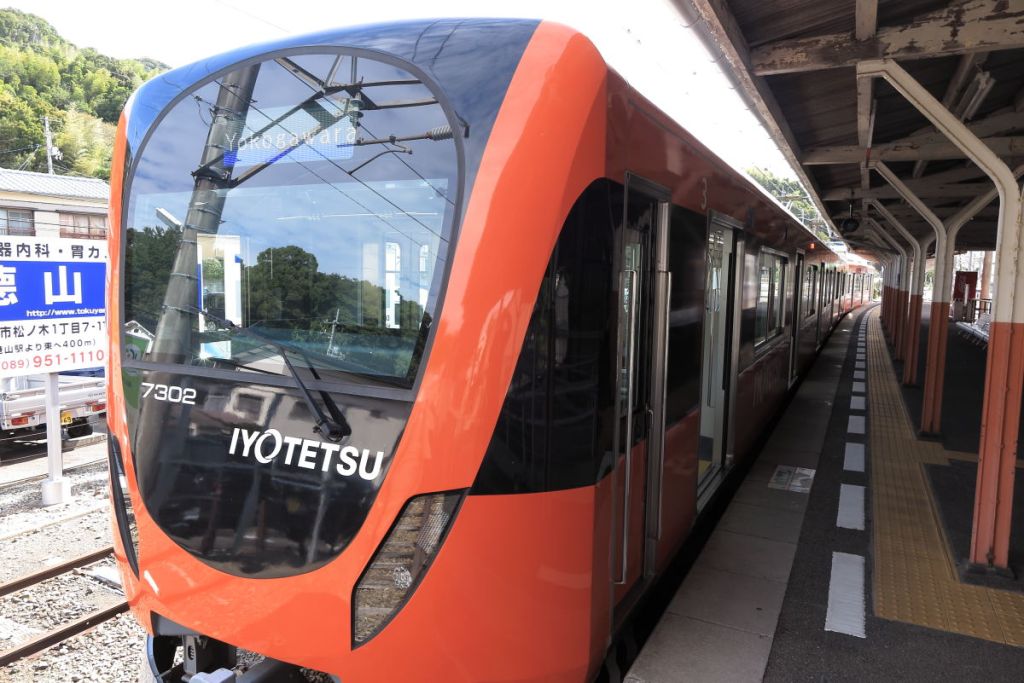
Due to the high winds along the way, I arrived at Matsuyama Kanko Port about 15 minutes late, and from there I took a connecting bus from Takahama Station on the Iyo Electric Railway to Matsuyama City Station. I took this line on a business trip five years ago, and I was surprised to see that the carriages had been updated.
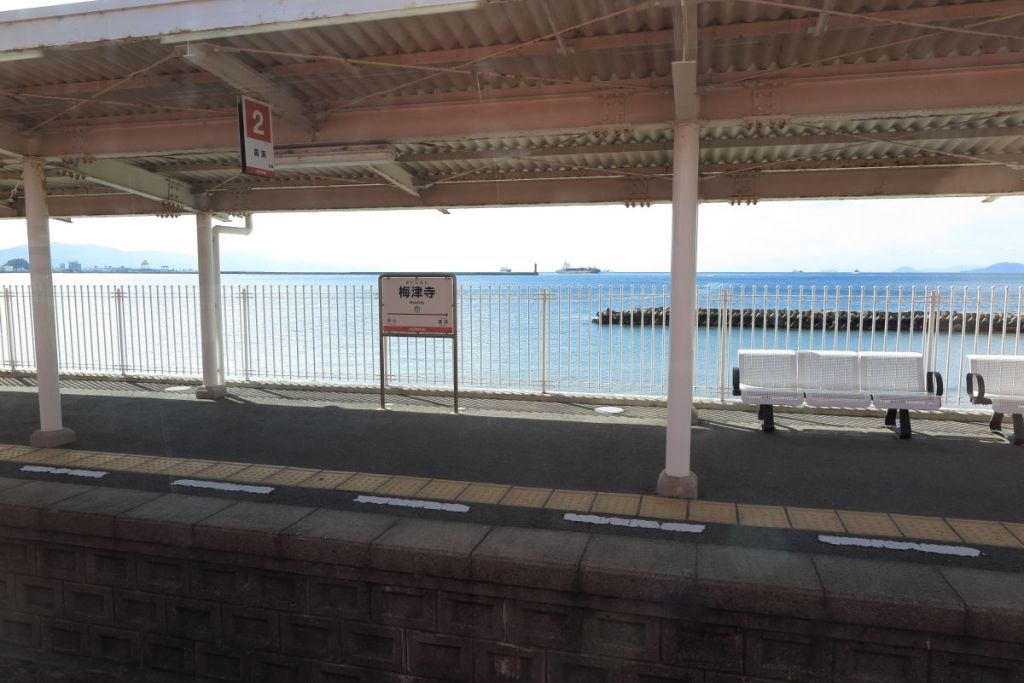
Along the way, the train will stop at Baishinji Station, which was the setting for the TV drama “Tokyo Love Story.”
I arrived at Dogo Onsen Station by tram from Matsuyama City Station. I was surprised to see the new trains, as I had imagined that the trains were old.
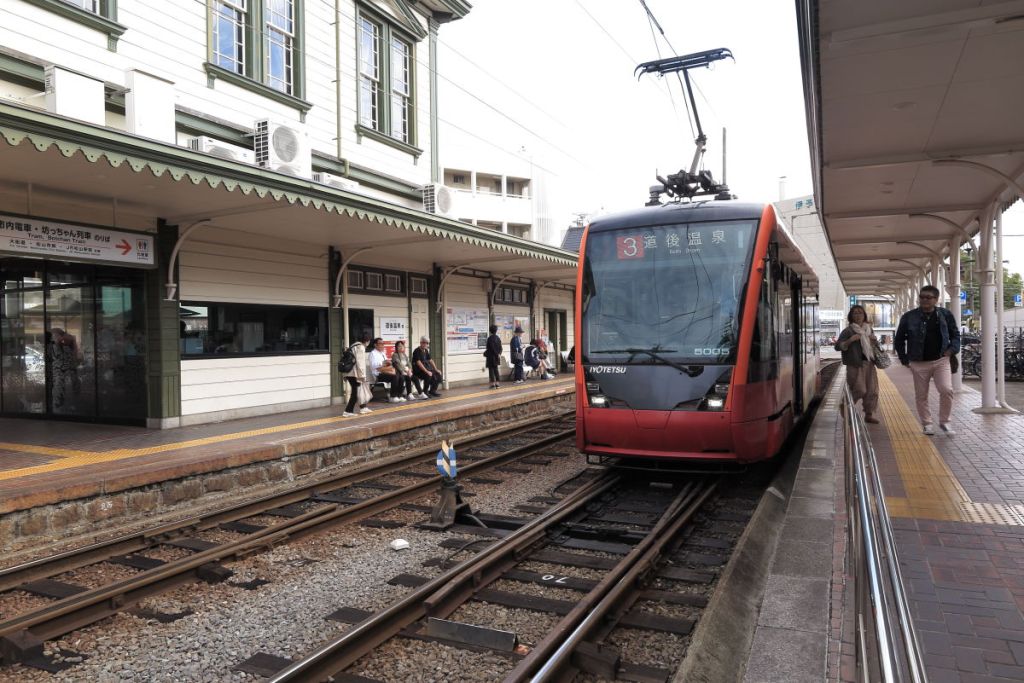
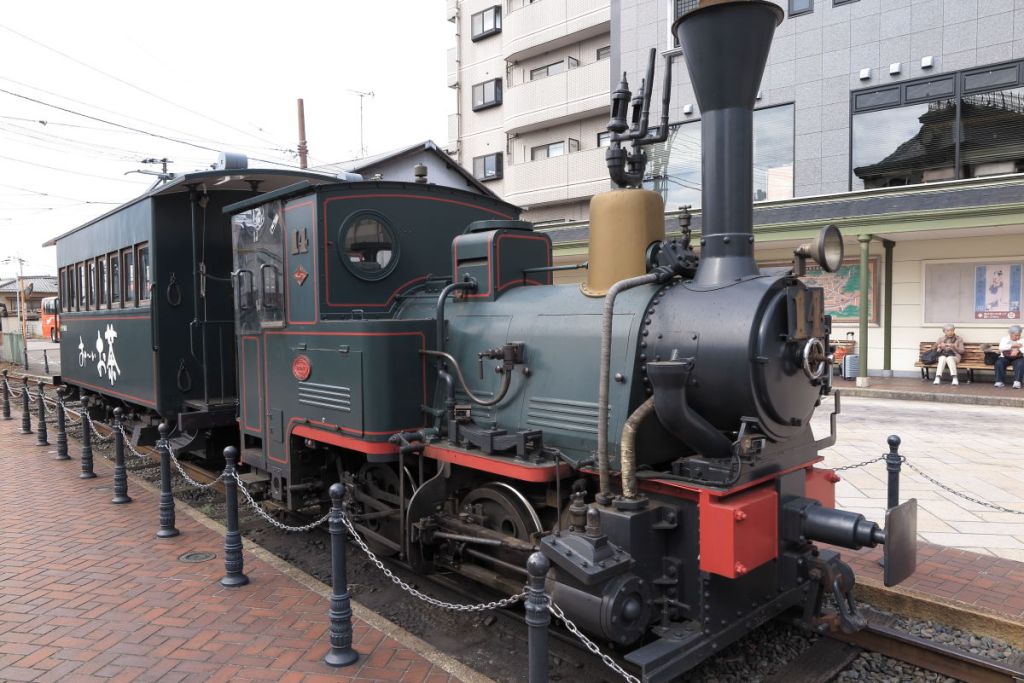
The Botchan Train is on display at Dogo Onsen Station.
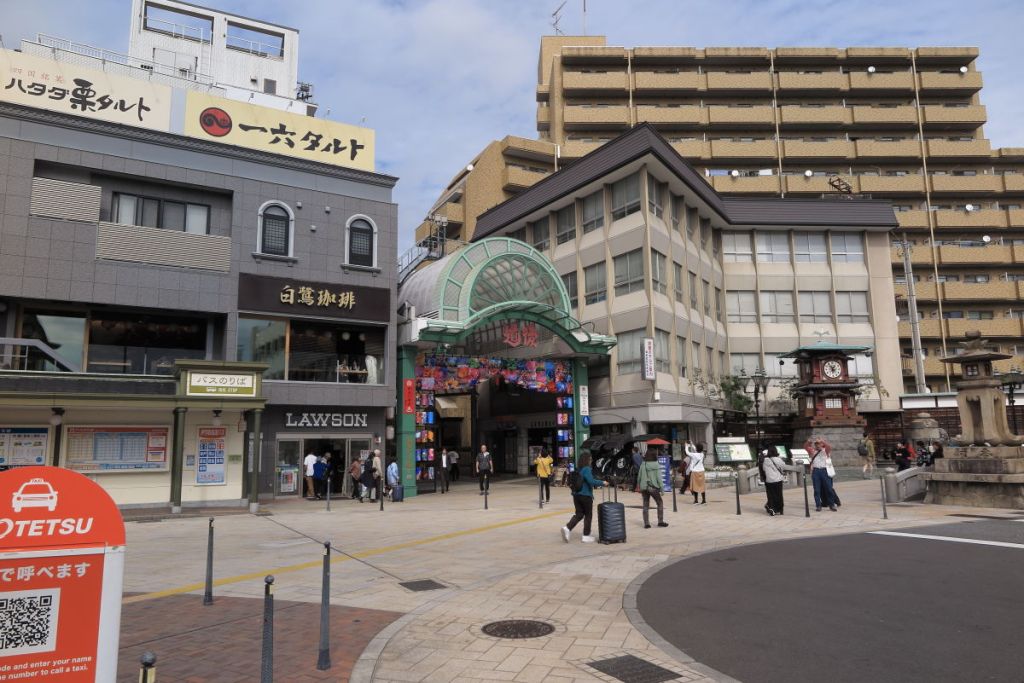
The hot spring town of Dogo Onsen remains bustling compared to other hot spring resorts.
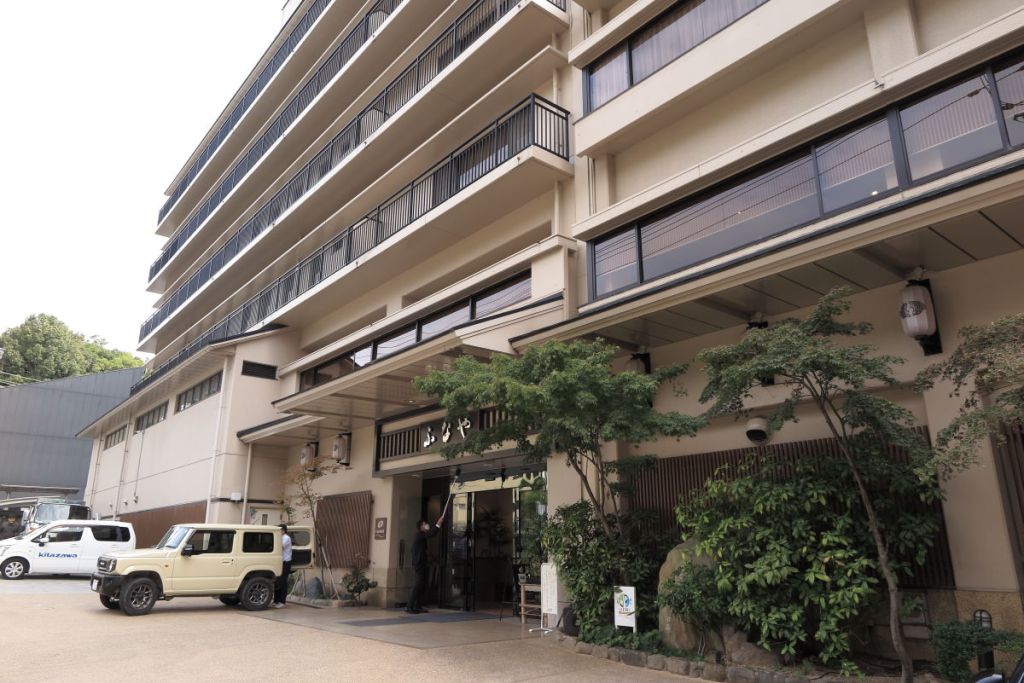
Today’s accommodation is Funaya, a long-established inn in Dogo Onsen that was founded 397 years ago.
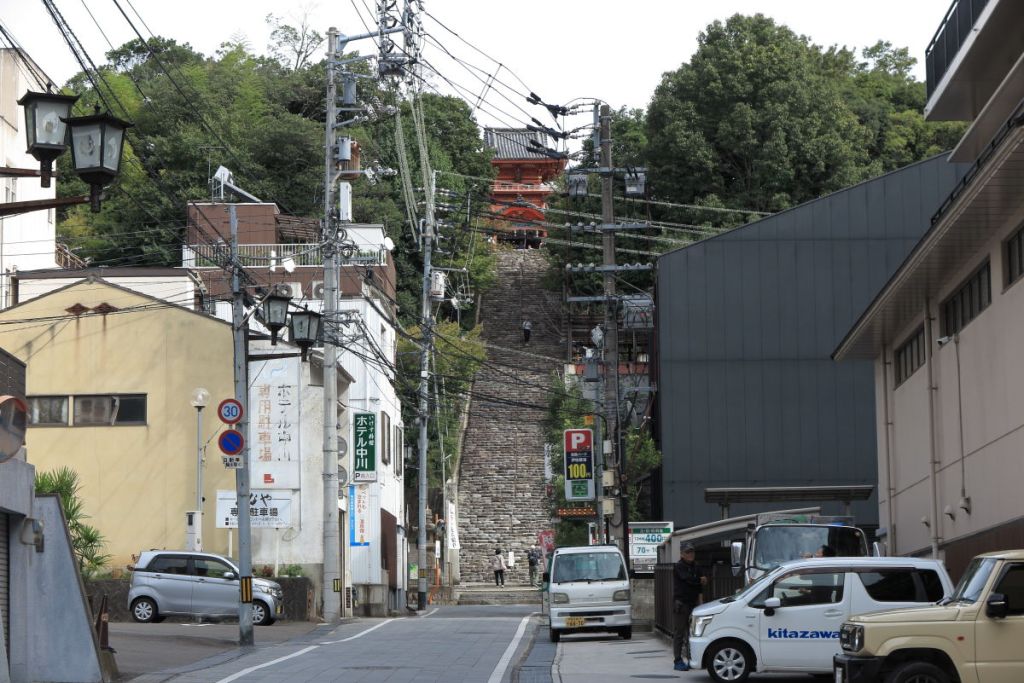
At the end of the road in front of Funaya are 135 steps to Isaniwa Shrine, whose main building has been designated as an Important Cultural Property of Japan, but I had no desire to climb them.
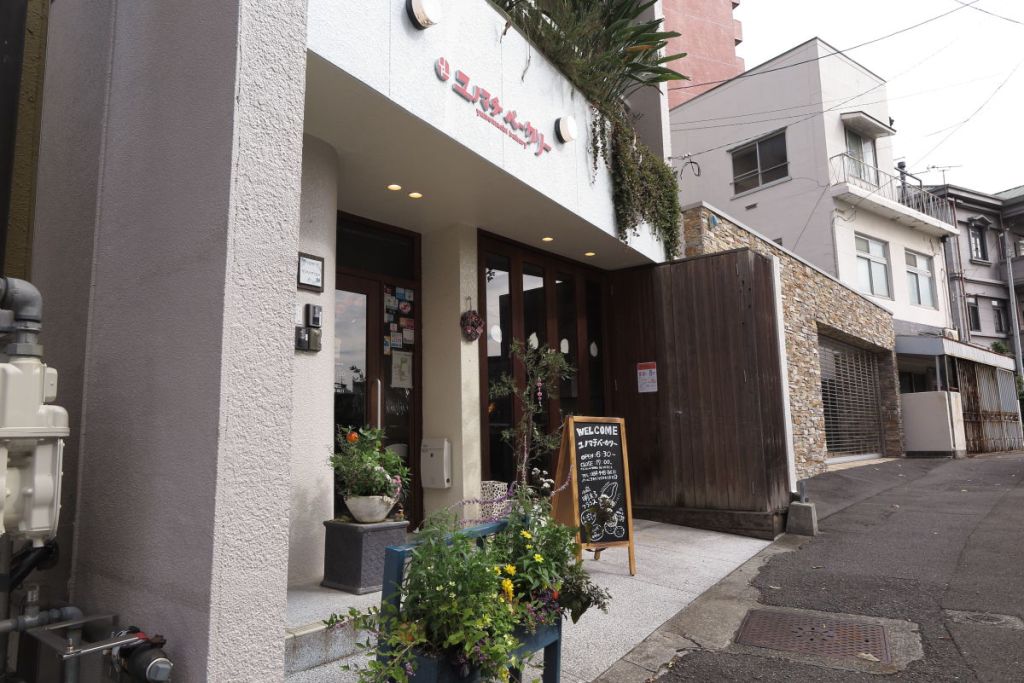
I left our luggage at the inn, ate the bread I bought at Yunomachi Bakery in the store, and then headed to Dogo Onsen Main Building, one of our goals for this trip.
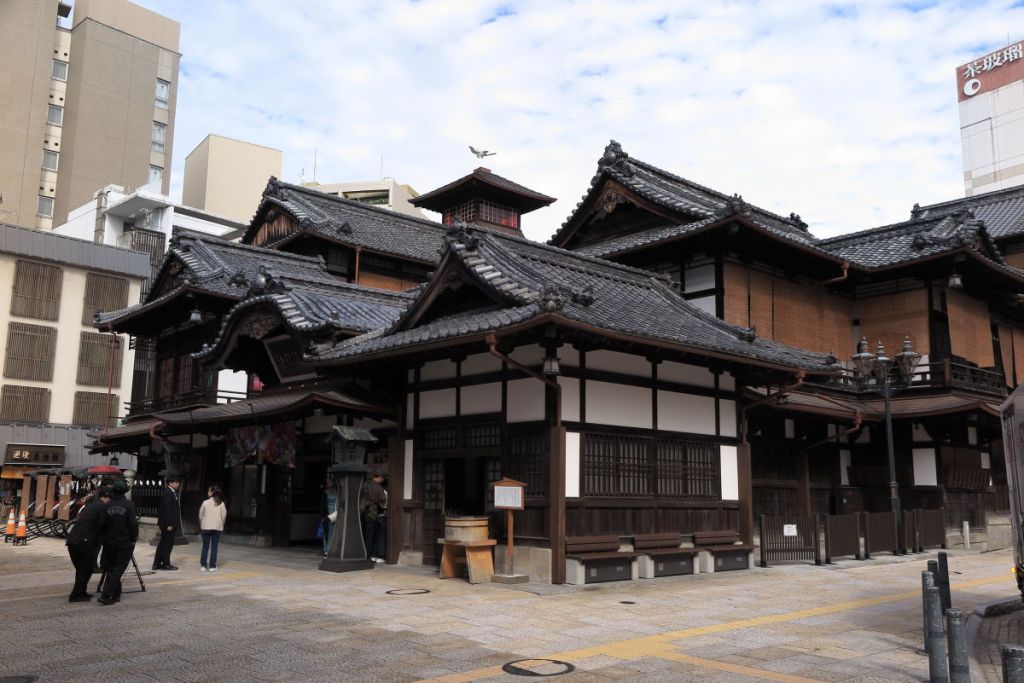
This is the Dogo Onsen Main Building, which has been designated as an Important Cultural Property of Japan and whose renovation was completed in December last year.
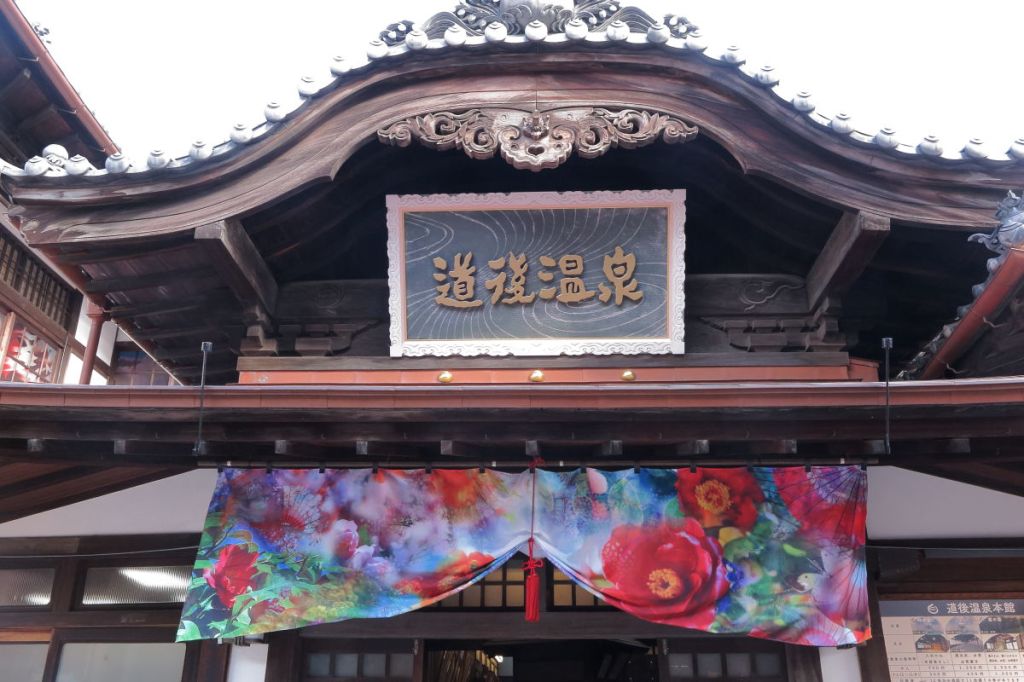
There was an art event by Mika Ninagawa, and the place was colorfully decorated.
After paying the fee for the second floor seats at Kami no Yu, I first received an explanation in the rest room on the second floor. There were about 10 European and American tourists there, and a local TV station was covering the experience.
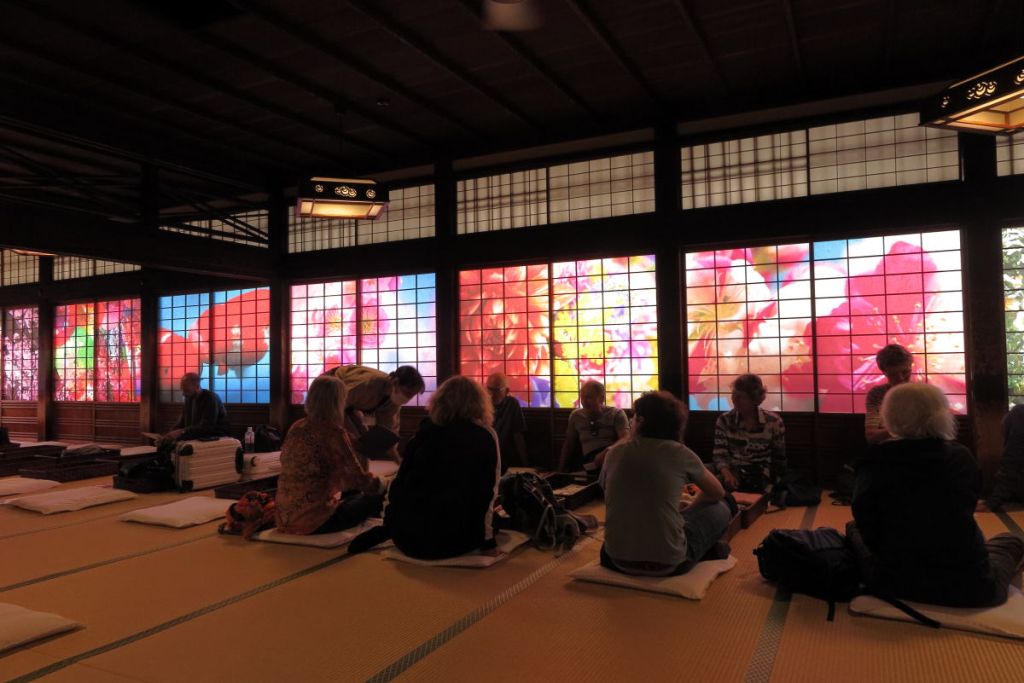
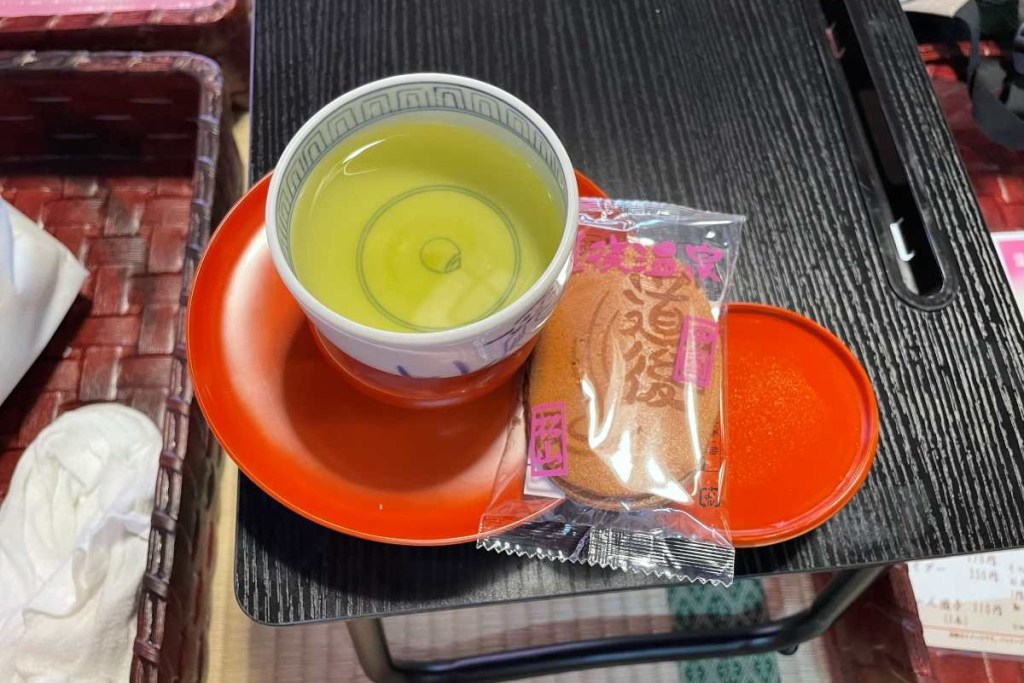
After changing into a yukata and taking a bath, you will be served tea and sweets.
Returning to Funaya, I checked in, rested in my room, and then went to the inn’s bath. The water is drawn from the source of Dogo Onsen and is an alkaline simple spring. I took a leisurely bath while thinking about Dogo Onsen, which boasts a history of over 3,000 years. The photo is a screenshot from the inn’s website, and there are two large baths, Mikageyu and Hinokiyu, which are alternately used by men and women. Both have open-air baths.

Dinner was a kaiseki course meal in my room. It had been a while since I’d had in-room dining at a ryokan. Nakai-san brought the food to us skillfully. I started with three appetizers. The one on the left was a cup of Kirazu, a dish from the previous owner of Funaya, which symbolizes never cutting ties with guests. In the center was walnut tofu, and on the right were simmered pacific saury in Arima style, duck simmered with maple leaves, and steamed white fish paste with cheese and chestnuts. Each dish was carefully prepared and very satisfying.
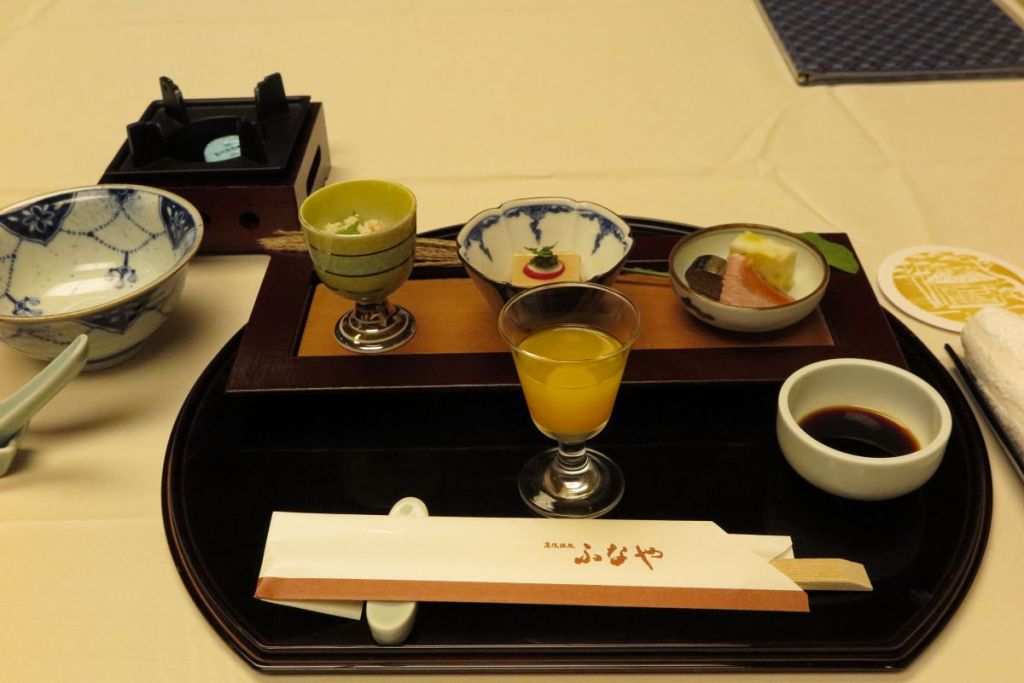
I ordered a sweet potato shochu from Ehime called Seto Musubi, which was a smooth drink with no strong flavor.

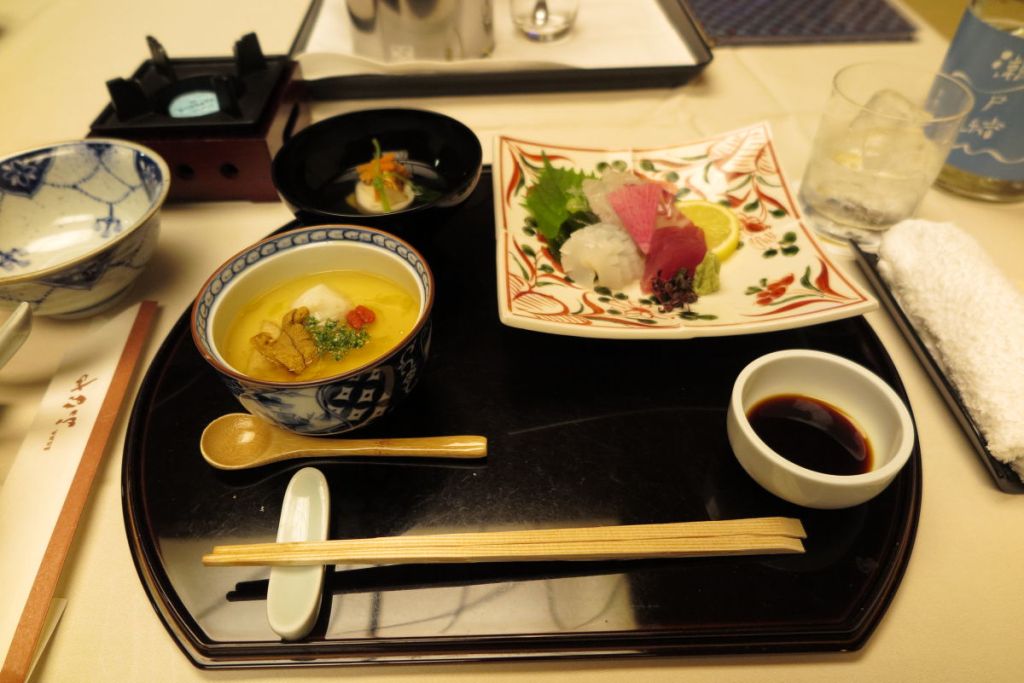
Soup, sashimi (sea bream, bonito, squid) and steamed conger eel meatballs. The steamed conger eel meatballs were especially delicious, the most delicious I’ve ever had.
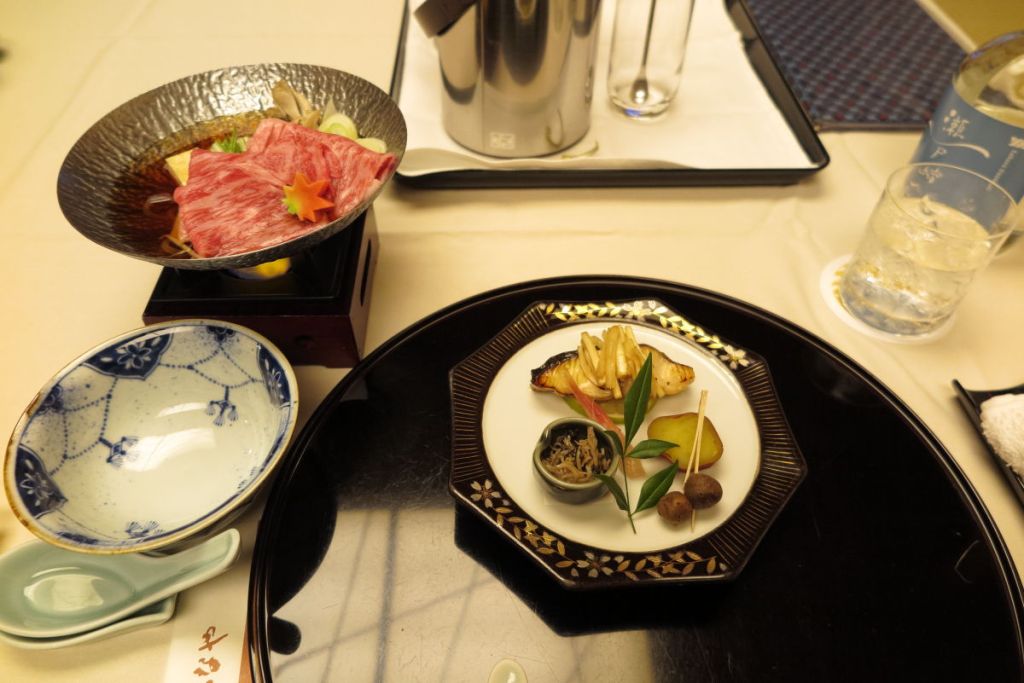
Wagyu beef sukiyaki hotpot and grilled Young Spanish mackerel topped with kinpira.
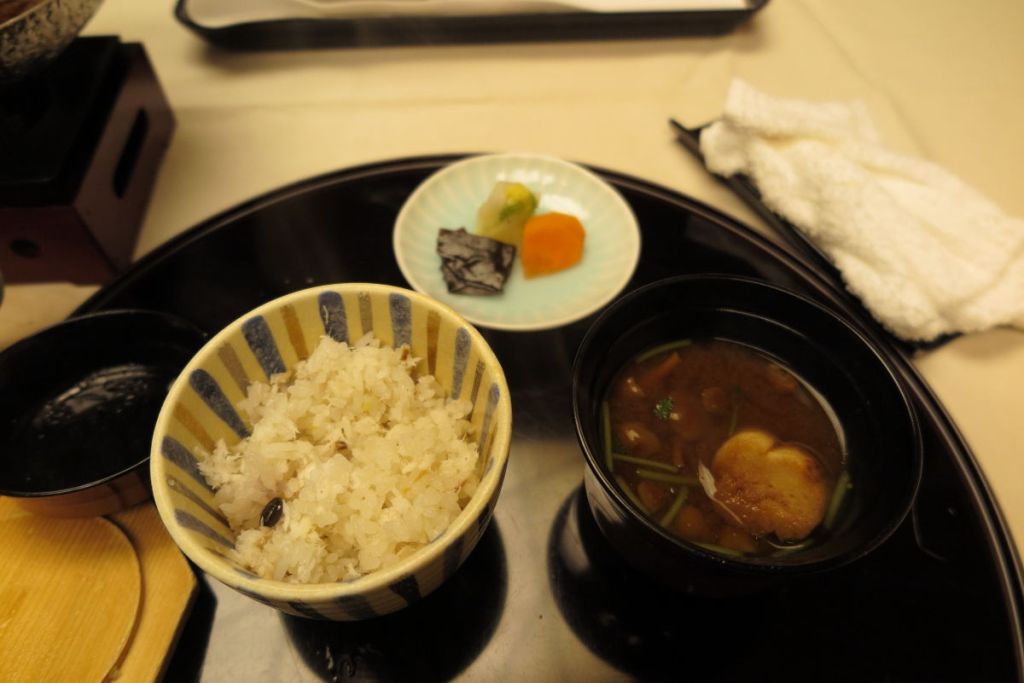
Sea bream rice and red miso soup.
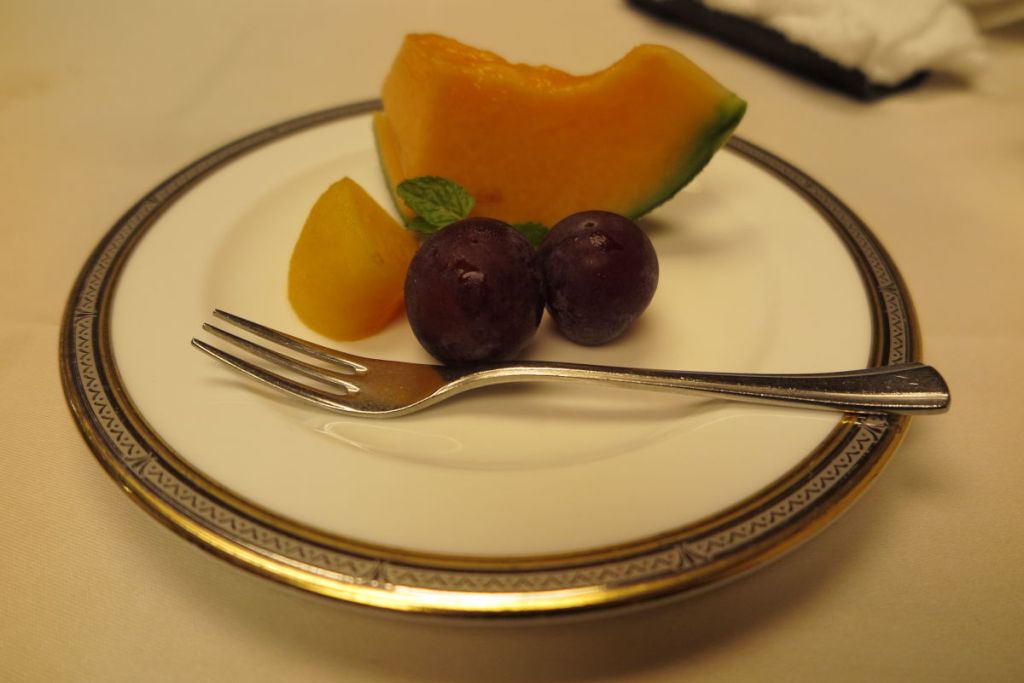
Melon, grapes, persimmon.
Every dish was delicious, and below the menu there was a description of each dish written by the chef, which was a first for me. It was a great idea.

October 22nd (Wed)
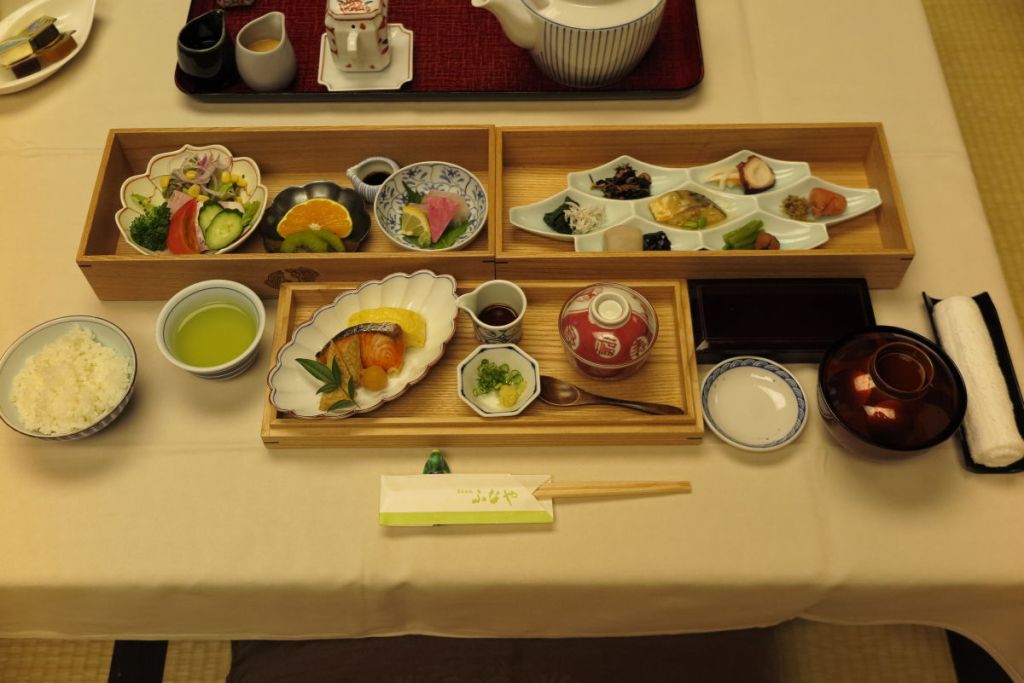
Breakfast is served in the room and you can choose between Japanese or Western style. I chose the Japanese style and it was excellent.
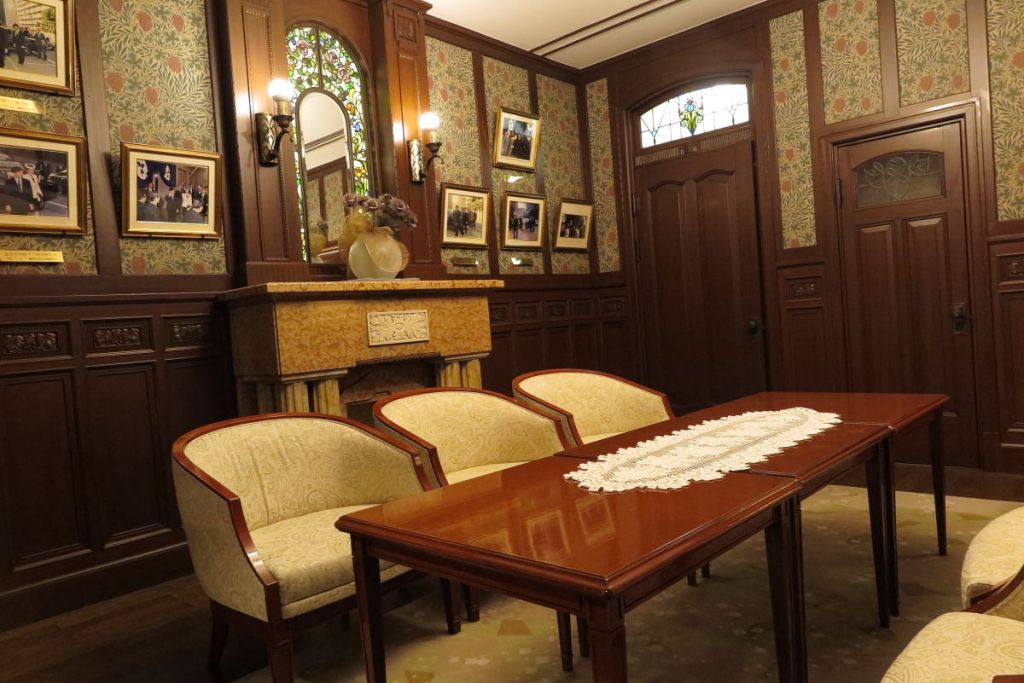
While waiting for a taxi to Matsuyama Airport, I looked around the exhibition room inside the building. The photo shows the Western-style room where Emperor Showa stayed in 1950, which has been relocated and reconstructed. Apparently the materials used for the Western-style building at that time were imported from the UK. It seems that members of the Imperial family still use Funaya when they come to Ehime.
Matsuyama Airport is conveniently located about 30 minutes from Dogo Onsen. As you enter the airport, there is tangerine juice coming out of the tap, which gives you a real Ehime vibe.
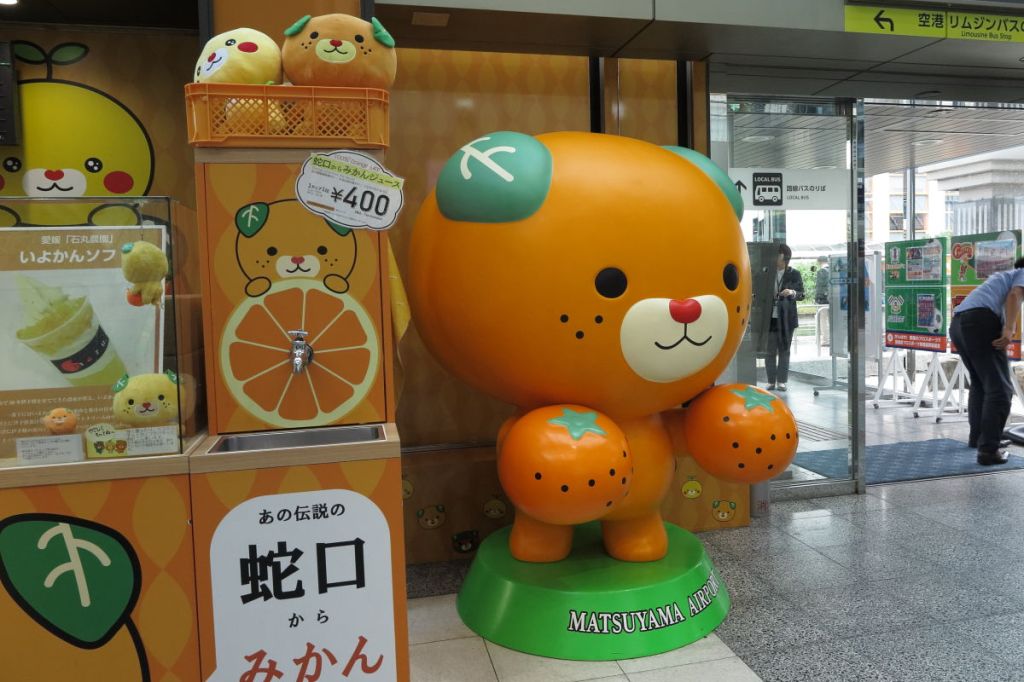
After having lunch at the airport, I boarded JAL flight 436, which departed Matsuyama Airport at 14:40, and arrived safely at Haneda Airport at 16:00. This time, I used public transportation to travel between Hiroshima and Ehime, across the Seto Inland Sea, and the trip proceeded as planned without any major issues. I was somewhat surprised by the number of tourists from Europe and the Americas, but it was a calm trip without any sense of overtourism. Above all, I was happy to be able to enjoy the delicious bounty of the Seto Inland Sea and Bungo Channel.
 旅好き爺の旅行記
コメントを残す