

I chose Amami Oshima as my destination because it was registered as a World Heritage Site in 2021 along with Tokunoshima, the northern part of Okinawa Island, and Iriomote Island, and because I had become interested in it after seeing an exhibition of works by Isson Tanaka, who loved Amami’s nature and painted subtropical plants and birds, at the Tokyo Metropolitan Art Museum in 2024.
March 15th (Sun)
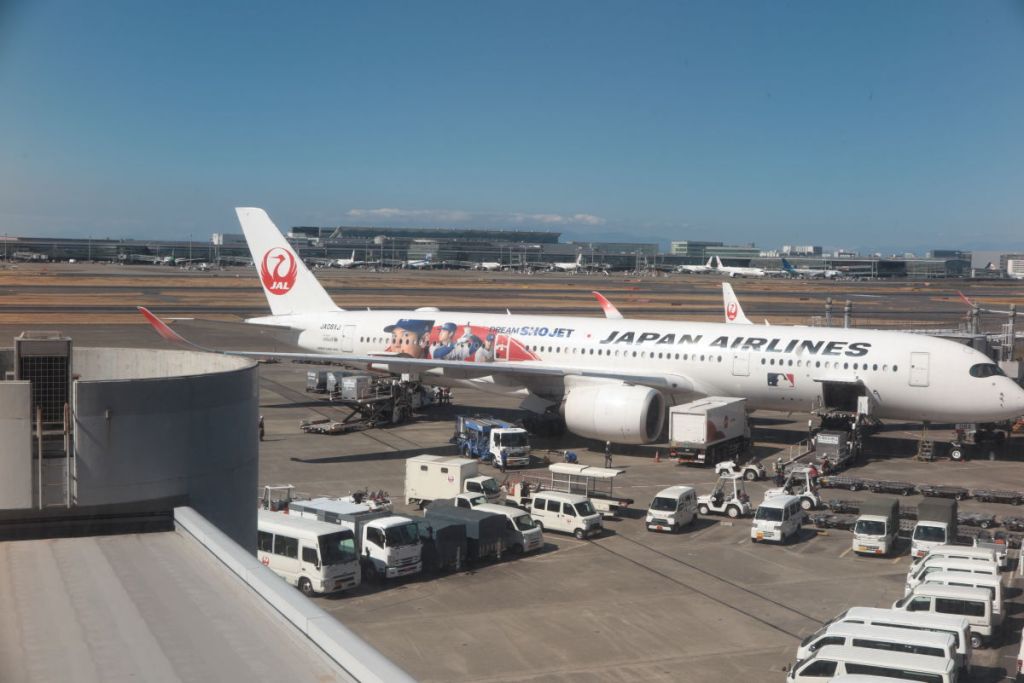
The only direct flight from Haneda to Amami Oshima was JAL659 departing at 11:15, so I had a rather late departure. While relaxing in the lounge, I spotted an A350-900 with Shohei Ohtani’s image painted on it parked outside. It was a timely encounter, given that the WBC was underway.
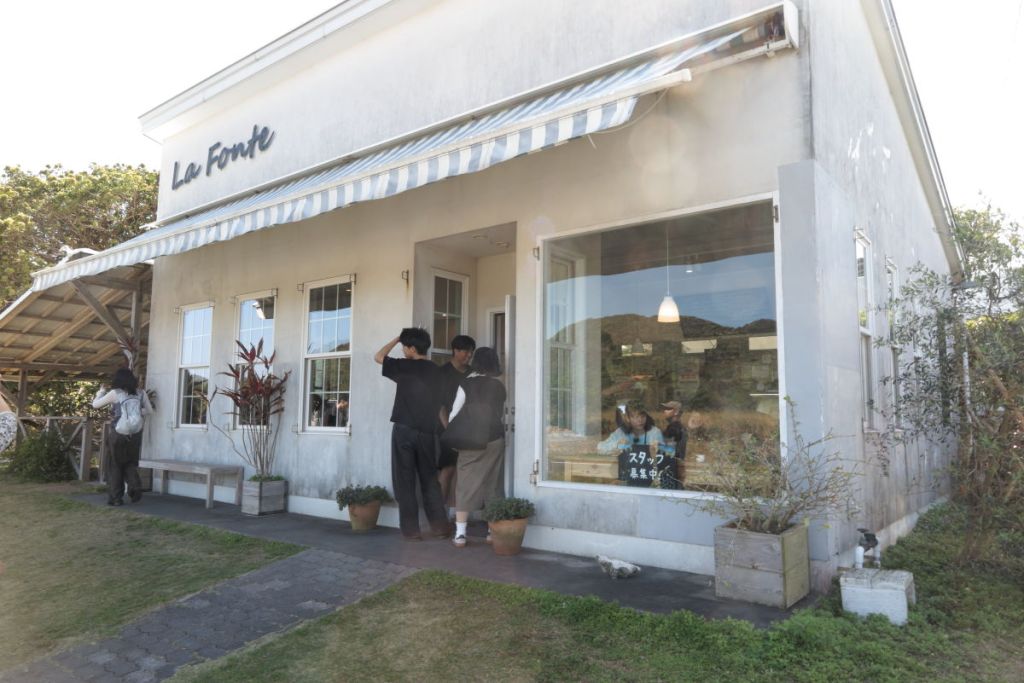
Since I was arriving in Amami Oshima at 13:35 in the early afternoon, I bought a bento box for the plane and ate lunch there. After arriving, I rented a car and headed to my accommodation for the night, the Yagijima Hotel. On the way, I decided to stop at La Fonte, a gelato shop directly operated by Izumi Farm. It was selected as one of Tabelog’s (the largest publisher of restaurant reviews in Japan) Top 100 Restaurants of 2023. The shop was bustling with many young customers.
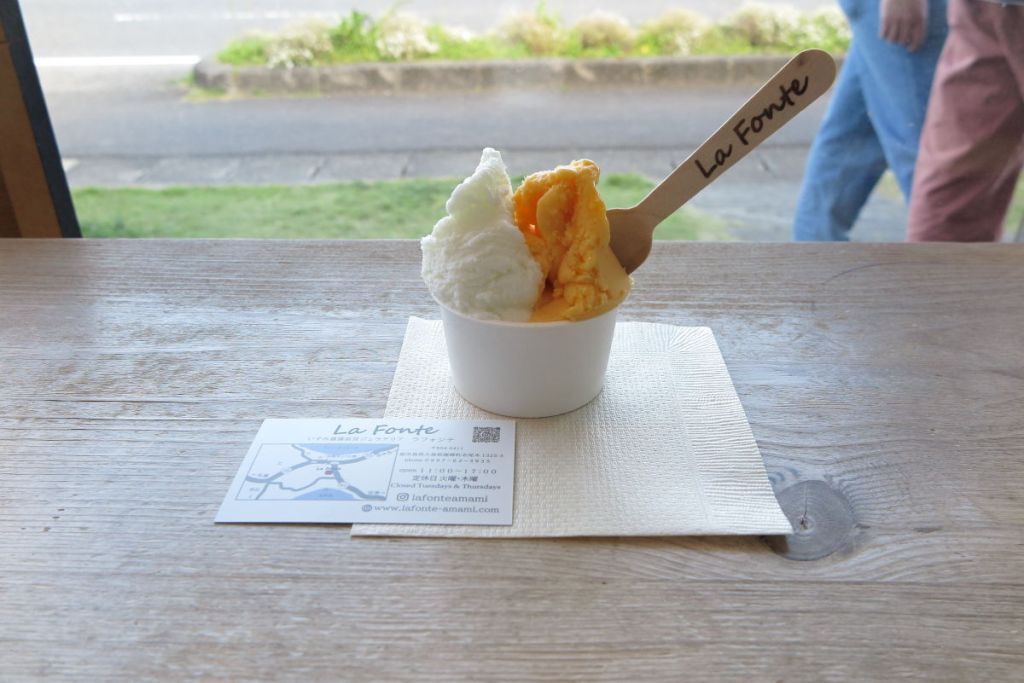
Adults start with a double scoop, so I ordered the Tankan (A hybrid of Ponkan and Navel orange). sorbet and La Fonte milk, and both were absolutely delicious.
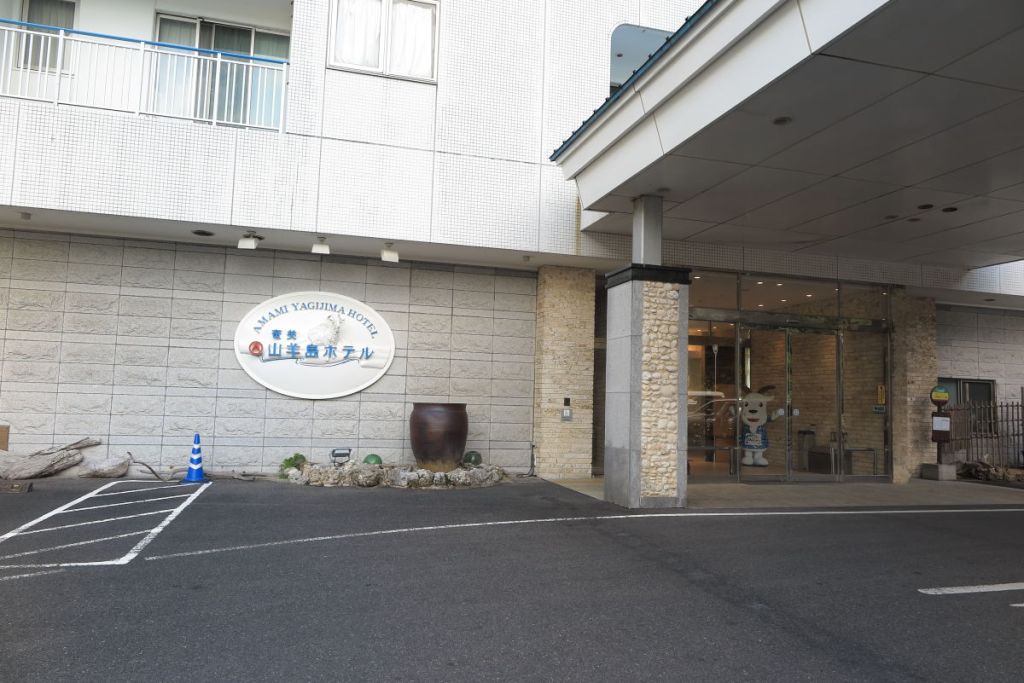
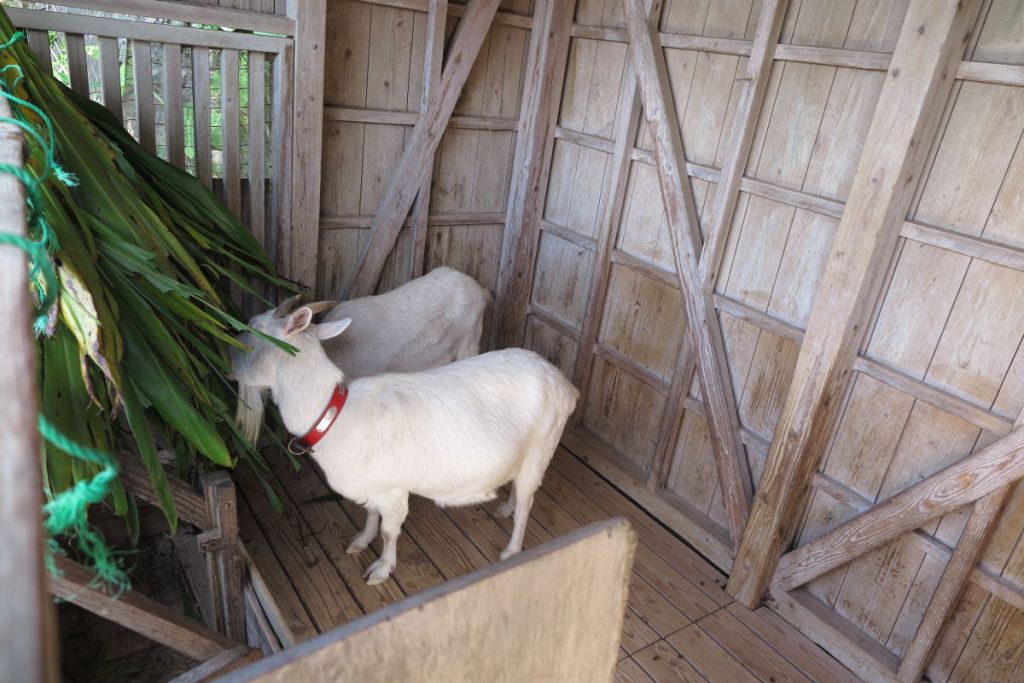
It took about an hour from here to reach our accommodation for the night, the Yagijima (Goat Island) Hotel. Right next to the parking lot, there was a goat shed, fitting for its name. Yagijima used to be an uninhabited island where goats grazed, but now only this hotel stands there. Although it’s an island, it’s connected to the mainland by a short bridge.
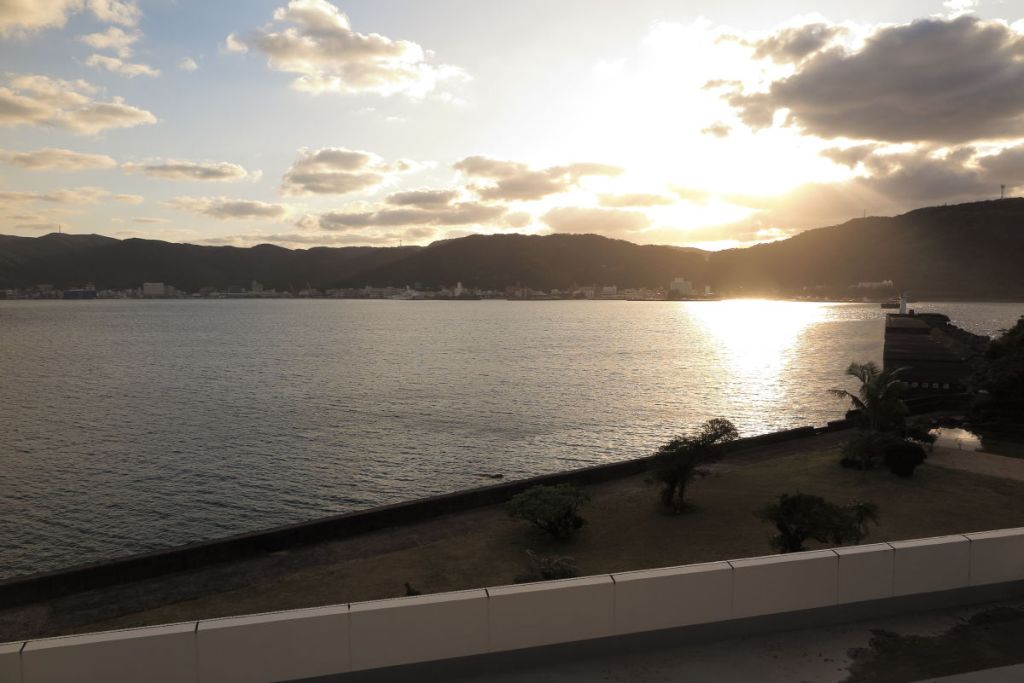
From my room, I could see the sunset over Naze Port.
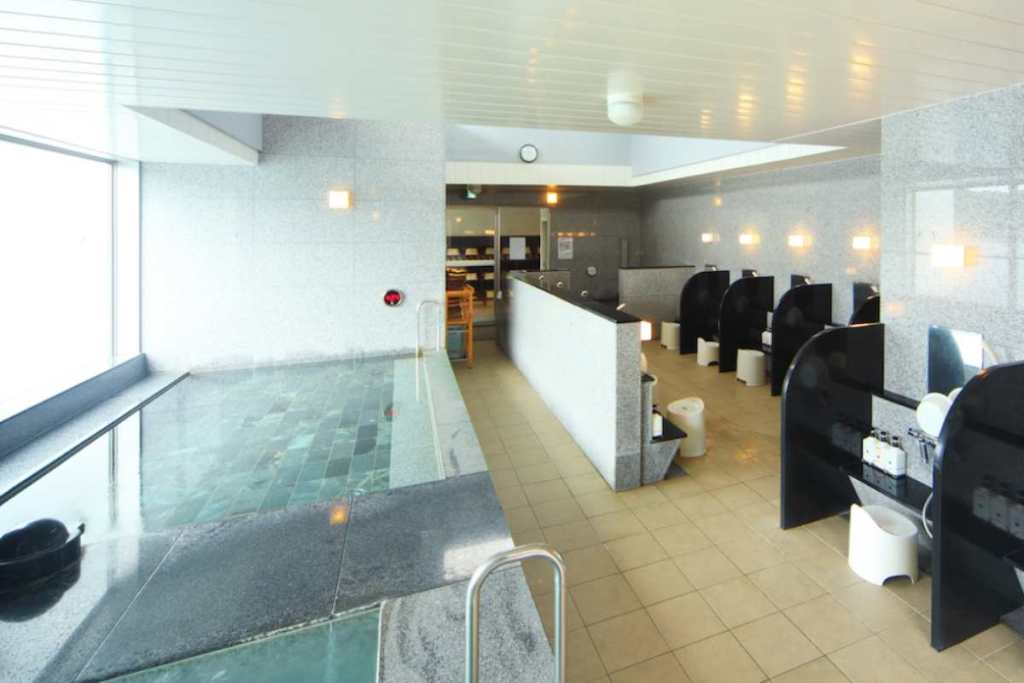
Although it’s not a hot spring, the 5th floor houses a bathing facility with an indoor bath, an open-air bath, and a mist sauna. The water is filtered through coral reefs, which somehow makes your skin feel smoother. The photo of the indoor bath is a screenshot from the hotel’s website.
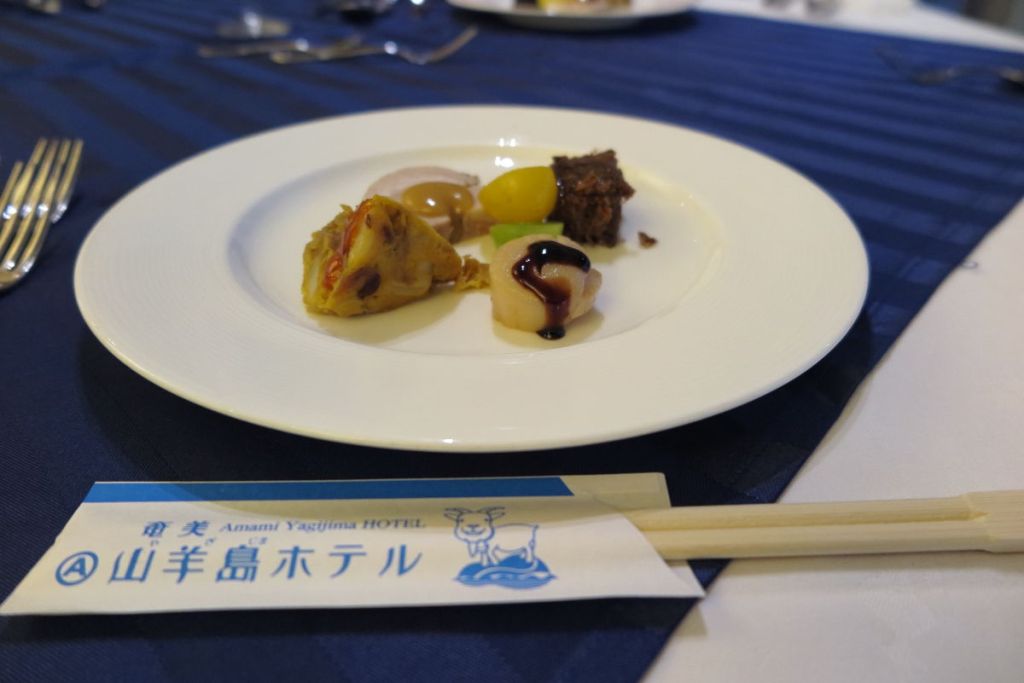
For dinner, you can choose between a Japanese or Western course, but since I’ll be having Japanese food from tomorrow onwards, I chose the Western course. The appetizers were porchetta, Spanish omelet, meat pâté, and grilled scallops.
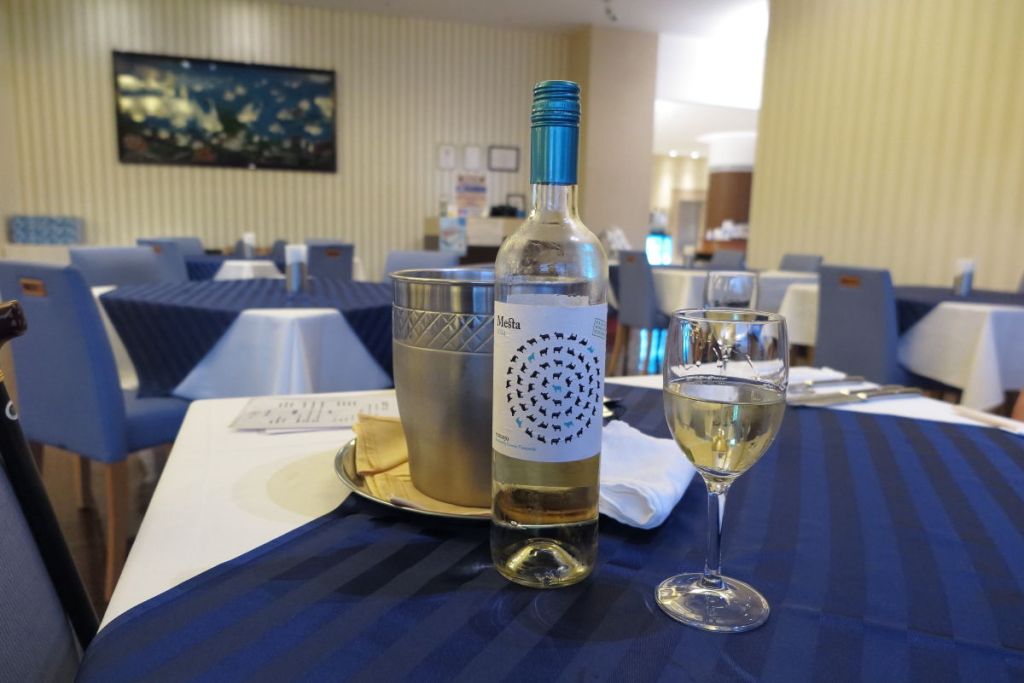
I enjoyed it with an organic white wine from Spain. It’s a dry wine, but it has a fruity, fresh aroma.
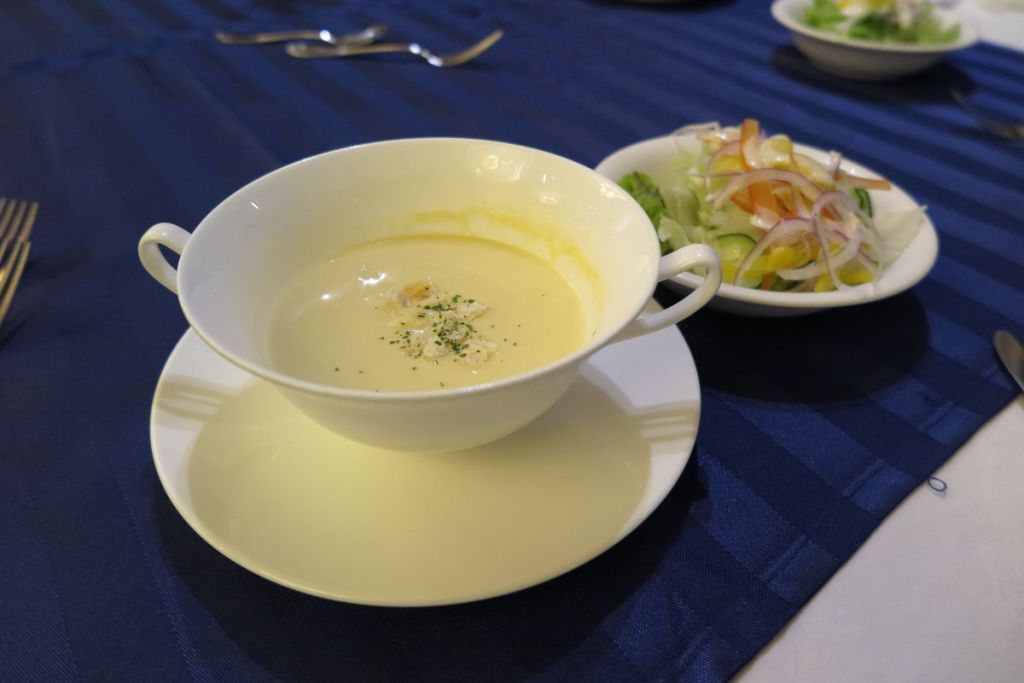
Next came corn chowder and a salad.
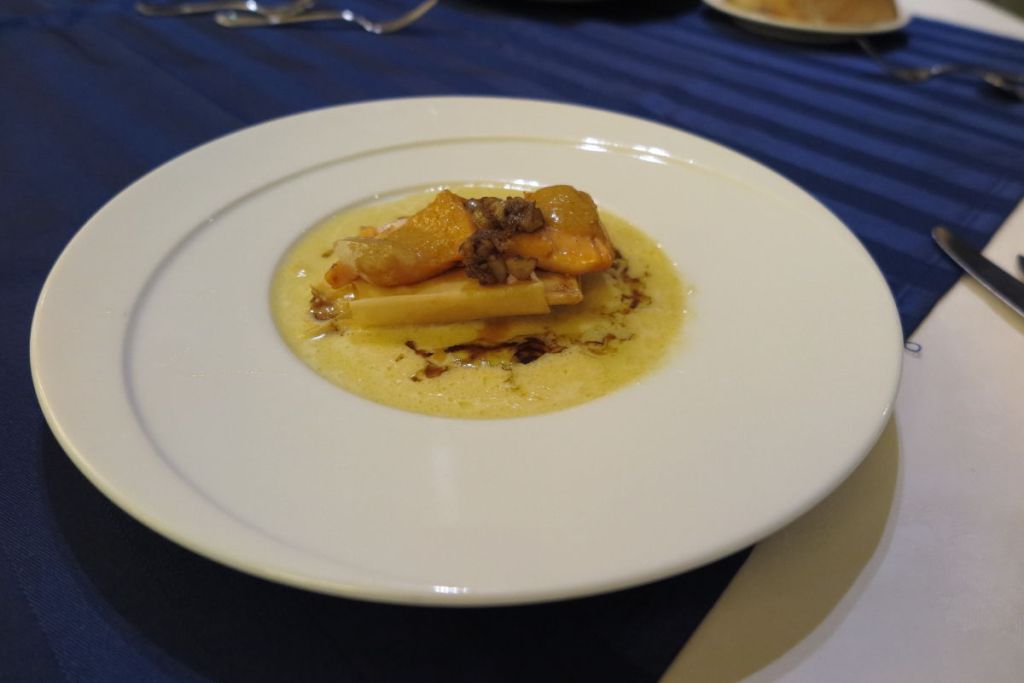
The fish dish is salmon.
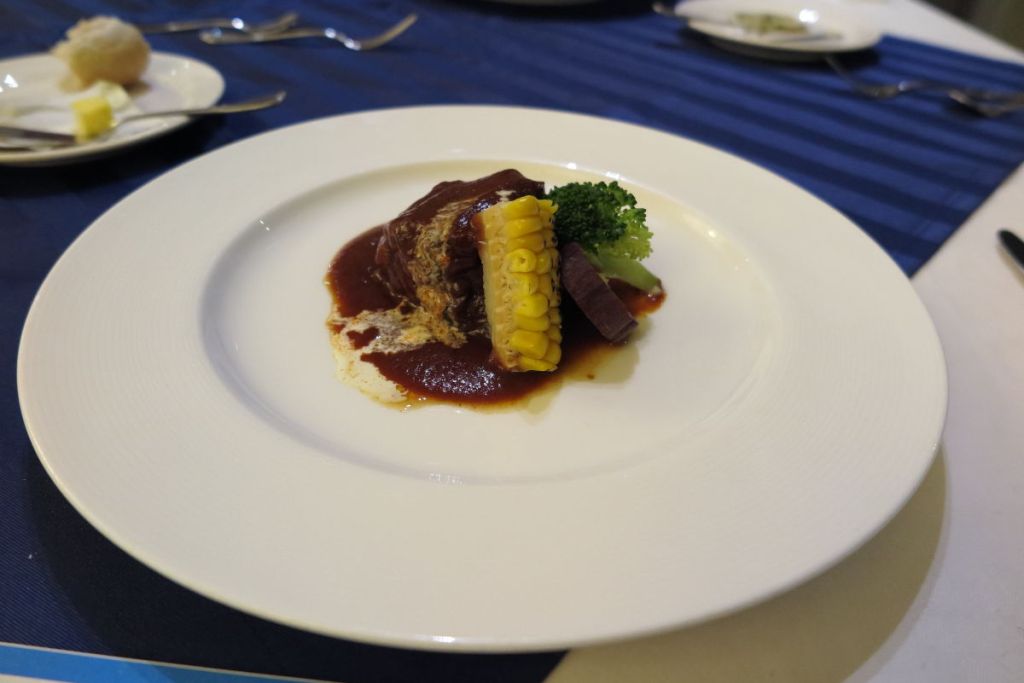
The meat dish is beef stewed in red wine.
Finally, dessert and coffee were served. It was a shame that there weren’t many ingredients typical of Amami Oshima, but the taste was decent.
March 16th (Mon)
After having a buffet breakfast, I decided to tour the southern part of the island today. The first place I stopped at was the Amami-Oshima World Heritage Conservation Center.
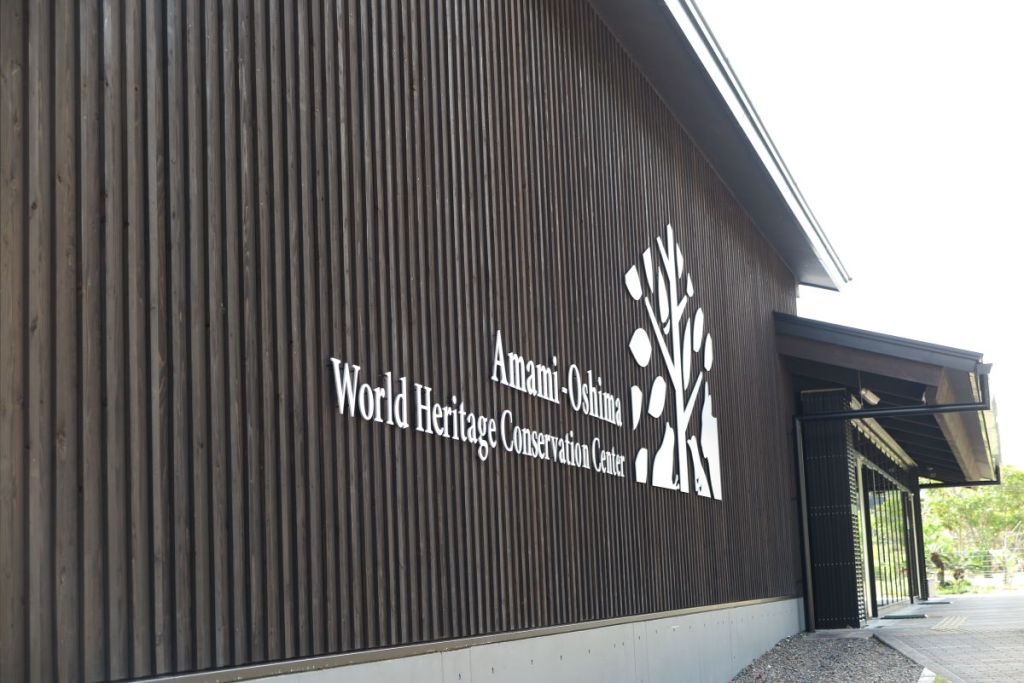
Inside, there are exhibits that allow visitors to experience the natural formation of Amami Oshima and its forests and ecosystems in a simulated way. The Amami and Okinawa Islands were connected to the Eurasian continent until several million years ago, but were separated from the continent by subsequent tectonic shifts, resulting in their current form. As a result, 75 species of animals that became extinct on the continent have survived as endemic species in the Amami and Okinawa Islands.
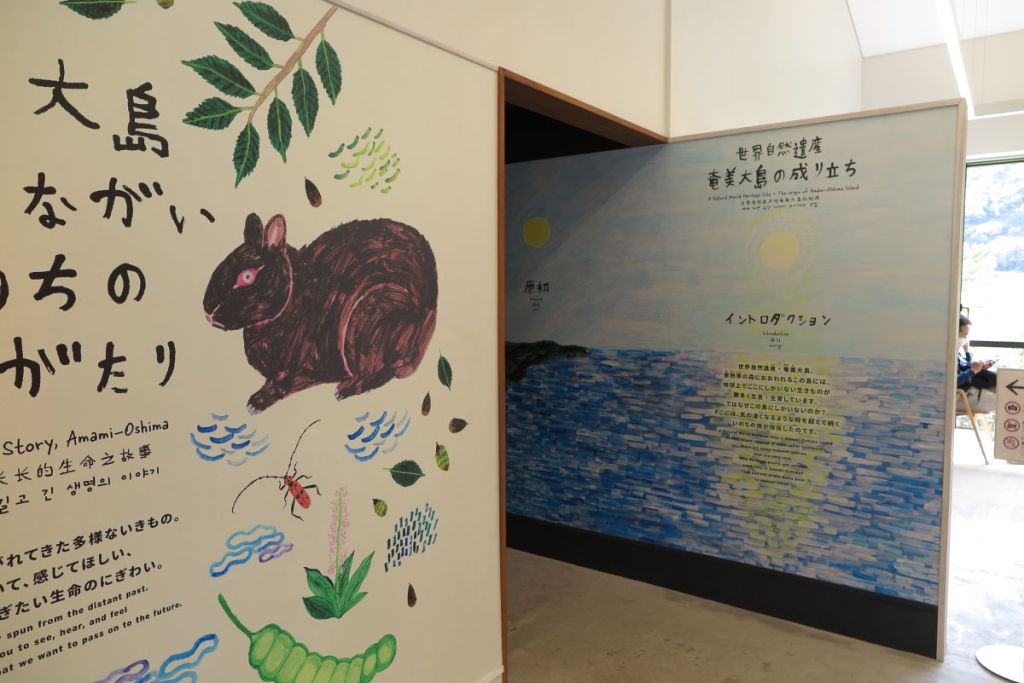
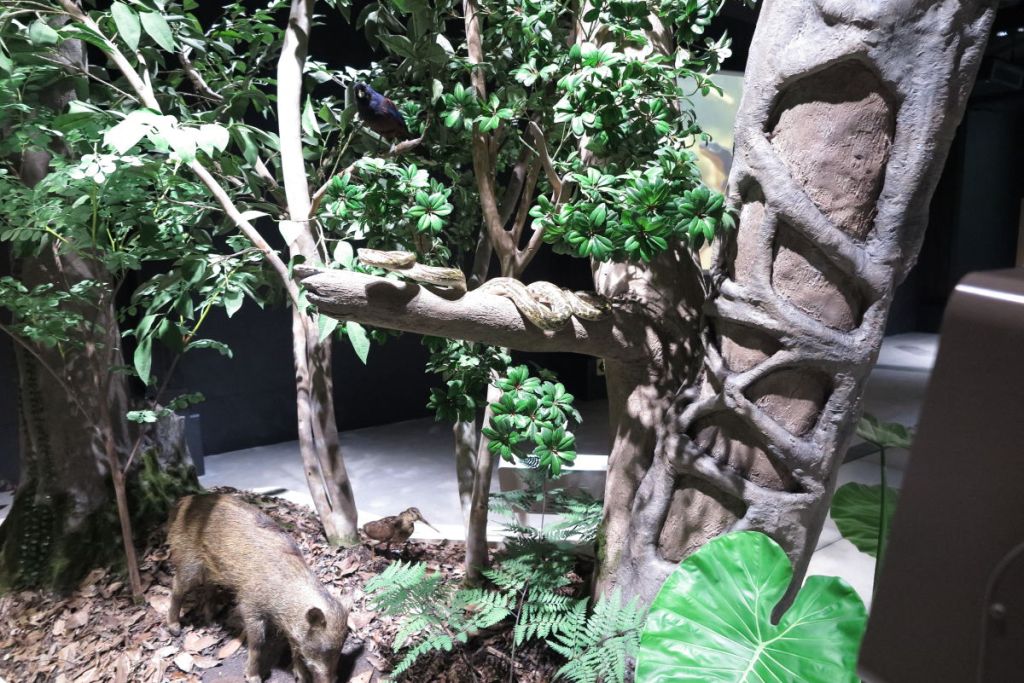
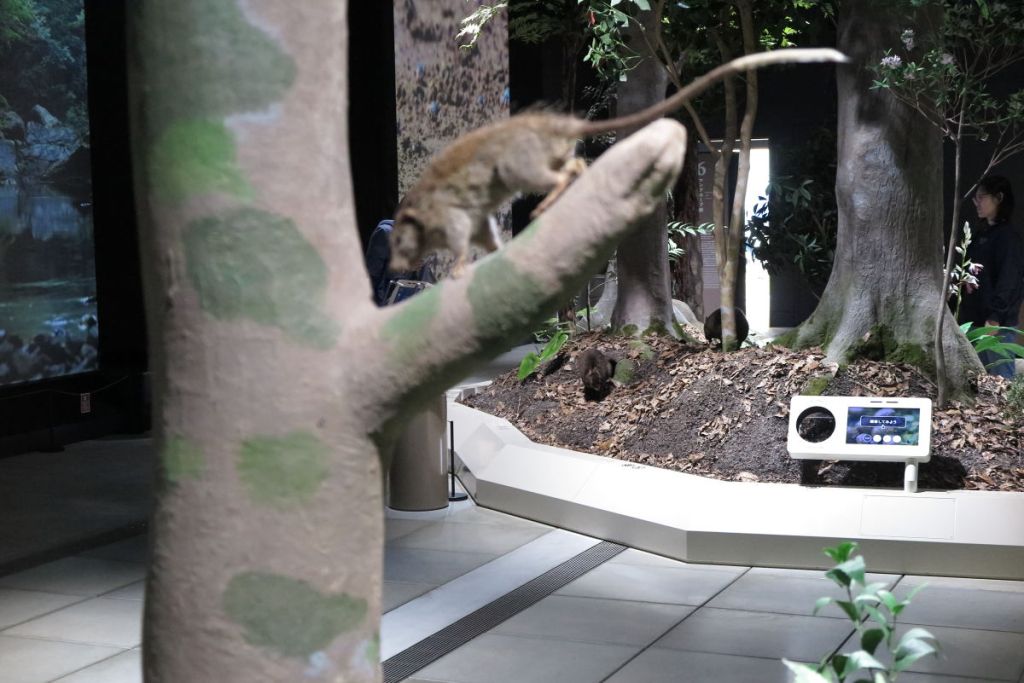
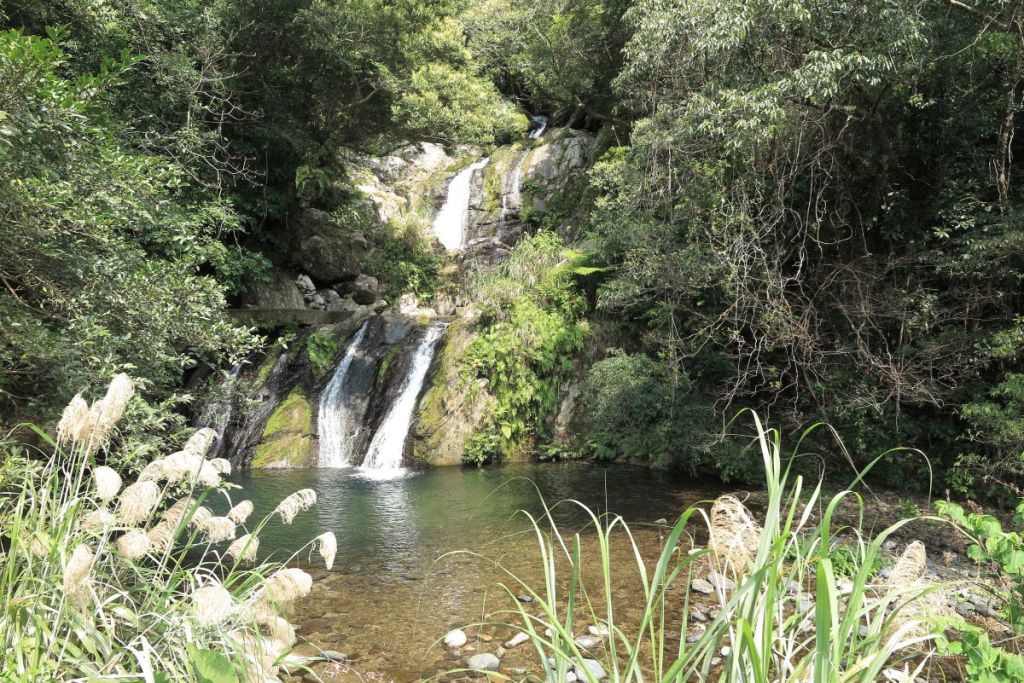
After finishing my tour, I headed to Arangachi Falls. I managed to get there safely by taking a narrow road off the main road. This waterfall has a drop of 30 meters and is one of Amami’s most representative waterfalls.
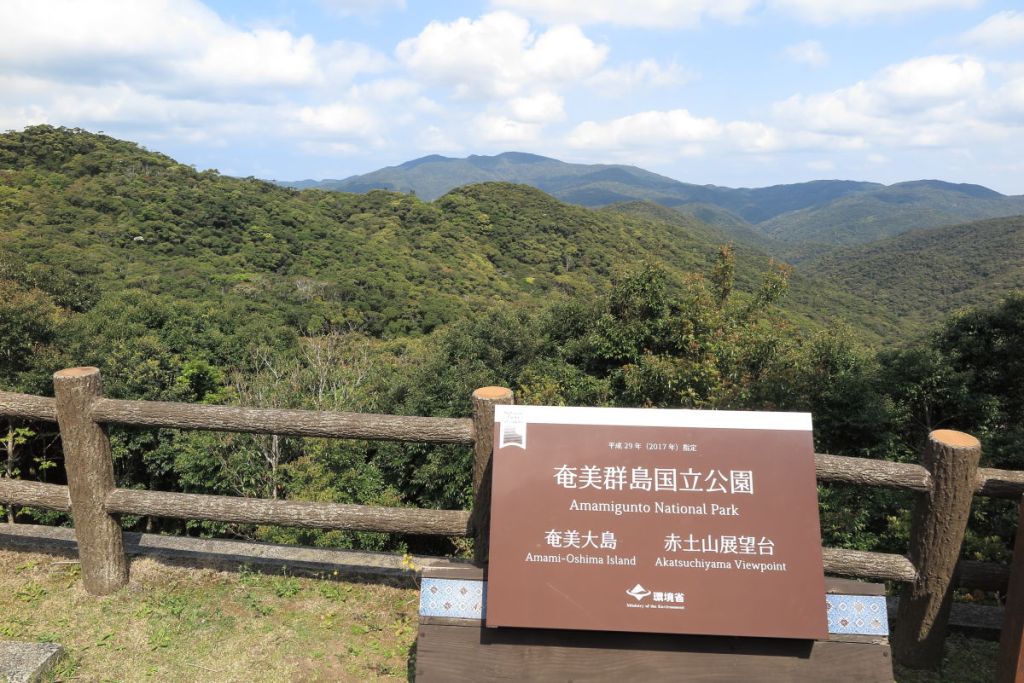
I retraced my steps and was able to see Yuwan-dake, the highest peak in Amami, from the Akatsuchiyama Observatory. Although 80% of the island is covered in forest, the scenery certainly confirms this. Thanks to the untouched forest, biodiversity is preserved.
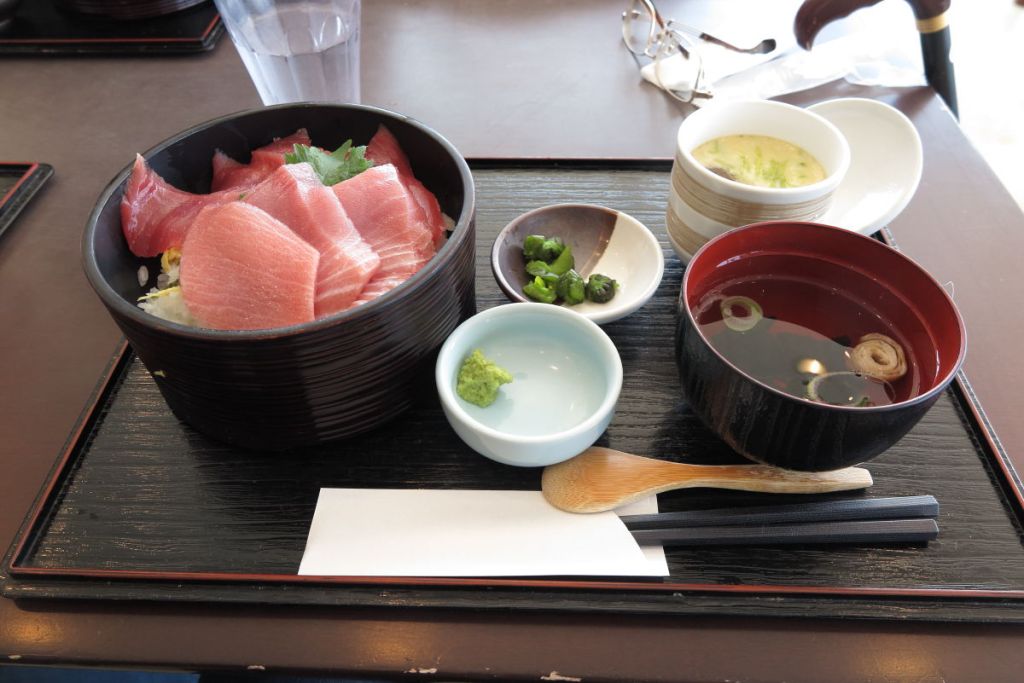
Since it was lunchtime, I headed to Setouchi Sea Station. Setouchi Town is known for its tuna farming, so I ordered a bluefin tuna bowl. The tuna was fatty and had a great texture, it was absolutely delicious.
From the restaurant on the second floor, you can see Kakeroma Island across the Oshima Strait.
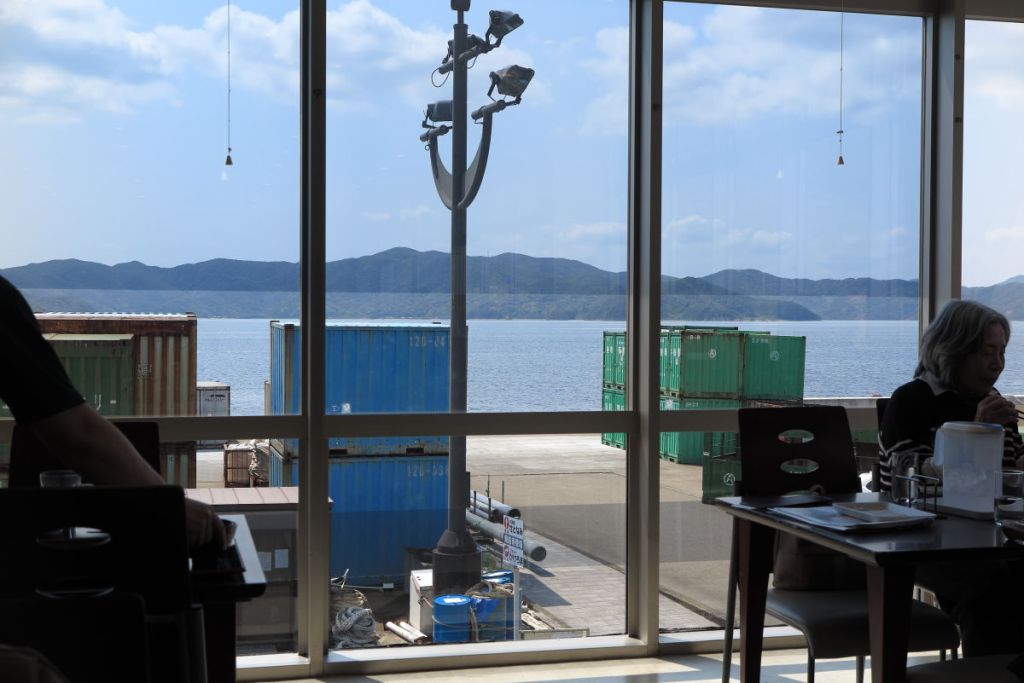
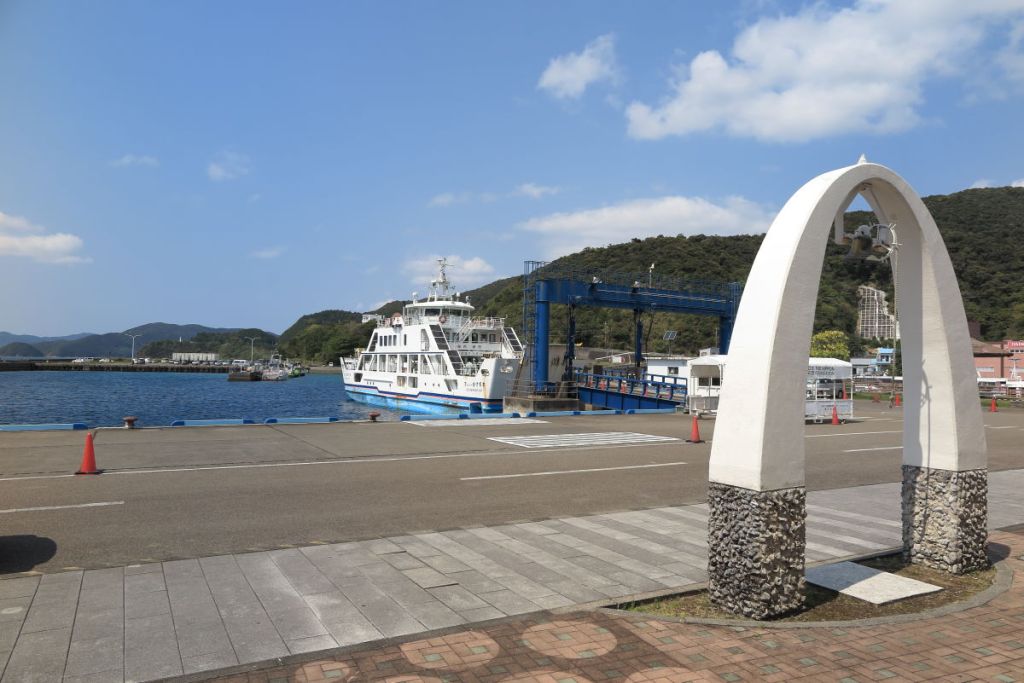
When I finished eating and went outside, a ferry bound for Kakeroma Island was docked. I considered going to Kakeroma Island, but due to the time constraints of the round trip, I decided to just enjoy the scenery this time.
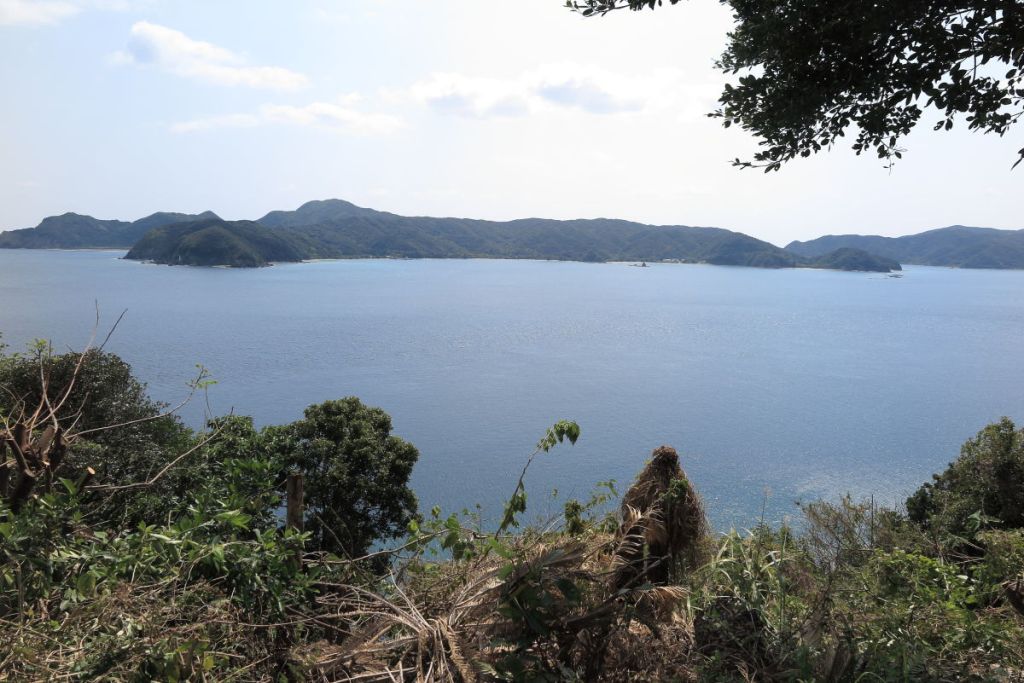
Next, I decided to head to Manenzaki Observatory. From here, you can also see Kakeroma Island across the deep blue Oshima Strait.
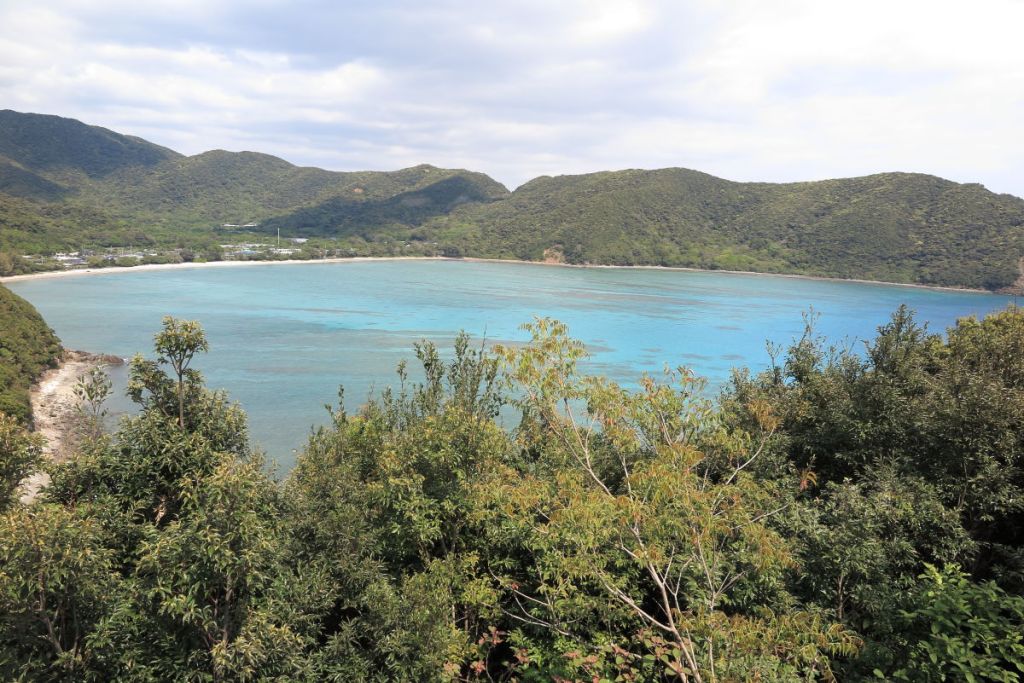
Looking to the other side, you can see the contrasting emerald green of Katetsu Bay. The contrast in the colors of the sea is magnificent.
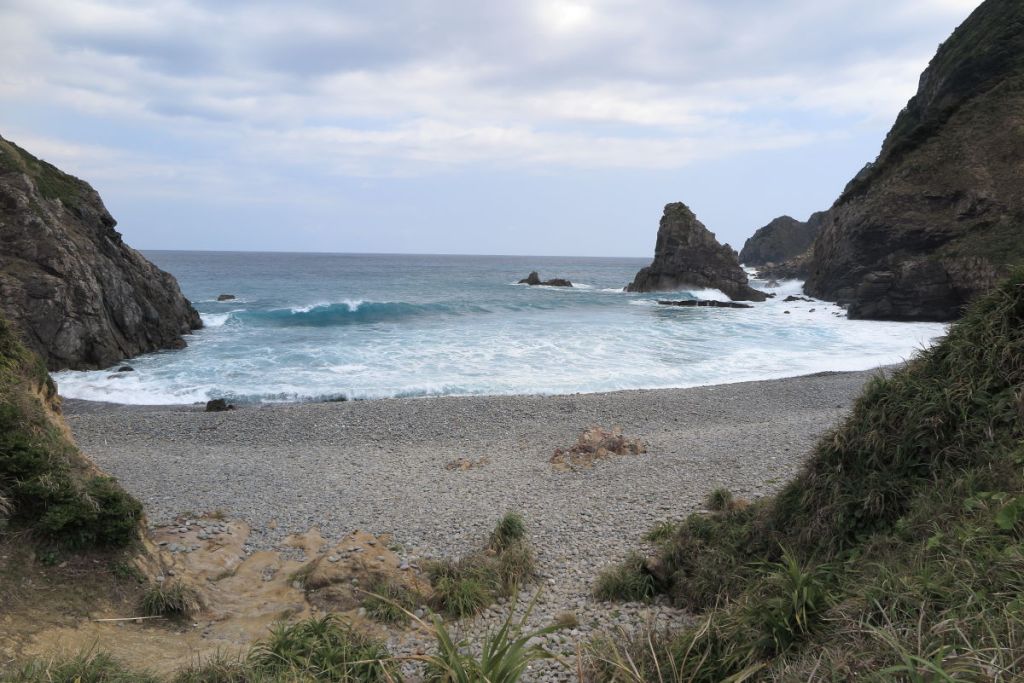
Next, I headed to Honohoshi Beach.
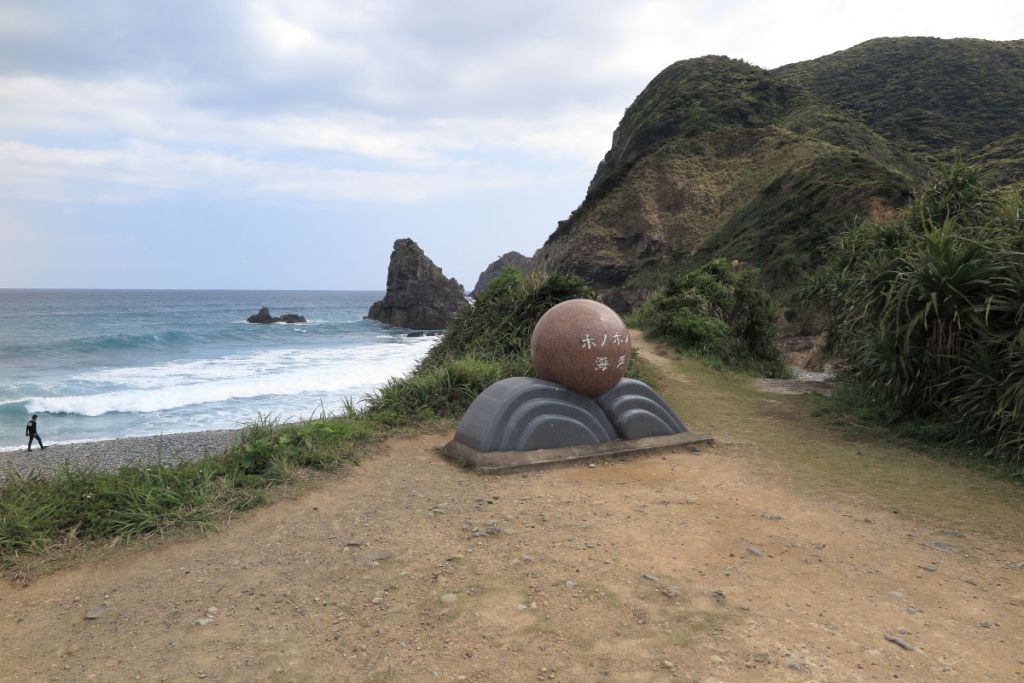
Because this coast faces the Pacific Ocean, large waves crash against it. As a result, the beach was covered with rounded pebbles.
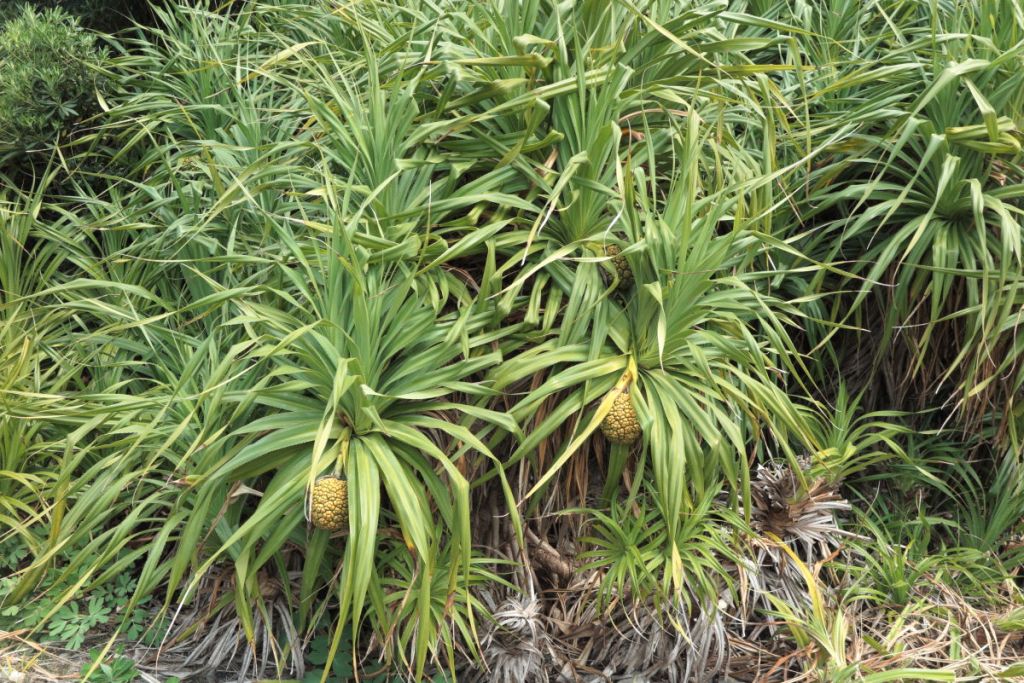
Along the road to the coast, I saw the fruit of the pandanus tree, which has also been the subject of paintings by Isson Tanaka.
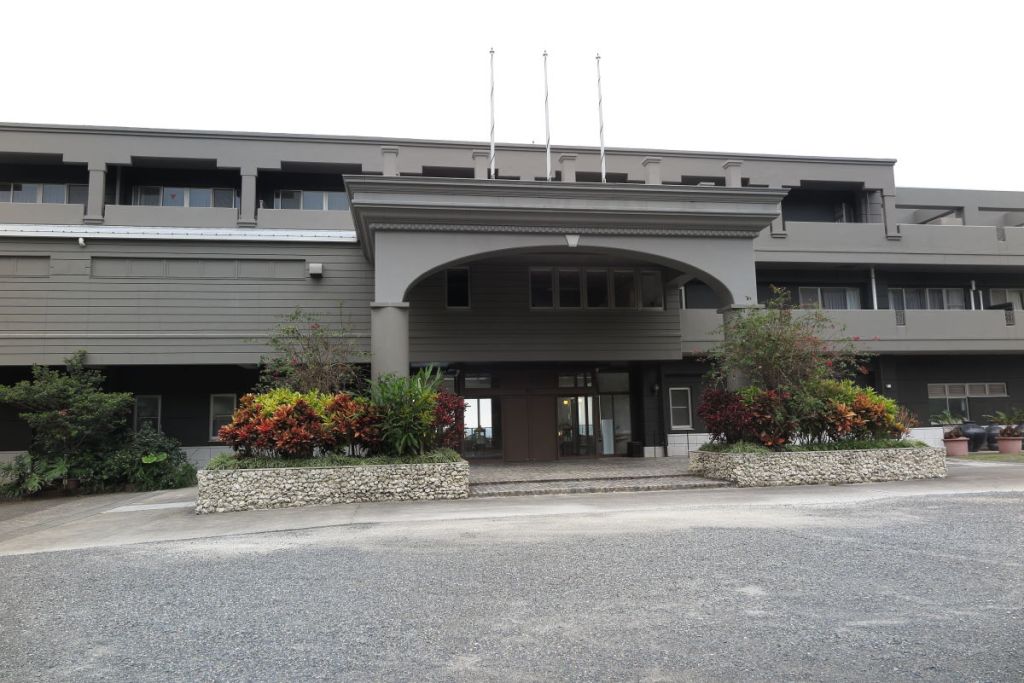
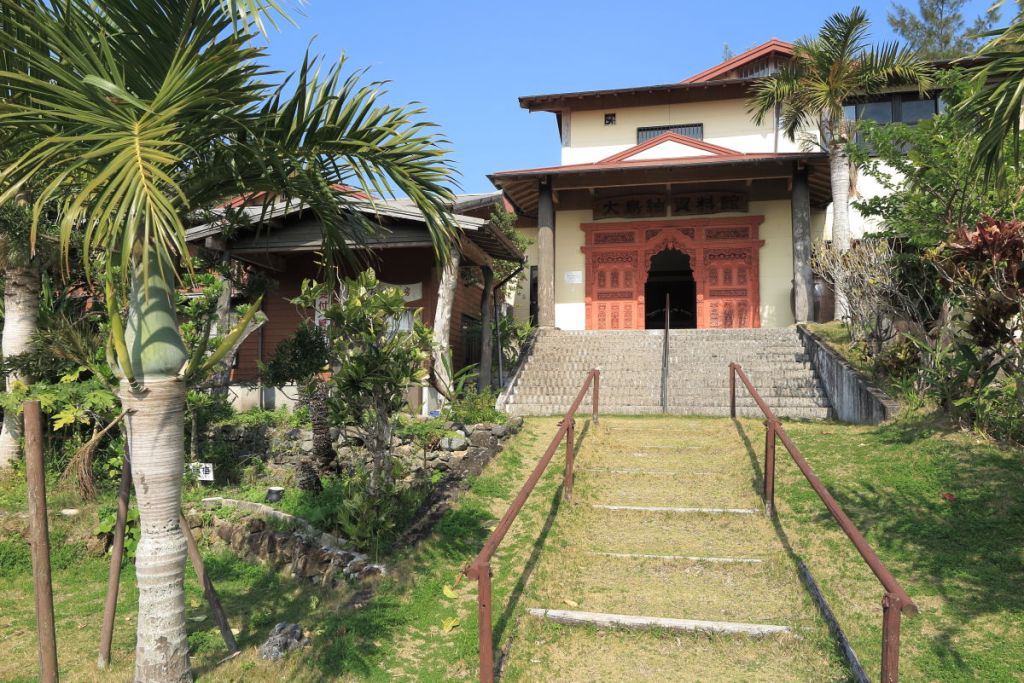
Having finished sightseeing in the south, I headed to my accommodation for the night, Hotel Thidamoon, located in the north. As it is the third largest island in Japan after Sado Island, it takes a little less than two hours to get there from Honohoshi Beach. Thidamoon is a hotel run by an Oshima Tsumugi weaving company and opened in 2005 as a base for promoting the traditional culture of Amami Oshima. There is an Oshima Tsumugi Museum on the second floor, and the Oshima Tsumugi Museum is located across from the hotel.
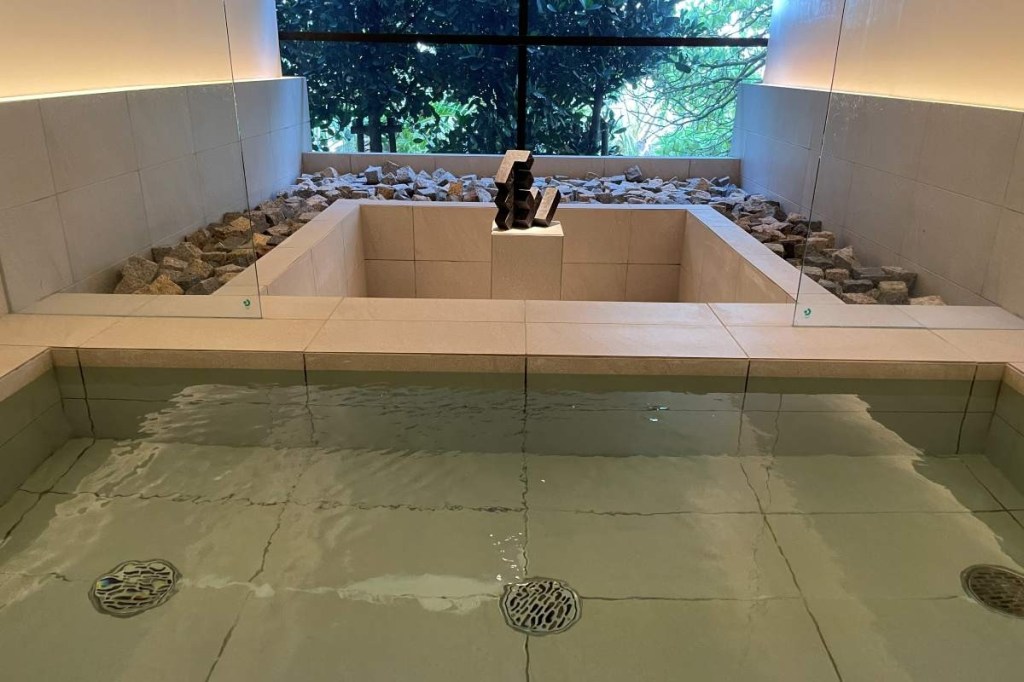
Although there is no large public bath, there are two private baths on the first basement floor that can accommodate up to three people and are free to use. You can enjoy the view outside and relax while soaking. The water is from underground coral reefs, so it warms your body and gives you the feeling of being in a hot spring.
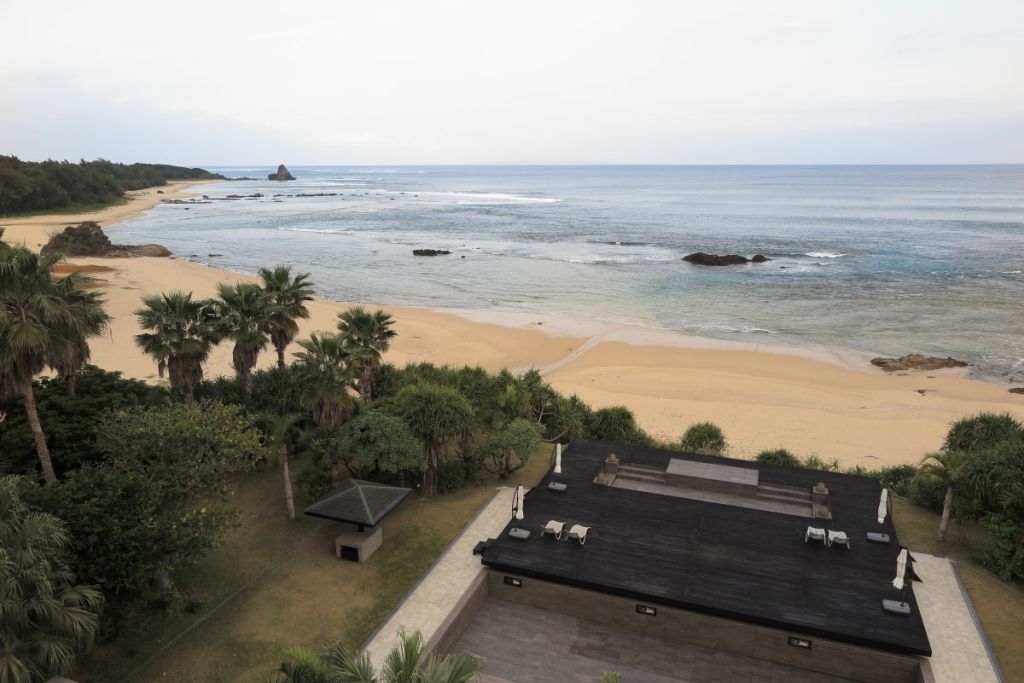
From the room’s balcony, you can enjoy a panoramic view of the Pacific Ocean and the sandy coastline. There’s also a swimming pool nearby, but it wasn’t filled with water yet, as it’s scheduled to open from Golden Week (early May).
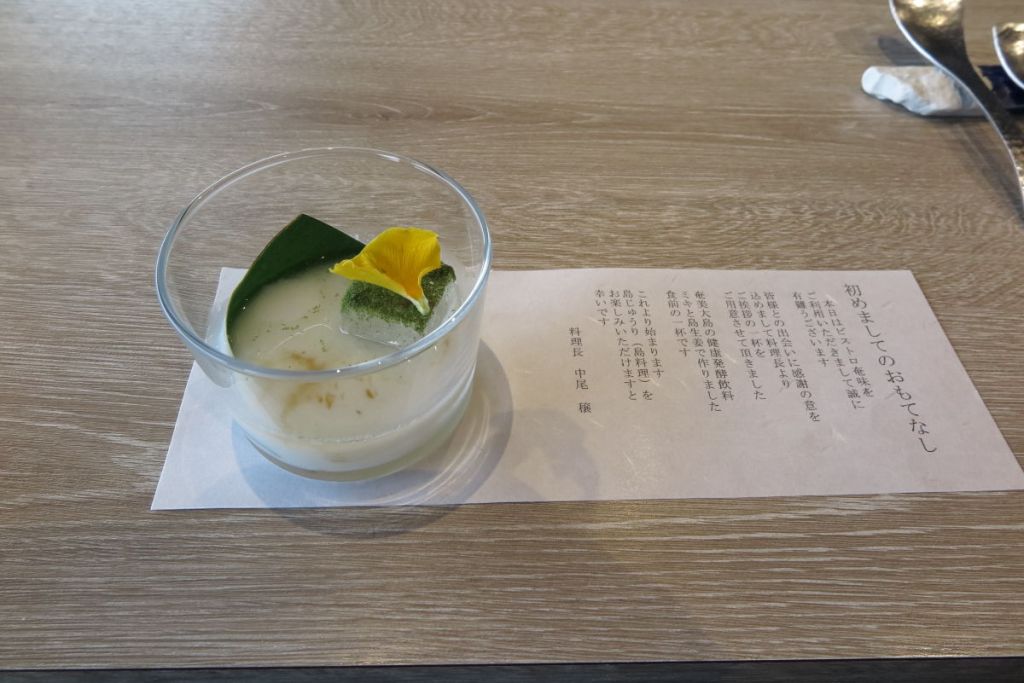
Dinner is served in two sittings, at 5:30 or 7:30, so I chose the 5:30 sitting, which was a little earlier than planned. Today’s menu was the Amami course, a creative Japanese cuisine, and it began with a greeting, followed by a pre-dinner drink made with Miki, a healthy fermented beverage from Amami Oshima, and island ginger.
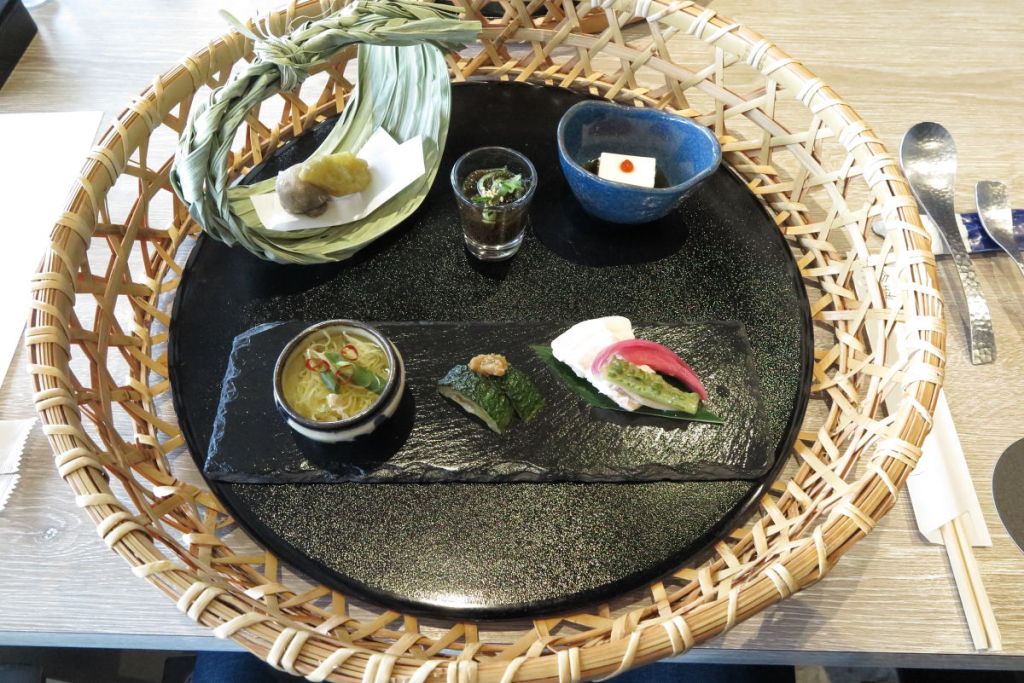
Next, a variety of dishes served on large plates were brought out. The top left was tempura made with taro root and boiled taro root, the top center was mozuku seaweed in sesame sauce, the top left was jimami tofu, and the bottom, from left to right, was a salad of green papaya and miminga, zucchini with meat miso sauce, and steamed salted pork with ginger lily.
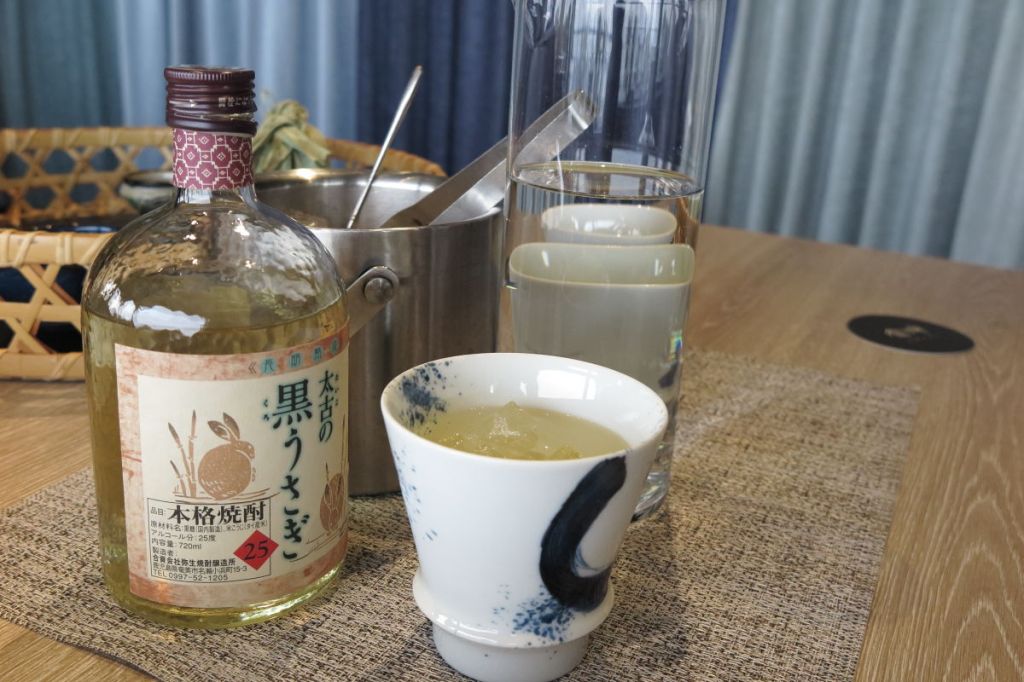
I heard that brown sugar shochu, made from sugarcane produced only in the Amami Islands, pairs well with Amami cuisine, so I ordered Taiko no Kuro Usagi (Ancient Black Rabbit). I had never tried brown sugar shochu before because I had the impression that it was sweet, but it had a rich aroma and a mellow taste, and was not sweet at all.
The sashimi was served with amberjack on top of a glass lid and red snapper (longtail snapper) underneath. The sweet island soy sauce paired perfectly with it. The red snapper was also very tasty, as befits a high-class fish.
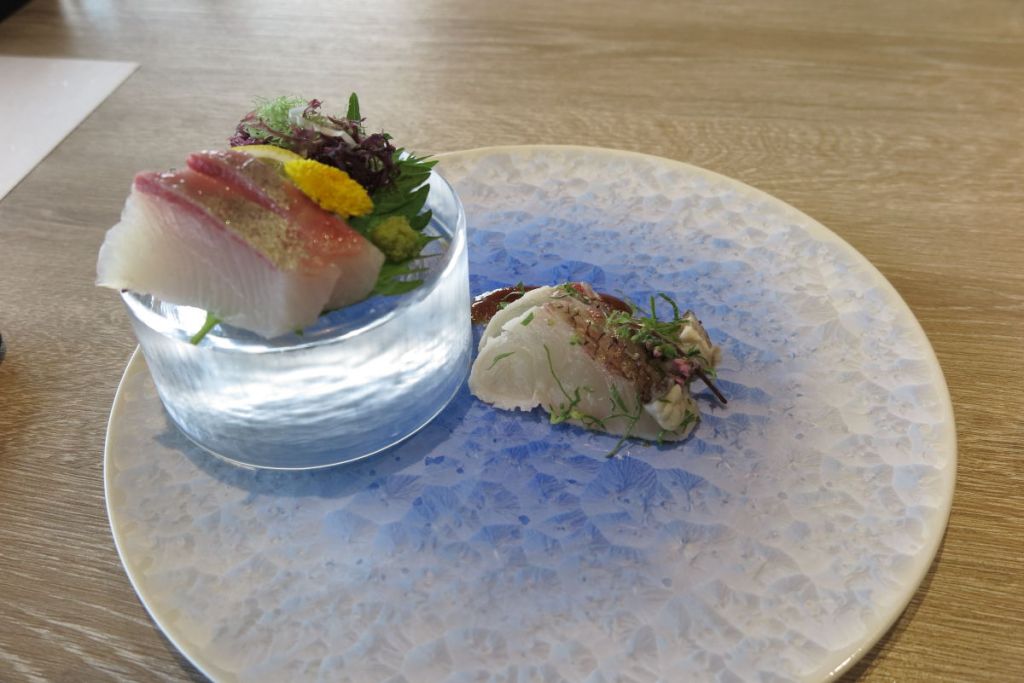
Today’s fish dish was simmered sea bream.
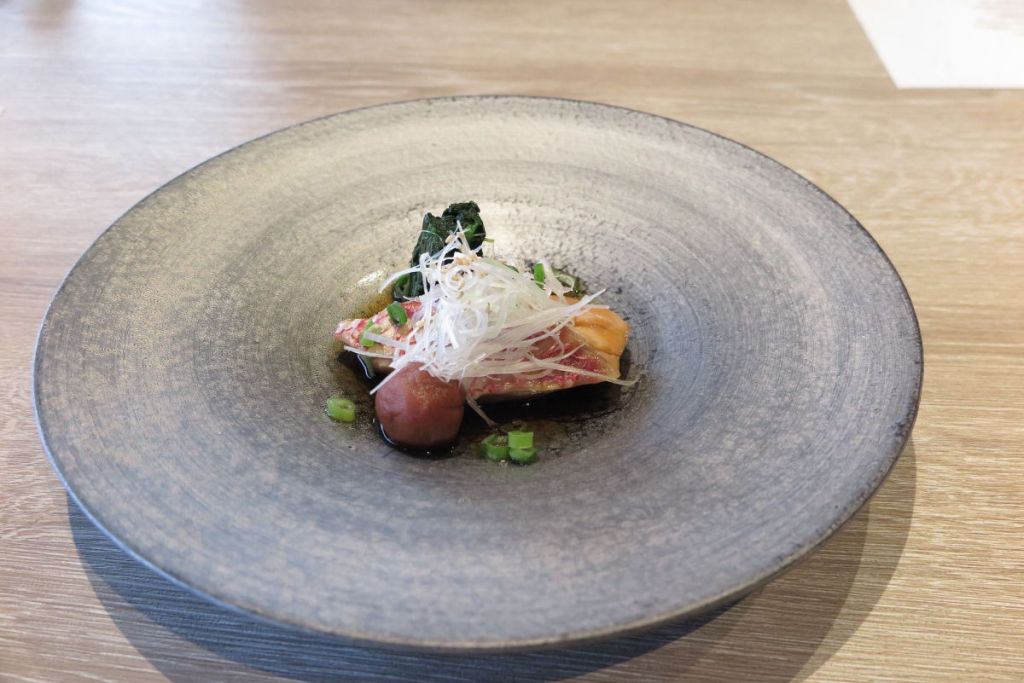
Next came slow-roasted pork wrapped in banana leaves. It had a light flavor and was very delicious.
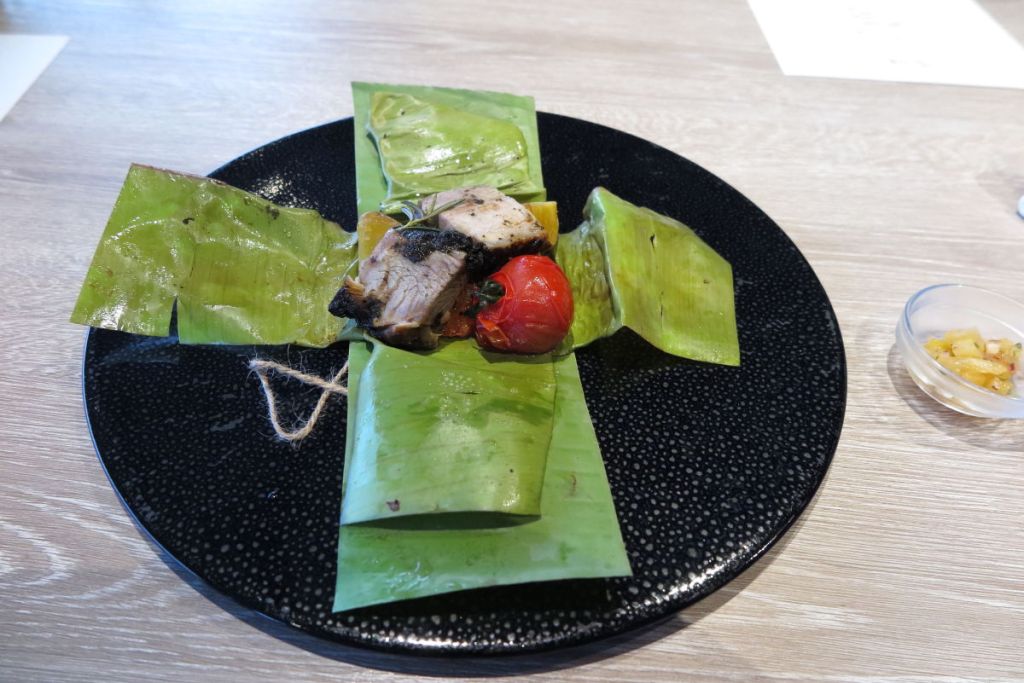
The rice dish was Amami’s classic Keihan (chicken rice with soup), but the medicinal soup served in an earthenware pot had a rich and deep flavor, making it the best Keihan I’ve ever had.
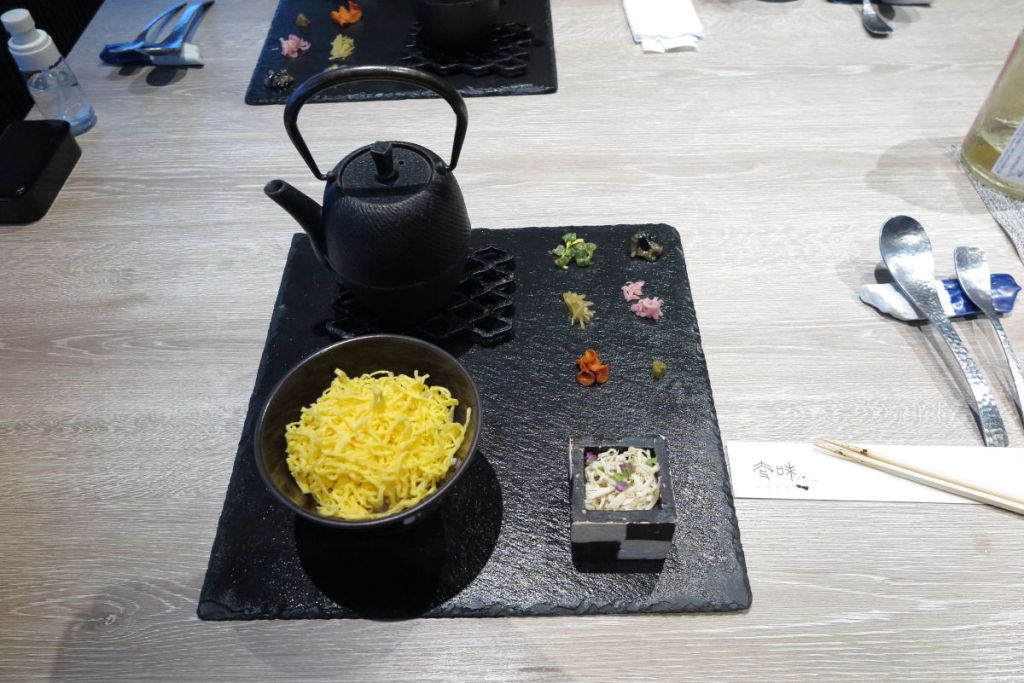
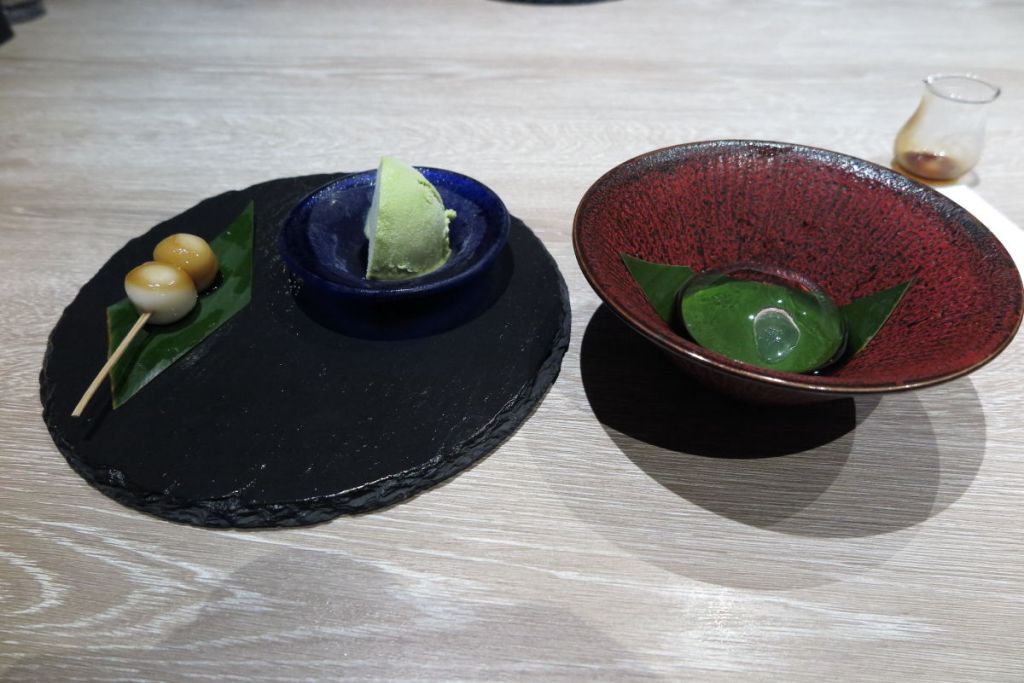
The dessert had a refined taste and was the perfect way to end the meal. It was a wonderful course that exceeded my expectations.
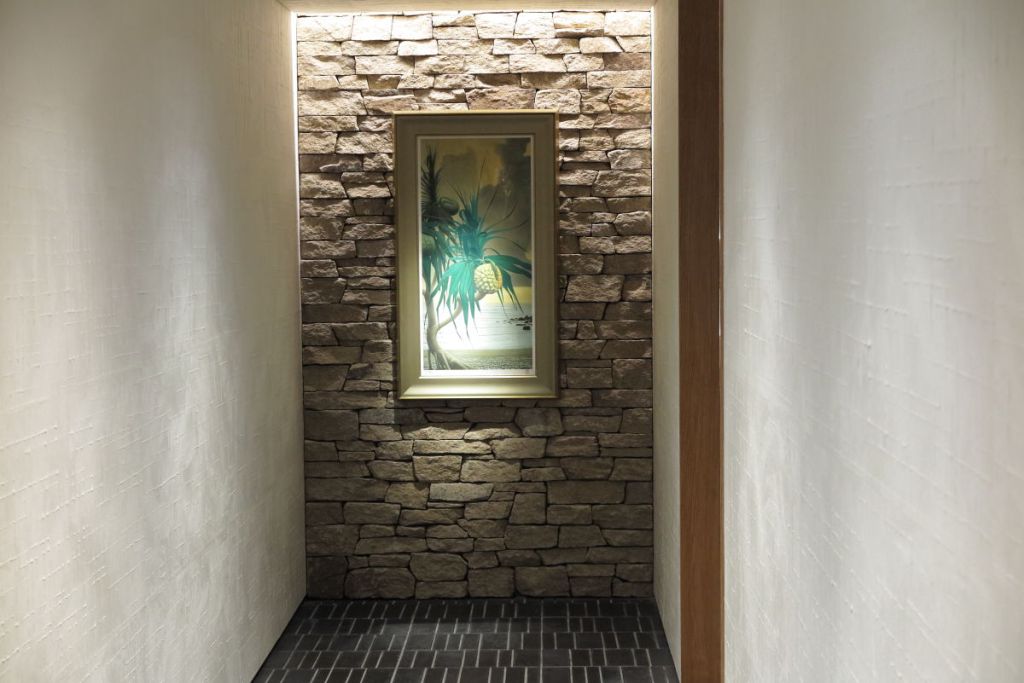
After dinner, I stopped by the gift shop, and the staff member kindly showed me to the gallery next door. At the entrance, there was a reproduction of Tanaka Isson’s masterpiece, “Seashore with Screw Pine.”
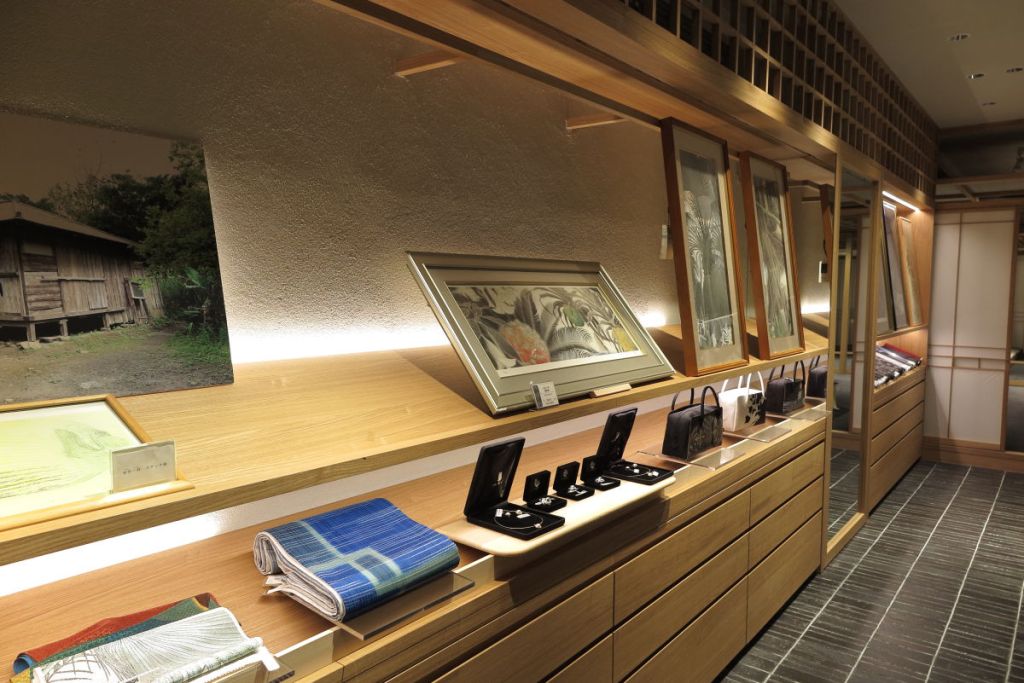
On the opposite side of this photo, there was a wonderful piece of Oshima Tsumugi silk displayed, but photography was not allowed.
March 17th (Tue)
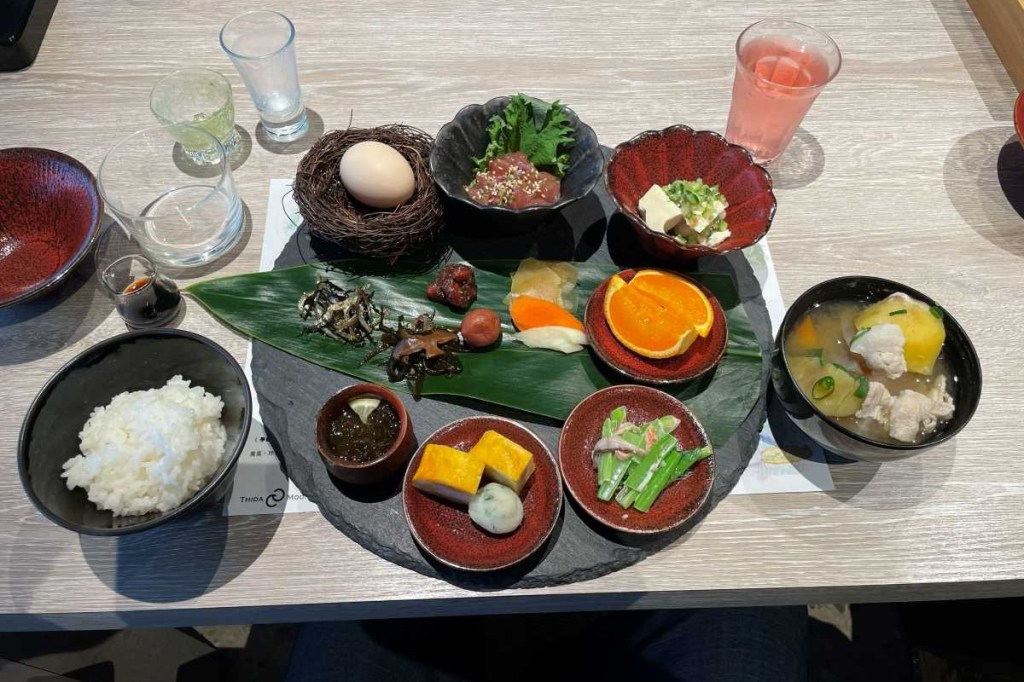
For breakfast, you can choose between Japanese or Western style, and this morning I chose Japanese. The presentation was beautiful, the taste was great, and it gave me a great start to the day.
Today I’ll be sightseeing in the northern part of the island. My first stop was Amami Park.
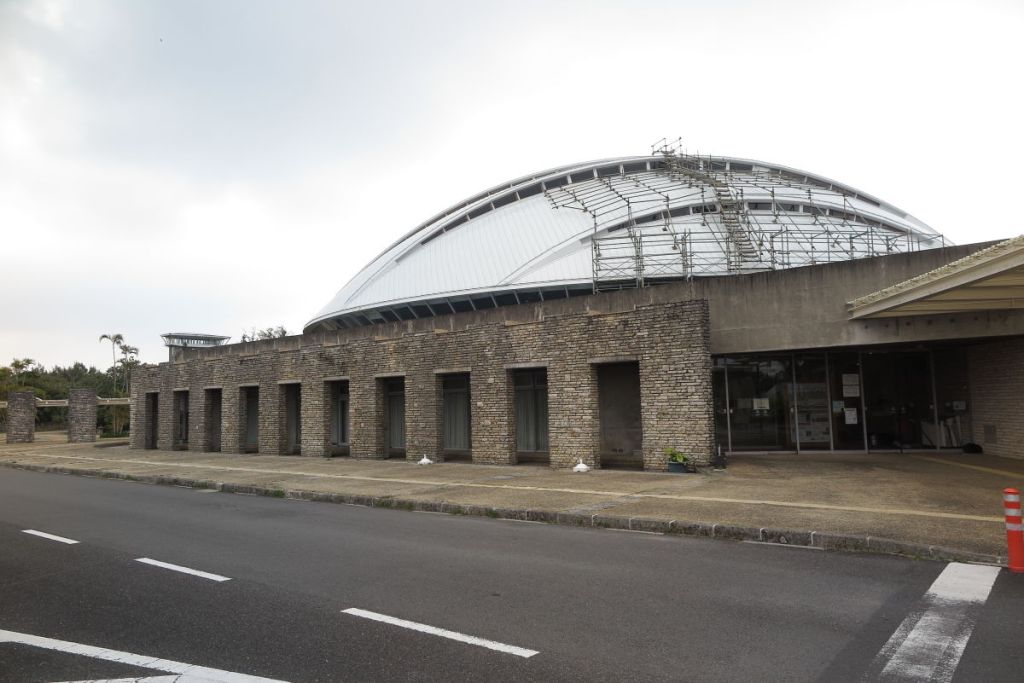
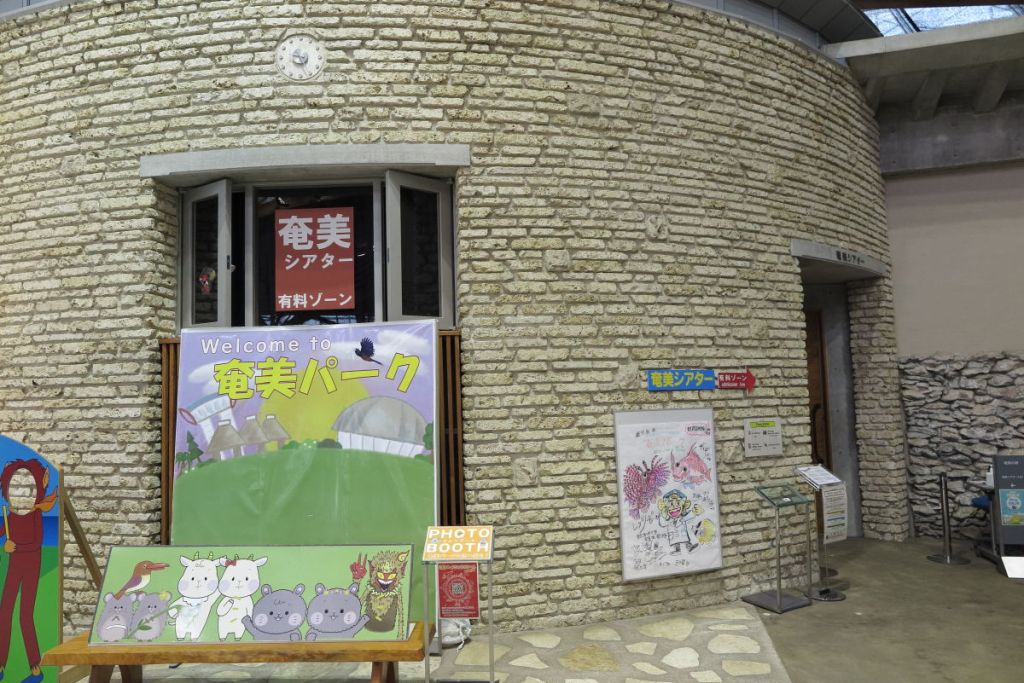
The building has a theater that showcases Amami’s nature and culture, so I went in there first.
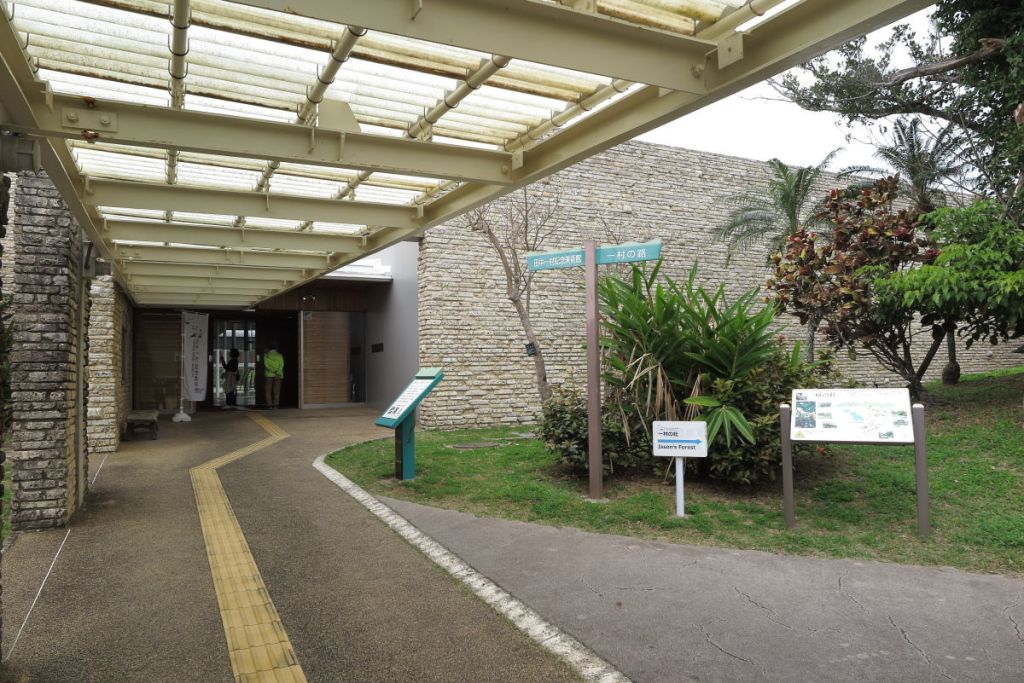
This is where the Tanaka Isson Museum, which was the inspiration for this trip, is located.
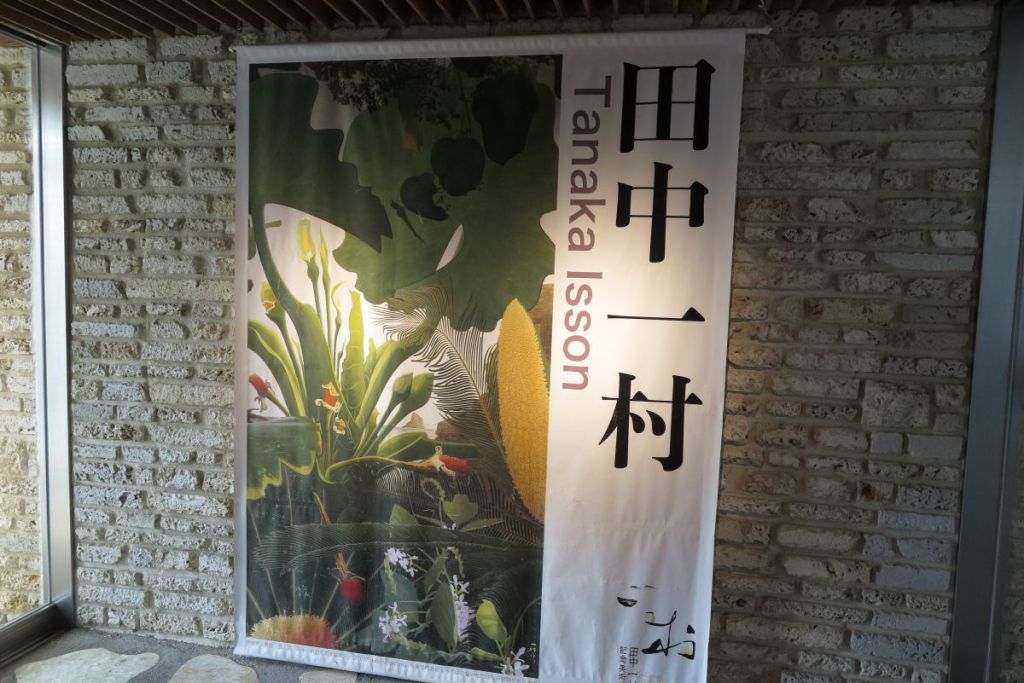
A poster of his representative work, “Alocasia Odora and Sago Palm,” was displayed at the entrance.
The photo shows the building where the permanent exhibition is held. Works from his childhood to his time after moving to Amami are on display. I was surprised to learn that despite Isson’s distance from the central art world, he had supporters and many of his works are privately owned. Photography is not allowed inside the museum, so please see photos online or elsewhere.
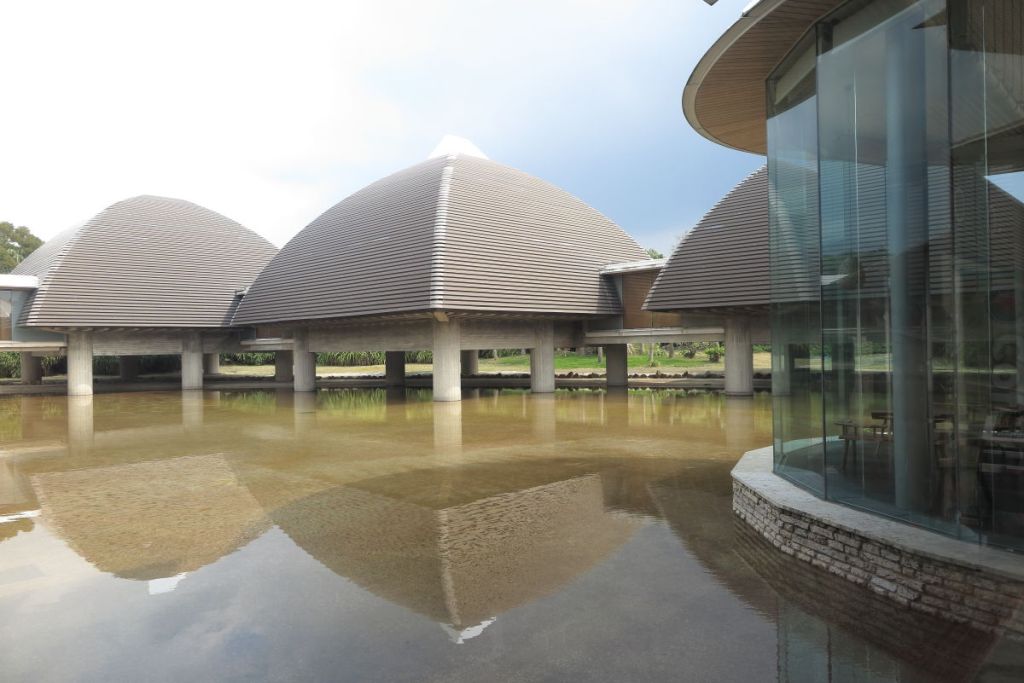
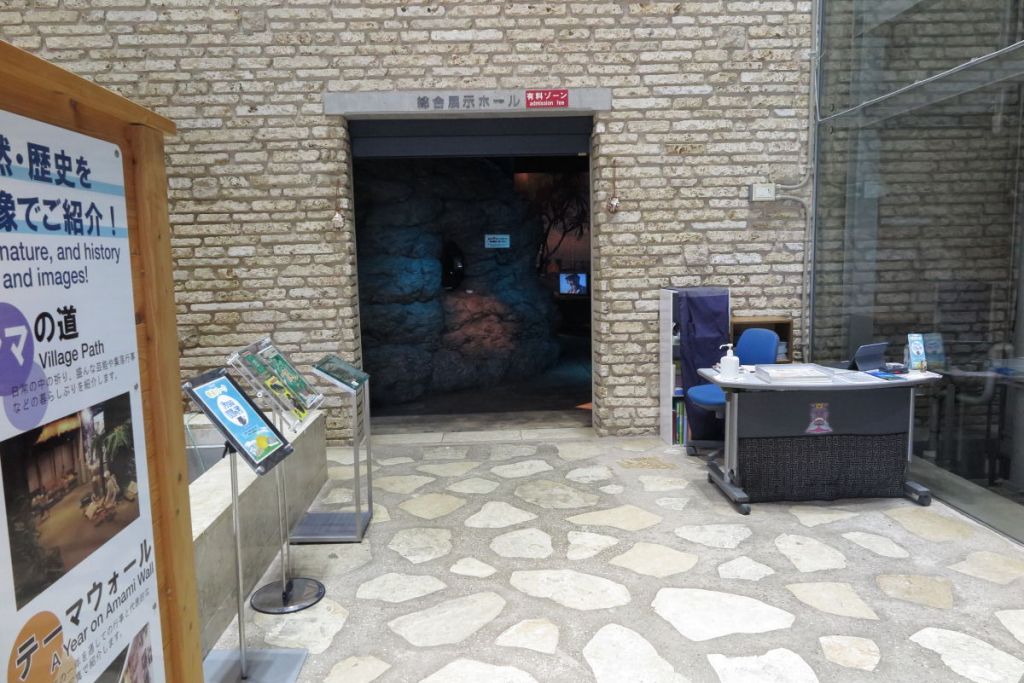
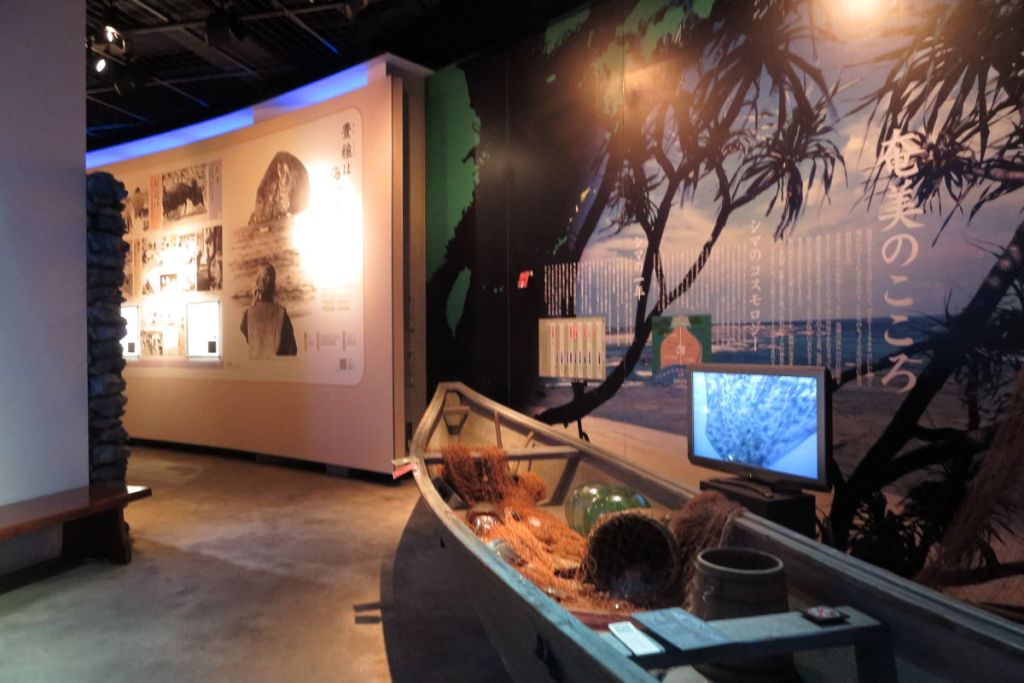
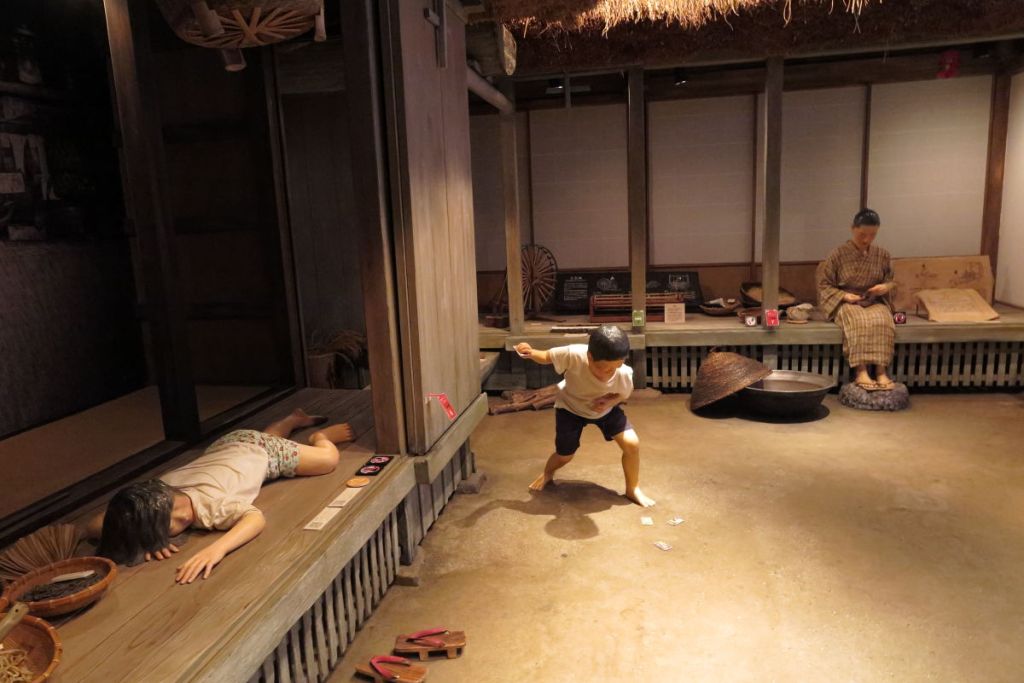
I returned inside the building and toured the exhibition hall. Here, the history, life, and culture of Amami are introduced.
Next, I headed to the site where Saigo Nanshu was exiled. Unfortunately, it seemed to be closed that day, so I couldn’t go inside.
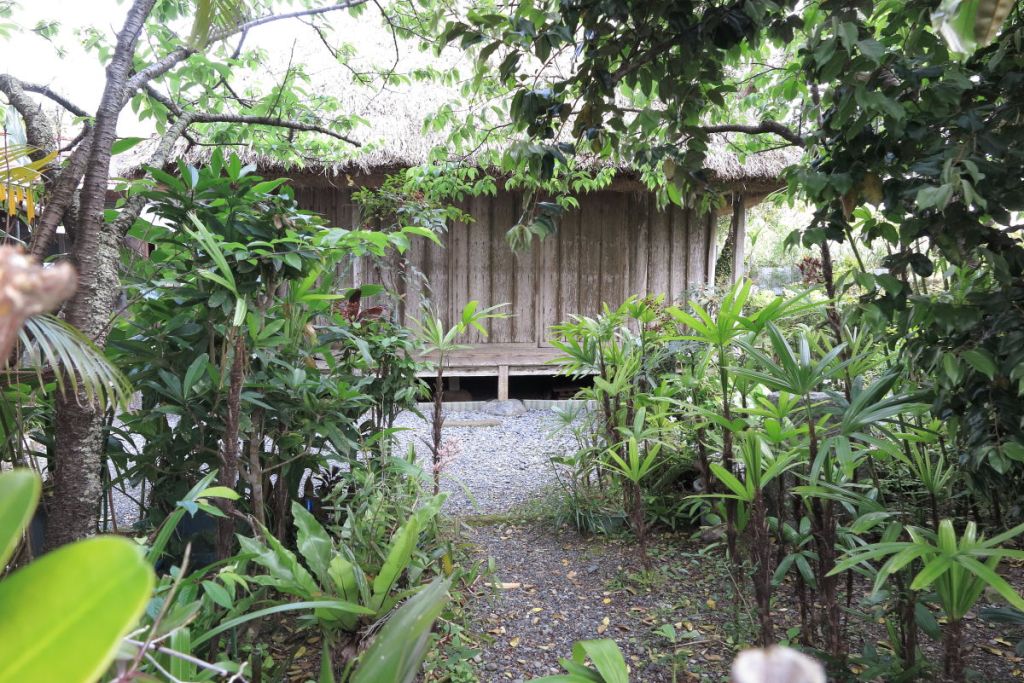
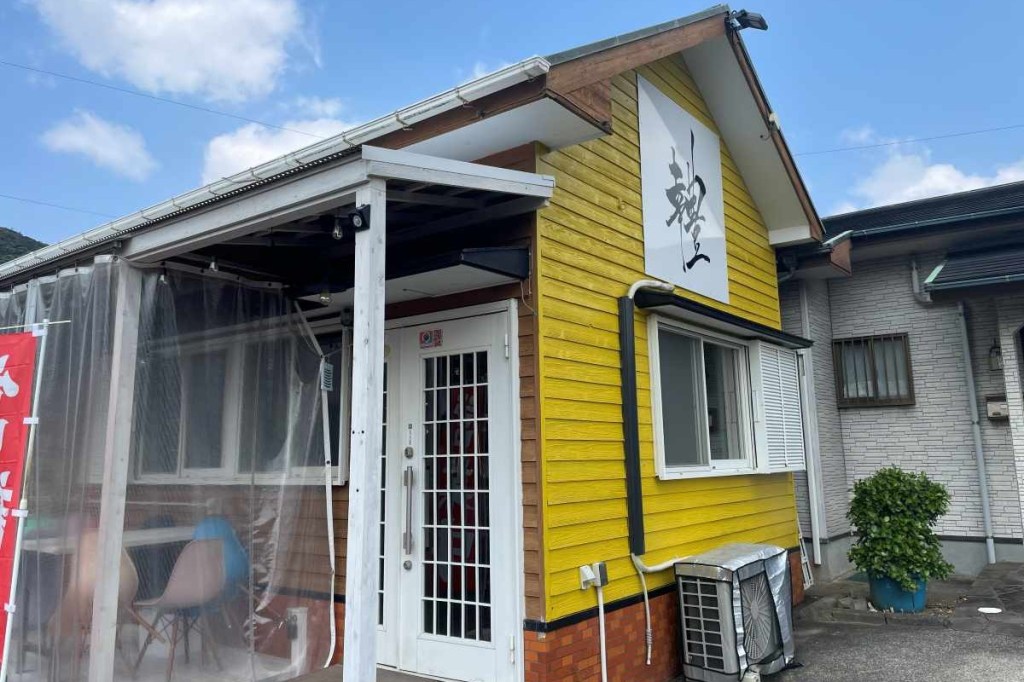
Since it was lunchtime, I had lunch at a nearby Izakaya (Japanese pub) called Roots.
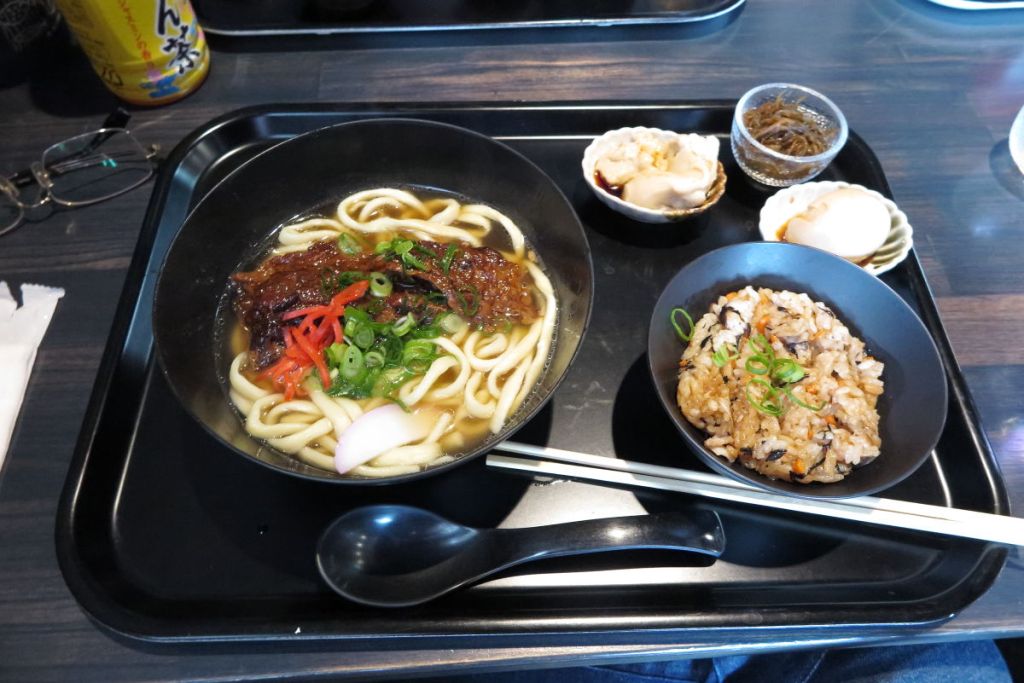
The Soki Soba set was delicious.
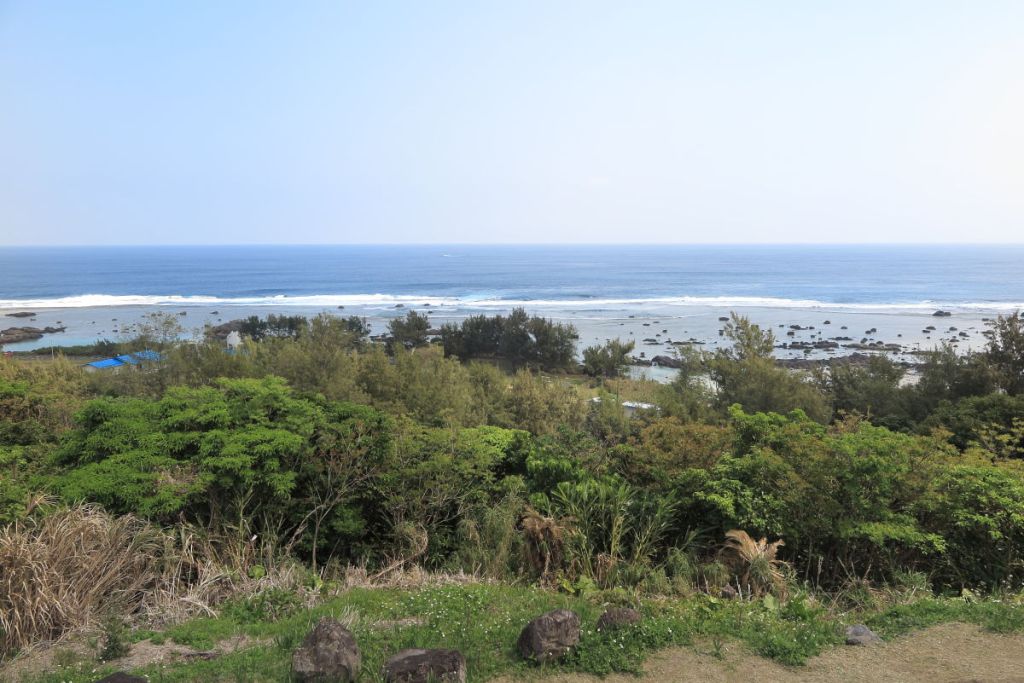
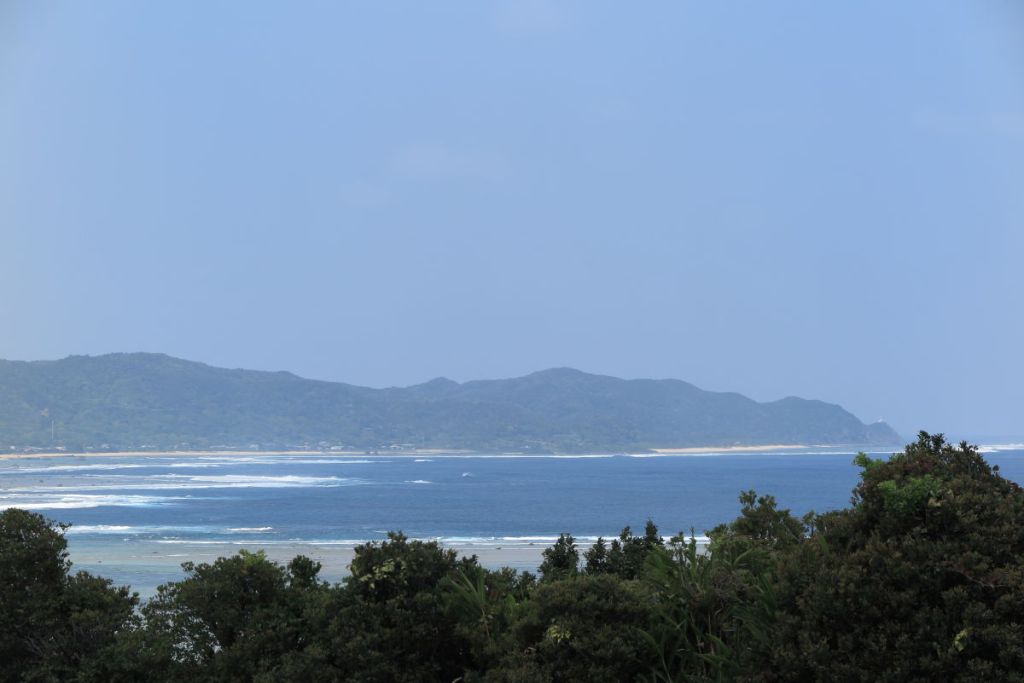
After lunch, I went to Ayamaru Cape Tourist Park. The coral reef area and the open sea have a striking contrast in color.
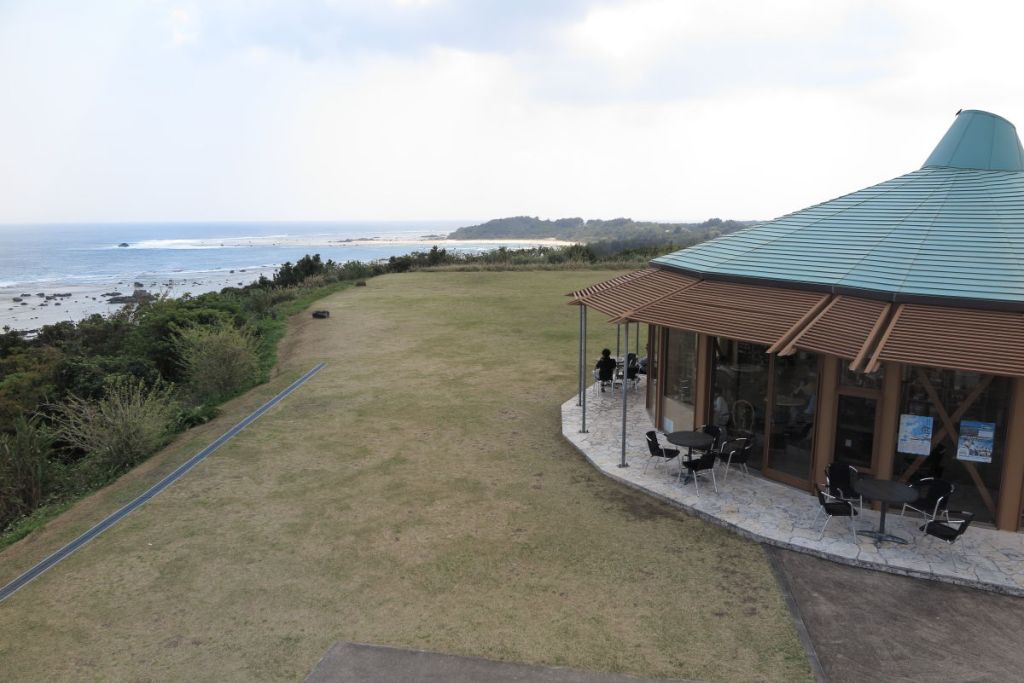
There are also stylish cafes.
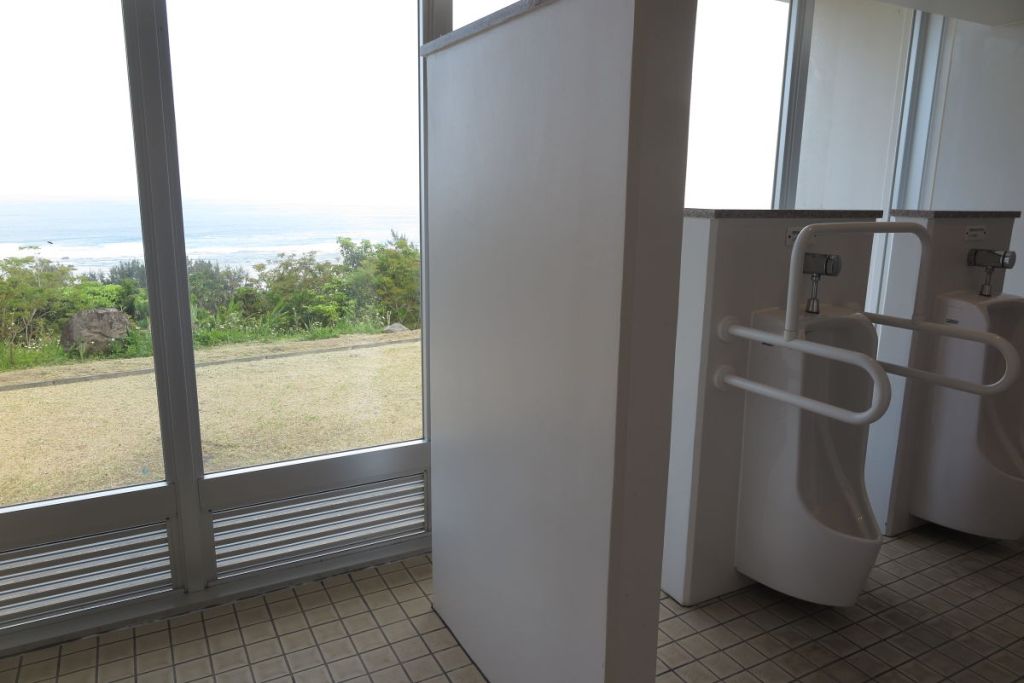
The toilets have an open design, allowing you to enjoy the view while you use the facilities.
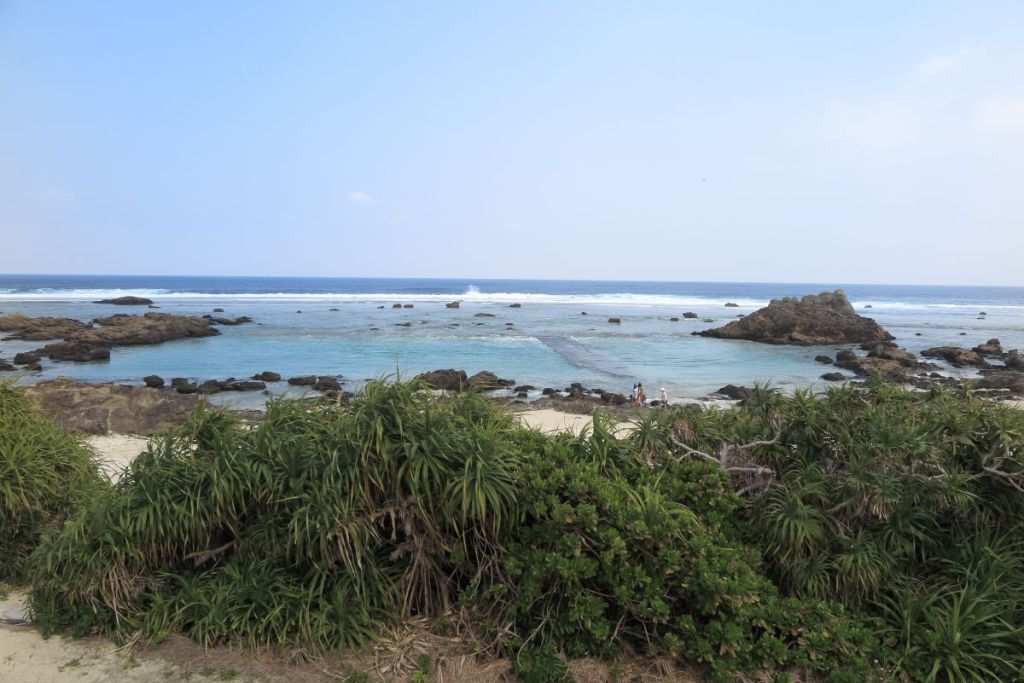
There was also a second observation deck, and the view from there was great as well.
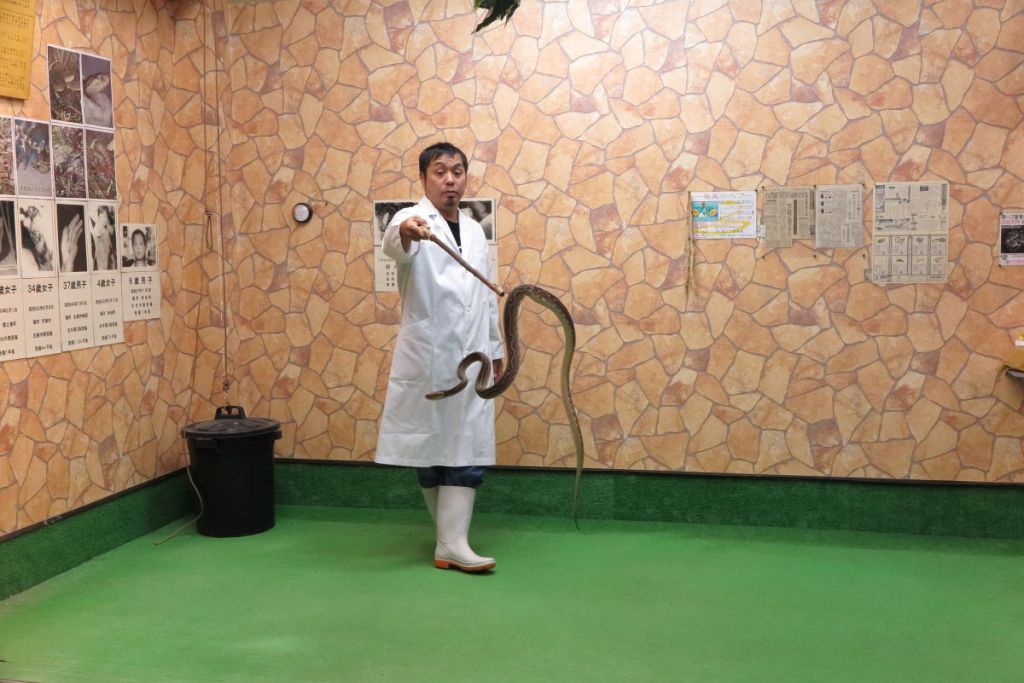
I returned to near the hotel and watched a snake show at Hara Habuya.
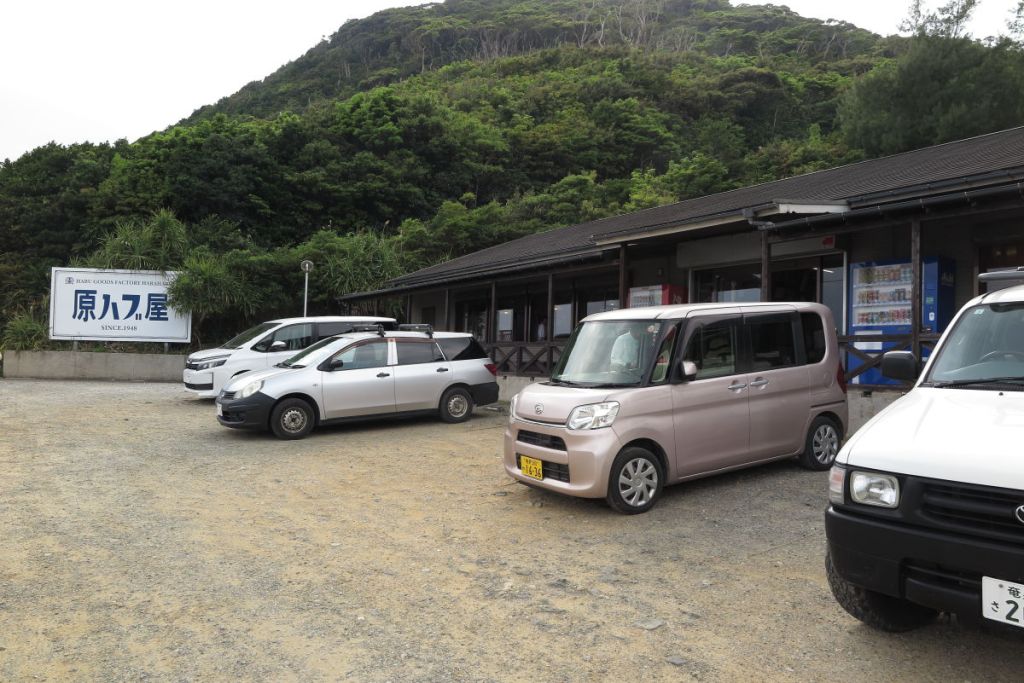
Apparently, this show has been performed by three generations of the same family, and the third generation is explaining about the habu snake. They also introduced other snakes from Amami, which was interesting.
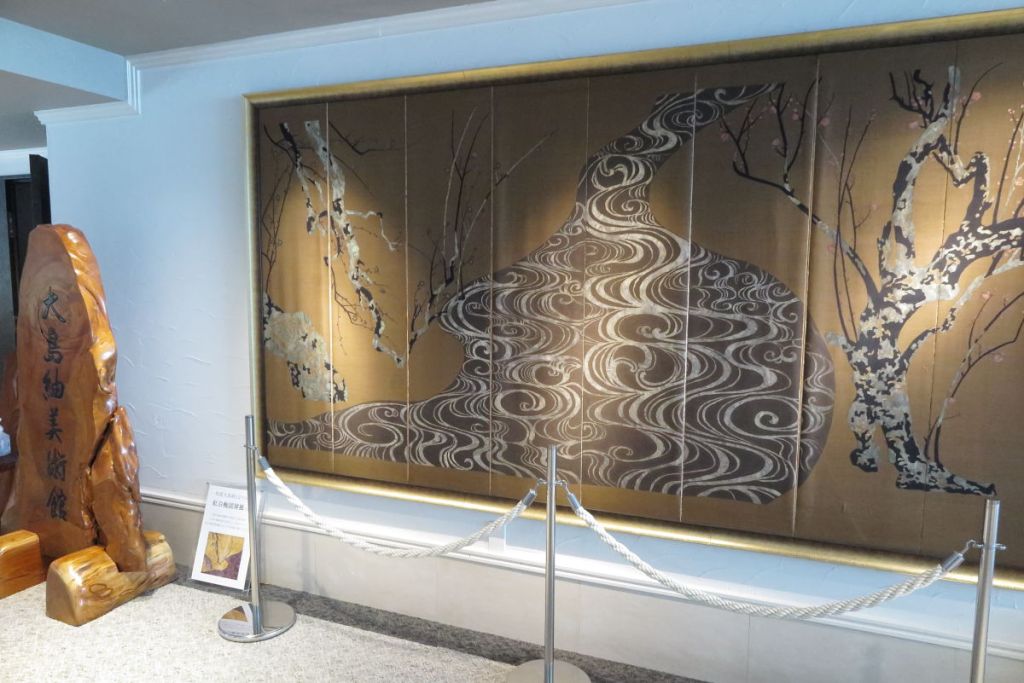
I returned to the hotel and was allowed to visit the Oshima Tsumugi Museum on the second floor. At the entrance, there was a folding screen depicting red and white plum blossoms by Ogata Korin, reproduced using Oshima Tsumugi silk.
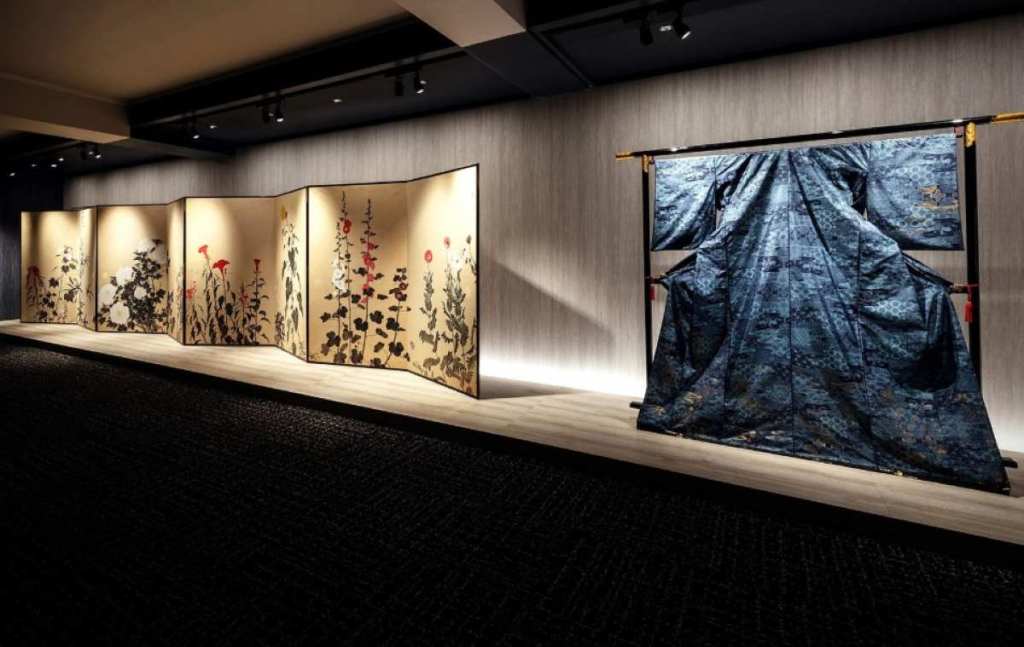
Photography is not allowed inside the Museum, so the photos below is screenshot from the hotel’s website. Many truly wonderful works of art are on display. The folding screen painting on the left is a work by Tanaka Isson. It seems the Oshima Tsumugi weaving company that manages this hotel also holds the rights to use the designs of Tanaka Isson’s works.
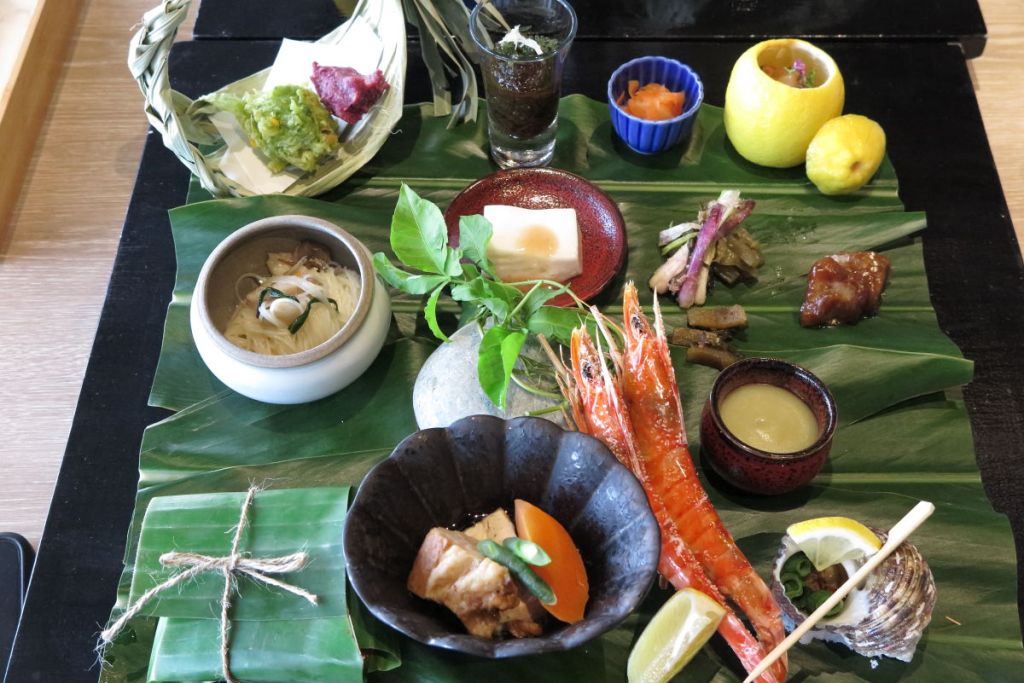
For dinner tonight, I had the special island meal (island hospitality cuisine). Just like yesterday, various dishes were served on a large stone plate. Inside a hollowed-out island lemon was namero (a type of minced fish dish) made with seasonal fish from Amami. There was also grilled turban shell, grilled prawns with salt, and oil-fried somen noodles. Inside a banana leaf was grilled black snapper with miso. The prawns were delicious and could be eaten shell and all, from head to tail.
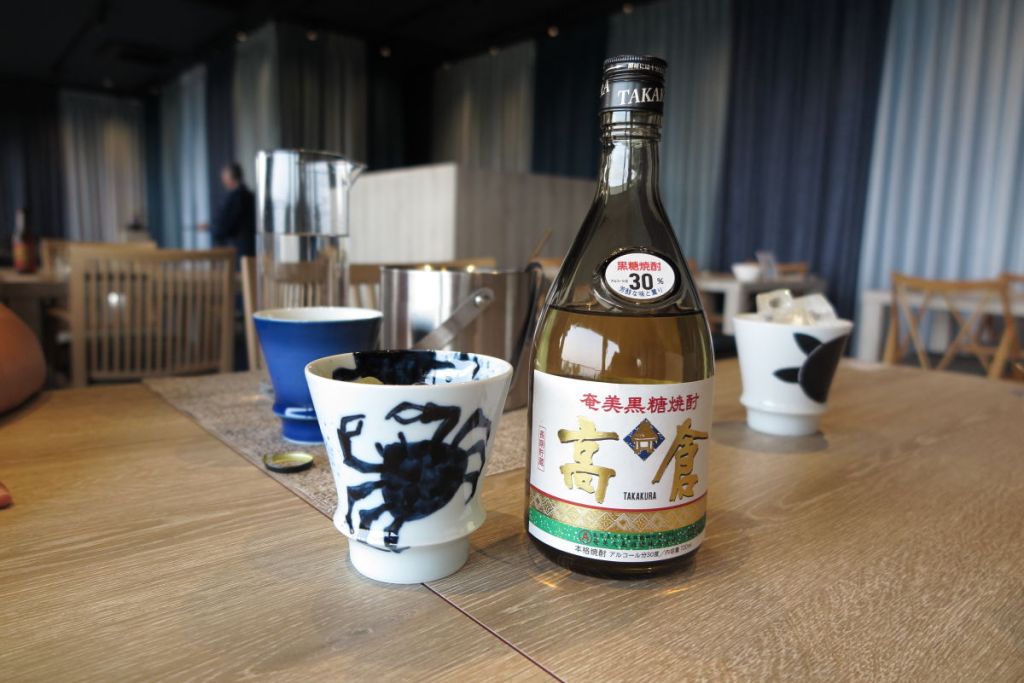
Today I ordered a brown sugar shochu called Takakura. It’s a shochu with a mellow richness and a pleasant aroma.
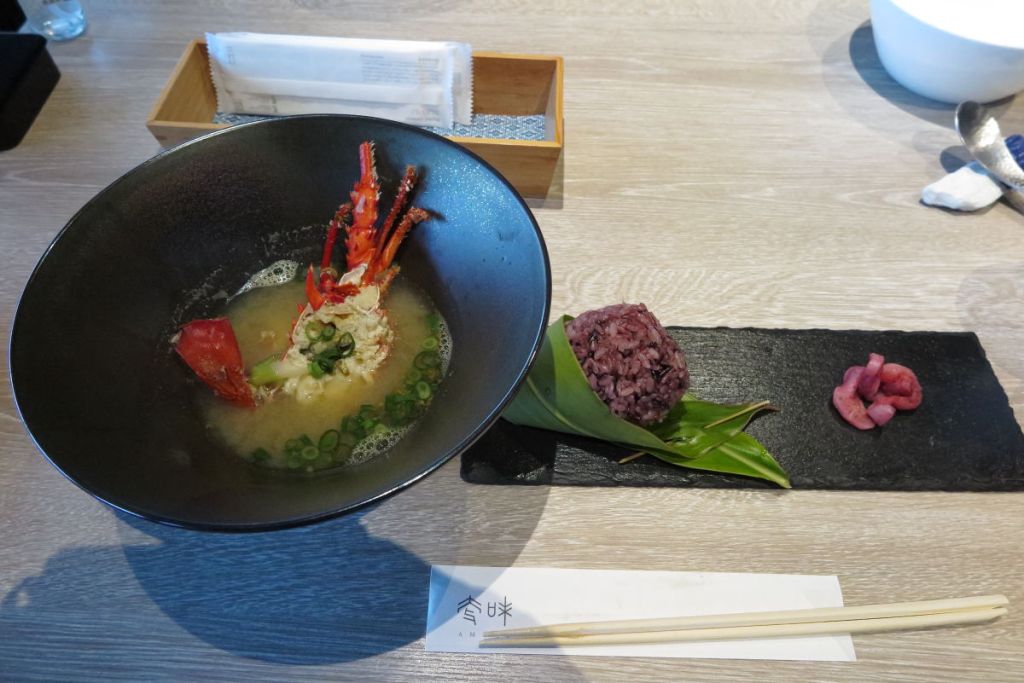
The bowl contained a generous portion of miso soup with spiny lobster. It was served with Amami black rice and pickled daikon radish.
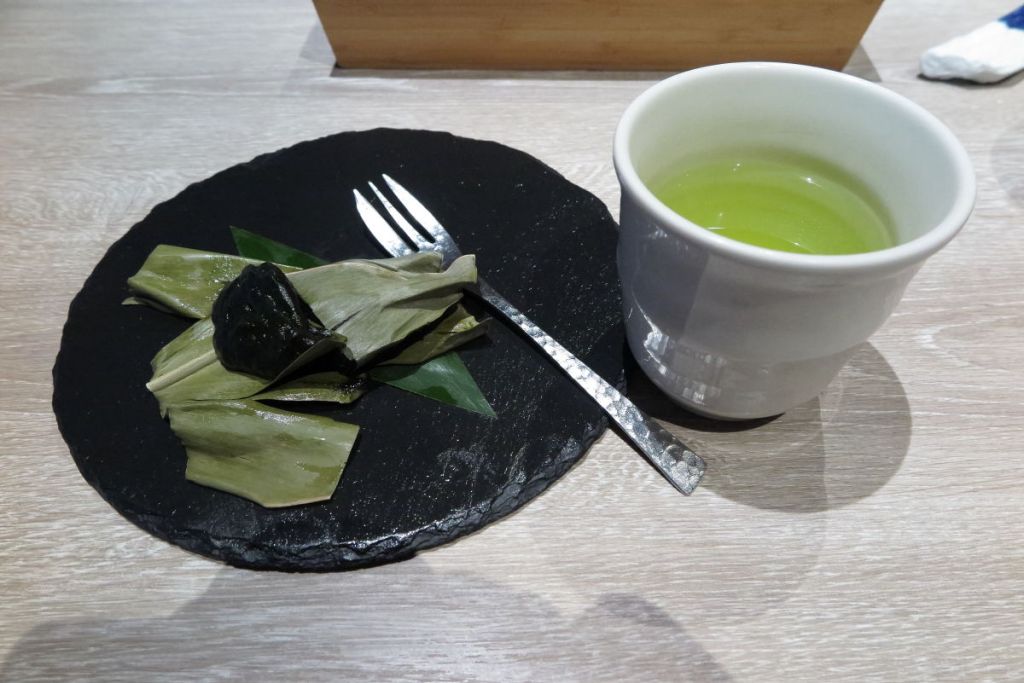
For dessert, we had kasha mochi with mugwort. Just like yesterday, it was a satisfying meal featuring plenty of Amami’s local cuisine.
March 18th (Wed)
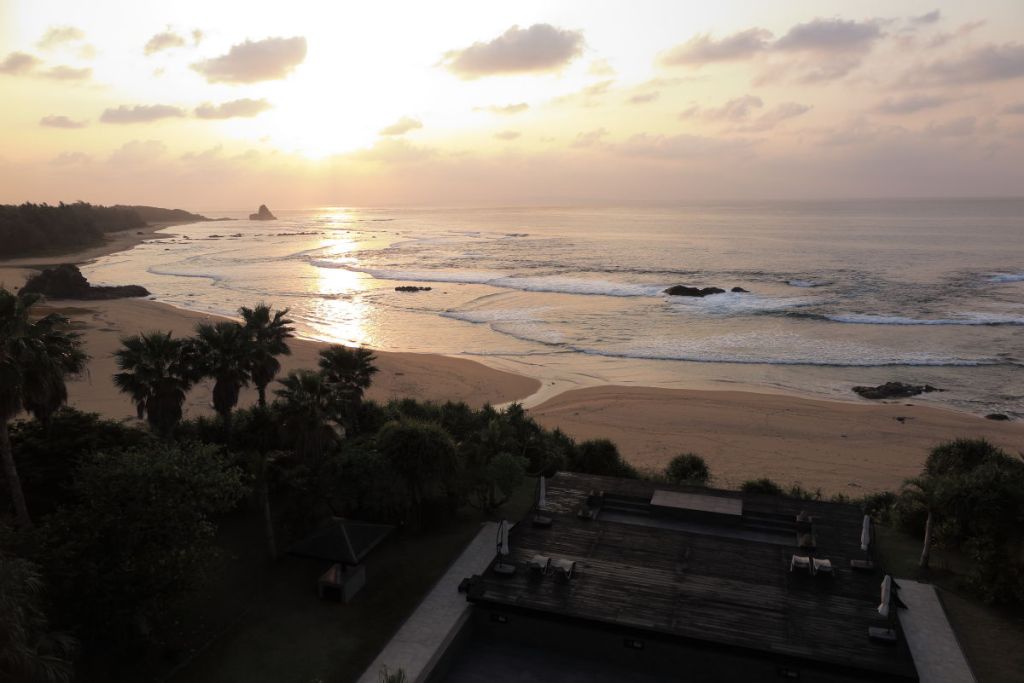
When I opened the curtains this morning, I could see the sunrise.
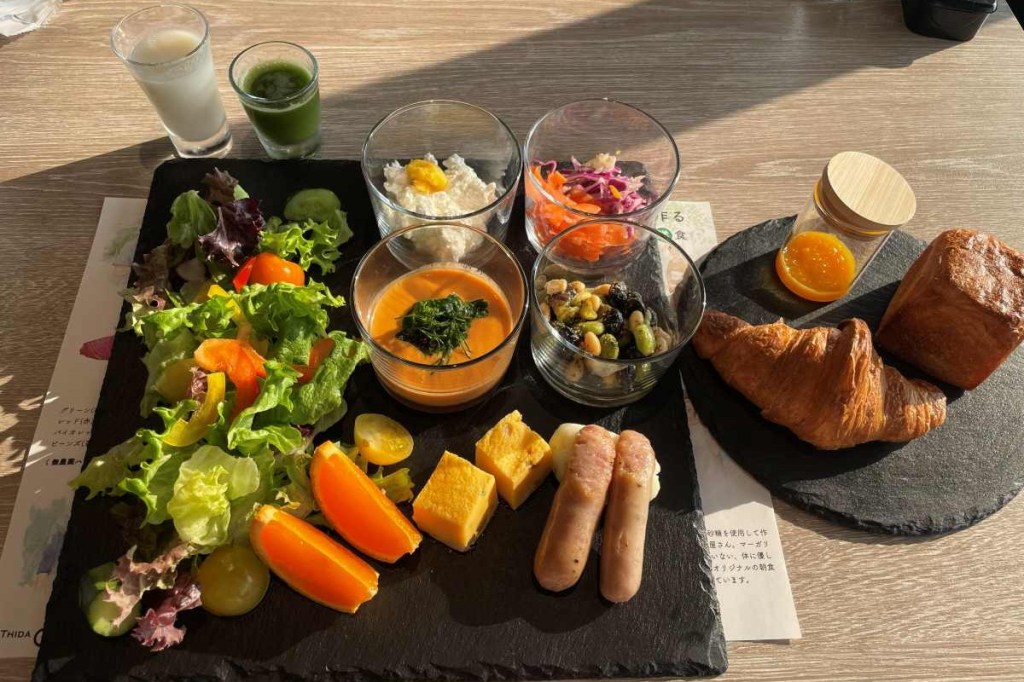
I had a Western-style breakfast today. In the upper left is the same Miki and smoothie as yesterday, and in the glass bowl are ricotta cheese, island carrots and roselle from Amami, purple cabbage and tuna confit, and a bean salad. It was a well-balanced Western-style breakfast.
After checking out, I visited the Oshima Tsumugi Museum across the street. An elderly male staff member at the museum gave me a detailed explanation.
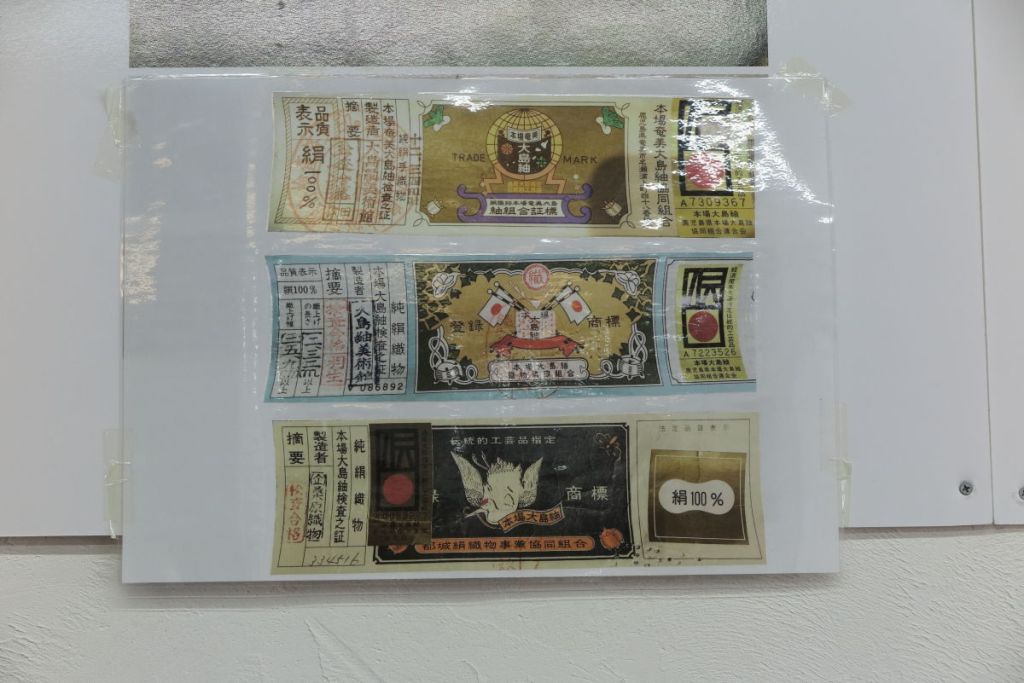
Oshima Tsumugi originated on Amami Oshima Island and spread to Kagoshima City and Miyakonojo City. The photo below shows a mark guaranteeing quality; initially, they used the one with the Japanese flag in the middle, but after the war, when the island was under US military rule, they could no longer use the flag, so they switched to the mark at the top. I learned for the first time that Amami Oshima, like Okinawa, was under US military rule. It was returned to Japan in 1953.
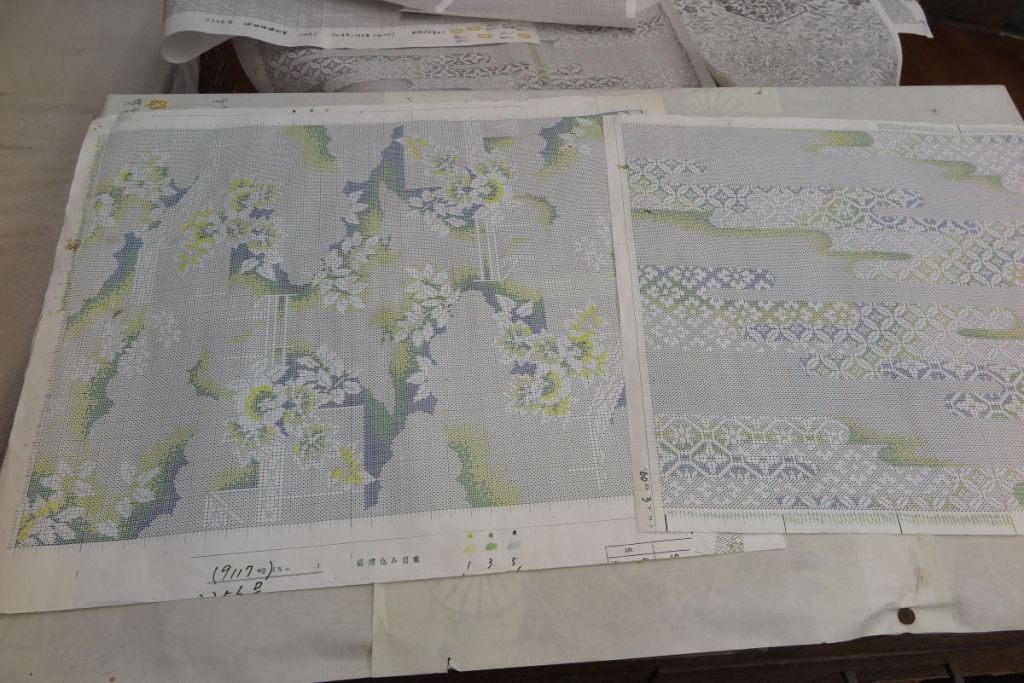
Although Oshima Tsumugi is called “tsumugi” (pongee silk), it uses seven strands of yarn spun by hand from cocoons bundled together to form a single thread. This thread is then tied and mud-dyed to create a patterned thread, which is then woven into the fabric. The photo below shows the design of the pattern, and the difference in color indicates how many strands of yarn are bundled and tied together.
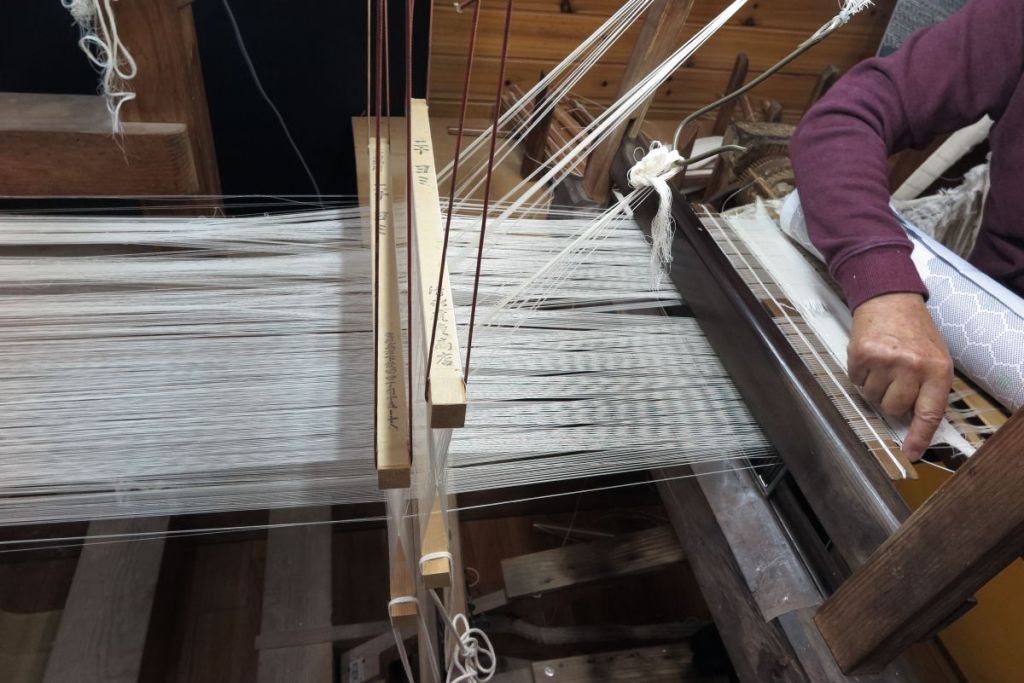
This is the machine used to draw out the threads, and I was amazed that the person explaining it could separate the five threads by touch alone. This process requires strength, so it’s traditionally a man’s job, and the elderly person in charge still does it.
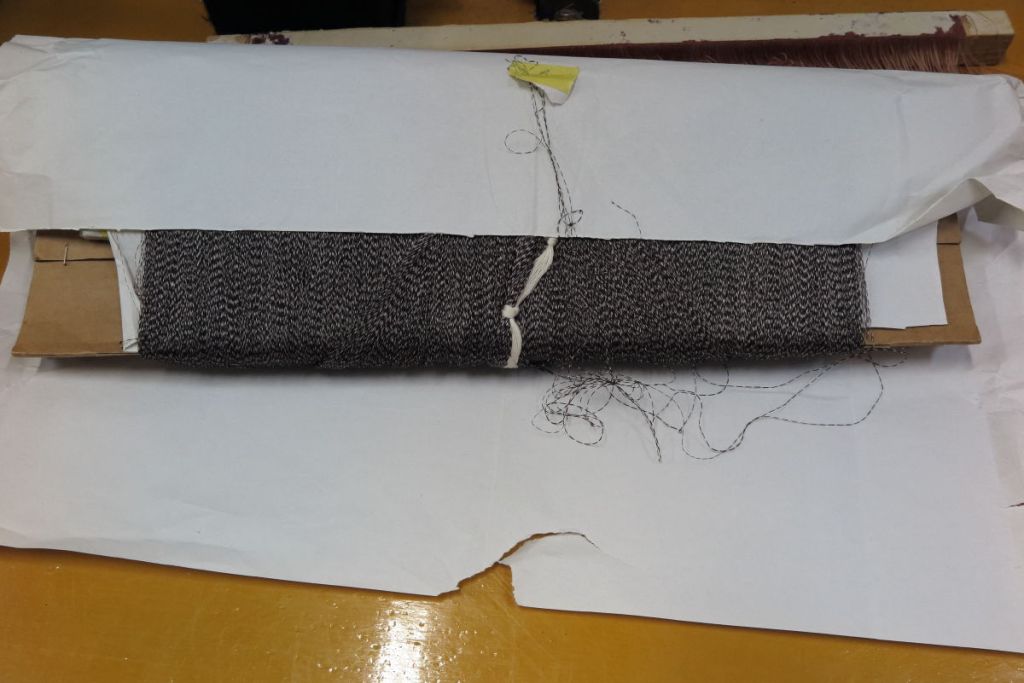
After the above steps, the yarn will be dyed with mud to create a pattern.
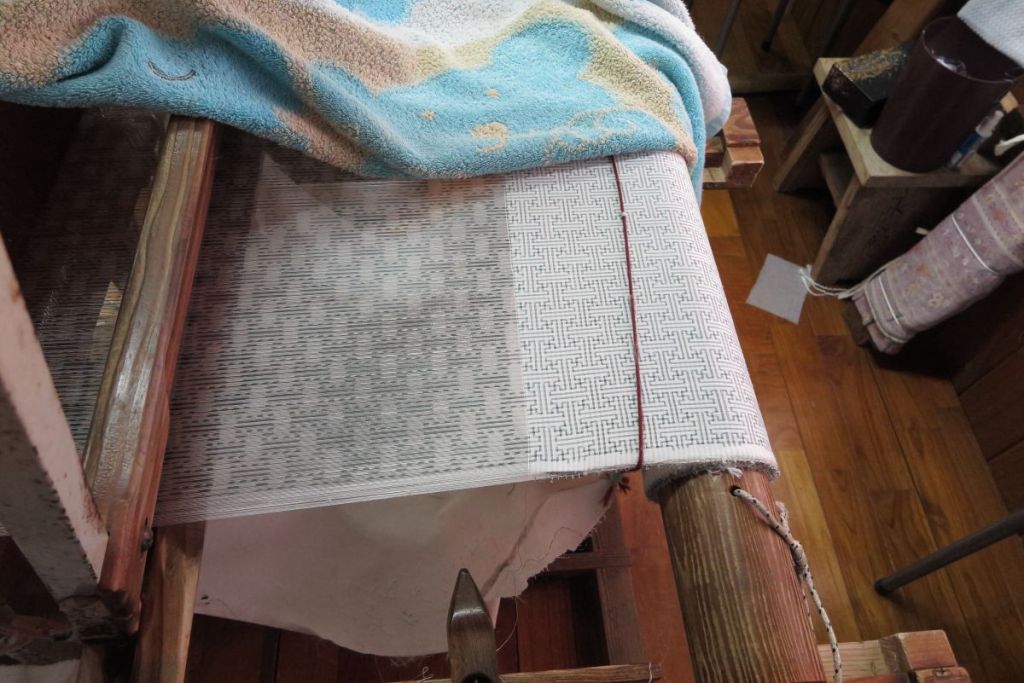
This thread will be woven into bolts of cloth. This is apparently a job done by women. There are many steps involved, and it takes at least a month.
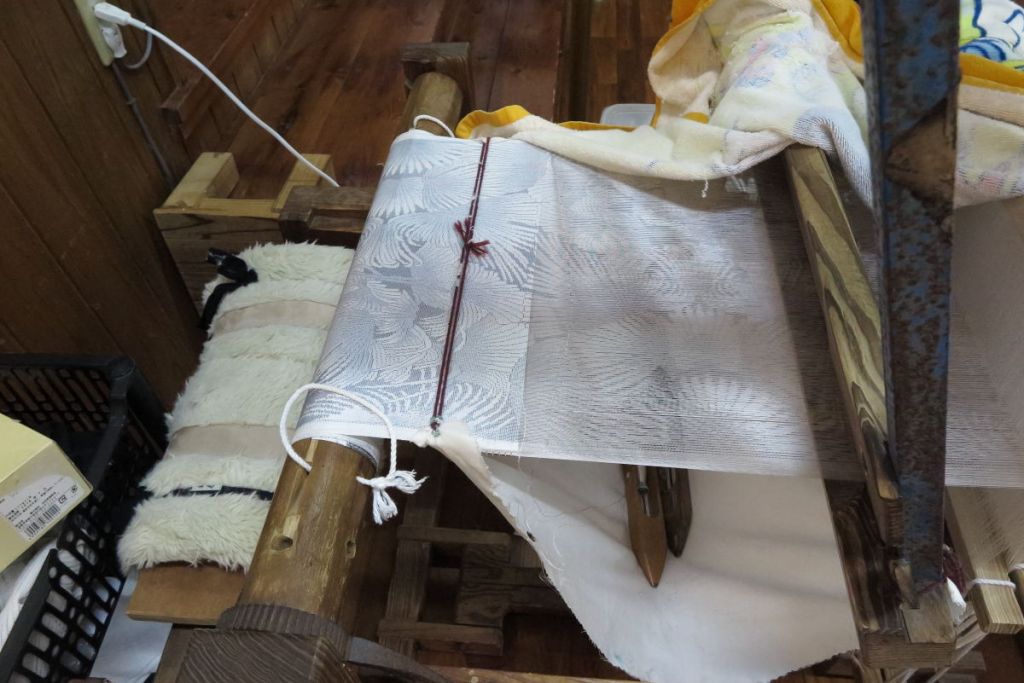
The museum also displays textiles from various eras.
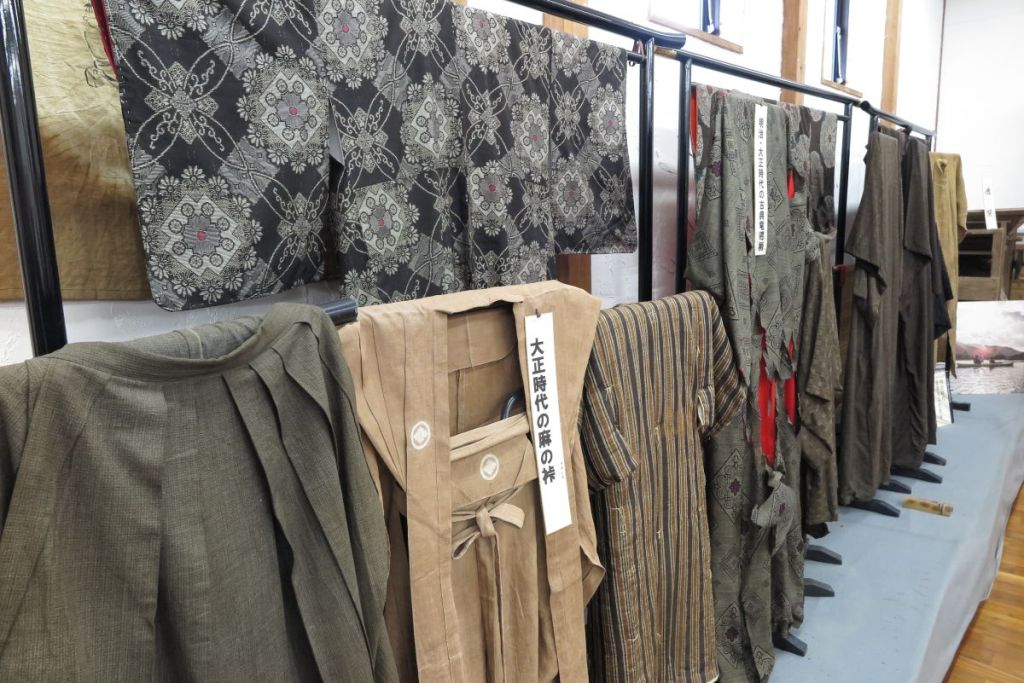
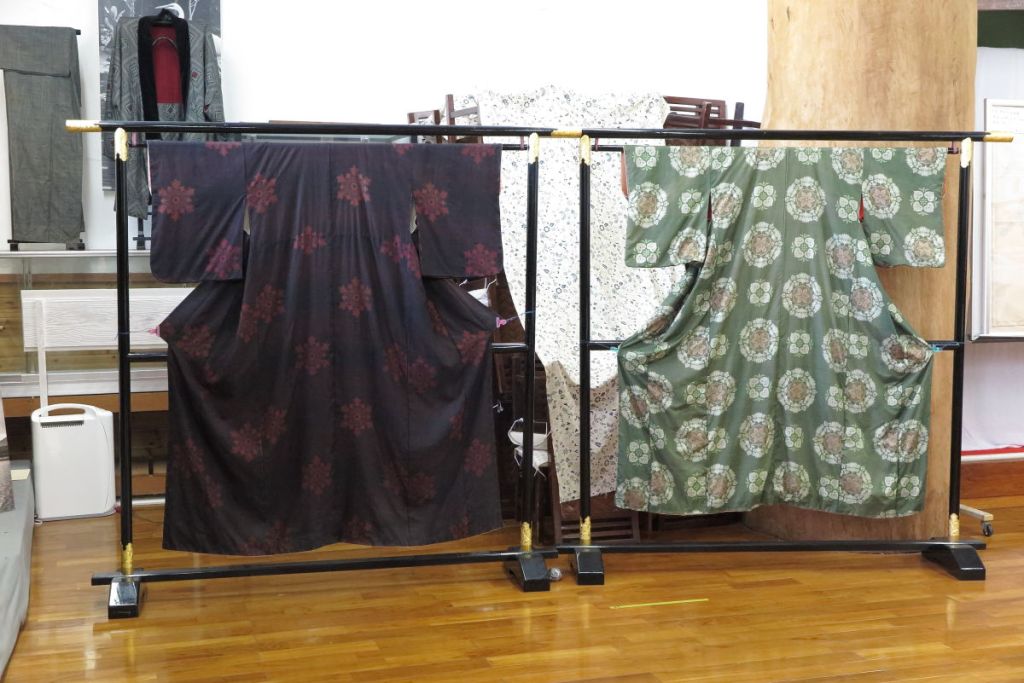
Oshima Tsumugi silk fabrics use patterned threads, so the pattern is the same on both sides. Even if the surface fades in the sun, it can be turned inside out and remade to look like new, meaning it can be used for three generations.
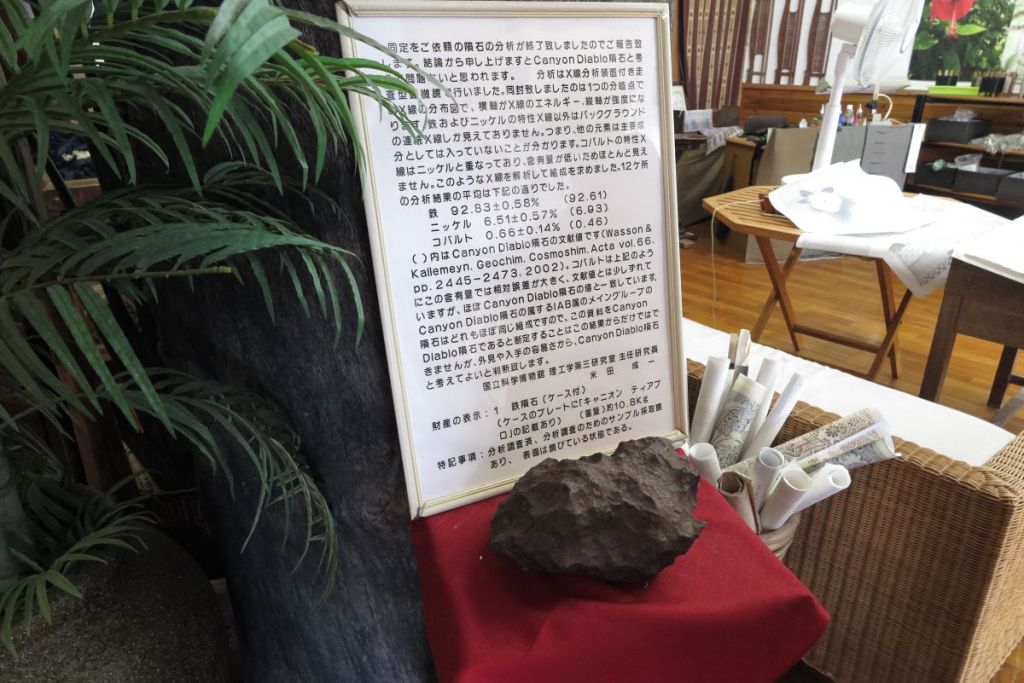
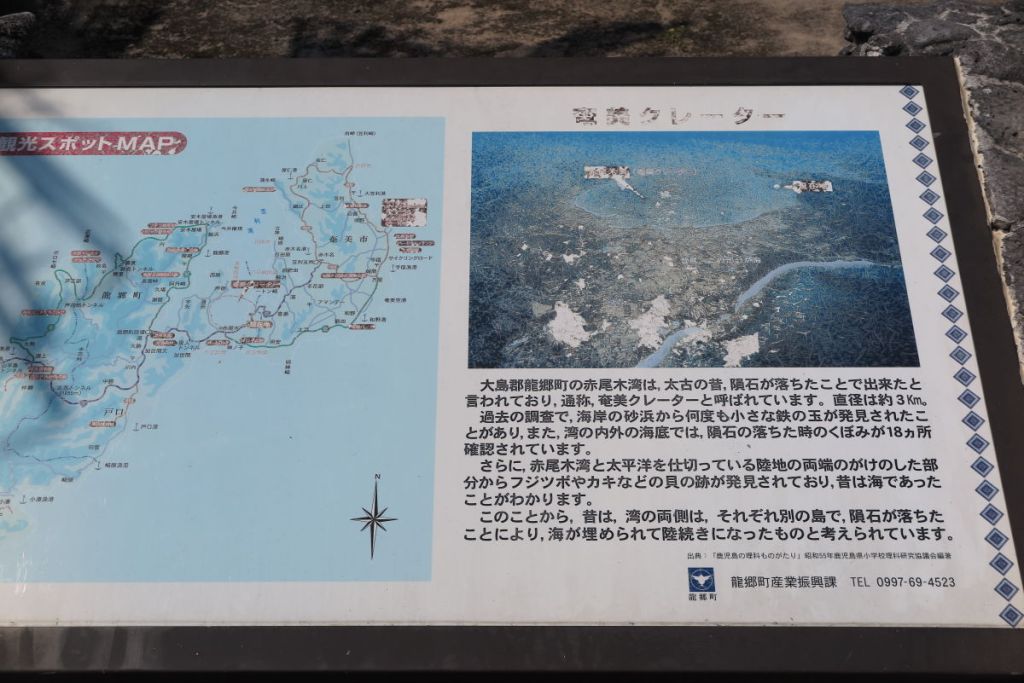
A meteorite was placed near the entrance. Mud dyeing is done using soil from the vicinity of the Amami Crater, where a meteorite is said to have fallen. The iron in the mud reacts chemically with the plant dyes, resulting in a black color. If the meteorite hadn’t fallen, mud dyeing might not have been possible.
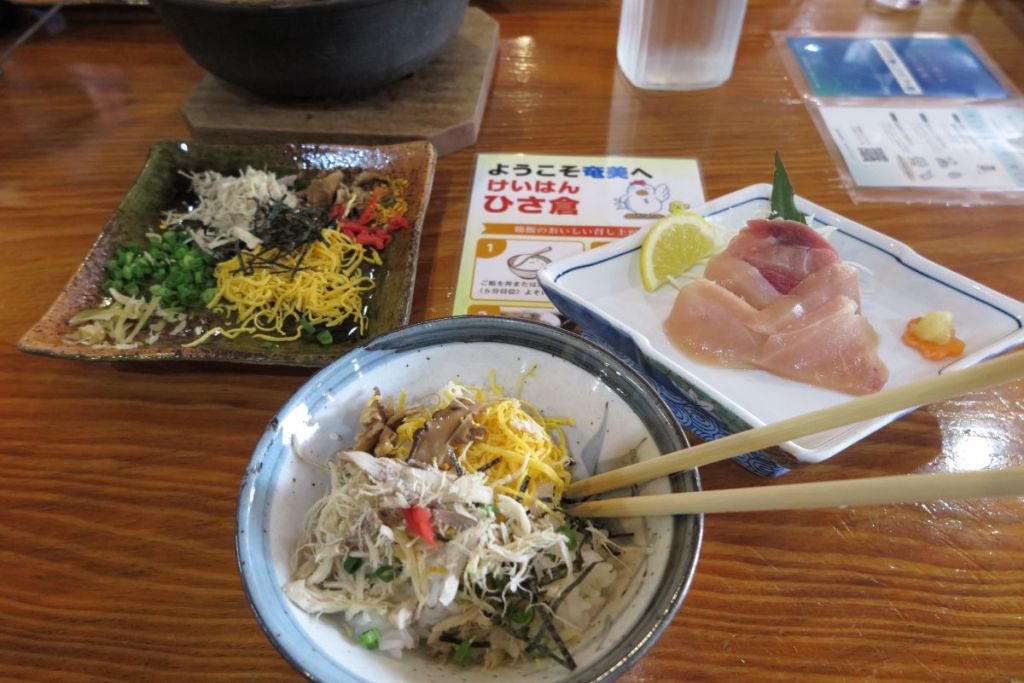
For lunch, I went to Hisakura, Keihan (a chicken rice with soup) restaurant in Tatsugo Town. I also ordered chicken sashimi, which was delicious. The soup was clear and had a light flavor.
Having seen the iron meteorite earlier, I went to Amami Crater after lunch. The explanatory sign also states that it is believed to have been formed by a meteorite impact.
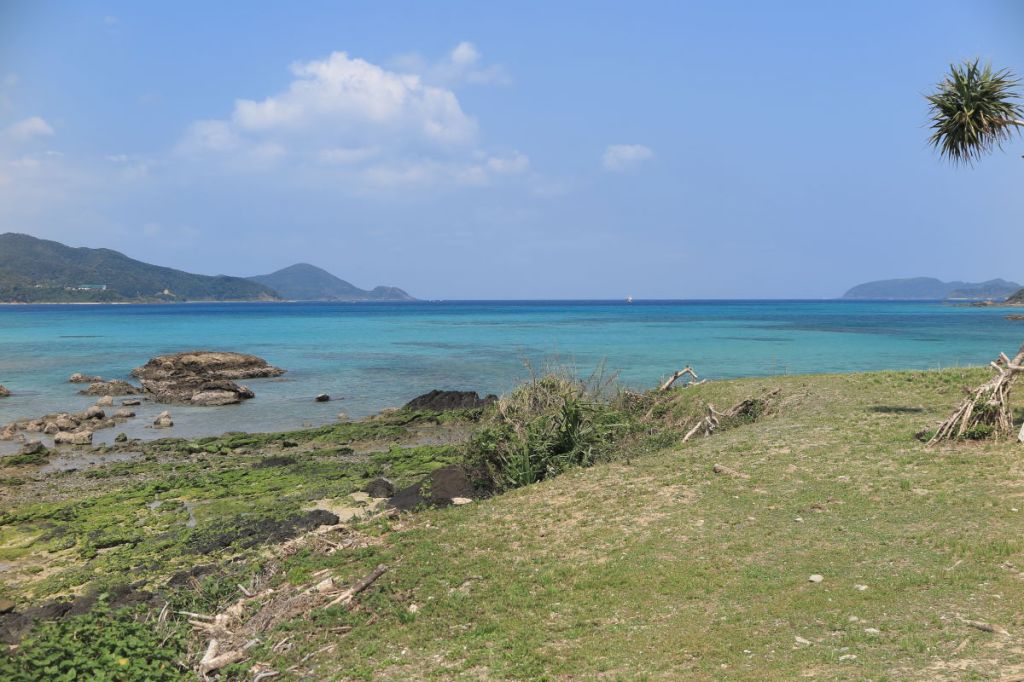
The gradient of emerald green and deep blue is absolutely beautiful.
I returned the rental car at the airport, but it was the first time I’d experienced this: the rental company also ran a gas station, so I refueled there. I was worried about the rising gas prices due to the war in Iran, and I imagined it would be even more expensive on an outlying island, but I was surprised by the price of 170.10 yen per liter. For comparison, on my way back from Haneda Airport, the price of gasoline along the Loop Road No.7 (Kan-nana Dori) was over 185 yen. I was told that gasoline prices are kept low on Amami Oshima due to subsidies.
I arrived at Haneda Airport at 4:50 PM on JAL flight 658, which departed Amami Airport at 2:25 PM. The departure was delayed by more than 20 minutes, but there were no particular problems. It was a 3-night, 4-day trip, and I was able to fully enjoy Amami’s nature, culture, and cuisine. It was a shame that there wasn’t a hot spring, but I was able to get the feeling of being in a hot spring.
 旅好き爺の旅行記
コメントを残す